

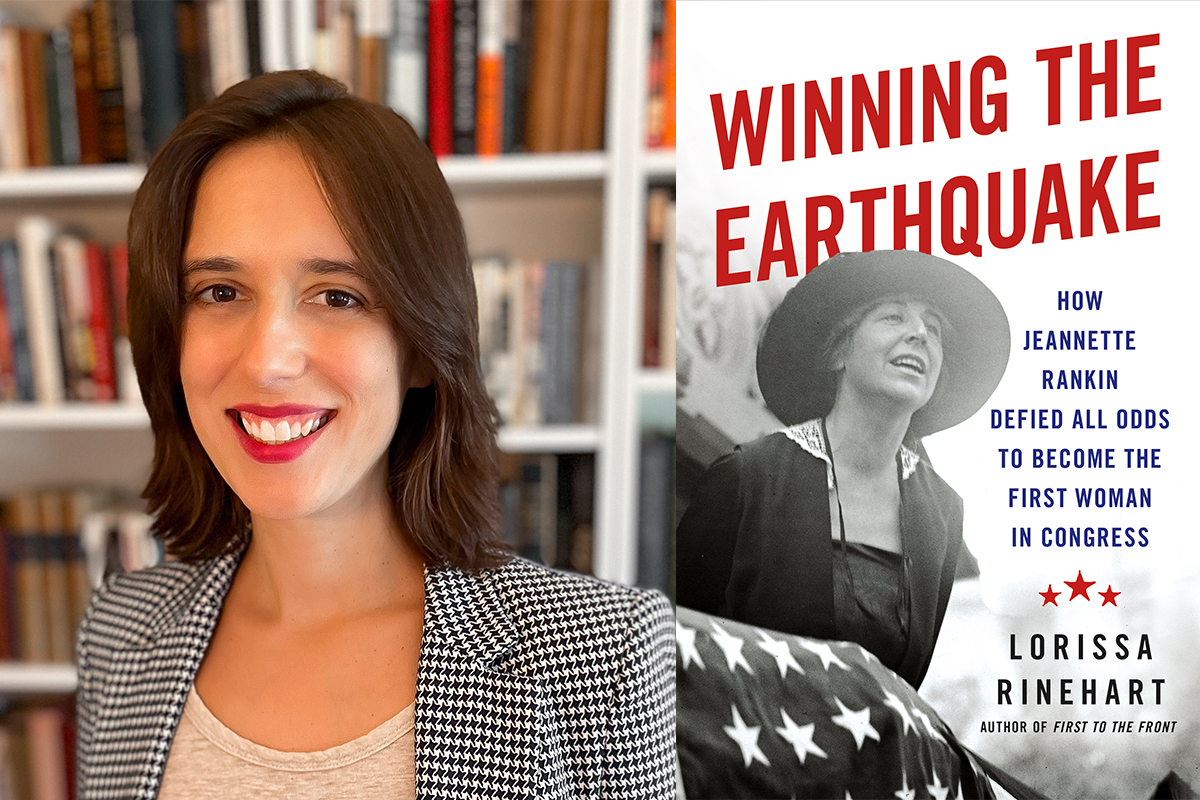
A new book offers a hopeful and instructive role model for our troubled times. Winning the Earthquake: How Jeannette Rankin Defied All Odds to Become the First Woman in Congress tells the story of a lifelong advocate for peace, workers’ rights, and women’s suffrage (i.e., the right to vote). Santa Barbara–based author Lorissa Rinehart has created the first book-length biography of this trailblazing politician, advocate, and organizer.
The biggest takeaway for Rinehart after researching Rankin’s life is the congressmember’s zeal for making sure every voice is heard.
“As we look at where we are in our democracy right now, it is as a direct result not of the people speaking, but of the people not being able to speak,” says Rinehart. “Not of democracy growing, but of democracy being stifled. I believe if we had looked and listened to Jeannette at the time, we would not be in the state where we are now.”
This is Rinehart’s second book, following her 2023 story of pioneering war correspondent Dickey Chapelle. A San Marcos High grad, Rinehart is a lifelong writer, inspired by teachers who “listened to my crap poetry” to keep typing. After spending time in New York City’s art world, she turned to writing. A magazine story on Chapelle led to an agent and her first deal. Casting about for her next project, Rinehart landed on Rankin.
“The more I started diving into her story, I realized two things,” says Rinehart. “One, that she was extraordinary. And two, that the depth and breadth of her legacy and its prescience to our own moment is not well understood. I tried to bring a wider lens to her life and career.”
Rinehart drew on original media coverage of Rankin during her career, as well as newly discovered oral histories. The book tells the story of Rankin’s origins in what was then a still-rugged Montana. Raised on a ranch, Rankin had, in Rinehart’s words, “an inborn sense of justice. She grew up reading the Constitution by candlelight, and this set into her this sense of participatory democracy and government of, for, and by the people.”
The girl who had lobbied her dad to pay his ranch hands better had her eyes truly opened after a trip to Boston to help her brother, a student at Harvard. There, she saw real urban poverty for the first time. Rankin experienced unchecked capitalism and economic divide on a large scale.
By her twenties, she was a fierce champion of women’s right to vote, along with making calls to abolish the Electoral College. Through ceaseless lobbying, she led her state in 1914 to become the 11th in the nation to give women the vote. She then ran for Congress and was elected in 1916 on a platform calling for worker’s rights, peace, and of course, voting equality. She headed back to D.C. with a long list of projects.
“One of the first things she did,” says Rinehart, “was bring the bill that would become the 19th Amendment, the Susan B. Anthony Amendment, to the House floor. She introduced it for the first time. This was, of course, a banner moment in women’s history.”
A lifelong advocate for peace, Rankin was also famously one of 50 congressmembers in 1917 to vote again against U.S. entry into World War I.
Along with calling for peace and equality, Rankin was emphatic in her defense of workers. During a major miners’ strike in 1918 in Montana, “Rankin made one of the most forceful and compelling speeches on their behalf on the House floor,” says Rinehart. “It was widely applauded and really put her in the history books, not only as a champion of workers’ rights, but also as a great statesperson and orator.”
Through the machinations of the Anaconda Copper Company, which basically controlled Montana politics, Rankin lost her seat after one term. But she did not lose her zeal for change. She traveled to Europe as part of a women’s peace delegation in the wake of World War I. She spent decades in the disarmament and peace communities. “As she often said,” notes Rinehart, “if you prepare for war, you’ll get war. If you prepare for peace, you will get peace.” In 1940, Rankin was again elected to Congress, where in 1941 she once again got a chance to vote against war. This time, her vote was the lone “nay.”
“She knew that [her post–Pearl Harbor vote] would not make a difference, and she knew also that she would be crucified for her vote, but she wanted to hang a lantern on the path that could have been,” says Rinehart with admiration. “And as we look at today’s new influx of armament technologies powered by AI, we are again at the same crossroads that Jeannette found herself at in 1919 [and 1941]. I hope that her lantern can still lead to that other path that we might take at this critical juncture.”
By the way, the title refers to a Rankin saying, “You can no more win a war than you can win an earthquake.” Amen, sister.
Winning the Earthquake: How Jeannette Rankin Defied All Odds to Become the First Woman in Congress (St. Martin’s Press) is available wherever books are sold. Rinehart will speak and sign books at Chaucer’s Books (3321 State St.) Thursday, December 4, from 6 to 7 p.m.
Related Posts




Premier Events

Mon, Mar 30
6:00 PM
Santa Barbara
Art4Grief Support Group 2nd 2-Week Session
Thu, Apr 02
2:00 PM
Santa Barbara
S.B. Rescue Mission Annual Easter Feast

Thu, Apr 02
5:00 PM
Santa Barbara
Exhibit Opening: The Santa Barbara Independent: ‘Covering 40 Years’

Sat, Apr 04
9:00 AM
Santa Barbara
Mesa Harmony Garden Spring Plant Sale
Sat, Apr 04
9:00 AM
Santa Barbara
Passport Fair, hosted by Congressman Salud Carbajal

Sun, Apr 05
10:00 AM
Santa Barbara
Easter Brunch at Brass Bear
Thu, Apr 09
6:00 PM
Santa Barbara
Chaucer’s Books – Poetry Night
Sat, Apr 11
3:00 PM
Santa Barbara
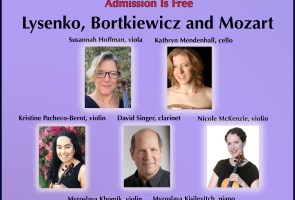
SB Music Club Free Concert Saturday 🎶
Mon, Apr 13
12:00 PM
Carpinteria
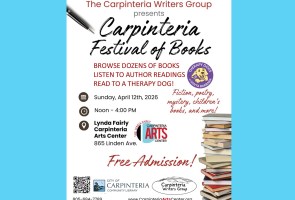
Carpinteria Festival of Books
Wed, Apr 15
10:00 AM
Santa Barbara
Free Senior Day – SB Botanic Garden
Mon, Mar 30 6:00 PM
Santa Barbara
Art4Grief Support Group 2nd 2-Week Session
Thu, Apr 02 2:00 PM
Santa Barbara
S.B. Rescue Mission Annual Easter Feast
Thu, Apr 02 5:00 PM
Santa Barbara
Exhibit Opening: The Santa Barbara Independent: ‘Covering 40 Years’
Sat, Apr 04 9:00 AM
Santa Barbara
Mesa Harmony Garden Spring Plant Sale
Sat, Apr 04 9:00 AM
Santa Barbara
Passport Fair, hosted by Congressman Salud Carbajal
Sun, Apr 05 10:00 AM
Santa Barbara
Easter Brunch at Brass Bear
Thu, Apr 09 6:00 PM
Santa Barbara
Chaucer’s Books – Poetry Night
Sat, Apr 11 3:00 PM
Santa Barbara
SB Music Club Free Concert Saturday 🎶
Mon, Apr 13 12:00 PM
Carpinteria
Carpinteria Festival of Books
Wed, Apr 15 10:00 AM
Santa Barbara

