
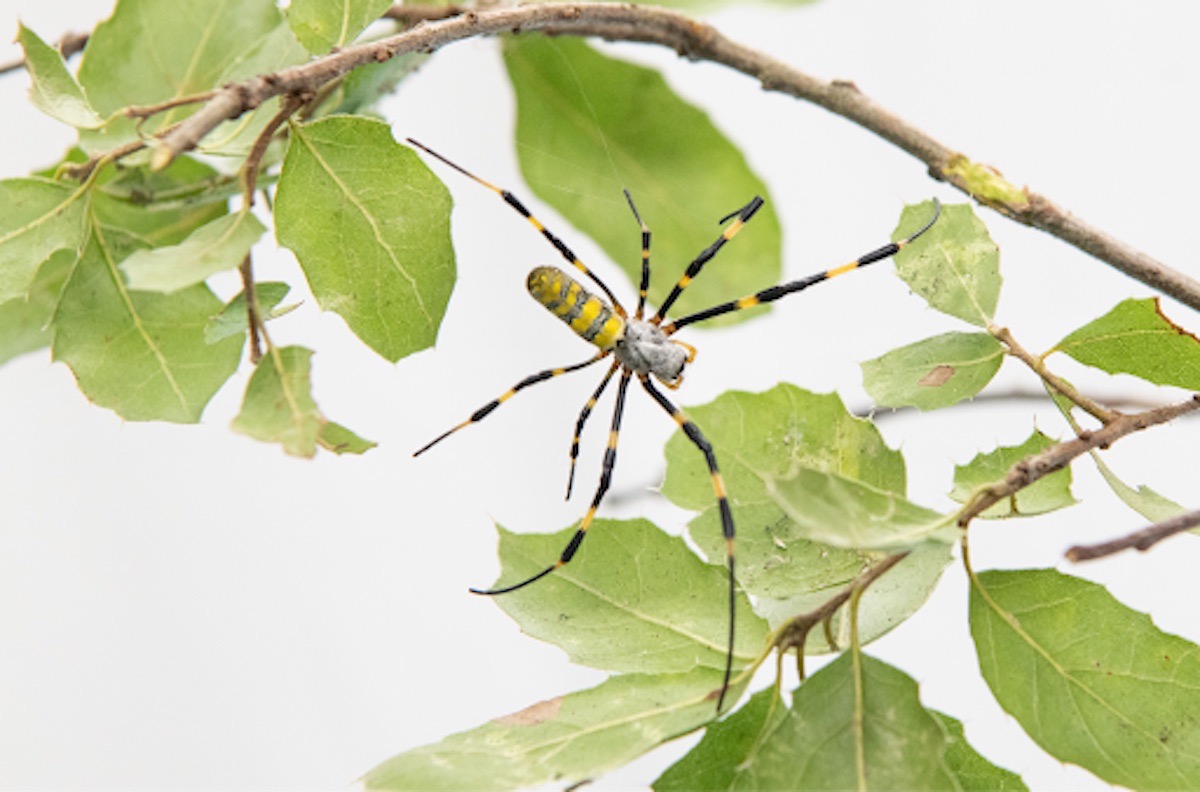
A lone Joro spider, native to East Asia and known for building massive webs, was discovered this fall clinging to a shrub outside a coastal Santa Barbara business. The sighting marked the first known appearance of the species west of the Great Plains.
While this may sound like the freaky start to a sci-fi movie, local scientists say there’s no reason to panic.
“This one probably came alone,” said Dr. Alex Harman, the Santa Barbara Museum of Natural History’s Schlinger Chair of Entomology, who responded to the scene. “It was right next to where they receive flower shipments. We searched the area and didn’t find any others.”
The discovery was first made by Sophie Cameron, a local naturalist and birding instructor, who recognized the spider by its striking yellow, black, and gray coloration and sheer size — three inches long with legs fully extended. She quickly contacted Harman, who confirmed it as a female Trichonephila clavata, better known as the Joro spider.
Originally spotted in Georgia in 2014, the Joro has since ballooned its way across much of the southeastern U.S., showing up as far north as Maryland and west to Oklahoma. Its sudden jump to California? Likely accidental.
“Flowers, fruits, vegetables — insects just come along for the ride,” said Harman in an interview. “They come in wood, pallets, even furniture. This one probably traveled inside a plant shipment from the East Coast.”
Despite their appearance, which may cause quite a bit of fear, Joro spiders are not harmful to humans. Their bite isn’t medically significant, and they’re more likely to flee than fight. Still, their ecological impact is less clear.
According to S.B. Museum of Natural History’s director of communications, Jonah Gabriel Haas, “there is some evidence it can outcompete native orbweavers.” More so, as Harmon reminds us, there are invasive species everywhere. “Ladybugs that we see on a day to day basis are actually introduced from Europe,” Harmon said. “While they’re not harming us, they can have impacts on native species.”
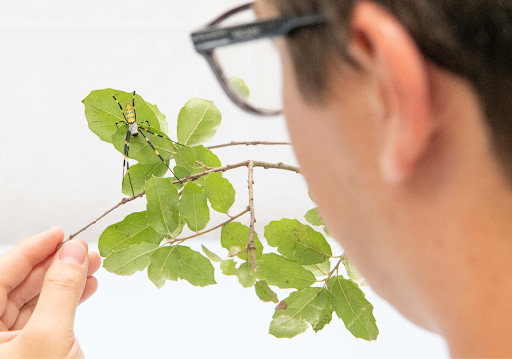
Harman also took issue with the term “flying spider,” a nickname the Joro has earned in headlines due to its ability to balloon — using silk to catch the wind and disperse. “Calling Joro spiders ‘flying’ is ridiculous,” he said in a museum statement. “Nearly all spiders disperse by wind. Using the f-word causes runaway misinformation as a story gets repeated and sensationalized.”
After a brief stay in a live enclosure, the spider was preserved in ethanol and added to the museum’s entomology collection, which now holds more than 350,000 insect and arachnid specimens. For a museum of its size, it is a pretty extensive collection.
“We’ve had major donations of butterflies and moths, and both previous curators were beetle guys,” said Harman. “So we have a strong collection of California insects.”
The scientific journal Southwestern Entomologist was notified of the finding, helping inform other scientists and track the distribution of insects over time. Additionally, keeping tabs on invasives is no bad idea — in an era of global trade, invasive species can show up anywhere.
“Insects and arachnids are very small and easy to overlook,” Harman explained. “They’re getting moved around constantly. State to state, we don’t regulate it the way we do with international shipping.”
That’s why, despite the spooky optics, the museum has declined to name the business where the spider was found.
“We don’t want this to be about shame or blame,” said Haas. “It could happen anywhere. That’s the point.”
So, no — Santa Barbara hasn’t been overrun by an eight-legged yellow menace. But for one brief moment in October, it was “Solo Spider meets Alex Harman,” and the rest is (preserved) history.
For more on Dr. Harman’s work, which includes biogeography, taxonomy, and the occasional beetle deep dive, visit the Santa Barbara Museum of Natural History at sbnature.org.
Related Posts





Premier Events

Tue, Feb 10
2:00 PM
Santa Barbara
Music & Meditation Santa Barbara Season Opening
Sat, Feb 14
10:30 AM
Los Olivos
Valentine’s Couples Massage + Wine in Los Olivos

Sun, Feb 08
1:00 PM
Santa Barbara
The Adam Moezinia “Folk Element Trio” at SOhO
Mon, Feb 09
6:30 PM
Santa Barbara
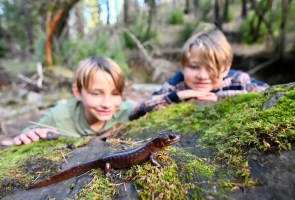
Science Pub: California’s Amphibian Waterpark
Mon, Mar 09
6:30 PM
Santa Barbara
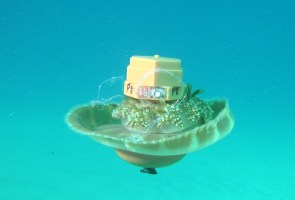
Science Pub: Cyborg Jellies Exploring Our Oceans
Sat, Mar 28
All day
Santa Barbara
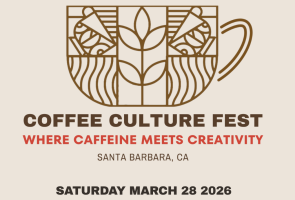
Coffee Culture Fest
Tue, Feb 10 2:00 PM
Santa Barbara
Music & Meditation Santa Barbara Season Opening
Sat, Feb 14 10:30 AM
Los Olivos
Valentine’s Couples Massage + Wine in Los Olivos
Sun, Feb 08 1:00 PM
Santa Barbara
The Adam Moezinia “Folk Element Trio” at SOhO
Mon, Feb 09 6:30 PM
Santa Barbara
Science Pub: California’s Amphibian Waterpark
Mon, Mar 09 6:30 PM
Santa Barbara
Science Pub: Cyborg Jellies Exploring Our Oceans
Sat, Mar 28 All day
Santa Barbara


You must be logged in to post a comment.