
[Updated: Thu., Jan. 8, 2026, 12:45pm]
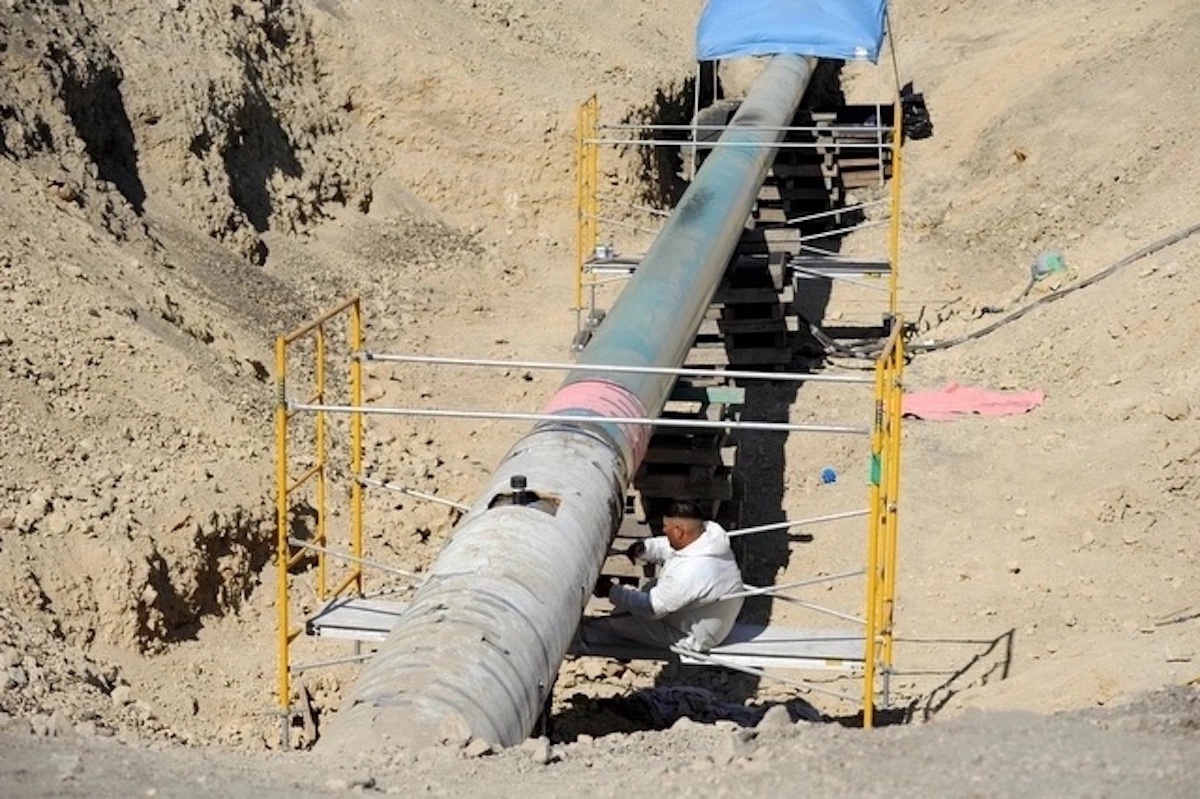
A Santa Barbara County judge declined Wednesday to immediately lift the injunction blocking Sable Offshore Corp. from restarting its onshore oil pipelines, approved a compromise schedule that modestly accelerates the case, and compelled the company to confirm in court that no oil is currently flowing through the lines.
At issue is whether Sable must continue complying with a July injunction Judge Donna Geck issued requiring the company to provide 10 days’ advance notice before restarting the pipeline operations, an order that was premised on oversight by California’s Office of the State Fire Marshal.
Sable now argues that oversight has shifted exclusively to the federal Pipeline and Hazardous Materials Safety Administration (PHMS), rendering the injunction moot.

“The court does not have jurisdiction,” Sable attorney Jeffery Dintzer of Los Angeles–based Alston & Bird told the judge, arguing that Las Flores pipeline system qualifies as an interstate pipeline under federal law. PHMSA, he said, has issued waivers that effectively displace the state fire marshal’s authority.
Dintzer repeatedly emphasized the financial pressure on Sable, saying each day the injunction remains in place costs the Houston-based company millions. At one point, he told the court, “We could restart today.”
Geck was unconvinced.
“Isn’t there an appeal pending?” she asked, referring to a related case now before the Ninth Circuit Court of Appeals. A decision on that appeal is anticipated in the spring.
Deputy Attorney General Michael Dorsi, appearing on behalf of the state, urged caution, noting that state and federal courts routinely deal with overlapping jurisdiction and that the legal issues raised were far from settled.
“These are complicated issues,” Dorsi said, adding that the state needed adequate time to respond. “We have a duty of candor.”
The response carries an added weight with California Attorney General Rob Bonta’s office entering the case this week. Bonta opposed Sable’s attempt to shorten briefing deadlines — a signal of renewed state involvement after weeks of public uncertainty about the attorney general’s role.
Attorneys for environmental groups said Sable had not been forthcoming about the status of pipeline operations. Jeremy Frankel, an attorney with the Environmental Defense Center, told the court that petitioners did not know whether the company was complying with the injunction or preparing to restart operations.
During questioning, Frankel repeatedly pressed Sable to clarify whether oil had been flowing through the pipelines — an issue he said went to the heart of compliance with the court’s July injunction. After initial evasive responses from Sable’s counsel, Judge Donna Geck posed the question directly.
Pressed by both the court and opposing counsel, Sable was ultimately forced to answer one key question: whether oil had been flowing through the pipelines.
After an initial vague response, Sable attorney Jeffrey Dintzer answered simply: “No.”
Judge Geck noted the response, then steered the parties toward a compromise schedule for the upcoming proceedings. Under the agreed-upon schedule, the next hearing is set for February 27.
Outside the courtroom, Julie Teel Simmonds, senior counsel at the Center for Biological Diversity, said the confirmation was significant.
“It’s a huge relief to learn there’s no oil in the onshore pipelines yet,” Simmonds said. “Sable told the judge it’ll fully comply with her injunction, which means no restart until it gets all the approvals it still needs, including an easement from State Parks and a coastal development permit from the Coastal Commission.”
For now, the injunction remains fully intact. Who gets to decide what happens next, though, remains very much up in the air.









You must be logged in to post a comment.