

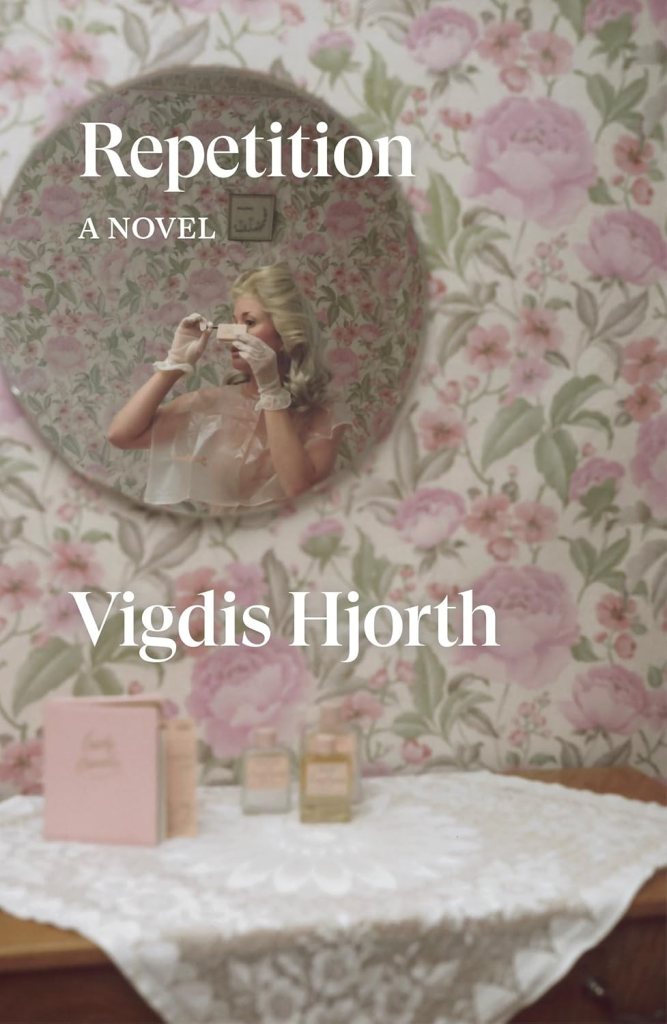
It’s late November in Norway, and the days are cold and short. A woman and her dog occupy a small cabin in a remote, forested area. The woman, whose name we never learn, tells us, “I usually retreated to this simple cabin after periods of activities such as events and literary festivals, in order to rest, to read, to catch up on sleep and to dream.” This unnamed narrator, a writer, spends most of her time thinking about the year she turned 16, nearly 50 years before. What happened then comes back to her with an astonishing level of detail and immediacy, as if the past is trying to tell her something.
The 16-year-old girl that the woman once was had a fraught relationship with her mother, who appears overbearing, neurotic, and obsessively determined to control her daughter’s every activity. With her other children, the mother doesn’t act this way, though why isn’t immediately clear. This battle of wills puts the whole family on edge. The daughter feels compelled to defy and trespass against her mother, lying about where she’s going and who she’ll be meeting. Her father comes to her defense from time to time, telling his wife to let the girl be, but that’s the extent of his involvement. Something is going on, something is amiss, but whatever it is lies camouflaged under the mundane details of a young girl’s quest to be 16, to party with her girlfriends and lose her virginity. It’s only well into the novella when the mother discovers her daughter’s diary that the reason for her fear and anxiety and the father’s aloofness is revealed.
Writing in the New York Review of Books, Ursula Lindsey notes that Vigdis Hjorth has “a gift for depicting painful, confusing, and mortifying relationships.” This is true of Repetition, a slender work of 144 pages, translated by Charlotte Barslund — who also translated Hjorth’s If Only, Will and Testament, and Is Mother Dead. Love and loss, breakups, siblings, and mothers are the grist with which Hjorth works. In Repetition our unnamed narrator refuses to let her childhood go, to forgive and forget. Unlike her parents, she can’t convince herself that the past is gone, forever inaccessible. ”I repeat and recall and relive and retell and redress because childhood lasts, youth lasts, our childhood and youth constitute a future that starts over constantly, it is an ongoing process.”
The most beautiful words the woman ever heard her father say were, “It isn’t easy being human.” After 48 years, she understands that her younger self was calling out to her mature self, the woman she would become. “Offer me your hand of salvation, throw me a lifeline, pull me up!” Hjorth gives readers moments which are deep, complex, and infinite.
This review originally appeared in the California Review of Books.





You must be logged in to post a comment.