When they were first proposed in November, updates to the Santa Barbara city ordinance that regulates massage therapists and businesses drew significant pushback from industry professionals who said the new rules would unfairly burden legitimate practitioners. Increased fees, unannounced inspections, and additional training requirements were among the changes that police argued are needed to comply with state law and to curb prostitution, human trafficking, and related criminal activity.
Since then, city officials have softened a handful of the suggested requirements ― for example, only conducting inspections based on complaints and lowering fees for sole proprietors ― but the remaining framework is still making some Santa Barbara practitioners tense. The ordinance has not been updated since its original passage in 1976.
“First off, I have to say I am pleased that they heard the public comment and have made changes to [the proposed ordinance],” said Kathy Gruver, who has been practicing in town since 2002. “But I think there is still a ways to go.”
Chief among Gruver’s concerns, which is shared by many of her colleagues, is a requirement that would force many therapists ― some of whom have been practicing for decades ― to go back to school. Practitioners were previously required to complete 250 hours of training to be certified through the California Massage Therapy Council. The new ordinance would increase that number to 500 hours.
“At this point in Santa Barbara, there are many experienced massage therapists who entered the profession when 250 hours was the standard, and they have completed thousands of hours of hands-on work,” said Pam Tanase, owner and operator of Massage Envy, at a recent Ordinance Committee meeting. “Requiring them to return to school for another 250 hours risks pushing skilled therapists out of the workforce.”
Phia Altman said the massage therapy school she attended in 1981 no longer exists. “I’m almost 67,” she said. “I’m closer to retiring. I don’t really want to have to go back to school at this point to do what I’ve been doing since the ’80s.” The ordinance originally mandated that therapists complete the extra hours by 2028, but the deadline has since been extended to 2029.
The new rules would also require all administrative staff at massage businesses to undergo Live Scan fingerprinting and background checks, a measure that police say is necessary to protect clients in vulnerable situations. Some critics worry, however, that the process could impact immigrant employees. Concerns also remain how the enhanced oversight would affect massage therapists who operate out of their homes.
Gruver has her doubts that the new regulations will truly address the illegal activity taking place at certain establishments. “My main concern is that nothing’s going to change,” she said. “Over a decade ago, I helped investigate these places in a neighboring city, and zero of them are shut down.” Gruver acknowledged the enforcement process can be “difficult and expensive,” but she also wondered why police can’t target businesses that are regularly suspected of prostitution. “We all know where they are,” she said. “Just go get rid of them.”
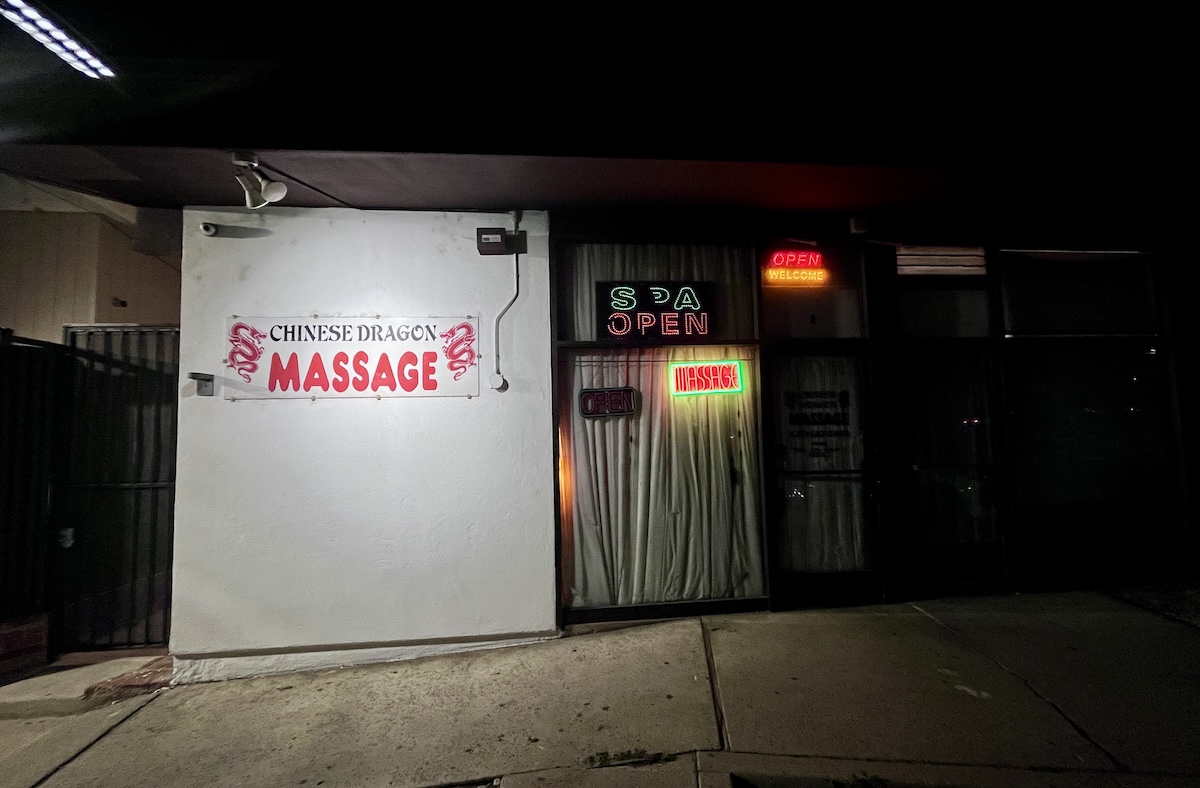
Gruver pointed to websites that promote and review massage parlors where customers can receive “extra services.” The top two most active locations, according to the user-generated testimonials, are Asian Care Center on upper State Street and Chinese Dragon Massage on Calle Real. “It’s a sure thing,” wrote one of the reviewers. Both businesses declined to comment when reached by phone.
Commander Brian Miller with the SBPD noted the current ordinance has not been updated for 50 years and said it “is being reviewed with the goal of enhancing community safety and ensuring that all businesses in the city operate in compliance with current laws and regulations.” Miller said there are approximately 40 massage establishments and about 284 massage therapists operating within the city.
“It’s important to note that these figures do not account for any massage providers who may be operating without a business license,” Miller said. “One of the benefits that would result from updating the ordinance would be having the ability to have the exact number of massage therapists operating in the city.”
When asked how many enforcement actions police have carried out in recent years, Miller estimated the department has investigated “at least a dozen complaints” over the past three to five years. “It is difficult to pinpoint an exact number of actions taken,” he explained, “as they often come to the police department through various channels,” including tips, criminal complaints against individual service providers, or code enforcement and fire code violations related to living conditions.
“The Santa Barbara Police Department is continuing to conduct community outreach related to the proposed ordinance updates with the goal of gathering input to ensure the updates are in line with the needs and concerns of local residents and businesses,” Miller said.
At the recent Ordinance Committee meeting, Councilmember Oscar Gutierrez said more work is needed to finalize the new regulations. “After hearing the perspectives of the people that are going to be affected by this, it does seem unfair,” he said. “I’m just trying to find some kind of middle ground where we can come to an understanding of just making this a safer, law-abiding practice.” The ordinance is expected to go before the full City Council this spring.