
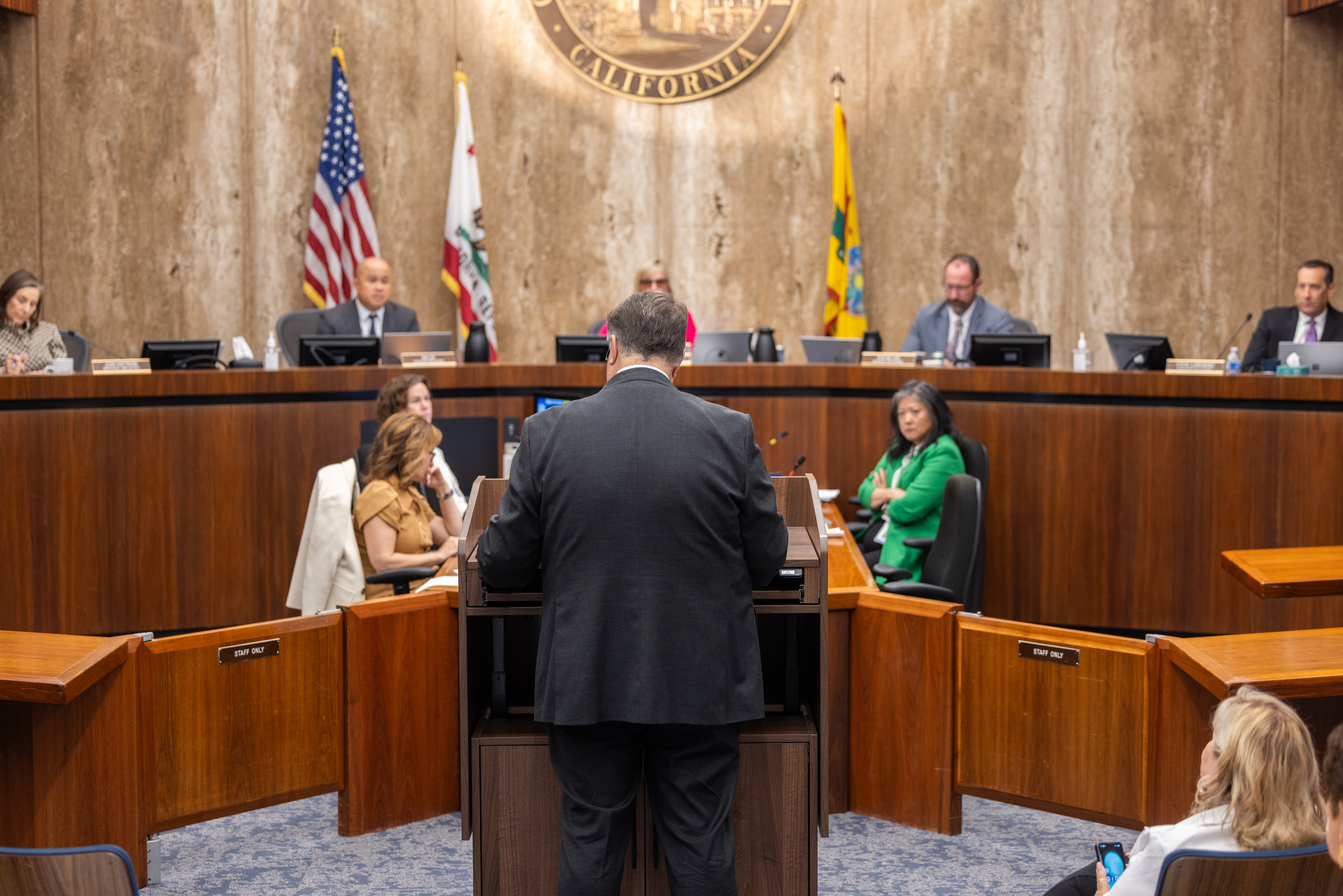
On February 10, following increased scrutiny of the Santa Barbara Sheriff’s Office’s significant overtime payouts, the Santa Barbara County Board of Supervisors voted to take several actions to increase fiscal accountability.
In addition to initiating official audits of the county government’s top five overtime-incurring departments — including the Sheriff’s Office and four as-yet-unidentified departments — and increasing reports on Sheriff’s Office overtime from quarterly to monthly, the board (on Supervisor Joan Hartmann’s suggestion) directed staff to research and report on its authority to create an Inspector General for fiscal and administrative oversight of the Sheriff’s Office, citing California statute AB1185. The Inspector General would function “like a circuit breaker on a runaway system,” Hartmann said. With Steve Lavagnino having left the meeting early due to personal emergency, the board voted 4-0 to accept these recommendations and several others made by the County Executive Office.
Sheriff’s Office overtime costs have been a longstanding budgetary woe for the county, but in recent years, the payouts have been exceptionally high. In fiscal year (FY) 2024-25, overtime costs reached $20.4 million — up from $12.4 million in FY 2021-22. Earlier this month, county jail custody sergeant Segun Ogunleye was arrested, removed from his position, and charged with 114 criminal counts pertaining to alleged time-card fraud, including misappropriation of public funds and false entries in records. But while Ogunleye may be an unusual case — the majority of overtime coding is fully permitted under existing department regulations and union agreements — the larger problem is widespread. Last year, some 29 employees earned more in overtime than their base salaries. The department’s top overtime earner received $170,000 in overtime.
If current trends continue, the Sheriff’s Office could have a budget deficit of $9 million by the end of this fiscal year, according to a review by the county Auditor-Controller. This comes as the county faces a $66 million budget deficit over the next few years, largely due to state and federal funding cuts.
“A responsible manager has to manage within one’s budget, and that just hasn’t really happened,” Hartmann said.
Presenting the Auditor-Controller’s findings to the board, Assistant County Executive Officer Tanja Heitman laid out the specifics of the overtime excess. One major cause is the frequent application of paid leave, whether sick, vacation, or other, toward overtime thresholds. This practice, which is allowed under the Sheriff’s Office’s current Memorandum of Understanding with the county, was noted on 36 percent of timesheets reviewed by the Auditor-Controller and resulted in $5.9 million in overtime costs.
Another factor impacting overtime costs is the use of standby status. Workers on standby are paid a $4 hourly wage to remain available to work on short notice; if called in, they are eligible for “portal-to-portal” compensation, which pays out additional compensation for commute time. Heitman said the auditor found “irregularities” around portal-to-portal compensation billing, with employees consistently logging three hours of travel despite varying distances between their housing accommodations and work locations. The department has taken steps to curb the misuse of portal-to-portal compensation, Heitman added.
A pattern of trainees working mandatory overtime and management receiving “hidden overtime” in the form of assignments coded as “extra help” also increased costs.
Sheriff Bill Brown cited persistent struggles with recruitment and retention in “the post–George Floyd era” as causes for the overtime excess. He also argued that his department is currently budgeted below adequate staffing needs and appealed to the notion of public safety.
“When it comes to the custody operations, those work hours are what is necessary to operate these two jails 24/7, 365 days a year,” said Brown. “Now, could we cut beyond that and not spend as much money on overtime? Yes, we could, but the realities I don’t think are ones you or our constituents would want to see.”
Brown and Undersheriff Brad Welch said the Sheriff’s Office is taking several steps to reduce overtime, such as identifying “alternative staffing models,” eliminating training models that pushed trainees into mandatory overtime, and examining the transfer of certain tasks and responsibilities from Sheriff’s Office employees to nonsworn, civilian workers.
Absent from the board’s discussion was any mention of federal immigration enforcement. This was not the case in public comment; several impassioned community members, including representatives from 805 UndocuFund and Mixteco Indigena Community Organizing Project, called upon the board to prohibit the Sheriff’s Office from collaborating with Immigration and Customs Enforcement by limiting the use of county funds.
Related Posts








Premier Events
Thu, Apr 02
5:00 PM
Santa Barbara
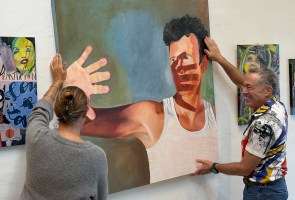
Paintings by Michael Vilkin at ART & SOUL GALLERY

Thu, Apr 09
7:00 PM
Santa Barbara
POSTPONED – Journey Within: Wisdom & Meditation with Gurudev – POSTPONED

Fri, Apr 10
2:00 PM
Santa Barbara
Music & Meditation SB – Concert April 10, 2026

Fri, Apr 03
2:00 PM
Santa Barbara
Ensemble Theatre Company Presents “A Night with Janis Joplin”

Fri, Apr 03
5:00 PM
Lompoc
Filipinos’ Contributions to Once Making Lompoc…

Fri, Apr 03
7:30 PM
Santa Barbara
Lahaina: Voices of Change

Sat, Apr 04
9:00 AM
Santa Barbara
Mesa Harmony Garden Spring Plant Sale

Sat, Apr 04
9:00 AM
Santa Barbara
Passport Fair, hosted by Congressman Salud Carbajal

Sat, Apr 04
9:30 AM
Santa Barbara
The Great Egg Hunt
Sat, Apr 04
5:00 PM
Santa Barbara
Classical Guitar at Art & Soul

Sun, Apr 05
10:00 AM
Santa Barbara
Easter Brunch at Brass Bear

Tue, Apr 07
7:30 PM
Solvang
ABRA Cadabra – ABBA Tribute Band

Wed, Apr 08
11:00 AM
Santa Barbara
True Story of Fremont Foxen & the San Marcos Pass
Thu, Apr 02 5:00 PM
Santa Barbara
Paintings by Michael Vilkin at ART & SOUL GALLERY
Thu, Apr 09 7:00 PM
Santa Barbara
POSTPONED – Journey Within: Wisdom & Meditation with Gurudev – POSTPONED
Fri, Apr 10 2:00 PM
Santa Barbara
Music & Meditation SB – Concert April 10, 2026
Fri, Apr 03 2:00 PM
Santa Barbara
Ensemble Theatre Company Presents “A Night with Janis Joplin”
Fri, Apr 03 5:00 PM
Lompoc
Filipinos’ Contributions to Once Making Lompoc…
Fri, Apr 03 7:30 PM
Santa Barbara
Lahaina: Voices of Change
Sat, Apr 04 9:00 AM
Santa Barbara
Mesa Harmony Garden Spring Plant Sale
Sat, Apr 04 9:00 AM
Santa Barbara
Passport Fair, hosted by Congressman Salud Carbajal
Sat, Apr 04 9:30 AM
Santa Barbara
The Great Egg Hunt
Sat, Apr 04 5:00 PM
Santa Barbara
Classical Guitar at Art & Soul
Sun, Apr 05 10:00 AM
Santa Barbara
Easter Brunch at Brass Bear
Tue, Apr 07 7:30 PM
Solvang
ABRA Cadabra – ABBA Tribute Band
Wed, Apr 08 11:00 AM
Santa Barbara

