

Sign up to get Matt Kettmann’s Full Belly Files, which serves up multiple courses of food & drink coverage every Friday, going off-menu from our regularly published content to deliver tasty nuggets of restaurant, recipe, and refreshment wisdom to your inbox
There are few more satisfying moments in a journalist’s life than when you realize that the story you are reporting is actually more significant than what you’d expected. If you’re lucky — or maybe there is some skill to such sniffing — you stumble upon enough of these treasures to build a decent career sharing such tales with everyone else. But that aha moment still feels the same for me today as it did in the late 1990s when my own journalism journey began.
I was reminded of that most recently while on my last day exploring the Roussillon region of southern France, which I started covering along with the neighboring Languedoc for Wine Enthusiast a year ago. I’d been there briefly during a family summer trip back in 2024 — I mentioned our Maury visit here — and got my intro to Languedoc last summer, which I wrote about here, here, and here.
But this week at the end of January was my first full-fledged dive into Roussillon, which sits just north of Spain and is also considered to be Northern Catalonia. While I never expect sympathy from friends, family, or readers when it comes to my descriptions of work trips such as this, it proved to be a rather exhausting, jam-packed week of dawn-to-midnight appointments without any real breaks. Aside from the usual cellar visits, vineyard tours, and wine-fueled meals, this trip included a visit to the organic wine fair Millesime Bio in Montpelier and attending a regenerative farming gathering at Domaine Lafage, which is what prompted and largely paid for my trip.
There was, of course, plenty of wine to taste, typically carignan, syrah, grenache, and mourvèdre in the red category. The whites were even more diverse and, at least for most American palates, more obscure, including grenache gris, grenache blanc, macabeo, vermentino (now officially called rolle here), a smattering of carignan blanc, and then two types of muscat (petit grains and Alexandria) that usually go into sweet wines.
These are all grown across a fascinatingly diverse landscape of distinct soils, aspects, and styles, making for a rather endless shower of interesting and often stellar wines, many of which barely exceed $15 a bottle. Expect more wine-focused stories about the Roussillon in the months to come.
But these French Catalonians were perhaps equally proud of their culinary treats, meaning that my meals were loaded with snails, shellfish, saucy white fish, thick blood sausage, foie gras, veal tartare, pig cheeks, and a savory stew of cabbage, veggies, and multiple meats called escudella catalan. Oh, and of course cheese and lavish desserts and more cheese.
By the sixth day, my reliably steel-lined stomach was rumbling through the night and I was craving salad. I even mentioned to my escort that morning, Eric Aracil from the Wines of Roussillon trade group, that I didn’t have much of an appetite. He either didn’t hear or smartly ignored me, for we were about to share lunch at one of Europe’s epicurean epicenters — yet one that very few people outside of this region seem to know.
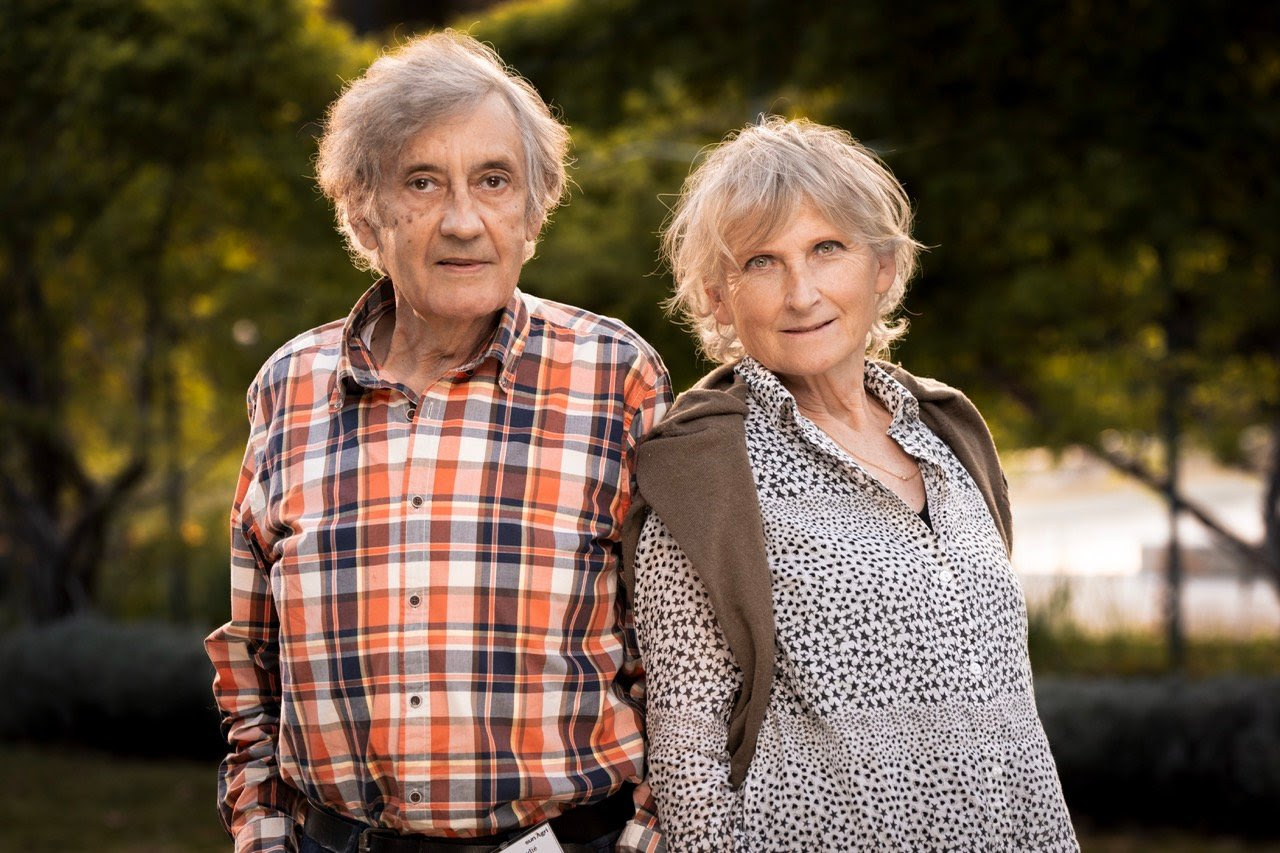
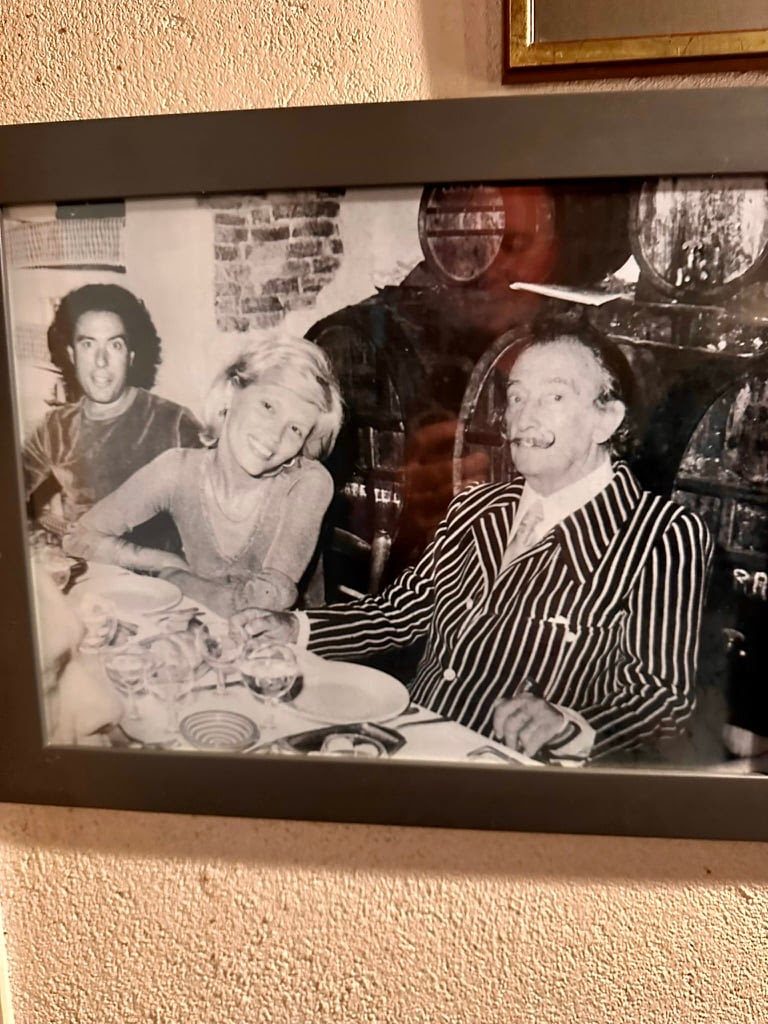
I’d never heard of Domaine de Nidolères before, nor were the names Martine and Pierre Escudié familiar at all. But upon entering their quaint country home outside of Tresserre and seeing photos of the couple with Salvador Dali and famous European movie stars, I knew there was much more to their story than a simple bed & breakfast with winery.
Martine told us to sit whenever, because the restaurant — where she tends to be the sole cook, server, and so forth — was only open for us that day. There’d been a regional wine meeting that morning, which required her attendance, and then she’d be off to prune her vines — they own more than 30 hectares — that afternoon once we were done eating. She didn’t want any more guests today.
As we sat down, Eric explained that Pierre’s recent health issues prevented him from doing much of anything anymore, so Martine was now in charge of it all. It also sounded like their son, who would be the ninth generation vintner in the family, was only marginally involved without much interest in taking over. Martine had always been intimately involved in most aspects of the estate, but was best known for running this bed & breakfast and restaurant since 1993. (Here’s a short video about her.)
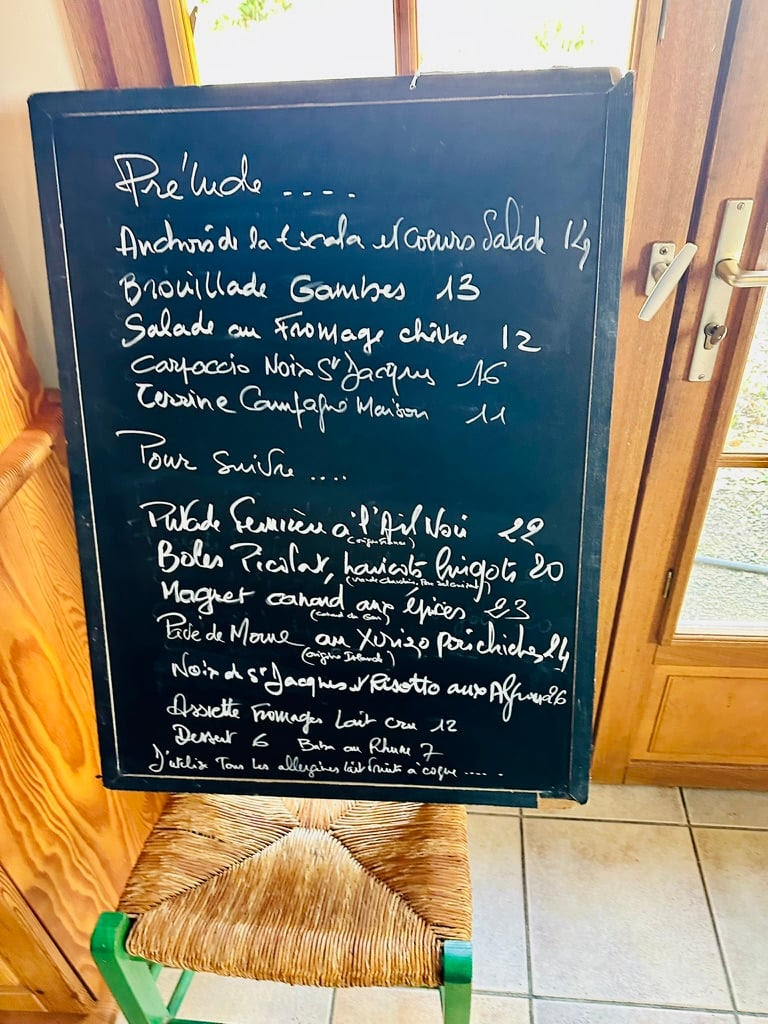
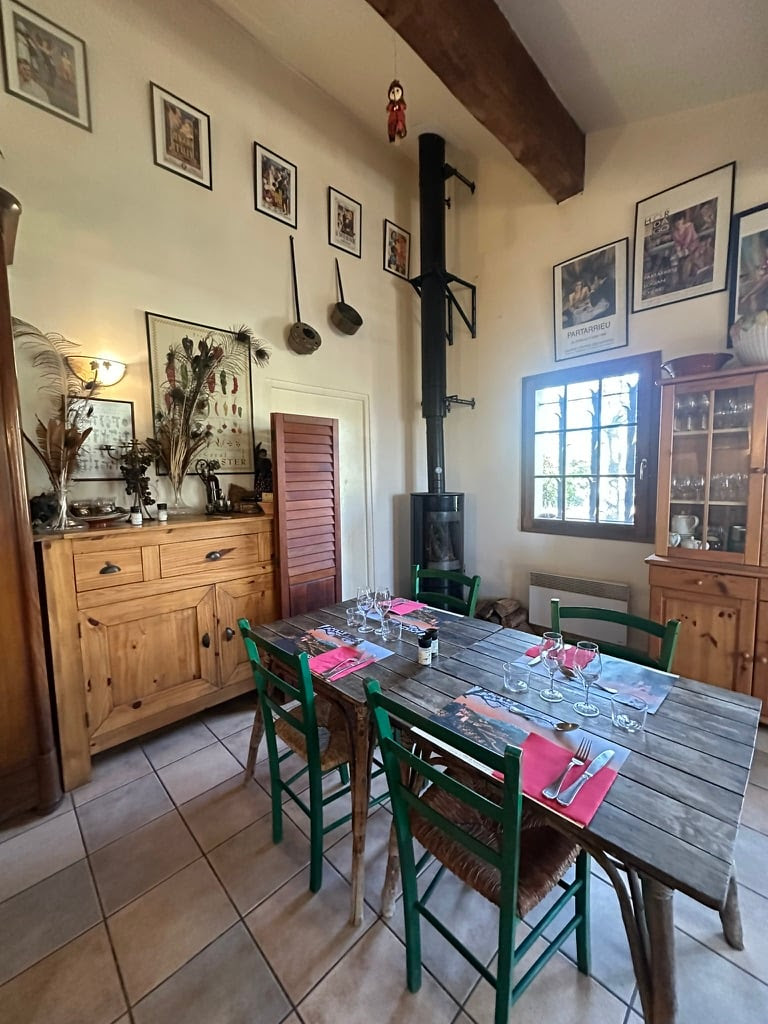
Though it was empty that day aside from us, the restaurant was still fully functional, reliant on reservations usually made a couple days in advance. The menu, written on a chalkboard, changed regularly with the seasons, and focused primarily on traditional Northern Catalonian cuisine, the type that had been stuffing me all week. But as I’d quickly learn, Martine’s deft hand in the kitchen gave a delicate lightness to even the richest dishes, causing me to believe I was in the presence of some unsung greatness.
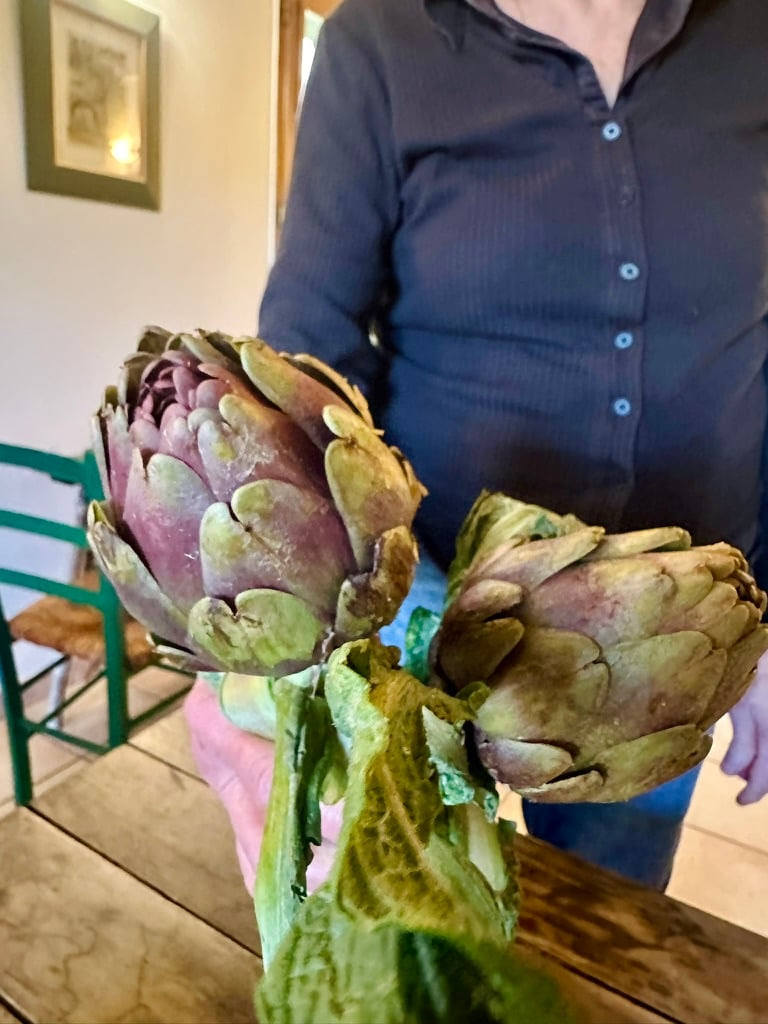
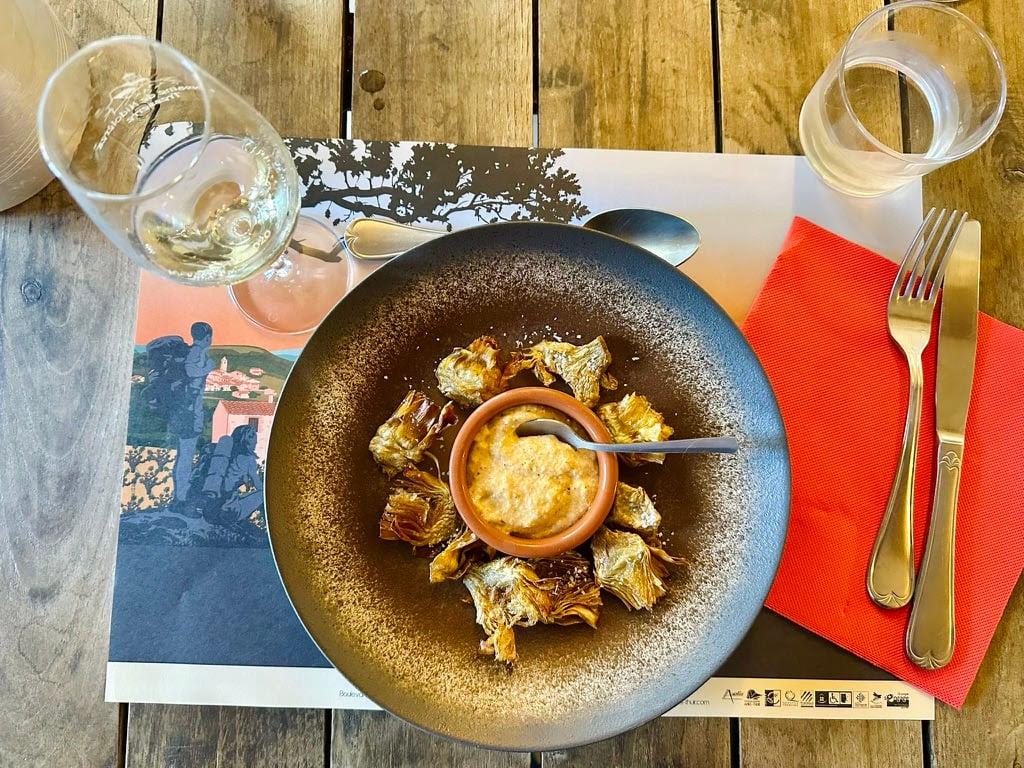
We started with the season’s first harvest of tiny purple artichokes, known as violettes de Provence in France. Their little hearts were fried just to the point of crispness, retaining an airy, almost floating texture. We dipped them into a piquant but smooth romesco-type sauce made with pine nuts, garlic, and a peppercorn whose mouth-buzzing sensation was exactly like a Sichuan peppercorn. (After she let me try some, I thought the peppercorns must be the same prickly ash tree fruits from China, just grown here.)
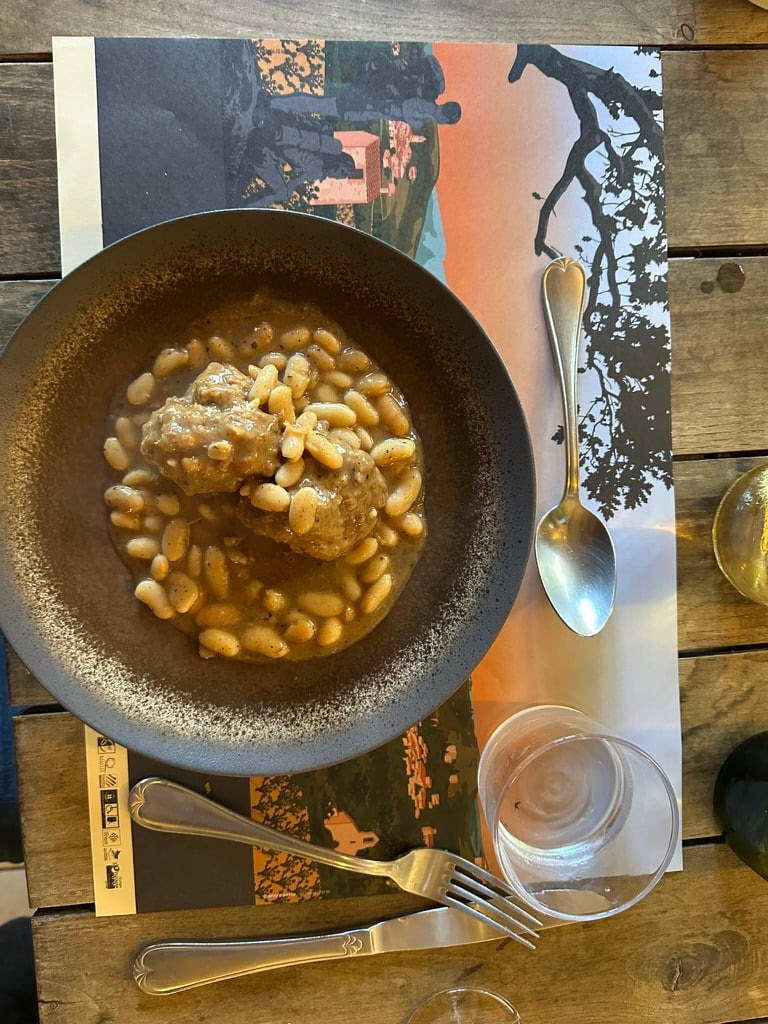
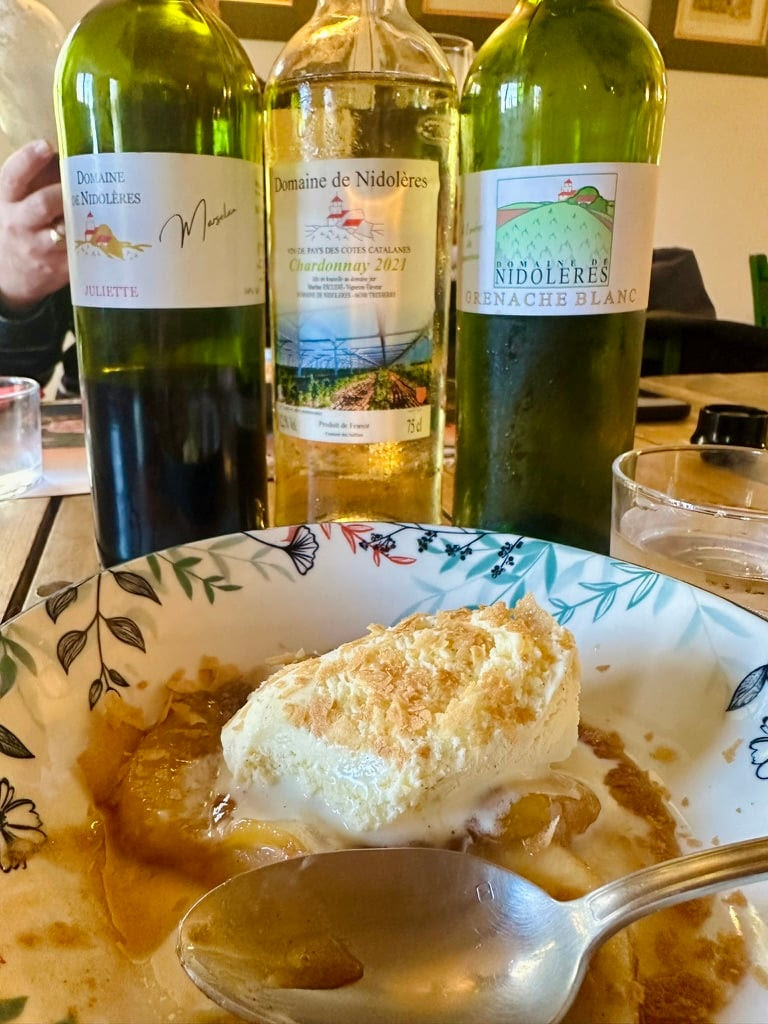
The main course was boles de picolat, two tangerine-sized meatballs made of beef and pork, sitting in a gravy of white beans that were dusted in cinnamon. I was suddenly hungry again, enticed by their hefty chew and brilliant balance of spices. Dessert was pear, ginger, and vanilla ice cream atop a crumpled cookie.
Along the way, Pierre joined our table, and we tried the Nidolères wines, specifically chardonnay, grenache blanc, and marselan, the cross between grenache and cabernet sauvignon that is gaining some popularity here. They were all good but the bottles really took a backseat to the bites.
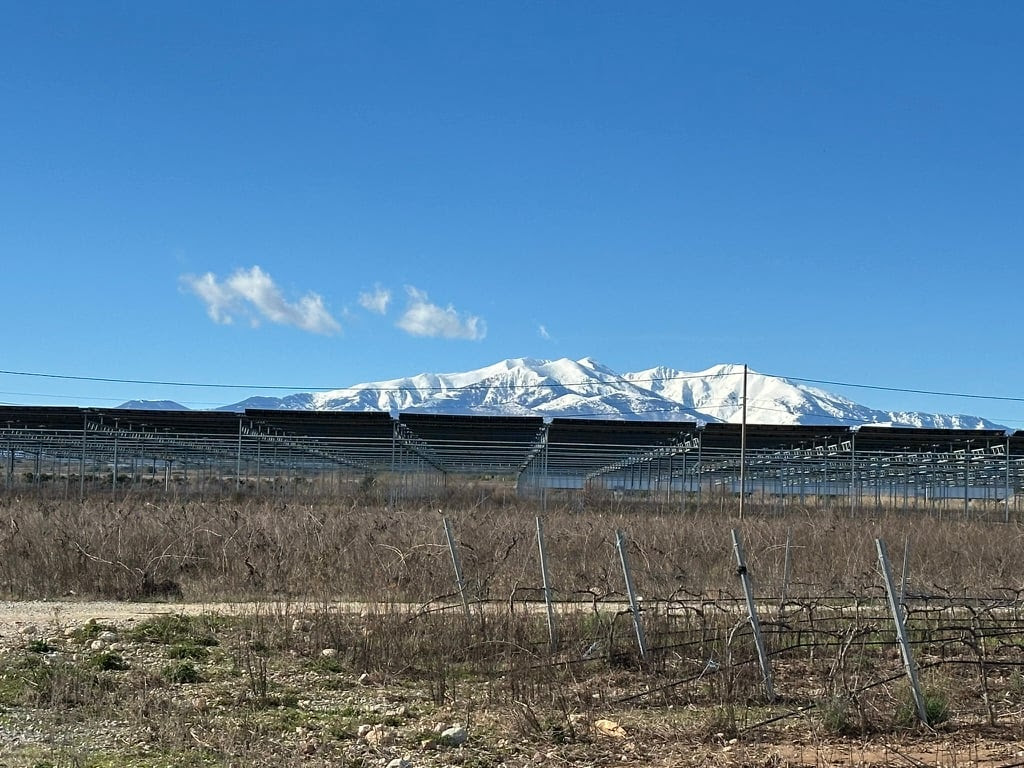
Though our meal and setting was steeped in history and tradition, Nidolères also sits at the forefront of viticultural innovation. Just steps from the auberge are two expanses of solar panels towering above vineyards, all leading to a small power plant also on site. The panels’ angles shift automatically to best capture the sunshine while simultaneously shading the vines from the ferocious summer rays that are increasingly damaging to this region as the climate warms.
Domaine de Nidolères was in fact the world’s first agrivoltaic power plant when the first four-and-a-half hectares of panel and plant were installed in 2017, apparently to some local ridicule. Following their first vintage of these vines in 2021, the Escudiés doubled down, doing the same photovoltaic-vineyard combination on nearly another four hectares in 2023.
The project remains successful from an energy generation and grape-growing standpoint, but it’s harder than ever to sell wine now. Add to that Pierre’s inability to help and not much other family support, and Martine looks very overwhelmed, especially for someone who’d otherwise be approaching retirement age.
As much as I was happy to have stumbled into this French national treasure — one that I did find out has been lauded in the French press over the years — I realized that I was catching this magic in its waning years, as the entire future of Domaine de Nidolères sits in doubt. As Eric confirmed as much, he seemed to get a bit misty about the whole thing, and I understood why.
Given all the current responsibilities, Martine is only able to escape to Paris about 10 days per year for fun, though that usually involves the work of selling wine too. As she explained with a smile, “I don’t have any life, in fact.”
Meanwhile, she’s bringing life to the Roussillon by nourishing folks such as myself, with her welcoming spirit as much as her excellent cooking. It’s worth the trip alone.
Celebrating Jake Beckett’s Life
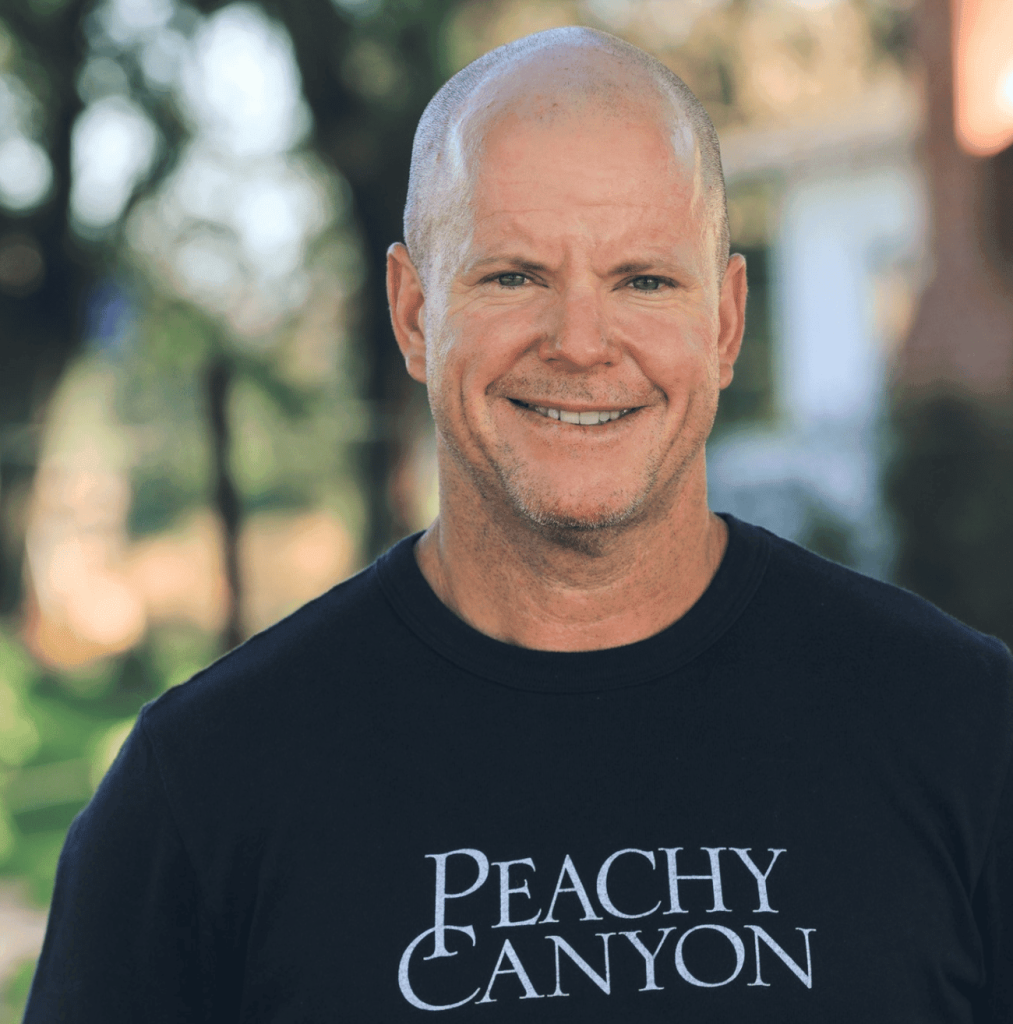
Paso Robles is still reeling from the shocking death of Jake Beckett, whose parents founded Peachy Canyon Winery. His celebration of life will be on Fri., Feb. 27, 1-4 p.m., at the Riboli Family Winemaking Facility in Paso Robles.
Family and friends are warmly invited to gather, share stories, laughter, and memories, and celebrate a life so well lived. They are asking people to RSVP. Memories and photos may also be shared through A Remembered Life.
From Our Table
Here are some food & drink stories you may have missed:
- Will the Michelin Guide’s foray into wine affect Santa Barbara wine country? We asked and got answers.
- Drover’s Doughnuts opened on Calle Real in Goleta. My family has enjoyed the savory, bagel-like creations, which make great breakfast sandos.
Related Posts




Premier Events
Fri, Oct 23
2:00 PM
Santa Barbara
Music & Meditation: Clarinetist Nancy Mathison & Pianist Antonio Artese

Mon, Oct 19
7:00 PM
Santa Barbara
PFLAG Santa Barbara October Meeting: “Schools and Inclusive Practices – What creates a safe and inclusive school?”

Tue, Oct 20
7:00 PM
Santa Barbara
Get Out the Vote Night @ SOHO, Music Performance by Loyal Defense Workers

Wed, Oct 21
6:30 PM
Santa Barbara
Teflon Comedy/Non-Schtick – Evening of Comedy

Thu, Oct 22
5:30 PM
Santa Barbara
Best Fest: A Celebration of the Best of Santa Barbara® Readers’ Poll 2026

Thu, Oct 22
6:00 PM
Santa Barbara
Chaucer’s Books Author Talk & Signing- Daniel M. Jaffe “Russian Silhouette: A Memoir of Activism and Identity”

Fri, Oct 23
5:30 PM
Solvang
Solvang Haunted House and Street Fair

Fri, Oct 23
7:00 PM
Santa Barbara
Beth Amine’s 20th Anniversary Wildcat Dance Variety Show

Fri, Oct 23
9:00 PM
Santa Barbara
Casa de la Raza Fundraiser: Brasscals! with DJ Darla Bea

Sat, Oct 24
10:30 AM
Santa Barbara
Picnic in the Cemetery: A Live Historical Event
Fri, Oct 23 2:00 PM
Santa Barbara
Music & Meditation: Clarinetist Nancy Mathison & Pianist Antonio Artese

Mon, Oct 19 7:00 PM
Santa Barbara
PFLAG Santa Barbara October Meeting: “Schools and Inclusive Practices – What creates a safe and inclusive school?”
Tue, Oct 20 7:00 PM
Santa Barbara
Get Out the Vote Night @ SOHO, Music Performance by Loyal Defense Workers
Wed, Oct 21 6:30 PM
Santa Barbara
Teflon Comedy/Non-Schtick – Evening of Comedy
Thu, Oct 22 5:30 PM
Santa Barbara
Best Fest: A Celebration of the Best of Santa Barbara® Readers’ Poll 2026
Thu, Oct 22 6:00 PM
Santa Barbara
Chaucer’s Books Author Talk & Signing- Daniel M. Jaffe “Russian Silhouette: A Memoir of Activism and Identity”
Fri, Oct 23 5:30 PM
Solvang
Solvang Haunted House and Street Fair
Fri, Oct 23 7:00 PM
Santa Barbara
Beth Amine’s 20th Anniversary Wildcat Dance Variety Show
Fri, Oct 23 9:00 PM
Santa Barbara
Casa de la Raza Fundraiser: Brasscals! with DJ Darla Bea
Sat, Oct 24 10:30 AM
Santa Barbara



You must be logged in to post a comment.