
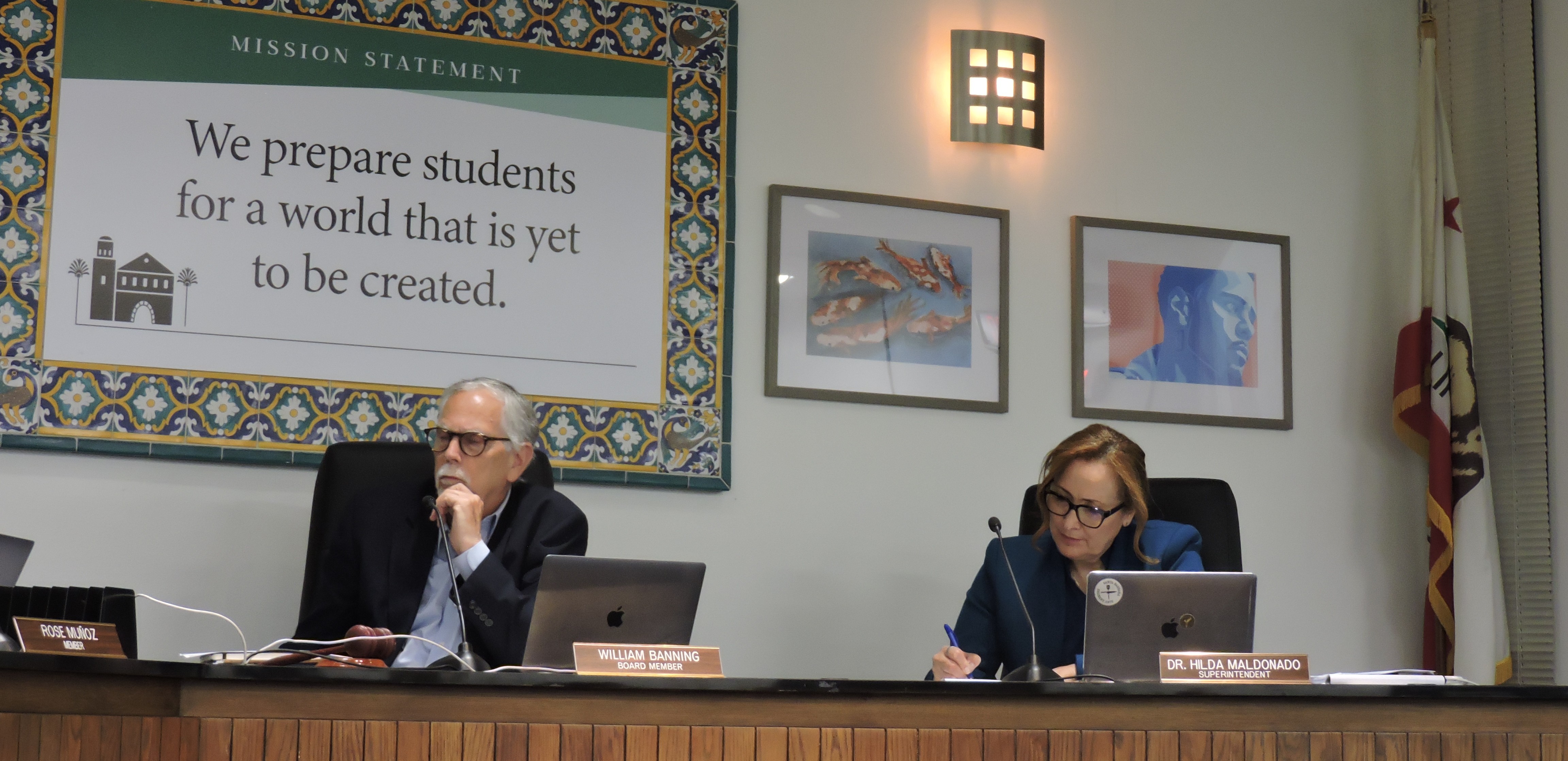
The Santa Barbara Unified School District has been grappling with a four-year, $60 million deficit.
But management just got raises.
It played out with the adoption of the district’s more than $250 million budget at the school board’s last meeting on June 23.
Parents Michele and Todd Voight — active members of the San Marcos High School community — wrote to the Independent and spoke during the meeting, saying the board was voting on a budget that “protects executive pay” while “cutting into classrooms and student services.”
Management compensation is up 35 percent, they noted, including nearly $150,000 in new raises this year alone.
The district’s budget is laid out in a giant black binder that even the boardmembers seemed to find daunting. The biggest piece of the pie goes to salaries and raises for employees, totaling around $222 million.

That includes a $1,500 cost-of-living raise for teachers next year. Additionally, “classified” employees — such as janitors and teacher’s aides — will receive a 2.5 percent raise.
But thanks to the “me too” clause in their labor contracts, district management, including Superintendent Hilda Maldonado, automatically receive the same raises as teachers and staff.
That equates to $145,350 in raises for management and $29,750 for “confidential” employees, or administrative staff who play a role in labor relations and cannot join labor unions to prevent conflicts of interest.
Management — including the cabinet and other top administrators, such as principals — and confidential employees are not represented by a bargaining unit, so raises are lumped into one agreement, according to Conrad Tedeschi, assistant superintendent of business services. Many school districts across the state follow the same formula with “me too” clauses for management.
However, the Voigts argued that executive pay eats up too many of the district’s dollars. Superintendent Maldonado’s total compensation, including salary and benefits, is approximately $370,000 a year.
Additionally, a new cabinet member, Marianne Hew, was recently hired by the district. Hew will be the district’s new assistant superintendent of family and student services, with an annual salary of $217,209 on a two-year contract. She is succeeding ShaKenya Edison, who served in the position for four years.
Meanwhile, Michele Voigt said, dozens of teachers and other staff received layoff notices this year (only two staff actually lost their jobs, however). She called it unfair and unsustainable.
“What’s keeping this budget afloat? It’s not sustainable revenue; it’s not structural reform. It is reserves, and those reserves are vanishing,” she said.
She said that since 2003, the district has lost around 60 percent of its reserve funds.
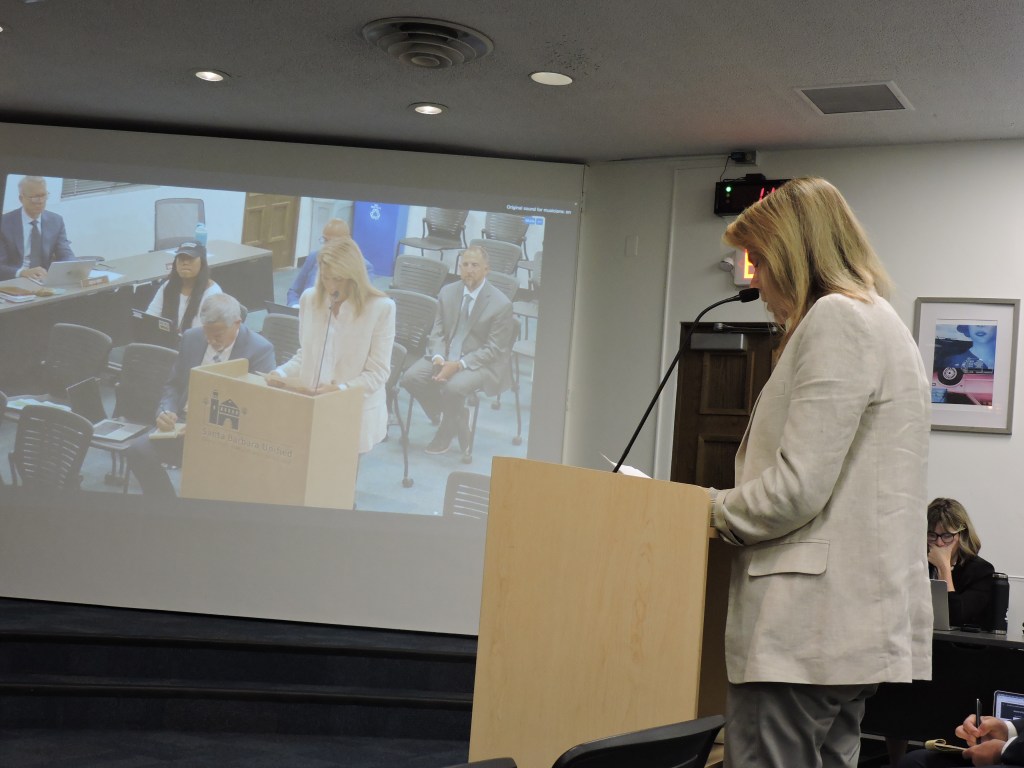
“This budget you’re being asked to adopt reflects a four-year cumulative deficit of over $60 million, with $34 million in losses last year, over $20 million this year, and more projected to follow,” she said. “This trend is a bump? It’s not a bump; it’s a cliff.”
Todd Voigt, who served on the district’s Finance Committee, urged the board to pursue executive-level spending cuts or spending freezes on general and administrative expenses, specifically within the superintendent’s office, “until the budget is balanced, at least,” he said.
“To the best of my knowledge, the board has yet to target the balanced budget goal … but the district can improve from here.”
In response to these comments, school board president Bill Banning asked Tedeschi, “Knowing the intricacies of how these pieces fit together, do you believe that some of the alarmist statements being made to the board from public comment are indeed things that we should be panicked about?”
Tedeschi said, “I don’t know if we should necessarily be panicked about them,” but, he added, “I do think it warrants looking into it.” There may be expenses or contracts that can be reduced, he noted.
“It’s really getting into the why, and I think that’s the work we’ll do in the Finance Committee.”
“If the public is very concerned with general administrative expenses, we need to dig in and get to the bottom of it,” he added.
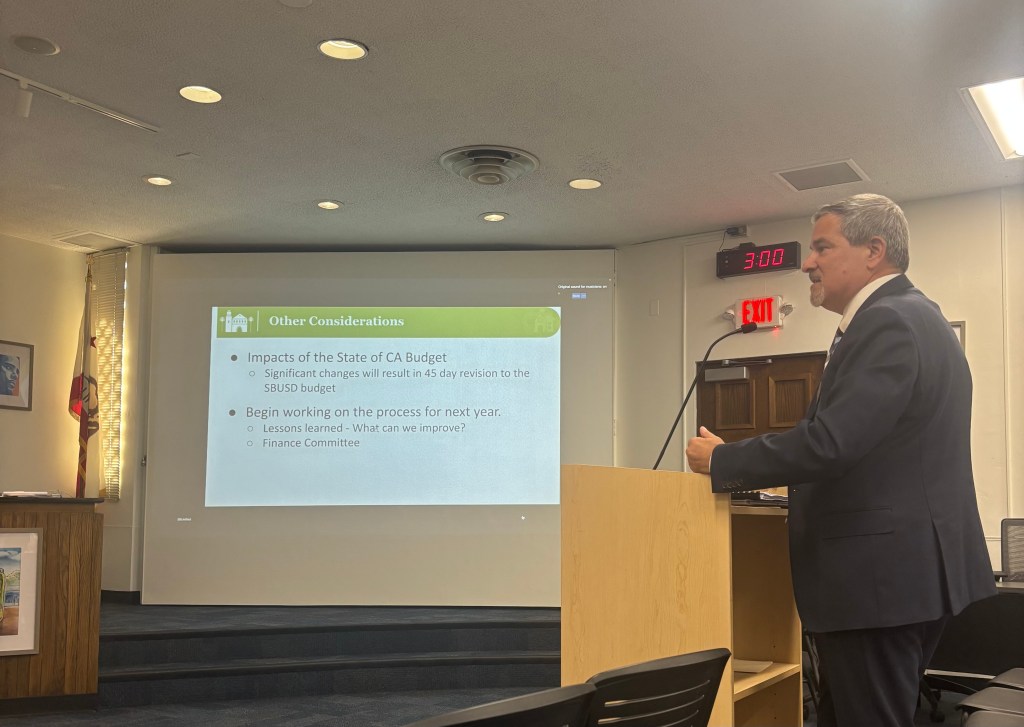
In his presentation of a multi-year projection to the board, Tedeschi said that after grappling with two more deficit years, the district hopes to trend toward a small surplus in the 2028-29 school year. He said he would be focused on aligning the Finance Committee’s decisions and recommendations with the board and cabinet.
“Looking at: What do we value most?” he said. “What’s working and not working?”
Ultimately, the board voted 4-1 to approve the budget. Boardmember Celeste Kafri voted no, stating that she wanted a timeline for a balanced budget before she could approve it.
Boardmember Sunita Beall said that looking at general and administrative expenses was a good place to start, but they will likely have to dig into other “painful” areas to resolve the deficit, as well.
“We’d love to spend money on everything. Nobody is spending money on lollipops,” she said. “We’re spending money on student electives, their mental wellness, their education, and so where we cut is going to have an impact. And we’d like to do it thoughtfully and not just start slicing and dicing.”
This week, the state just passed its budget, which has consequences for other districts statewide but does not as heavily impact Santa Barbara Unified, since it is a community-funded district (based on property taxes).
However, some additional revenue may come from the state for the district’s state-funded programs, such as special education, Tadeschi said at the meeting. If so, any significant changes will result in a revision to the district’s budget, which he would present to the board in August.
Related Posts






Premier Events

Sat, Oct 10
9:00 AM
Santa Barbara
Treble Clef Chorus Fall Treasure Sale

Tue, Oct 06
All day
Santa Barbara
New and Emerging Technologies in the Hands of Artists: Brave New Work 2.0

Tue, Oct 06
6:00 PM
Santa Barbara
Chaucer’s Books- Horror Stories with Joseph Fink

Wed, Oct 07
7:30 PM
Santa Barbara
Ensemble Theatre Company Presents: “Buyer & Cellar”

Wed, Oct 07
7:30 PM
Santa Barbara
The Theatre Group at SBCC Presents: “CLUE”

Thu, Oct 08
7:00 PM
Santa Barbara
“A Night of Blues” with Morganfield Burnett

Fri, Oct 09
7:00 PM
Santa Barbara
Paseo Nuevo Spooky Movie Nights

Sat, Oct 10
9:00 AM
Santa Barbara
SBNC 1st Annual Health & Wellness Fair

Sat, Oct 10
1:30 PM
Goleta
🌴 Another Day in Paradise at S.B’s Premier Ice Rink

Sun, Oct 11
7:00 AM
Ojai
Flamenco Guitarist Tony Ybarra

Sun, Oct 11
10:00 AM
Santa Barbara
18th Annual Domestic Violence Solutions Brunch
Sat, Oct 10 9:00 AM
Santa Barbara
Treble Clef Chorus Fall Treasure Sale
Tue, Oct 06 All day
Santa Barbara
New and Emerging Technologies in the Hands of Artists: Brave New Work 2.0
Tue, Oct 06 6:00 PM
Santa Barbara
Chaucer’s Books- Horror Stories with Joseph Fink
Wed, Oct 07 7:30 PM
Santa Barbara
Ensemble Theatre Company Presents: “Buyer & Cellar”
Wed, Oct 07 7:30 PM
Santa Barbara
The Theatre Group at SBCC Presents: “CLUE”
Thu, Oct 08 7:00 PM
Santa Barbara
“A Night of Blues” with Morganfield Burnett
Fri, Oct 09 7:00 PM
Santa Barbara
Paseo Nuevo Spooky Movie Nights
Sat, Oct 10 9:00 AM
Santa Barbara
SBNC 1st Annual Health & Wellness Fair
Sat, Oct 10 1:30 PM
Goleta
🌴 Another Day in Paradise at S.B’s Premier Ice Rink
Sun, Oct 11 7:00 AM
Ojai
Flamenco Guitarist Tony Ybarra
Sun, Oct 11 10:00 AM
Santa Barbara


You must be logged in to post a comment.