
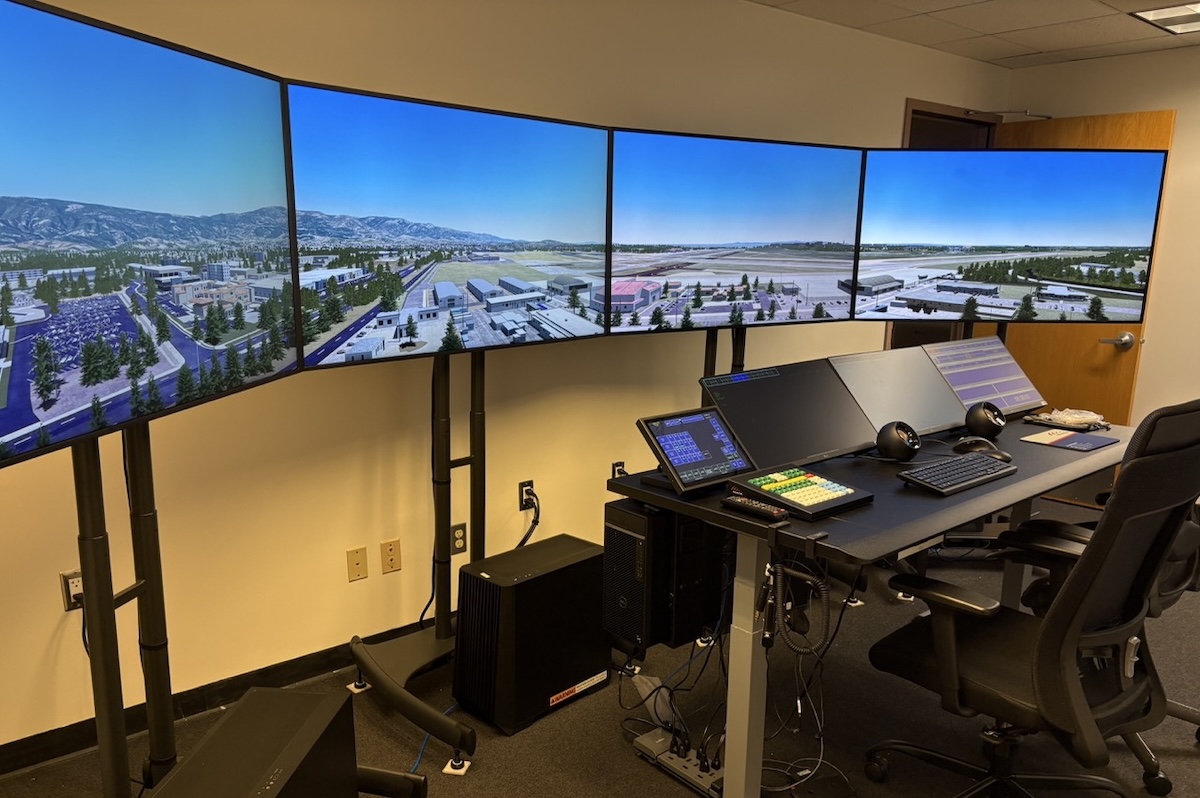
Just before the Fourth of July, Santa Barbara airport’s air traffic control tower welcomed a state-of-the-art Tower Simulation System (TSS). More efficient than traditional tabletop methods, this new system will be used in training and updating both new and experienced controllers. One of almost 100 systems installed across the country, Santa Barbara is home to the first TSS nationally to be fully funded by Trump’s Big Beautiful Bill.
“For the first time, without leaving the facility, we’ll be able to immerse trainees in highly realistic scenarios that replicate the airport’s unique operating environment, allowing them to build experience and confidence before working live traffic,” said Jeffrey Allen, SBA air traffic manager.
As of September 2025, a team of 21 certified air traffic controllers (three less than in 2024), one certified controller in training, and 11 developmental controllers work in Santa Barbara’s airport tower. Both certified controllers in training and “position-qualified” developmental controllers are able to assist certified controllers in their tower duties when staffing is low.
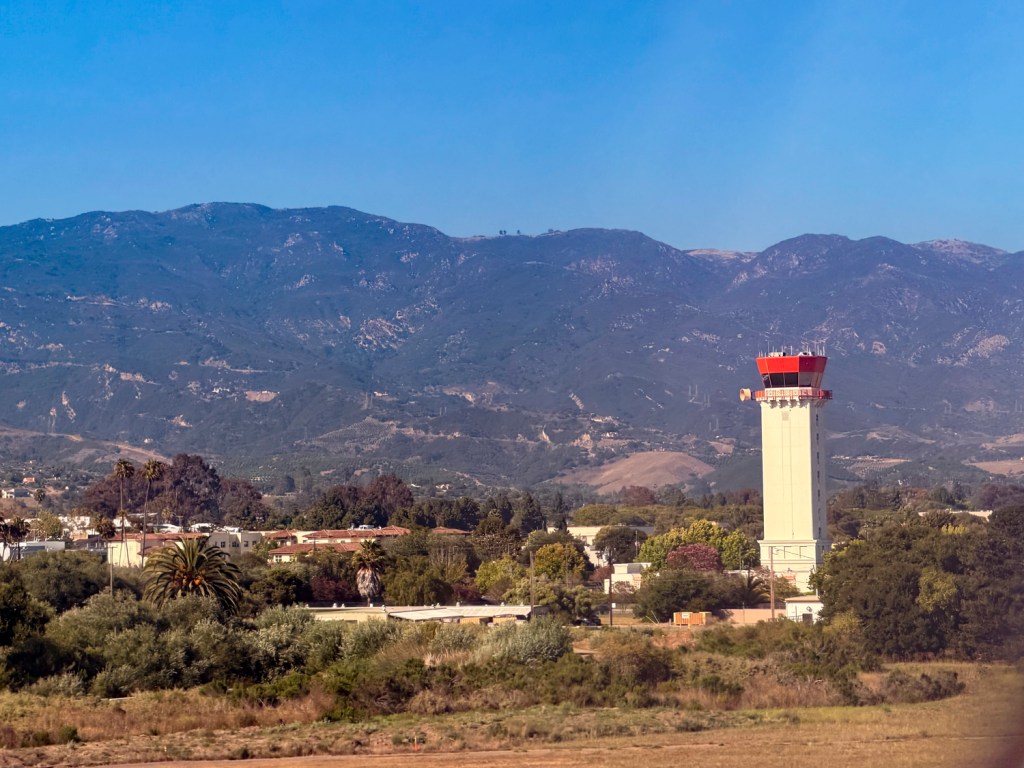
Together, this tower team directs commercial and private air traffic on SBA’s runways, accounting for the safety of almost 1.5 million commercial passengers in 2025.
The TSS is run like a flight simulator, but in reverse, with the operator sitting in the controller’s chair. A wall of monitors displaying images of the SBA taxiways surround an office desk, while speakers radio in calls from an emulated pilot. SBAs can be run by a remote operator, or an AI virtual pilot that uses voice recognition and automated responses.
The $140,000 system simulates Santa Barbara’s runways day and night, through various weather and visibility situations — like marine layer and extreme fog — providing “structured training scenarios that mirror real-world operations,” according to a spokesperson for the Federal Aviation Administration.
In 2021, a statistical analysis of TSS training, conducted by the private firm Ernst & Young, found that the new system could reduce the certification timeframe of new controllers by almost 30 percent. “It’s an investment not only in our workforce, but in the future of aviation safety,” said Allen.





You must be logged in to post a comment.