


FORE! “That’s the dumbest idea you ever had,” I was told. And more than once: “And that’s saying a lot.”
At issue was a Molotov cocktail of an idea I tossed out a couple weeks back suggesting the Municipal Golf Course on Las Positas Road — 108 acres of city-owned free-and-clear land — could and should be converted into capital-“A” affordable housing. Most people were nicer about it, recounting how they learned to golf thanks to the grizzled-yet-forbearing mentors they encountered on the public course which then cost only 50 cents to play. Others warned of the slippery slope that inevitably ensues whenever a camel’s nose like this is allowed under the tent. What’s next, they demanded: the city’s lawn bowling sites? Alice Keck Park Memorial Gardens?
It was the domino theory all over again.
To all of you, I say, “I hear you. And I feel you.” But sometimes, you just got to double down on dumb. This time is one of them.
Here’s my Plan B, which I stole from a well-known real estate appraiser whom I encountered while getting my ears bent in one of the many inner sanctums of Harry’s Plaza Café. “Cut the baby in half,” he said. Use only half the Muni course for housing and leave the rest for a nine-hole course. Most municipal courses, my ear bender told me, are nine-hole courses. (I have not confirmed.) After cutting the 108-acre property in half, setting aside 54 acres for the golf course and 12 for a new city wastewater treatment plant — the designated site for when rising sea levels necessitate its move — this would still leave 42 acres of city-owned land.
Depending on how you do the math, that’s eight to 12 city blocks’ worth of “free” land onto which roughly 1,100 to 1,800 units of capital-“A” affordable housing could conceivably be built.
According to the smartest back-of-the-envelope spit-baller I know, the per-unit land cost for most housing development ranges from $120,000 to $300,000. If such upfront development costs were removed from the equation — as well as the typical back-of-the-book rates of return expected by any savvy developer — that saving would bend the needle of affordability in a meaningful direction and way.
My ear-bending appraiser at Harry’s had other things to say. The location of Muni is uniquely situated for such a scheme, he said. The freeway on-ramp is just spitting distance from the site. So, too, is Adams Elementary School, which seems to be winning new awards every time you blink. As for groceries, Gelson’s and Trader Joe’s are just down the street and around the corner.
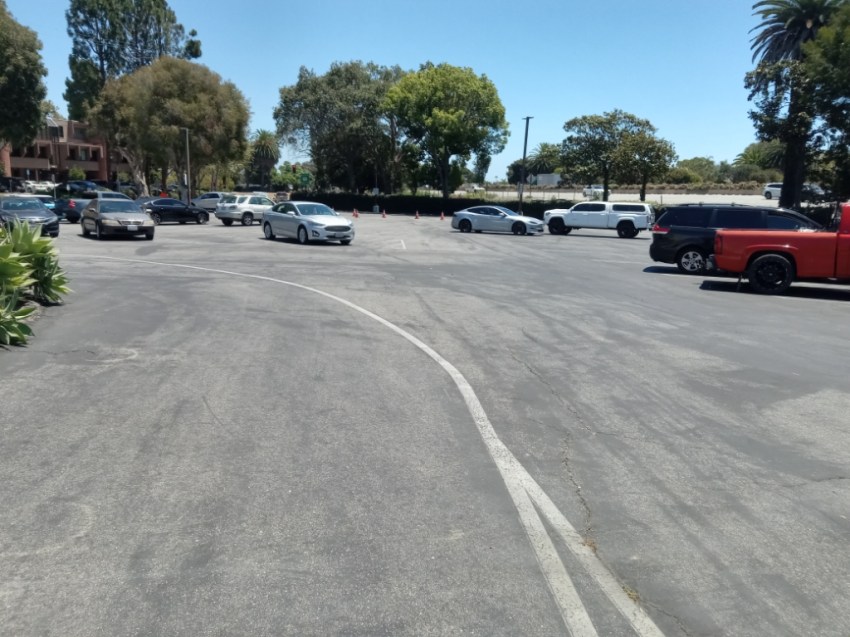
What about Earl Warren Showgrounds? many readers asked. Good question. Earl Warren is owned by the State of California, which is very adamant about telling cities like Santa Barbara what to do about housing and homelessness while steadfastly refusing to open up its grossly underutilized state parking lots — think the DMV — to the ridiculously effective Safe Parking Program, which manages various sites where people who live in cars can sleep in peace and get back inside.
Based on the most recent stats, the number of people sleeping their cars here has increased 48 percent in the last couple years. And roughly half these car-dwellers hold down full-time jobs. But the $2,000 a month they reportedly bring home is not nearly enough for that home to include a traditional roof or four walls.
Right now, the County of S.B. is spending $32 million a year — mostly from the state and the feds — on various homeless programs; a whole lot of good is getting done. The overall numbers are dropping; so, too, are the digits tabulating the chronically homeless and the numbers for homeless kids and families with kids. But the numbers for people 55 and older jumped by 7 percent, as have the numbers for kids between the ages of 18 and 24.
What we need most is capital-“A” affordable housing — maybe like they build in Europe — not market-rate housing. I don’t believe in the Tooth Fairy, and I don’t believe in trickle-down economics. Despite the heroic restraint displayed by many mom-and-pop landlords out there, Santa Barbara housing prices have been granted blanket immunity from the laws of supply and demand. Remember the city’s experimental “affordable by design” AUD rental housing program? City Hall bribed developers to build rental units with special density bonuses. And a whole lot of small rental units got built. Last I looked, it was about 700. But on average, their rents were 20 percent higher than the market rate.
Just saying.
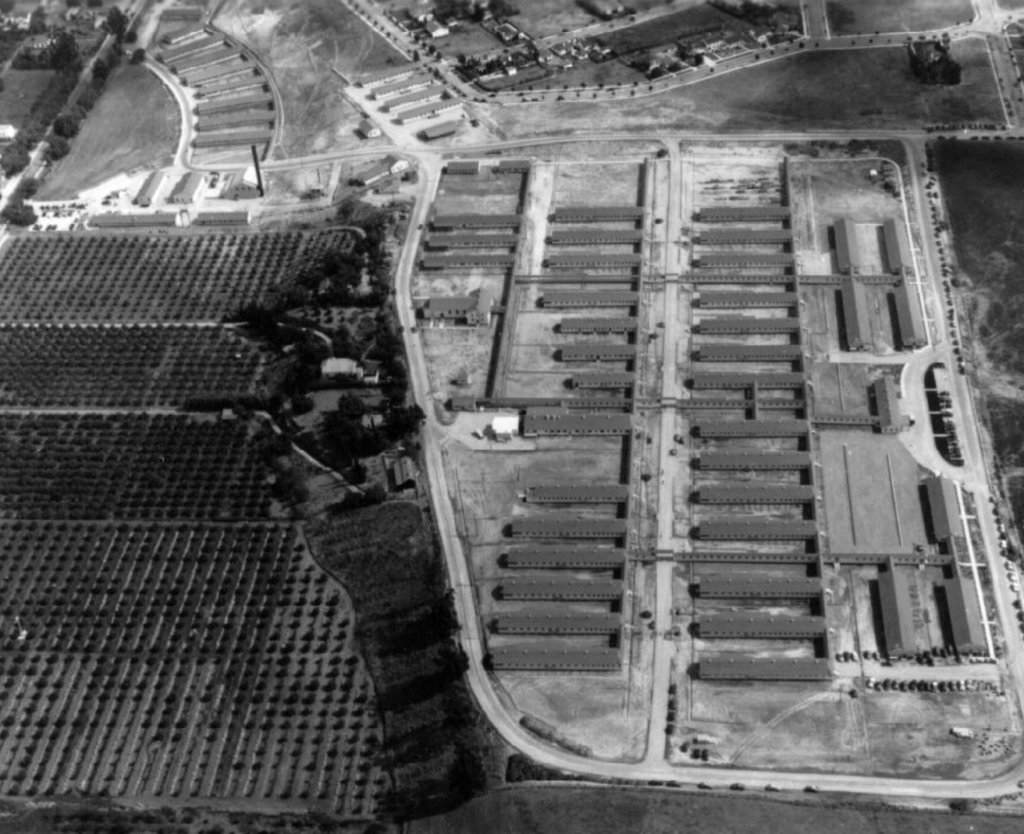
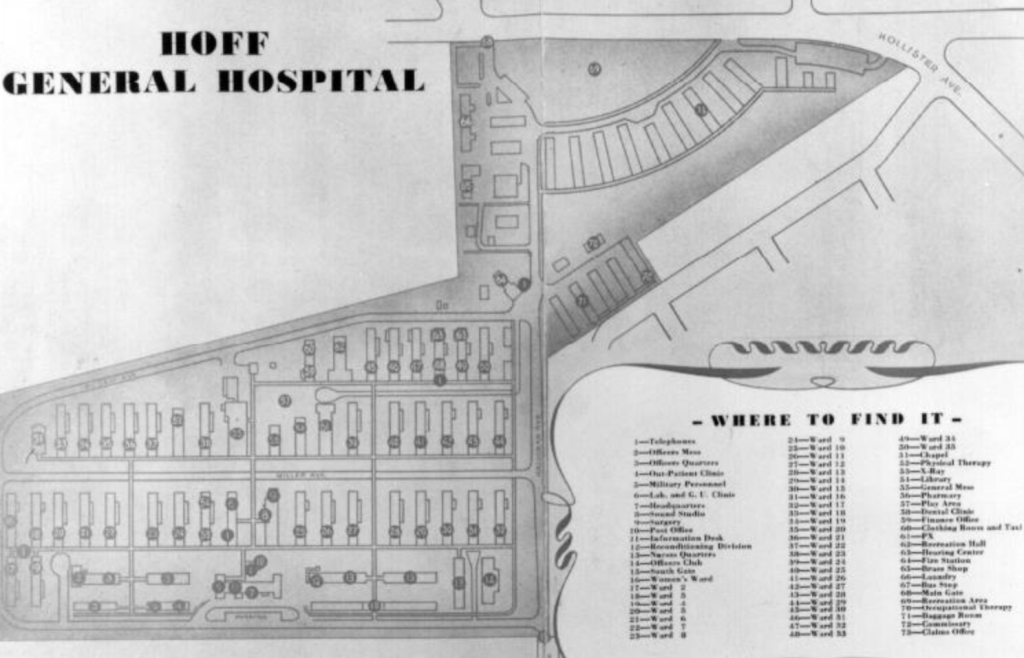
Last detail. When I got home from Harry’s, someone had emailed me a history of the Muni Golf Course before it was the Muni Golf Course. During World War II, it was the site of a sprawling military hospital complex with 1,000 temporary buildings and 500 permanent ones often referred to as Hoff Heights. It’s where a lot of wounded servicemembers were sent to recuperate. Many understandably didn’t leave when they got better. After the war, ownership of the land transferred from the Department of Defense to the Federal Public Housing Authority and then — on June 14, 1946 — to the County of Santa Barbara’s Housing Authority. Then mysteriously, 10 years later in 1956, it was transferred again, this time to the City of Santa Barbara. The golf course quickly ensued.
How this was engineered I don’t pretend to have found out. My mind races with the possibilities. Most, no doubt, are unfairly salacious. But then again, maybe not.
For the record, I got no beef with golfers. Muni provides a lot of people much-needed respite and solace at a time when both are in criminally short supply. I’m merely thinking aloud here. Can this baby be cut in half and still survive? I don’t know. But is it really so dumb to want to find out?






You must be logged in to post a comment.