

OIL’S WELL THAT ENDS WELL: I got the memo early this week. It turns out we have a 10 percent chance of being totally wiped out as a species — a human extinction event — within the next 10 years. It has something to do with AI and how the machines keep getting smarter because of something called “recursive self-improvement.” That’s not an adult ed class, it turns out.
“Hmmm,” I wondered. “What’s the upside?”
For starters, I could stop worrying about climate change. Who cares? We’ll all be dead.
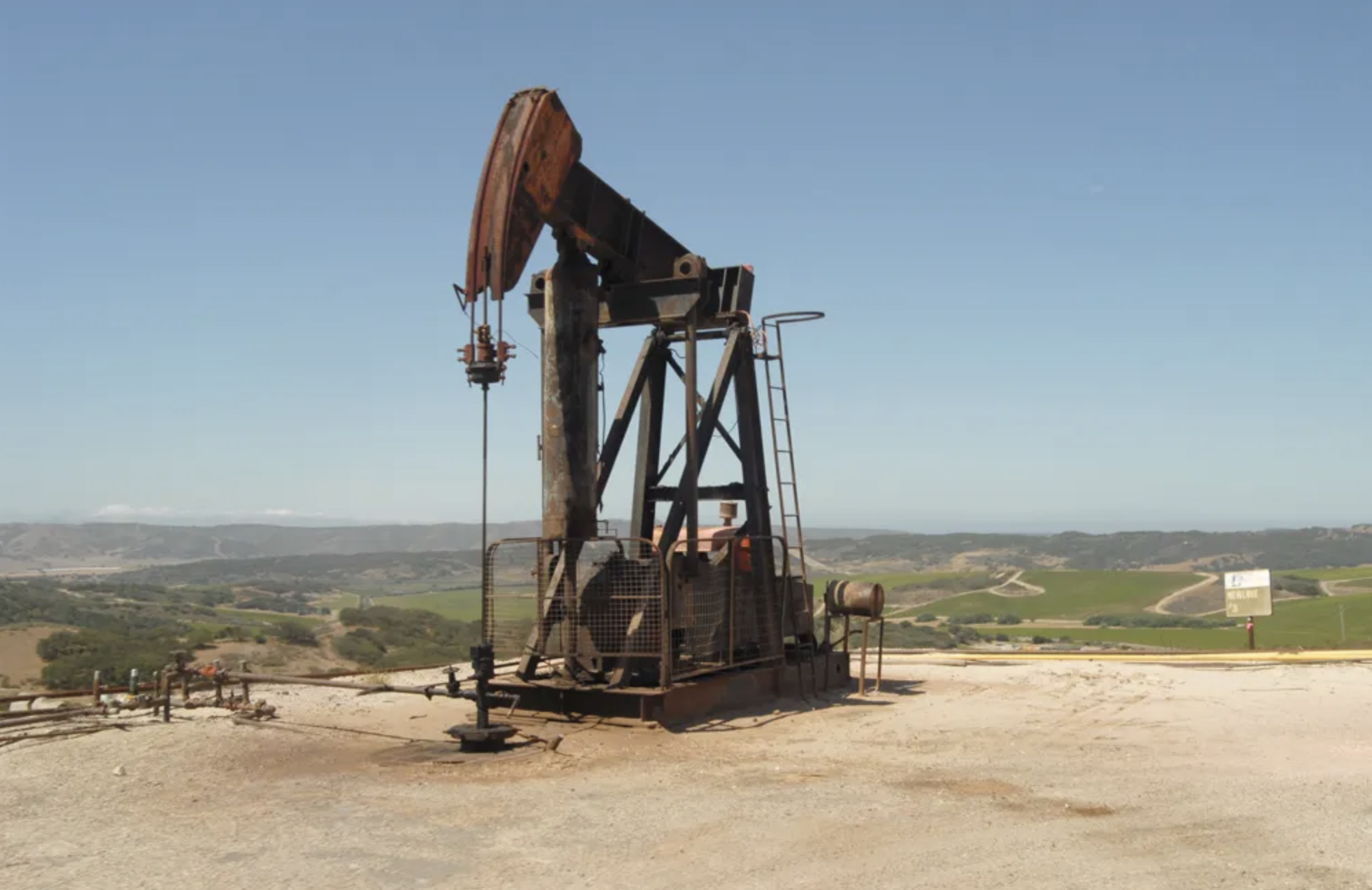
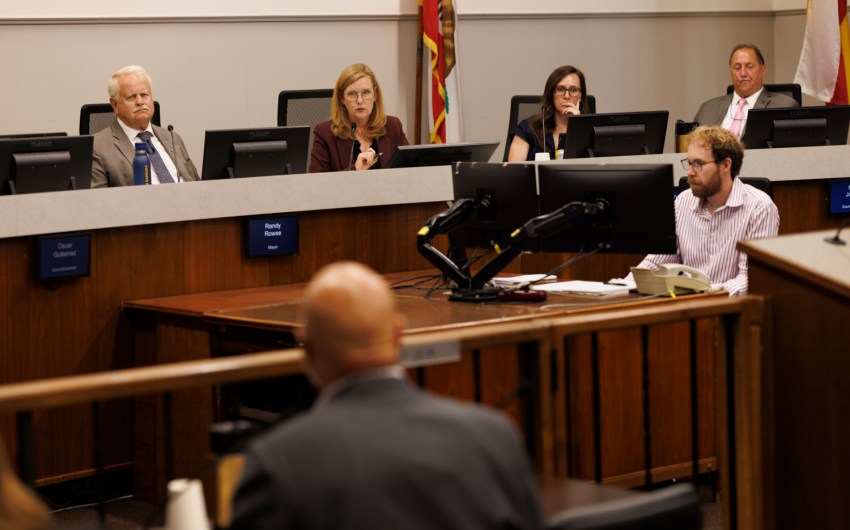
But this Tuesday, the county supervisors weren’t worrying about AI-mageddon. It was all oil, all the time. There was some magnificent speechifying. But more to each other than at each other’s throats. That leavened the five hours of intense debate before the supes voted 3-2 to ban any new oil drilling on shore.
Far more radical a proposal is the plan to pull the plug on the 1,000 onshore oil wells currently in production. That’s far from a done deal, but it’s definitely coming. You can hear the tectonic plates grinding.
For the county’s brand-new CEO Jana Petersen — now four weeks on the job — it must have felt excruciatingly familiar. The county she used to run (Boulder in Colorado) just happens to be suing ExxonMobil to collect restitution for the damage caused by climate change. A recent wildfire fueled by extreme drought and hurricane-force winds burned down 1,000 homes. That Exxon scientists confirmed the undeniable reality of climate change in the early 1970s but spent millions denying its existence for the next 25 years is central to Boulder’s case. That case, by the way, is scheduled to be argued in front of the Supreme Court on October 5.
Our supervisors insist they knew nothing of this lawsuit when they hired Petersen. But Supervisor Joan Hartmann certainly knew about Exxon’s deliberate campaign of deception and brought it up at Tuesday’s meeting.
Hartmann went on to what it looked like up close and personal. “We know exactly what a warming world looks like because we’ve already lived through it,” she said, referring to the Thomas Fire, which sent 282,000 acres in Ventura and Santa Barbara counties up in smoke. Three weeks later, she added, “A mountain of mud and boulders came down on Montecito at 20 miles an hour.” By sunrise, 23 people were dead. “That’s not a statistic here,” Hartmann stated.
It used to be that Santa Barbara could count on one major wildfire every ten years, Hartmann recounted. Now, it’s jumped to one every two years. Throw in all the torrential floods and atmospheric rivers, the odd tornado warning, summer hailstorms, dead seals and porpoises washing up on the beach like seaweed, and you get the picture: We’re not in Kansas anymore.
Or maybe that’s exactly where we are.
Hartmann’s point is that oil is already going the way of the dodo bird: We should not save it from extinction and we should not allow the industry to take us with them. There are more charging stations in California now, she said, than gas station gas nozzles. For the first time in history, renewable energy sources are cranking out more juice than coal.
Coming to the defense of the North County’s onshore oil heritage was Santa Maria Supervisor Steve Lavagnino. It would be his last hurrah in front of a packed house and a home crowd speaking about a subject he passionately believes in. He teased the young anti-oil activists using their cell phones — devices made out of oil — to read their speeches denouncing oil. Supervisor Laura Capps objected they had no choice. “That’s exactly my point,” Lavagnino replied, “We can’t live without it.”
“But they don’t want to live that way,” Capps shot back. “They want another future.”
“But they are living today,” Lavagnino retorted.
North County people don’t tell South County residents how to live their lives, he said, or how they should organize their economies. Santa Barbara gets seven million visitors a year; that’s 20,000 visitors a day, Lavagnino noted. They arrive daily on 38 flights or drive in on Highway 101. They stay in one of 5,000 rooms in 81 hotels. All this generates a lot of greenhouse gas emissions, he pointed out.
He could have added — but somehow didn’t get around to it — that people driving around in cars and trucks generate 45 percent of the county’s total greenhouse gases. By contrast, North County’s onshore oil industry is responsible for about 11 percent of those gases.
Many of all these drivers live in the places where two-thirds of 3,000 recent poll respondents said they want oil to just go away. The one-third of the respondents who wanted oil to stay happened to live where all the oil jobs are. These are jobs that pay grown-up wages to workers who never got a bachelor’s degree.
Lastly, Lavagnino challenged the factual accuracy of anti-oil activists accusing the industry of poisoning the county’s skies and underground water supplies. He stated that the groundwater contamination they alleged flat-out does not exist. As for the air quality concerns, he noted, the county met all federal air quality standards with flying colors on all but 18 days in the last year. And on those days, he said, the exceedances fell in the very lowest of the six federal air quality impact categories. “We should be celebrating,” he said. “This is success.”
In the end, Lavagnino didn’t persuade Hartmann and Hartmann didn’t persuade Lavagnino. That they carried on such a high-octane debate in good faith and with goodwill and humor was enough to get misty-eyed over. Trust me, that ain’t remotely the way it is in most deliberative government bodies these days.
So, I’m going to enjoy it while we got it. After all, we all have a 10 percent chance of being dead within 10 years.
Related Posts




Premier Events
Sat, Oct 10
9:00 AM
Santa Barbara
Treble Clef Chorus Fall Treasure Sale

Sun, Oct 11
5:00 PM
Santa Barbara
Trinity Choir: Choral Evensong

Wed, Oct 07
7:30 PM
Santa Barbara
Ensemble Theatre Company Presents: “Buyer & Cellar”

Wed, Oct 07
7:30 PM
Santa Barbara
The Theatre Group at SBCC Presents: “CLUE”

Thu, Oct 08
7:00 PM
Santa Barbara
“A Night of Blues” with Morganfield Burnett

Fri, Oct 09
7:00 PM
Santa Barbara
Paseo Nuevo Spooky Movie Nights

Sat, Oct 10
9:00 AM
Santa Barbara
SBNC 1st Annual Health & Wellness Fair

Sat, Oct 10
1:30 PM
Goleta
🌴 Another Day in Paradise at S.B’s Premier Ice Rink

Sun, Oct 11
7:00 AM
Ojai
Flamenco Guitarist Tony Ybarra

Sun, Oct 11
10:00 AM
Santa Barbara
18th Annual Domestic Violence Solutions Brunch
Sun, Oct 11
10:00 AM
Santa Barbara
Free Community Day at S.B. Botanic Garden
Sun, Oct 11
10:00 AM
Santa Barbara
Downtown Classic Car Show Santa Barbara
Sat, Oct 10 9:00 AM
Santa Barbara
Treble Clef Chorus Fall Treasure Sale
Sun, Oct 11 5:00 PM
Santa Barbara
Trinity Choir: Choral Evensong
Wed, Oct 07 7:30 PM
Santa Barbara
Ensemble Theatre Company Presents: “Buyer & Cellar”
Wed, Oct 07 7:30 PM
Santa Barbara
The Theatre Group at SBCC Presents: “CLUE”
Thu, Oct 08 7:00 PM
Santa Barbara
“A Night of Blues” with Morganfield Burnett
Fri, Oct 09 7:00 PM
Santa Barbara
Paseo Nuevo Spooky Movie Nights
Sat, Oct 10 9:00 AM
Santa Barbara
SBNC 1st Annual Health & Wellness Fair
Sat, Oct 10 1:30 PM
Goleta
🌴 Another Day in Paradise at S.B’s Premier Ice Rink
Sun, Oct 11 7:00 AM
Ojai
Flamenco Guitarist Tony Ybarra
Sun, Oct 11 10:00 AM
Santa Barbara
18th Annual Domestic Violence Solutions Brunch
Sun, Oct 11 10:00 AM
Santa Barbara
Free Community Day at S.B. Botanic Garden
Sun, Oct 11 10:00 AM
Santa Barbara


