
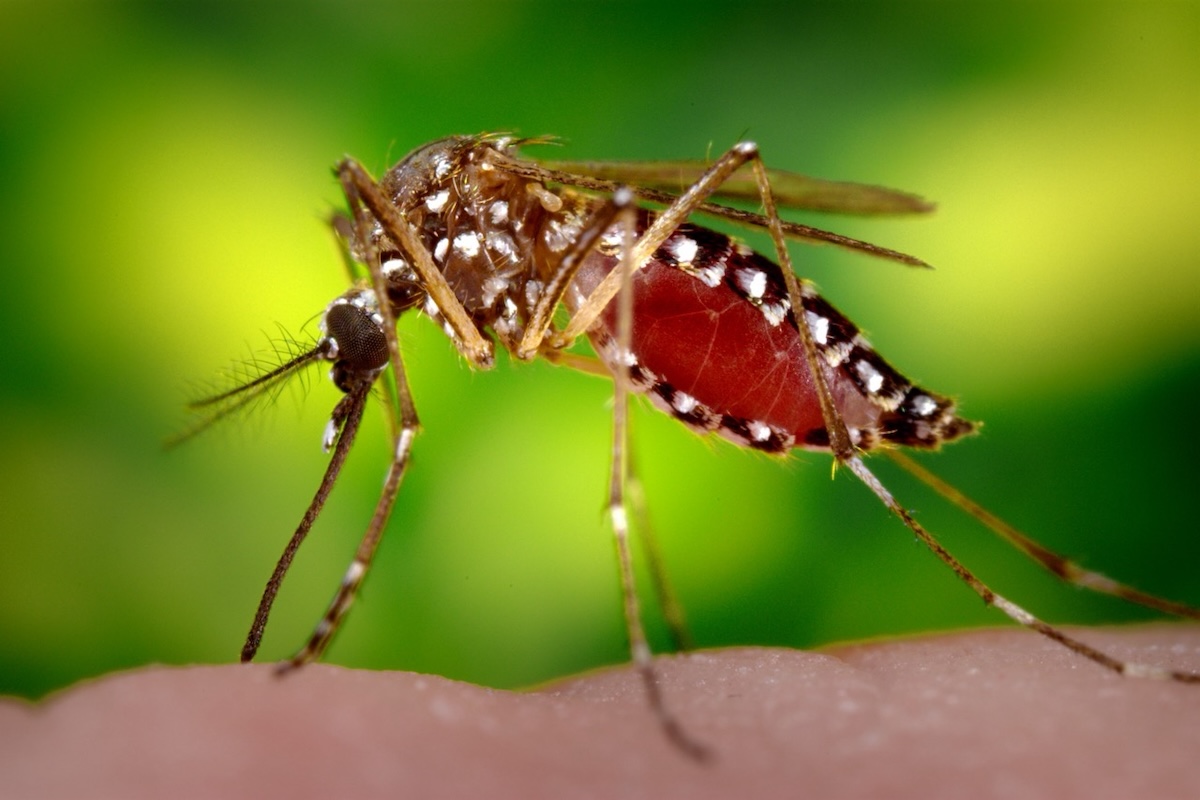
It’s the “ankle biter” time of year, and an aggressive and harmful one was trapped in Carpinteria on July 14. The Aedes aegypti mosquito bites during the daytime, as well as dawn and dusk, generally in the vicinity of the feet and ankles, carrying the potential for Dengue, which can cause serious conditions. Dengue caused 20 infections in Los Angeles County from 2024 to 2025.
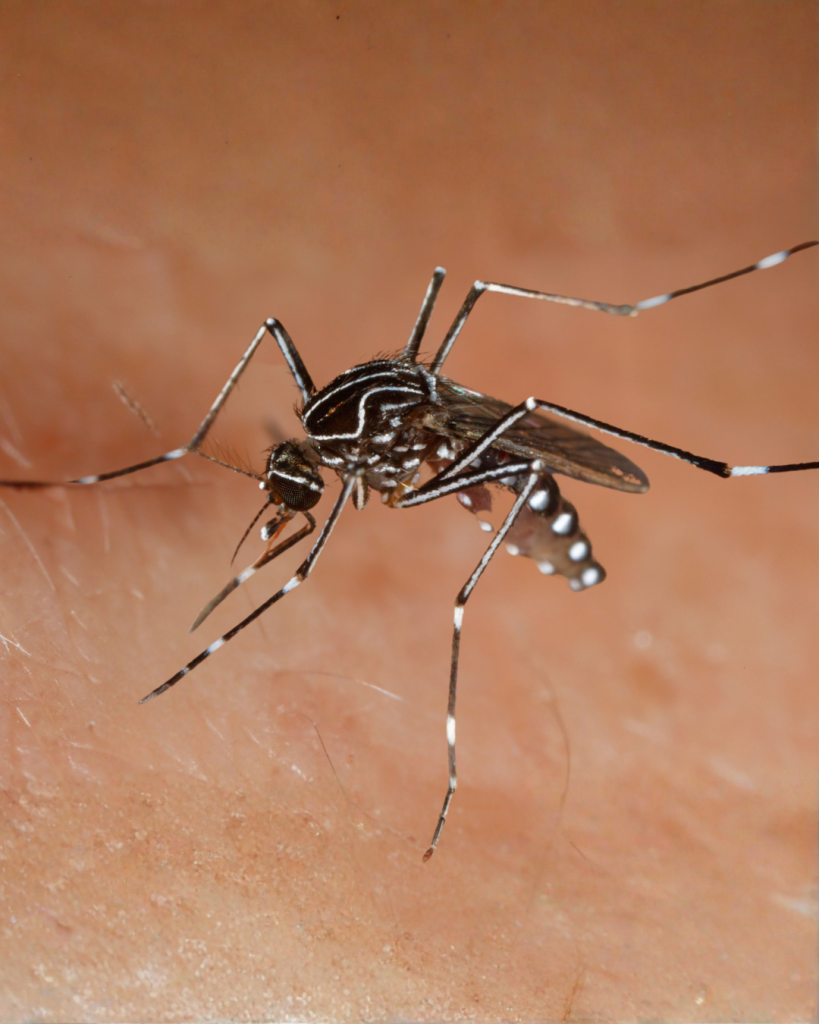
In the tropics where Aedes aegypti is native, it can also carry Zika, Chikungunya, and yellow fever viruses. Dengue (pronounced DENG-gey), once a disease of the tropics, has spread to the northern latitudes, first appearing in California in 2013. Generally, four to 10 days after someone is bitten, the virus can cause fever or flu-like symptoms; in severe cases, it can cause blood vessels to leak. The best prevention is to eliminate standing water — even the liquid trapped in plants such as bromeliads. The mosquitoes can lay eggs that will hatch in amounts of water as small as a bottle cap.
Another invasive mosquito, the Aedes notoscriptus, was trapped on Santa Barbara’s Westside in March and on the Mesa in June. It’s also a daytime ankle-biter that, in its native Australia, can carry canine heartworm. (In Santa Barbara, different mosquitoes carry heartworm: Aedes sierrensis, which hatch in oak trees or barrels, and Anopheles franciscanus, which breed on algae mats.)
Concerned that the two mosquitoes could become established in Santa Barbara County, Brian Cabrera, who heads the Mosquito and Vector Management District, said that public awareness would slow the spread. “Residents can help ‘fight the bite’ by eliminating the sources of water where they lay their eggs and develop, as well as contacting the district if they suspect they are being bitten by these mosquitoes.”
The district phone number is (805) 969-5050 and a report can be submitted at its website mvmdistrict.org if either mosquito is found.









You must be logged in to post a comment.