
[Updated: Wed., July 29, 2026, 10am]
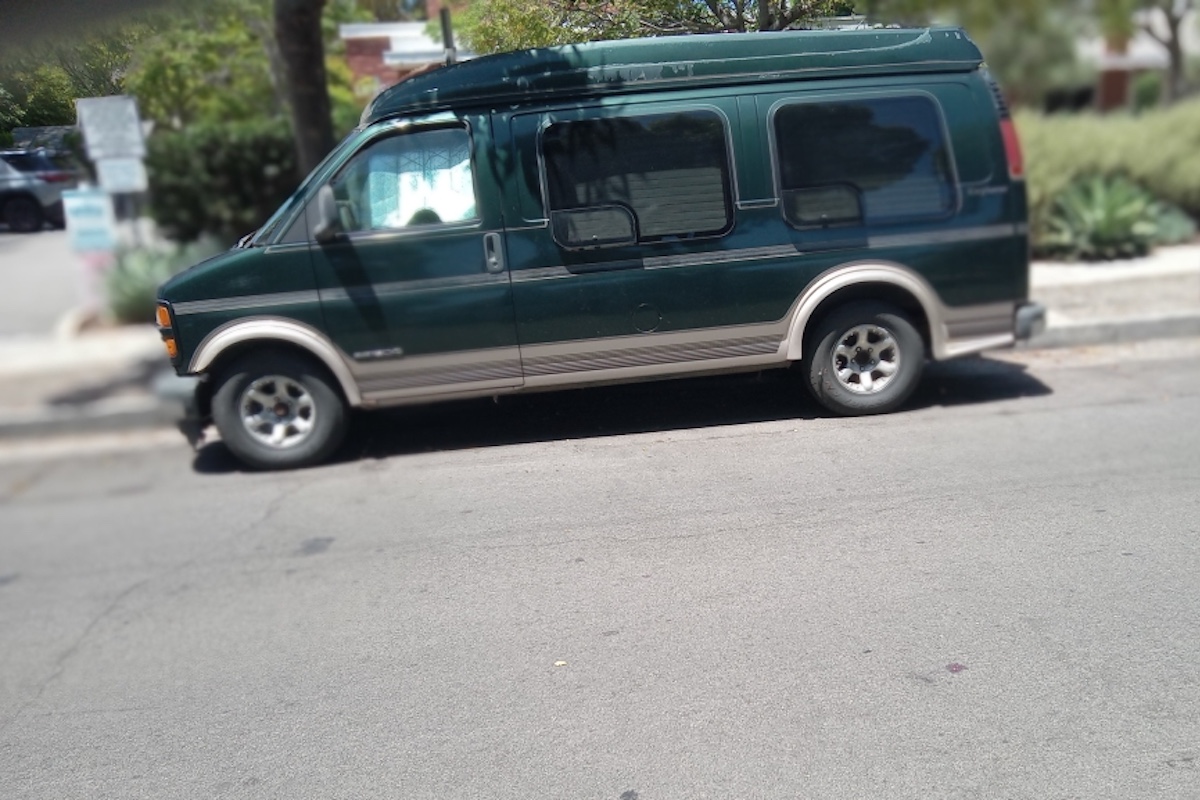
It was almost 400 years ago to the day that legendary British barrister Sir Edward Coke famously decreed, “A man’s home is his castle.” Much has changed since then; based on shifting economic realities, Coke’s immortal turn of phrase would more accurately read, “A person’s car is their castle.”
According to the County of Santa Barbara’s most recent Point-in-Time count — a rough census of unhoused people — the number of people now living in their vehicles has increased by 48 percent, jumping from 675 to 962 countywide over the past two years. By sharp contrast, the overall number of homeless people tabulated by the same count was up by 25 percent.
The Point-in-Time counts being notoriously imprecise, county executives responsible for managing the intractable homelessness crisis contracted with UCSB and Simtech Solutions, a private consulting firm specializing in harnessing technology to track who exactly is homeless and how they can best be reached. The focus was on people living in vehicles who had not sought out county services. Specifically excluded from this study were individuals who had reached out for such services. Only 90 of the more than 900 people living in their vehicles identified in the most recent Point-in-Time count were surveyed. The survey is identified as qualitative not quantitative in nature, meaning its findings are more illustrative than definitive.
What they found did not conform to many popular notions of who is living outside the traditional confines of four walls and a roof. For example, more than half of the 90 people interviewed — 55.4 percent — reported working jobs that brought in, on average, $2,358 a month. Mostly, they worked jobs in the service, retail, hospitality, and domestic service industries. Twenty percent relied on government assistance grants, on average $1,225 a month. The surveyors found that those working private-sector jobs tended to be younger and middle-aged; those relying on government grants tended to be older. Those 45 and older constituted 55 percent of the population surveyed.
Sixty-one percent lived in cars or vans, 28 percent in RVs, and 7 percent in trucks. Most were men living alone in their vehicle. Minor children were present only in 19 percent, but pets in 57 percent. The vast majority reported their vehicles were both mechanically drivable and legally registered and insured. But one-third reported feeling at peril of not being able to cover insurance costs. Of all vehicle type, RVs exhibited the lowest rate of insurance and registration — 60 and 62 percent, respectively.
The survey did not explore such issues as substance abuse or mental health challenges; fully two-thirds reported they had transitioned directly and abruptly from being housed — either rental or home ownership — to their vehicles. Two-thirds lived in Santa Barbara County before moving into their vehicles, “confirming,” according to the report, “that this unengaged population consists primarily of long-term local residents.”
On average, the respondents reported being in their vehicles 4.6 years. Of the respondents, 51 percent reported losing their job, 34 cited rent increases, non-renewal of lease, or inability to make mortgage payments. Another 23 percent reported divorce, domestic violence, a family death, or family conflict. Nearly 9 percent reported medical disabilities or experiences with the criminal justice system.
Especially striking, 34 percent said getting housed back inside and out of their vehicle was of utmost priority, while 20 percent said they were equally adamant about remaining in their vehicles, citing the autonomy, flexibility, and cost savings involved. They also cited their “dissatisfaction with existing shelter models.”
Even more striking to those conducting the survey was how evenly split — 50-50 — respondents reported in engaging with the county’s array of services available to people living outside traditional housing. Fifty percent said they did not want to be contacted by outreach workers.
“Jurisdictions must recognize that standard homeless response messaging, which framed vehicular living as an acute crisis requiring immediate shelter placement, will alienate the 27.3 percent who view their vehicle as a viable, autonomous housing choice,” the report concluded.
Instead of the traditional pitch by outreach workers, the report recommended local governments provide “safe legal parking options with basic utility hooks-ups (power, water, sanitation) for individuals who choose to remain in their vehicle long-term or who work non-traditional hours.” The report authors noted, such an approach would require significant legal, service-provider, and governmental cooperation “to prevent perceptions of legal residency rights.”
The report also recommended local governments draft ordinances allowing private property owners to open up ag or commercially zoned sites for RV vans villages for workers employed at local businesses.
For vehicular residents more open to engagement, the report urged local governments to provide time-limited subsidies for first and last month’s rents plus security deposits. For seniors and medically disabled residents, the report suggested local governments bridge the gap between the $1,225 in governed funds and market rents. Lastly, the report urged local governments to fund subsidies for mechanical repairs, insurance, and registration.
This report was not presented to the county supervisors during the massive data brain dump on the issue of homelessness that took place two weeks ago. It was, however, alluded to in the report. Its findings and recommendations will no doubt be cited in the months ahead as government agencies struggle to find new ways to respond to an intractable problem.
Editor’s Note: The story was updated to include the sample size of the survey.
Related Posts



Premier Events

Mon, Oct 26
7:00 PM
Santa Barbara
Beauty and the Origins of Electrophysiology, Telecommunications & the Global Theater
Mon, Oct 26
5:00 PM
Montecito
Halloween at The Speakeasy at San Ysidro Ranch

Mon, Oct 26
6:00 PM
Santa Barbara
Chaucer’s Book Talk & Signing with Jennifer Chassman Browne “See Us, Know Us: Profiles of Disability”

Wed, Oct 28
5:00 PM
Santa Barbara
Fundraiser for Domestic Violence Solutions

Wed, Oct 28
7:00 PM
Santa Barbara
Reel Rock 20 Climbing Film Tour

Wed, Oct 28
7:00 PM
Goleta
IVRPD Presents : Halloween Pumpkin Patch

Thu, Oct 29
6:00 PM
Santa Barbara
Halloween Paint & Sip at Goodland Wine Shop
Fri, Oct 30
12:00 AM
Montecito
Día de los Muertos at The Speakeasy

Fri, Oct 30
11:30 AM
Santa Barbara
🌼💀 Join us for Día de los Muertos! 💀🌼

Fri, Oct 30
2:00 PM
Santa Barbara
“Sea to Summit “Art Exhibit & Benefit Oct 30 & 31

Fri, Oct 30
3:00 PM
Santa Barbara
Family Movie Night at the Eastside Library: “Coco”
Mon, Oct 26 7:00 PM
Santa Barbara
Beauty and the Origins of Electrophysiology, Telecommunications & the Global Theater
Mon, Oct 26 5:00 PM
Montecito
Halloween at The Speakeasy at San Ysidro Ranch
Mon, Oct 26 6:00 PM
Santa Barbara
Chaucer’s Book Talk & Signing with Jennifer Chassman Browne “See Us, Know Us: Profiles of Disability”
Wed, Oct 28 5:00 PM
Santa Barbara
Fundraiser for Domestic Violence Solutions
Wed, Oct 28 7:00 PM
Santa Barbara
Reel Rock 20 Climbing Film Tour
Wed, Oct 28 7:00 PM
Goleta
IVRPD Presents : Halloween Pumpkin Patch
Thu, Oct 29 6:00 PM
Santa Barbara
Halloween Paint & Sip at Goodland Wine Shop
Fri, Oct 30 12:00 AM
Montecito
Día de los Muertos at The Speakeasy
Fri, Oct 30 11:30 AM
Santa Barbara
🌼💀 Join us for Día de los Muertos! 💀🌼
Fri, Oct 30 2:00 PM
Santa Barbara
“Sea to Summit “Art Exhibit & Benefit Oct 30 & 31
Fri, Oct 30 3:00 PM
Santa Barbara

