

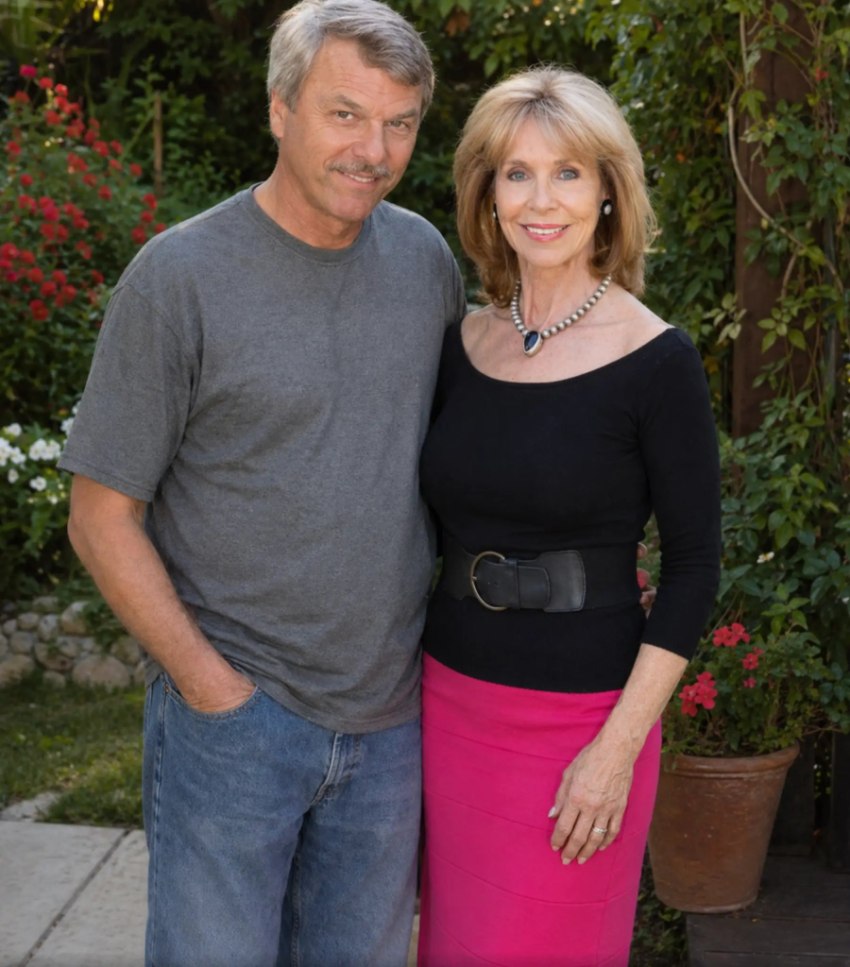
One morning in the late 70s, Nansie Chapman Douglas received the kind of news that everyone dreads: Her brother and best friend, John Michael, had been in a car accident and might not survive.
Douglas was in Los Angeles. John was all the way in Borneo, the Southeast Asian island where he was living. They were thousands of miles apart, and there was nothing she — or her parents in Santa Barbara — could do to help him.
“I hung up the phone. Moisture in my eyes blurred my vision. My world became a hazy nightmare,” Douglas wrote in her memoir of the moment, When the Road Ends, Love Builds a New One, released on April 16.
After 11 weeks in a coma, John finally woke up. Douglas was overjoyed, but the relief was short-lived. He had survived, yes, but he had suffered a traumatic brain injury, and she was forced to confront a painful reality: He would never be the same again.
At first, John could barely walk. He couldn’t go to the bathroom or eat on his own. He had lost much of his independence. In many ways, he was like a newborn relearning how to be an adult again.
The hardest part was his temper. John became easily agitated, often cursing at the people around him — or at seemingly nothing at all.
“His three hovering companions — frustration, anger, and struggle — always lurked in the background waiting for any opportunity to ambush him,” she wrote.
For years, he was in and out of rehabilitation centers, slowly regaining his independence.

Then, four and a half years after the accident, Douglas and her family found themselves at a crossroads. John had progressed enough to leave rehabilitation, but no one knew where “home” should be. Their parents were divorced, and both had complicated living situations. The alternative was for John to move into a care facility across the country, but Douglas couldn’t bear the thought.
So, she had a wild idea: What if he moved in with her?
Many people warned her that it wouldn’t be easy. That the life of a caregiver — especially of someone with a traumatic brain injury — would be a daily battle. Douglas heard their concerns, but she knew she had no other choice. This was her brother, and she wanted to help him get better again.
So, Douglas and her then-husband, Bob Chapman, welcomed John into their Pacific Palisades home. By then, he could walk, though with a noticeable limp, and he could feed himself, but even simple tasks like gripping a fork remained difficult. He also struggled with severe depression, and his anger persisted.
“He didn’t even talk much the first, God, three or four years that he was with us,” Douglas recalled, sitting across from me in her home on Santa Barbara’s Riviera. “I mean, other than ‘fuck you,’ ‘fuck this,’ ‘fuck that,’ which were his favorite words.”
She became John’s primary caregiver while continuing to work full time at the graphic design business she and Chapman owned. No two days looked the same. One day, John might get arrested; he might hurl dog poop at her; another day, Chapman might take a punch to the face from John. She lived in a constant state of fight-or-flight.
“You never get a chance to really get your nervous system to calm down,” Douglas said of her role as a caregiver. “You’re constantly on.”
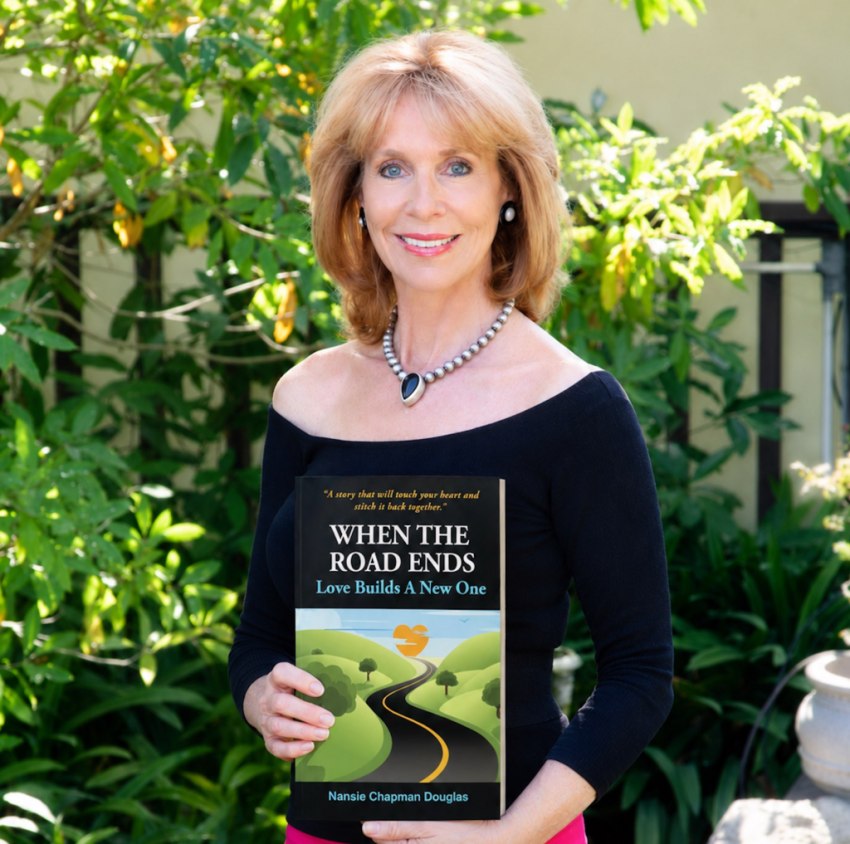
She was exhausted, and somewhere along the way, she realized she had stopped taking care of herself. In many ways, she had put her own life on hold to save her brother’s. That realization became one of the driving forces behind writing her memoir, which she hopes will remind fellow caregivers to care for themselves, too — to go to therapy, exercise, listen to music, meditate, and, perhaps most importantly, surround themselves with supportive people.
“You need to make time for those things for yourself,” she said.
To encourage reflection, Douglas ends every chapter with a series of bullet points she calls “Lessons Learned.” In them, she revisits the chapter’s events and shares the insights she gained along the way. In total, the book contains 178 of these lessons.
“The ‘Lessons Learned’ is really to help other caregivers maybe sort of think about, for themselves, how are they getting through it, how are they managing in their life,” she said.
In the end, John made a remarkable recovery. Eventually, he, Douglas, and Chapman — who has since passed away — moved back to Santa Barbara, where John continued living on his own.
In Santa Barbara, things weren’t perfect. There were still roadblocks, but looking back, Douglas isn’t sure where she would be today if she hadn’t made a conscious effort to care for herself and held onto the belief that things would somehow work out. It’s a mindset she hopes to impart to caregivers.
“It’s really important to keep the faith,” she said.
Douglas is holding a book signing and reading at Live Oak Unitarian Universalist Congregation on Sunday, August 16 at 2 p.m. For more information, see her website care4caregivers.org You can purchase When the Road Ends, Love Builds a New One at Chaucer’s Books, Tecolote Book Shop, Barnes and Noble, and Amazon.
Related Posts


Premier Events
Fri, Oct 23
5:30 PM
Solvang
Solvang Haunted House and Street Fair
Fri, Oct 23
7:00 PM
Santa Barbara
Beth Amine’s 20th Anniversary Wildcat Dance Variety Show
Fri, Oct 23
7:00 PM
Santa Barbara
This & That Performs at Roy

Fri, Oct 23
9:00 PM
Santa Barbara
Casa de la Raza Fundraiser: Brasscals! with DJ Darla Bea
Sat, Oct 24
10:30 AM
Santa Barbara
Picnic in the Cemetery: A Live Historical Event
Sat, Oct 24
11:00 AM
Goleta
2nd Annual Charger Cup to Benefit DP High Golfers

Sat, Oct 24
12:00 PM
Santa Barbara
Makers Hive Market

Sat, Oct 24
2:00 PM
Santa Barbara
Japanese Sacred Architecture: Shinto and Buddhism

Sat, Oct 24
2:00 PM
Santa Barbara
Thriller 2026 – Get Scary for Charity!

Sat, Oct 24
3:00 PM
Santa Barbara
Downtown Santa Barbara Trick-or-Treat
Fri, Oct 23 5:30 PM
Solvang
Solvang Haunted House and Street Fair
Fri, Oct 23 7:00 PM
Santa Barbara
Beth Amine’s 20th Anniversary Wildcat Dance Variety Show
Fri, Oct 23 7:00 PM
Santa Barbara
This & That Performs at Roy
Fri, Oct 23 9:00 PM
Santa Barbara
Casa de la Raza Fundraiser: Brasscals! with DJ Darla Bea
Sat, Oct 24 10:30 AM
Santa Barbara
Picnic in the Cemetery: A Live Historical Event
Sat, Oct 24 11:00 AM
Goleta
2nd Annual Charger Cup to Benefit DP High Golfers
Sat, Oct 24 12:00 PM
Santa Barbara
Makers Hive Market
Sat, Oct 24 2:00 PM
Santa Barbara
Japanese Sacred Architecture: Shinto and Buddhism
Sat, Oct 24 2:00 PM
Santa Barbara
Thriller 2026 – Get Scary for Charity!
Sat, Oct 24 3:00 PM
Santa Barbara



You must be logged in to post a comment.