As rates continue to bounce around, trending upward against inflationary news and data, more and more talk is around buy-downs and how to use them. It sounds nice to have someone pay to lower your interest rate, right? Yet, how to achieve this, and what it actually costs, are the finite details that seem to get glossed over in the hurrah of a quick fix. Let’s break these down so you can understand what options exist and how they may best serve your financial plan. For simplicity’s sake, we’re going to stick to fixed-rate mortgages in this discussion, as many adjustable loans do not offer the same options.
There are two types of buy-downs: permanent and temporary. Temporary buy-downs only exist on a purchase mortgage and cannot be paid for by the borrower directly. Commonly called a 1-0, or 2-1 buy-down, the prefix here refers to the period of time around which the mortgage is bought down. For example, a 1-0 buy-down buys down the rate one percent below the current market rate for one year. A 2-1 buy-down buys it down for 2 percent below the current market rate for the first year, and then one percent below today’s market rate the second year. If today’s market rate is 7 percent, then with a 2-1 buy-down, you pay as if your rate was 5 percent this year, then 6 percent the next, then back to 7 percent thereafter.
This lower payment level is achieved by the funds for the buy-down being held in a separate account by the servicer. They are applied toward the difference in interest (thus the payment level) between the bought down rate and the actual rate of your mortgage. You qualify, and sign documents, around today’s actual rate. The buy-down agreement is executed during closing between yourself and the one who is buying this down on your behalf: the lender, the Realtor, and, most commonly, the seller. If you do not use all of the funds that were held aside for your buy-down, the difference is applied toward your principal balance at payoff. These types of buy-downs can be executed on primary and secondary residences — not investment properties.
This is a great option because you do not “lose” any funds if you sell or refinance the property before the buy-down period expires. It is not great if you felt you really cannot afford the non-bought down rate, as the loan will eventually shift back up to that level once the buy-down period is over. It can also be quite costly, with many sellers balking at the price tag. Many times, we see the sales price being increased to cover the amount. Example: Instead of offering $1,000,000, the buyer offers $1,050,000 with a $50,000 credit toward buy-down.
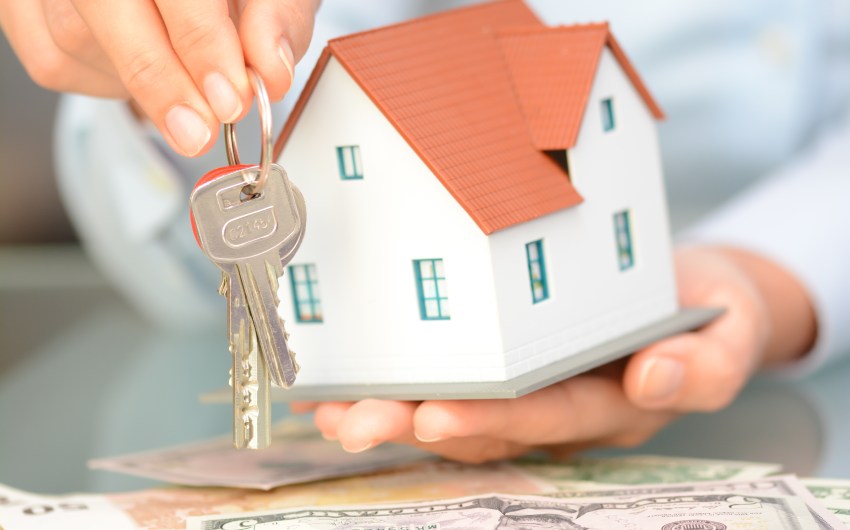
Permanent buy-downs are simply another way of saying “points.” One point is one percent of your loan amount. Points can come into effect on purchase as well as refinance mortgages, paid for by the borrower, seller, or agent (if a purchase). Points are an up-front charge for a lower interest rate for the life of the loan. They are not a 1:1 ratio; paying one point now does not mean your rate is directly lowered by one percent. The cost of points varies on the daily market, your specific parameters, and investor appetite. However once done, it’s done. There is no adjustment to a higher rate in the future.
A con of this is that if you refinance or pay off the current loan, there is no refund on points. Yet, a positive aspect is that points can typically be written off on your tax returns: in the immediate year paid on a purchase, and over time on a refinance. Also, this type of buy-down can be executed on all occupancy types: primary, secondary, or investment. And, yes, you can still use that trick of offering a higher price with a concession back toward this strategy.
One thing to keep in mind around either approach is that the cost varies by the loan amount. If you are putting 20 percent down and your price is $1,000,000, then your loan amount is $800,000. One point thus equaling $8,000. If the price increased to $1,050,000, then the loan amount increased to $840,000, and one point now costs $8,400. Because Temporary buy-downs are relative to itself, there is an even greater fluctuation as the loan amount changes. In this same example between loan amounts, and using a current rate of 7 percent, the 2-1 buy-down would have cost $18,646.35 in the first structure, and $19,578.67 on the second structure. Whoa — that’s a lot of math, right? And, yup, a lot of money.
There are a lot of ways to offset the current rate environment, and each strategy needs to be tailored to your own, unique situation. Reviewing this option with your lender is key. Ensuring your Realtor is on board is essential. Knowing that it is adjustable is vital. Temporary buy-downs are not guaranteed, and permanent buy-downs do not always make sense. As with anything in the mortgage world, there is risk, reward, math, and emotion. Yet using these tactics can really help you win, and that’s the whole point.
Austin Lampson is a licensed mortgage professional and branch manager of Origin Point Mortgage. She has spent the last quarter-century helping her clients balance math and emotion to achieve their financial goals. Reach Austin at (805) 869-7100, austin@austinlampson.com, or visit austinlampson.com.