Pardon the irresistible pun, but it has been a Wilde summer at the movies. We’re talking, of course, about Olivia Wilde. The actress, especially adept at working in extreme zones of comedy and drama, lives up to her family name in the currently screening I Want Your Sex (directed by UCSB graduate Gregg Araki, review here), as an über-hip contemporary artist dishing out erotic excesses, verging on sadism. Meanwhile, she has been spending her summer hanging out on big screens citywide — including Santa Barbara — as both actor and director in the funny-edgy sorta comedy The Invite, now heading to its next life stage, in the streamingverse.
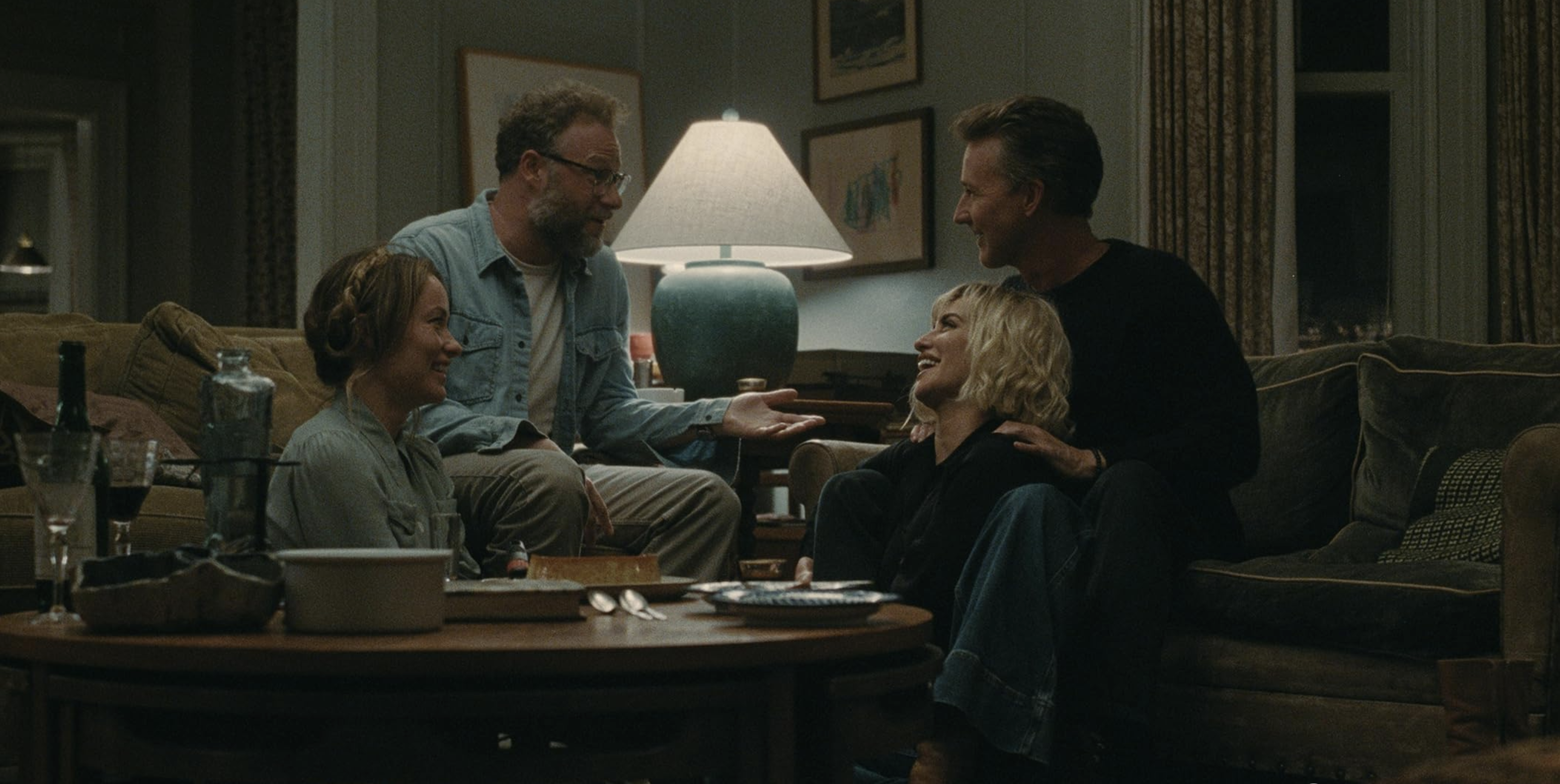
If Wilde’s toothy role as a contemporary artist is intentionally over-the-top and clad in satire, she portrays a much more relatable character in The Invite, as Angela, the marriage-weary wife in a revealing double-couple dinner saga. Wilde finds herself in heady company here, with Seth Rogen as her “failed musician” and midlife slumpy husband, Joe, and, as dinner guests from the upstairs San Francisco apartment, Penelope Cruz as a sexologist divorcee Piña and Edward Norton as Hawk, a widower, firefighter-turned-rolfer, and self-appointed self-help counselor.
Angela has invited the neighbors down, to Joe’s dismay. The neighbors, who have a thing for sex parties — sometimes late at night and sometimes orgasmic-ly loud — have an added invitation in mind. The stage is set for social, emotional, and sexual fireworks, of both the dark and the light sort.
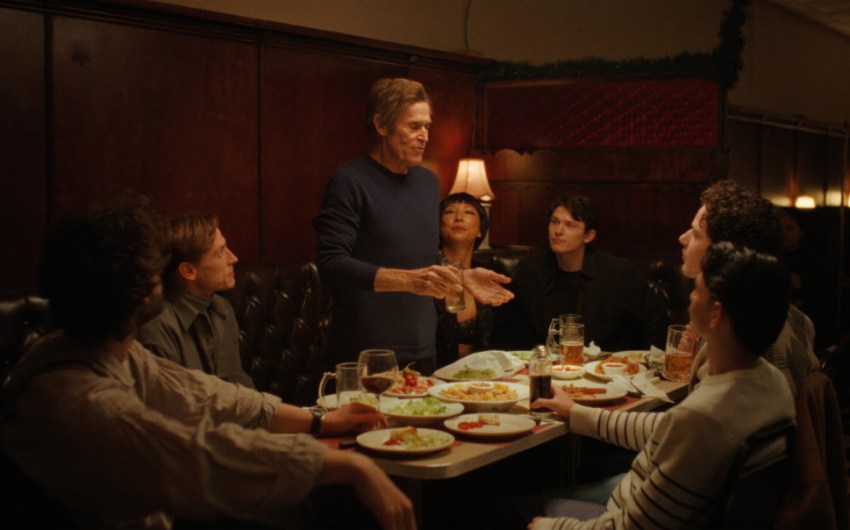
“Stage” is an appropriate term here, for this four-character/one location setting in which characters and interactions expand beyond the limits of said location. Essentially an English language remake of Spanish director Cesc Gay’s The People Upstairs (Sentimental), The Invite was written by Will McCormack and Rashida Jones, and begs comparisons to other volatile and intimate couples-related films such as Who’s Afraid of Virginia Woolf? and Roman Polanski’s Carnage (with Jodie Foster, Kate Winslet, Christoph Waltz, and John C. Reilly).
As in those films, what begins with at least a forced politeness over dinner devolves into a soul-baring and potentially libido-baring misadventure. Addressing an argument the visitors heard from outside the door, Hawk says, “We love a contentious environment.” So does this film. By the end of the night, Hawk offers a brief summation of the sturm und drang which had gone down over the evening: “all we wanted to do was look at your apartment and maybe have a little fucking.”
Wilde’s direction keeps the tension taught, and the balance between drama and comedy in check, and various cinematic subtleties are folded into the mix. For one, a sly reference is made to another apartment-based film, Hitchcock’s Rear Window, with a subplot involving mutual voyeuristic angle involving Angela’s nude post-shower ritual observed by Hawk from his own window perch.
After all of the provocative and sometimes agonizing dramedy of this night of reckoning, the film finds some calmer resolution by letting music do the speaking, by movie’s end. Joe finally faces his music-phobia demon and goes to the piano, gradually pecking out the old standard “(I’m) Confessin’ (that I Love You),” and his wife joins him on the piano bench. Their fate is thus kept open for us, with a future which may or may not hold. Only a sequel could tell.
As a brilliant added touch, the end credit music goes to a rare and raw demo version of “Our House,” as performed by its songwriter Graham Nash and his then-wife Joni Mitchell, and replete with mistakes and laughter. The song, especially in this seminal state, is a timeless serenade to a romantic union — however brief — and a particular house with three cats in the yard. It’s a poignant post-postscript to a story about the fragility and renewable hope of relationships.
See trailer here.