

Sign up to get Matt Kettmann’s Full Belly Files, which serves up multiple courses of food & drink coverage every Friday, going off-menu from our regularly published content to deliver tasty nuggets of restaurant, recipe, and refreshment wisdom to your inbox
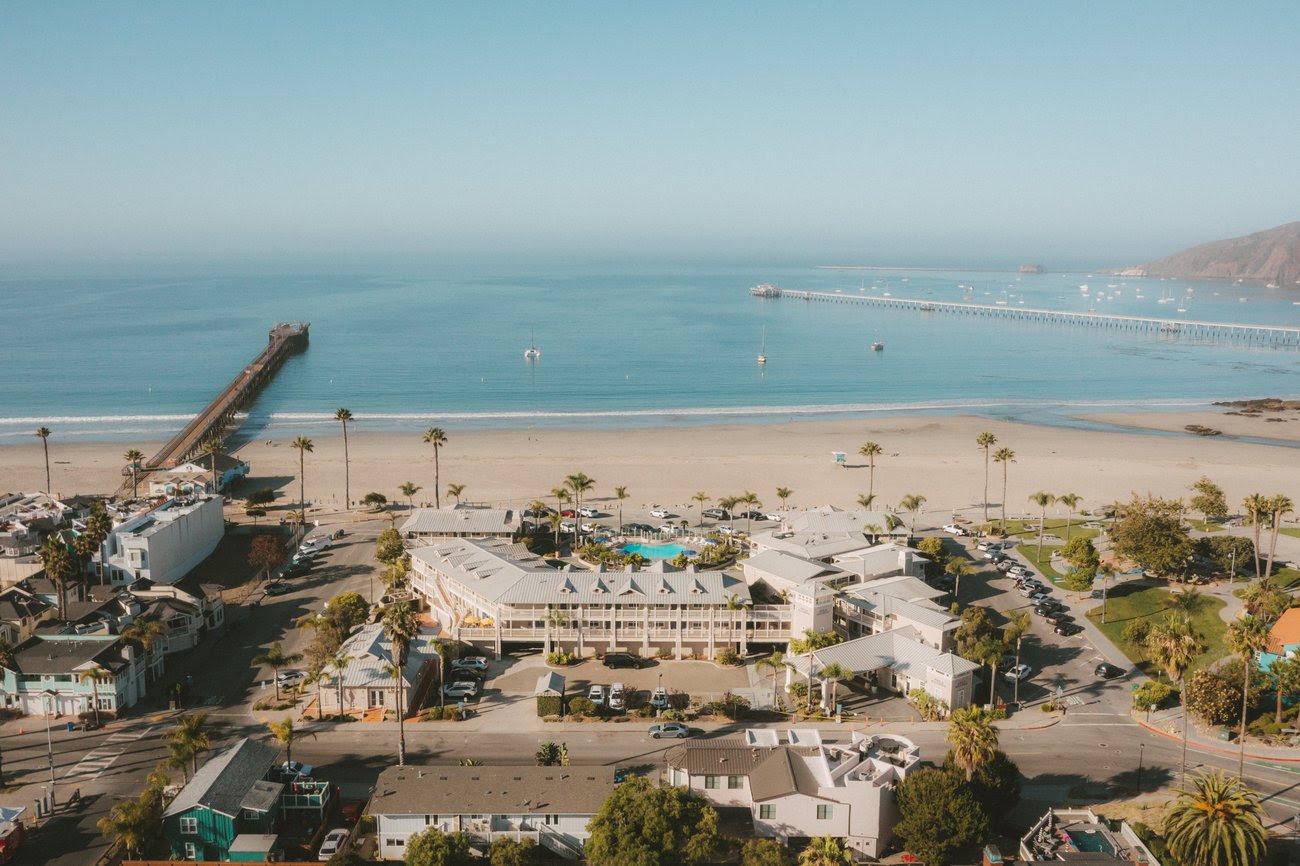
The waters of Avila Beach are quite warm these days, even after 11 p.m., which is when my winemaking buddy Mike Sinor and I decided to take a quick dip last Thursday. We’d been staring at the ocean since before sunset from his family’s Shuck Shack, where Mike’s grown kids, Tomas and Esme, serve up natural wines from near and far alongside an array of oysters and other savory, seafood-leaning snacks.
“Isn’t this where that poor lady got eaten by a shark years ago?” I asked as we wandered in. It was, but we weren’t going very deep anyway, just enough to snap us both back into relative sobriety and refresh our bones before bed.
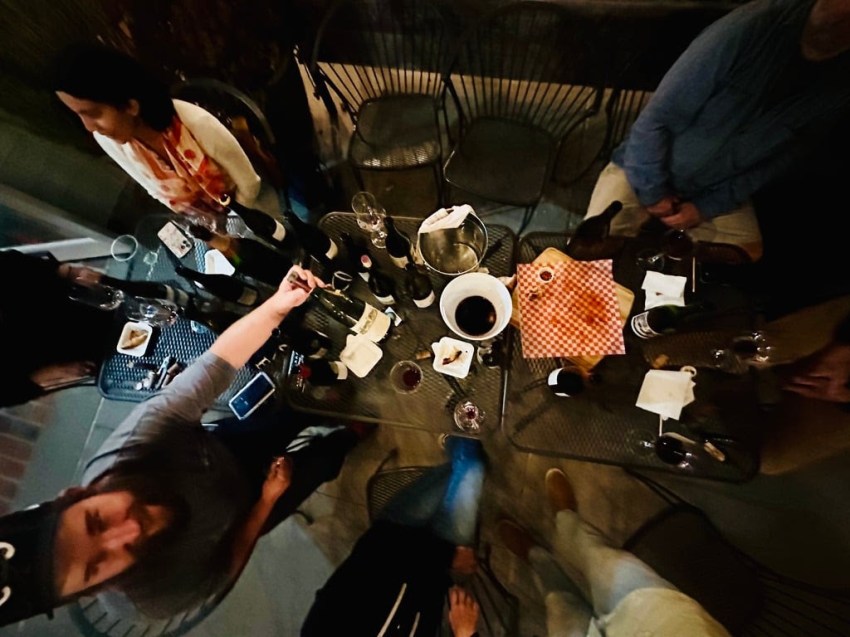
We’d spent the evening opening about 30 bottles of wine with our other winemaking friends, namely veterans Steve and Paula Dooley of Stephen Ross Wine Cellars, mid-career superstar Mikey Giugni of Scar of the Sea, and newcomers Ryker and Pooja Wall of Idola Wine Co. Encouraged by Tomas Sinor, who runs his own brand Uncommon Earth, many of the tastings were blind — always fun, especially when surrounded by inquisitive and traveled palates, able to sound smart while confusing riesling for vermentino, frappato for gamay.
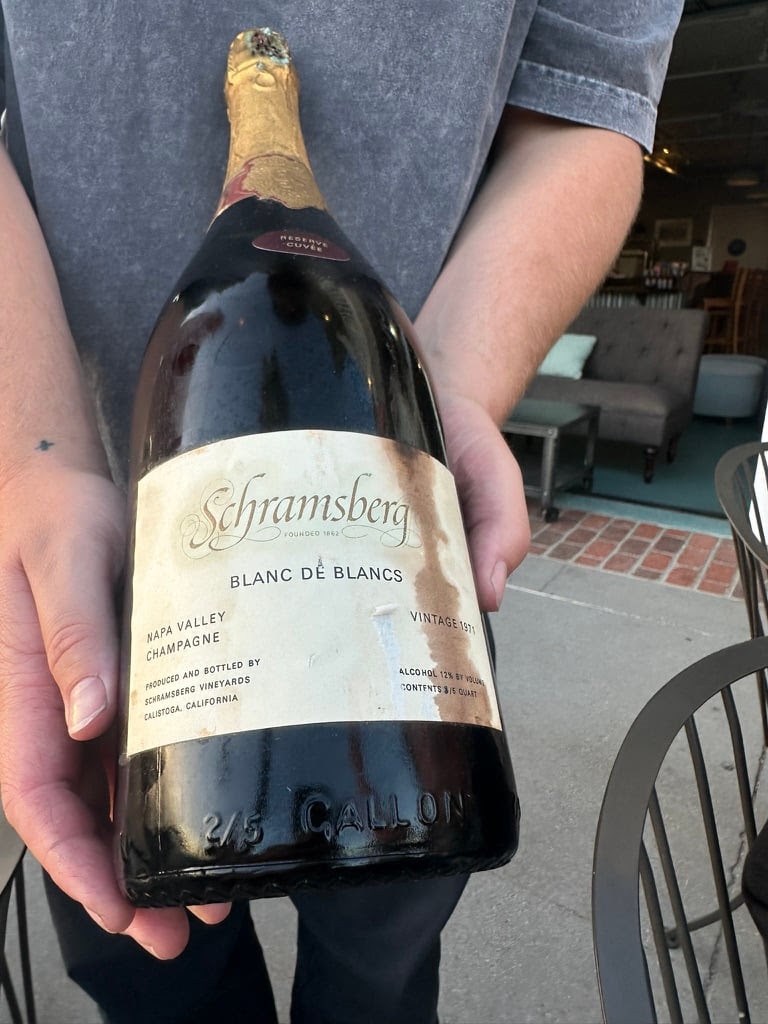
And many were not blind, including a magnum of 1971 Schramsberg blanc de blancs from Napa Valley, which somehow still had a bit of fizz (albeit a tawny color and rusty flavor).
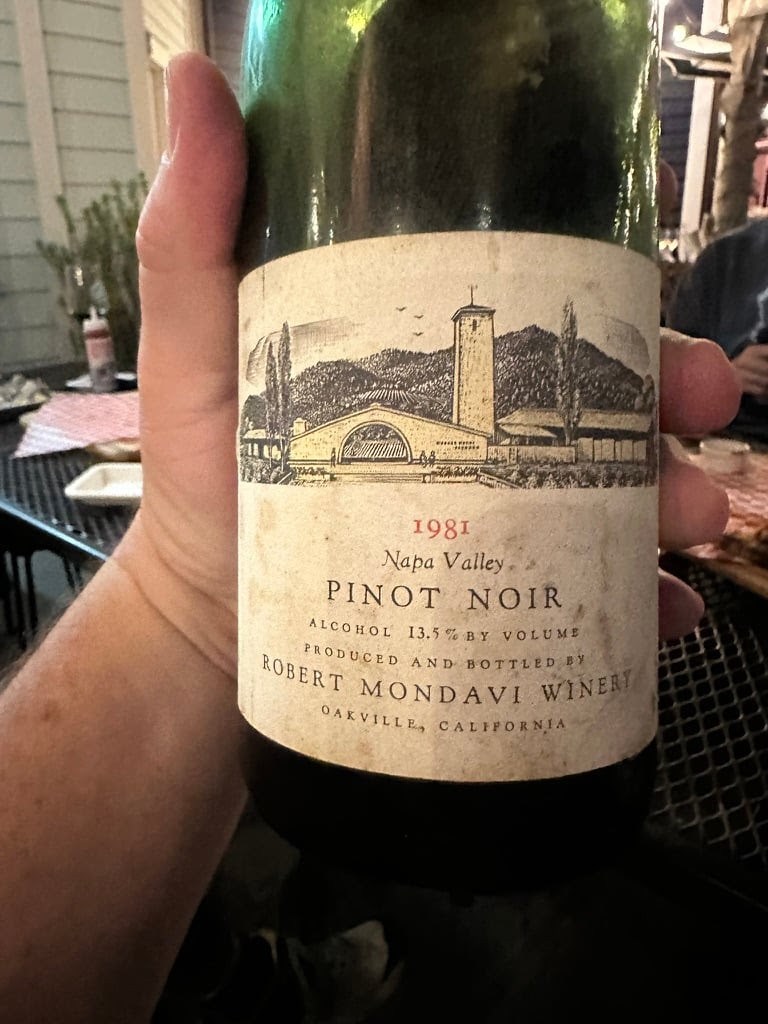
There was savagnin from the Jura and sauv blanc from Alto Adige and Austria, nero d’avola blends from Sicily and Temecula, old-vine chenin blanc from Carmel Valley. But the night’s subtle stars were the S.L.O. Coast wines that each winemaker brought to share — plus a 2015 Qupé syrah from the nearby Sawyer-Lindquist Vineyard that I showed blind. Most all of the S.L.O. Coast wines I taste, even the older ones, are so fresh and bright and interesting that they happily compete for attention against any bottle you find.
This exercise in excess was about what I expected when I asked if Mike wanted to hang out for a night. (You may recall last year’s visit with Mike and company.) I was coming up for a few meetings in the Edna Valley that Friday, but was conveniently also asked to check out a new Avila hotel on Thursday night, setting the stage for a 24-hour S.L.O. Coast adventure. Mike rallied the troops, and our epic affair ensued, ending with that late night swim.
Luckily for me, the Avila Beach House was just steps away from both the Shuck Shack and the beach. After accepting the invitation to attend the opening party and stay the night, I realized that I’d stayed there a couple of times before on previous wine reporting trips when it was called the Avila Lighthouse Suites. Though it never closed entirely, the 54-suite property underwent a renovation over the past year and rebranded as the Avila Beach House a couple months ago.
All of the suites are within earshot of the ocean, but they gave me one of the second-story spots perched right over the town’s promenade, with direct waterfront views from Fossil Point at the east end of Avila Beach all the way to the breakwater that protects San Luis Bay. (I could even see the Shuck Shack from the balcony.)
I remembered the large room layout right when I walked in, although the new cottage-chic decor was new. The proper suite setup — living room/mini-kitchen, separated by a big bathroom, leading into a sprawling bedroom — quickly reminded me of how much I wanted to stay there for multiple nights in the past. Rates here very depending on the season, but my room starts at less than $500, which is hard to beat for oceanfront living these days.
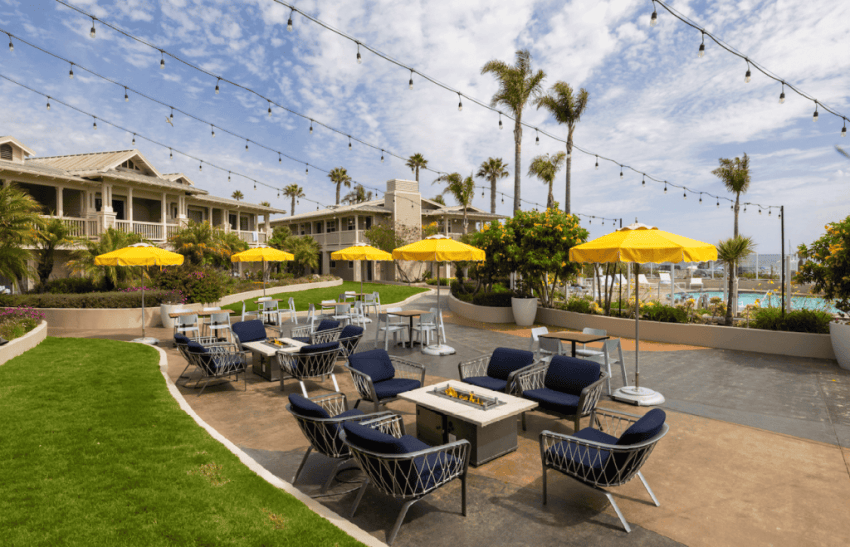
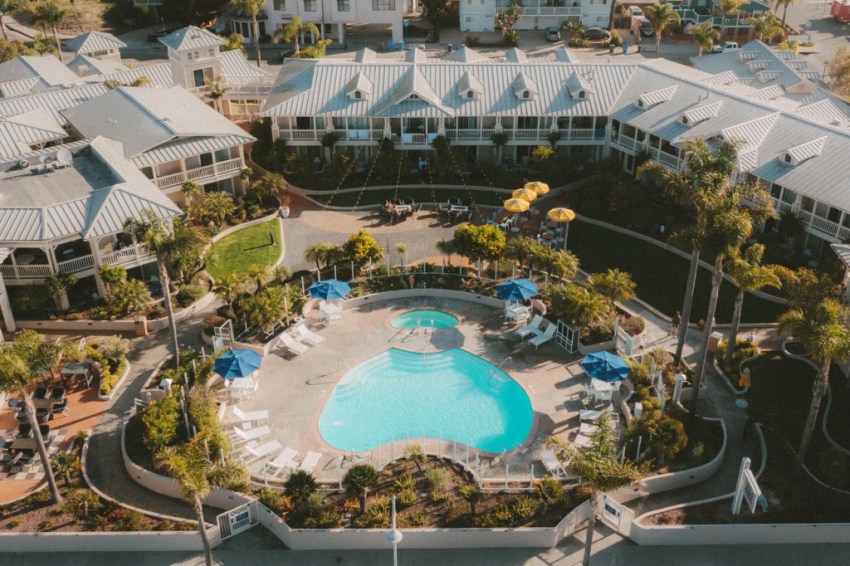
The open house event took over the hotel’s central terrace, where live music, spritzes, and roving appetizers were served, and small groups broke off into tours of the property’s revamped event spaces. I took my own tour of the pool that next morning, after a decent continental breakfast. It’s one of the most beautifully situated hotel swim scenes on the Central Coast, surrounded by the sounds and sights of the ocean, views of the mountains, and glimpses of handsome architecture.
My stay was brief, but triggered the same epiphany that hits me every time I go to Avila Beach, or really any of S.L.O. County’s smaller coastal towns such as Los Osos or Cayucos or Cambria. For being less than 90 minutes away from Santa Barbara, Avila delivers that palpable sense of escape you want in a vacation, but with an easy familiarity that can usher in real relaxation.
At least that’s my theory, because, as usual, I was actually there to work. My first appointment on Friday morning was at Mercenary Premier, a newly founded partnership between beverage canning entrepreneur Jason Fullmer and veteran winemaker Josh Baker, who’s worked in the region’s large wineries and custom crush facilities for decades (and also ran the great boutique brand Baker & Brain).
This summer, the duo took over the former Orcutt Road Cellars facility, where Edna Valley’s pioneering Niven family made their Baileyana, Tangent, and other wines from 1999 until Daou Vineyards bought the property for their white and rose wines. When Daou sold to Treasury Wines for a billion dollars a couple years ago, this facility went on the market.
Baker and Fullmer, who started Mercenary as a mobile canning business in 2018, were able to ink a deal just two months ago, right in time for harvest. The plan is to run the facility as a custom crush winery and beverage packaging business, both making wine for clients and putting alcoholic drinks in a wide range of cans, pouches, bags, and so forth. There’s apparently an “adult Capri Sun” in the works, which we were all excited to try.
“Custom crush is the lifeblood of the wine industry,” said Baker, explaining that the facility can handle 3,000 tons of fruit annually. “We did 2,000 this year, which is pretty amazing since we got the keys 60 days ago.”
I was off to Chamisal Vineyards to hang with winemaker Brianne Engles, who started there in 2020 and became the vintner-in-charge in 2023. We drove around the vineyard, much of which is being replanted right now, mostly to the historic property’s expected pinot noir, chardonnay, and syrah. But Brianne is also adding a mildew-resistent hybrid variety called floréal to the mix, and considering other options for some of the fallow ground, like fruit trees and elderberries.
“What I’m working through is Chamisal 3.0,” she told me, explaining that the original plantings by Norm Goss in 1973 went through redevelopment when Terry Spizer took over (and called the place Domaine Alfred) in 1994. “It’s stressful,” she said of making decisions that will dictate the next 30 years, “ but very exciting.”
We tasted through a flight of 2024s, which is really the first vintage that Brianne controlled from bud break to bottle. I’d never tried their Luminary bubbles, and was sad to hear that the rosé-only brand Malene is no longer, now just Chamisal’s estate rosé. The rest of the lineup was excellent as expected.
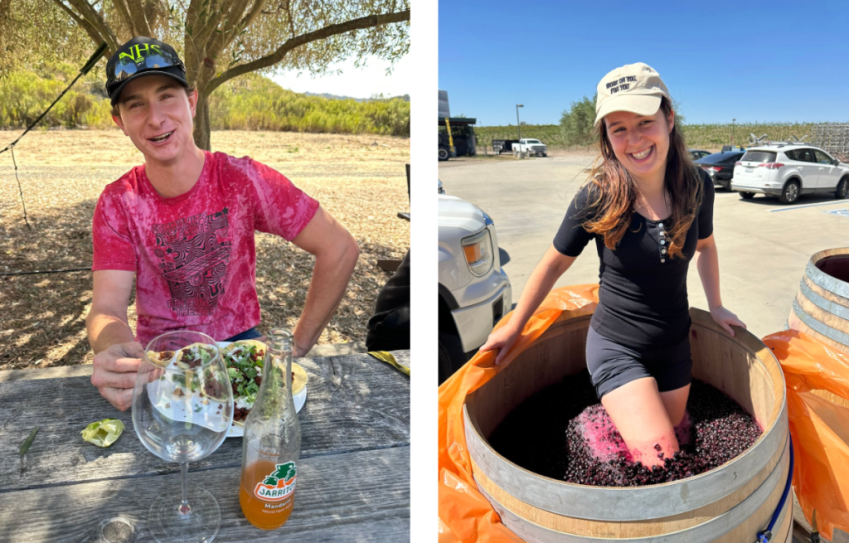
We rolled outside for the Friday harvest lunch, which cellarhands take turns preparing. It was Chuy’s taco day, and that instigated an intern from Modesto named Blake Sutter to challenge the existing taco-eating record, held by a former intern from Germany. We watched as he approached 25 tacos, slower and slower with each bite, and heckled the whole time, including someone alleging that the reigning champ used two tortillas per taco. True or not, Blake swallowed #25, putting an exclamation point on his final day of work at the winery.
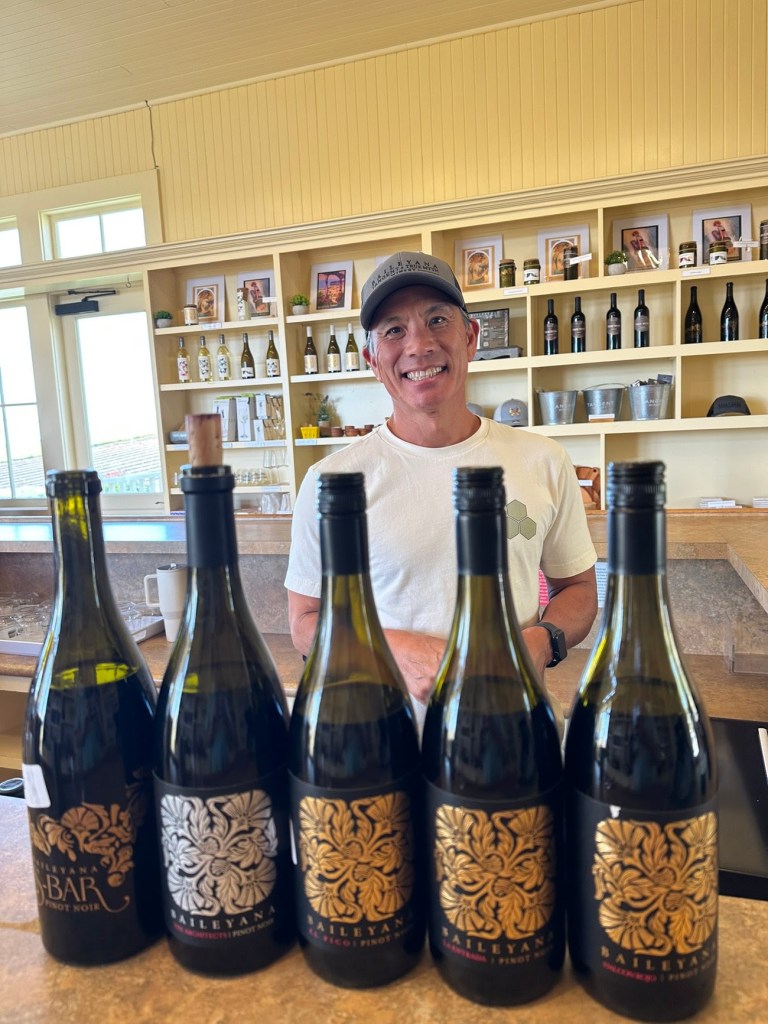
Just down the road, I made a quick stop at Baileyana’s tasting room to catch up with longtime winemaker Rob Takigawa, who started with the Niven family in 1999 and stayed on when the brands were sold in 2020 to WX. He now oversees the production of Baileyana, Tangent, True Myth, and — since WX is scaling down Chronic Cellars in Paso — a brand called Here by Chance, which is a riper style than the rest of the portfolio. We tasted them all, including smaller lot pinots such as Halcon Rojo and The Architects.
While sipping on Baileyana’s S-Bar chardonnay, Takigawa explained that the name was actually an acronym developed years ago by John Niven that stands for “super bad ass reserve.” It certainly made sense for that bottling. “It comes from the ugliest vineyard I’ve ever seen,” said Rob, “but it makes the best wine.”
My final appointment for the day was at the region’s most buzzed about, and brand new, hospitality hub: the Edna, which is home to a gourmet market and café, a tasting room for multiple brands made onsite, the Valley of Nine Distillery, and, soon, the Restaurant at Edna, which is set to open in November.
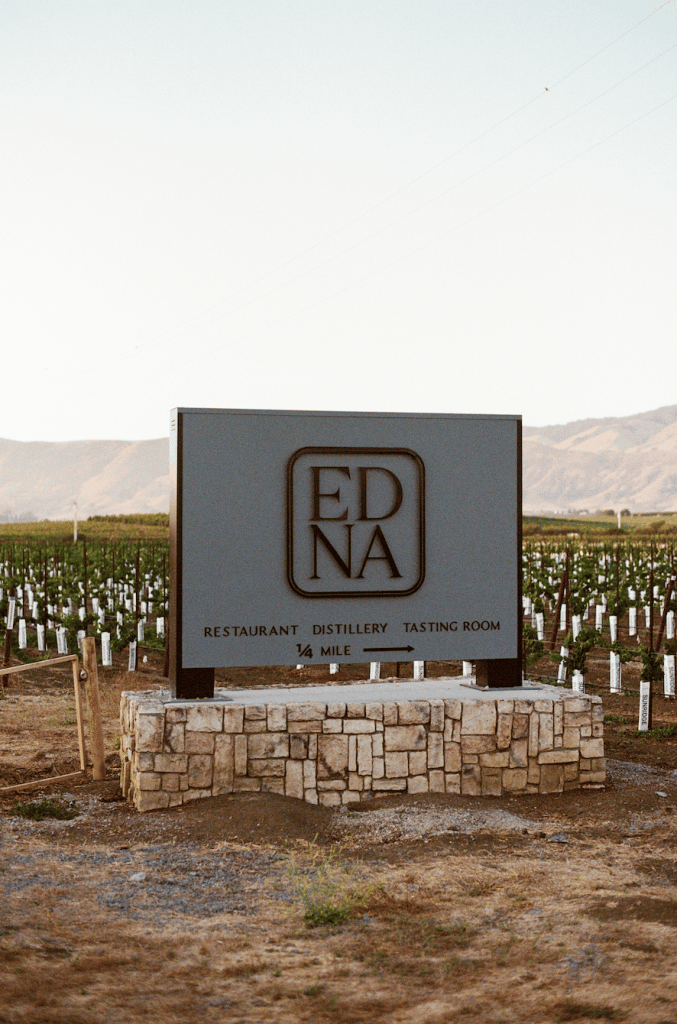
This is the revisioning of the former Edna Valley Vineyards, which the Nivens sold to the Gallos in 2011. The Gallos then sold it to a partnership of S.L.O.-based owners in 2025, paving the way for this ambitiously multifaceted project. They managed to attract a very serious chef in Jeremy Fox, who rose to fame in 2007 by opening Napa Valley’s Ubuntu and then started Santa Monica legends Birdie G’s and Rustic Canyon.
I first visited it about a year ago, when Steve Dooley of Stephen Ross Wine Cellars and Tyler Eck of Dunites showed me around the winery and former tasting room, which was in the midst of a massive remodel. Steve and Tyler helped develop the concept of using the winery as a custom crush facility as well as a home for their wines and two new brands co-owned by the Edna’s partners: Greengate, which produces pinot, chard, and a zesty trousseau gris; and Vestre, which focuses on Bordelaise wines from Paso.
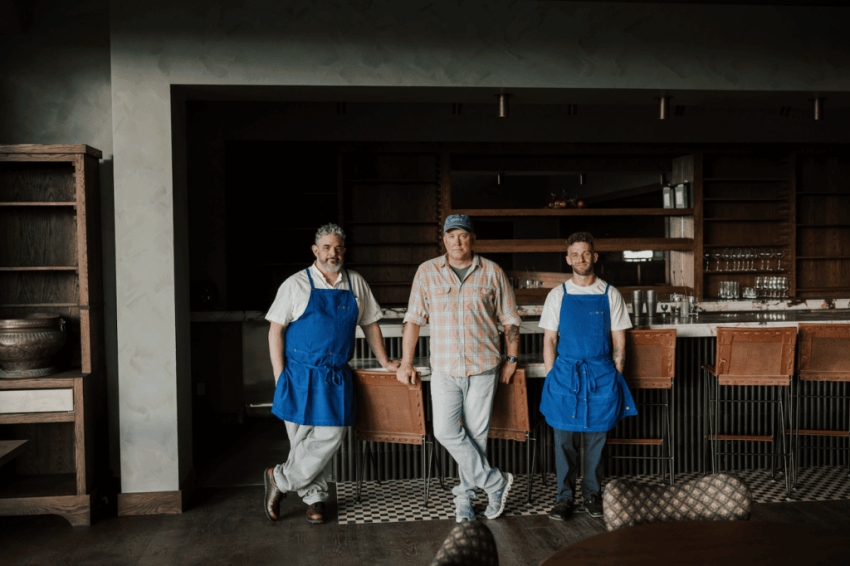
Steve greeted me out front last Friday, and started to tour me around. (Imagine my surprise when, on Wednesday as I was writing this, I got the news that Stephen Ross Wine Cellars pulled out of the project! I haven’t had time to hear why.) He introduced me to manager Joe Johnson, who said the Edna is “very much a choose-your-own-adventure situation.”
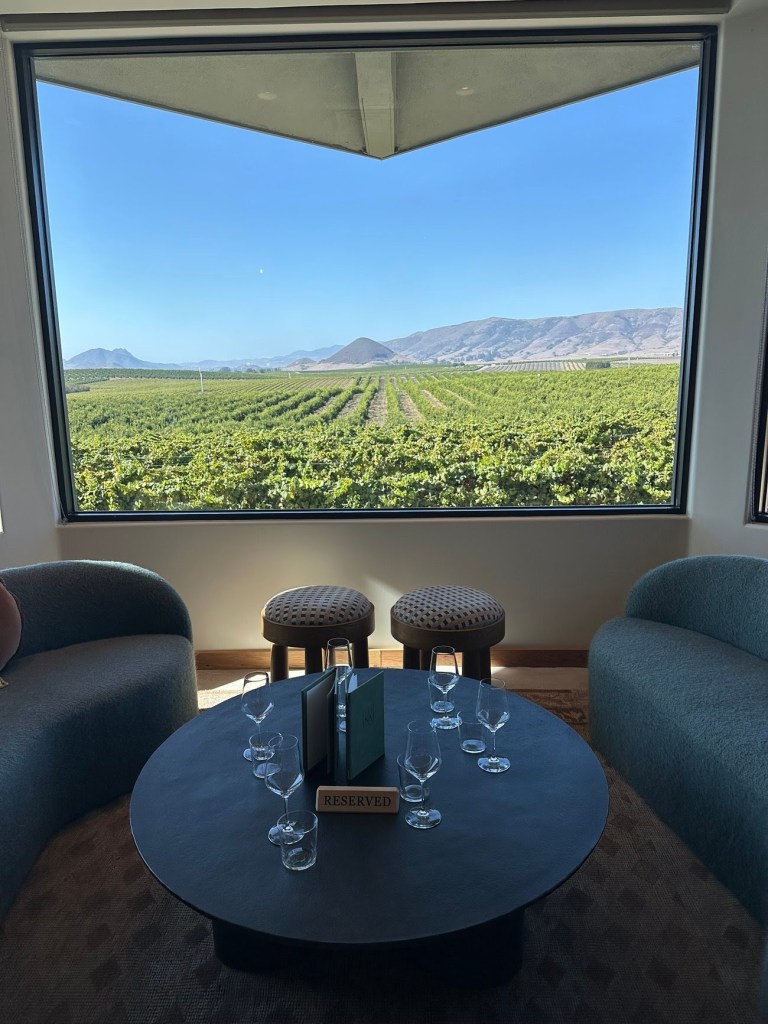
There’s the tasting room, which has flights of Dunites, Greengate, and Vestre. There’s the market and cafe, which open onto a patio and huge grass lawn that sometimes features live music. There’s the distillery lounge that will open soon, and then the 50-seat restaurant, sporting storybook Edna Valley views and helmed daily by former Birdie G executive chef Matt Schaler.
I plan to return to eat there once it opens, but an early look at the menu is promising: laminated buttermilk sea biscuits, cover crop fritters with urchin remoulade, petrale sole stuffed with Dungeness crab, and steaks with caper leaves and Caesar butter.
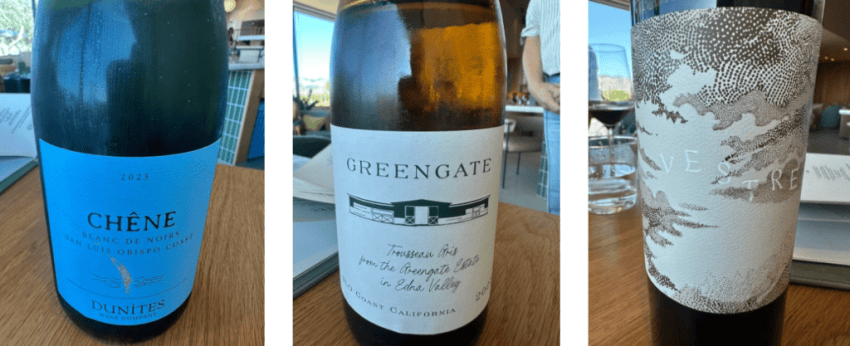
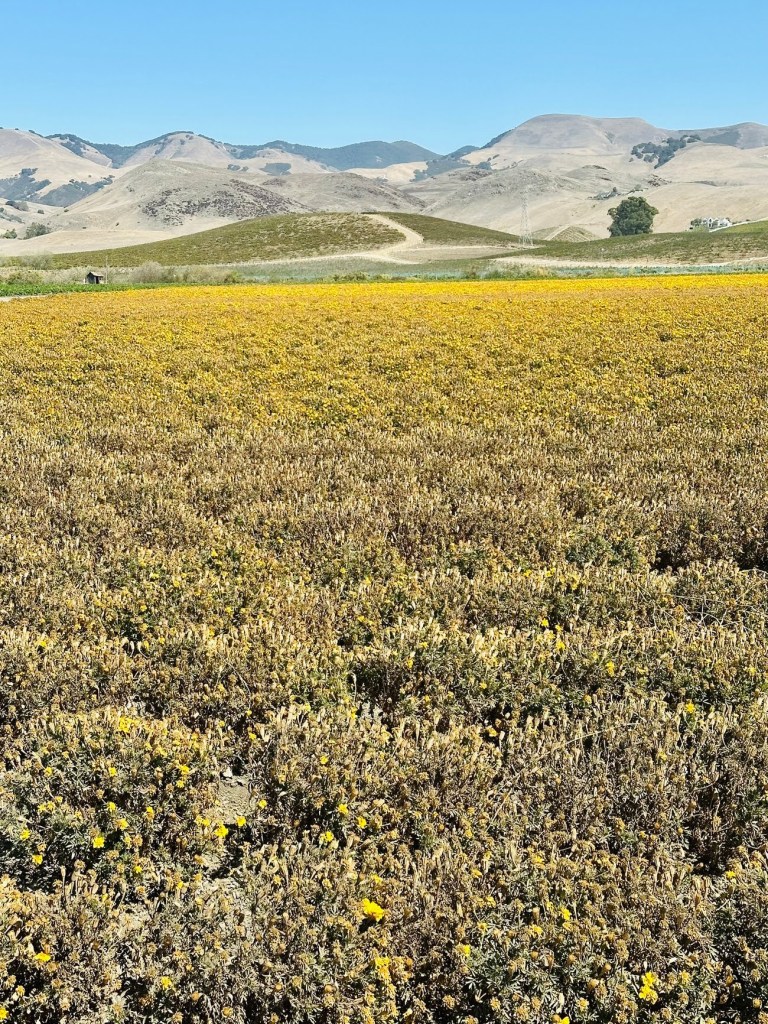
I ended my day in the cellar with head winemaker Tyler Eck, who shared sips of some fermenting trousseau before taking me into the tasting room. In between glances out of the window at the grape and citrus rows stretching out toward the morros, we talked about his established Dunites brand as well as the new Greengate, which includes a zesty, chillable red made from trousseau, poulsard, and pinot.
Then there’s Vestre, the most foreign venture for Tyler. “I’d never touched a Paso Robles grape before,” he laughed. “I’d never seen malbec.”
We tasted a few of his 2025s, including a peppery cab franc–led blend and a single varietal malbec, aged in concrete to keep it fresh. For not knowing what he’s doing with these grapes, they’re pretty thrilling wines.
Once the restaurant opens, we’ll discover if these dazzling hospitality dreams can attract the steady clientele from S.L.O. and beyond required to succeed, helping to make the Edna Valley a culinary destination akin to Los Alamos. It may be as easy as getting more folks to realize how convenient and compelling this region is, because once people catch the S.L.O. Coast bug, we always come back.








You must be logged in to post a comment.