

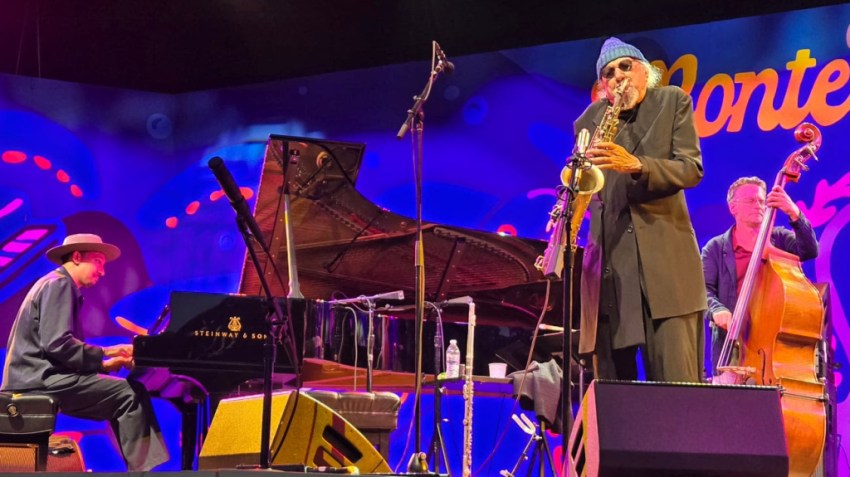
Do you know the way to Monterey? A recurring question: How best for the jazz-seeking Santa Barbaran to heed the potent late September call of the Monterey Jazz Festival, which is at 69, the world’s oldest and also one her finest jazz fests?
Of course, there is the standard, pragmatic choice, to barrel up the King’s Highway, California’s main artery of the 101. But the more soulful choice, if a bit longer and twistier, is the twining seaview trajectory of Highway 1, hugging the jagged, climbing coastal route through the magic troll hamlet of Big Sur and the twinkly tourist-luring village of Carmel-by-the-Sea before landing squarely in the five-stage compound of the Monterey Fairgrounds.
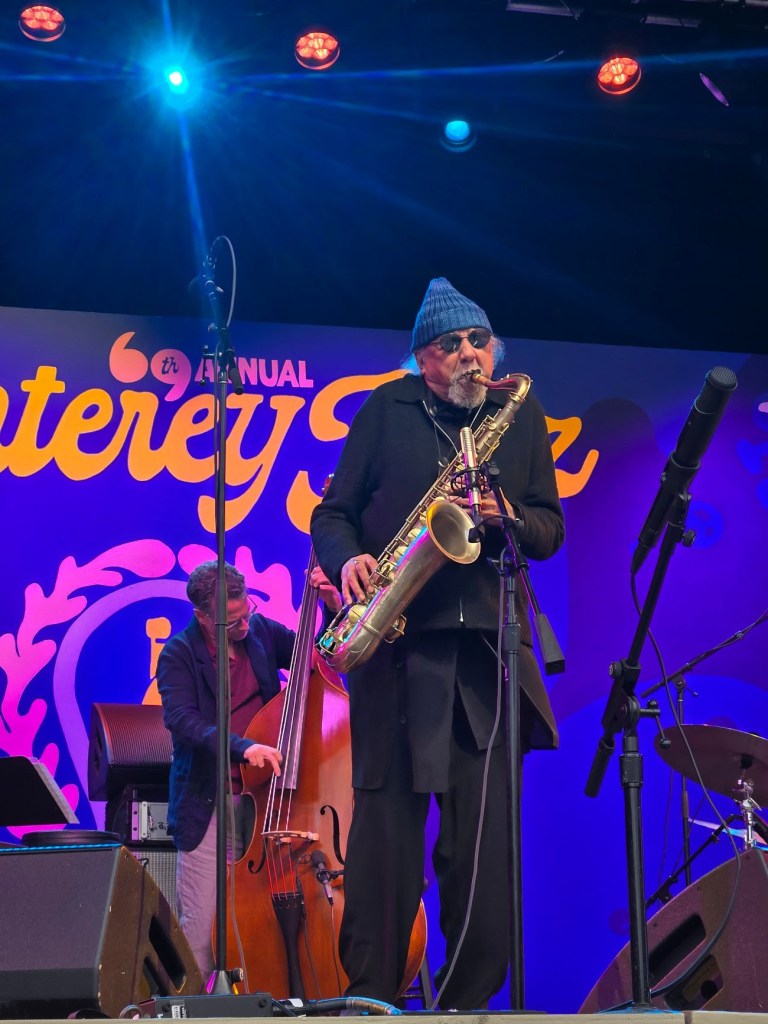
It was here that Jimi Hendrix burned his guitar, in a cathartic squall of feedback. And it was here that Charles Lloyd recorded the friendly epic “Forest Flower.”
A local angle beckons here. Worldly Montecitan jazz elder Lloyd spent his fame-avoidance “wilderness years” of the 1970s and early ‘80s in Big Sur, before settling more squarely in the lavish woods of Montecito and making his return to the global jazz spotlight/crosshairs. 2026 marked the 60th anniversary of Live at Monterey, the wildly selling (for jazz) album — with its centerpiece “Forest Flower” — which shot his career skyward, and ironically seemed to have helped pave the way for his downward/outward fall, into the arms of a Big Sur reclusion.
Perhaps that duality accounts for why he rarely performs his best, and best-known, tune. But there it was last Sunday on the Hendrix-anointed stage, stretched out in its lazy, lyrical glory as a set closer, in the gracious company of bandmates Gerald Clayton (piano), Larry Grenadier (bass), and minor miracle working drummer Brian Blade. (FYI, Grenadier joins Lloyd at the Lobero Theatre on November 12, along with guitarist Bill Frisell and drummer Kweku Sumbry).
“Forest Flower,” on the Monterey arena stage circa 2026, was a peaceable time-travel-ready idyll of a piece of music, a nice place to hang out in for 20 minutes or so as the day gently waned in Monterey. Lloyd himself seemed to enjoy the hang factor, lingering in the moment’s glow as he nudged the ending beyond a natural stopping point before the final soft two beats ending the tune. He then lingered on stage, beaming gently out at the vast adoring crowd right up until the moment the stage curtain pulled completely shut.
Jazz is a civic aroma in Monterey at festival time. The First Presbyterian Church’s Sunday service, dubbed “Jazz Sunday,” found Reverend Mark Peake noting that “God can turn blue notes into a love supreme.” (Hopefully, he/she spares the good blue notes.)
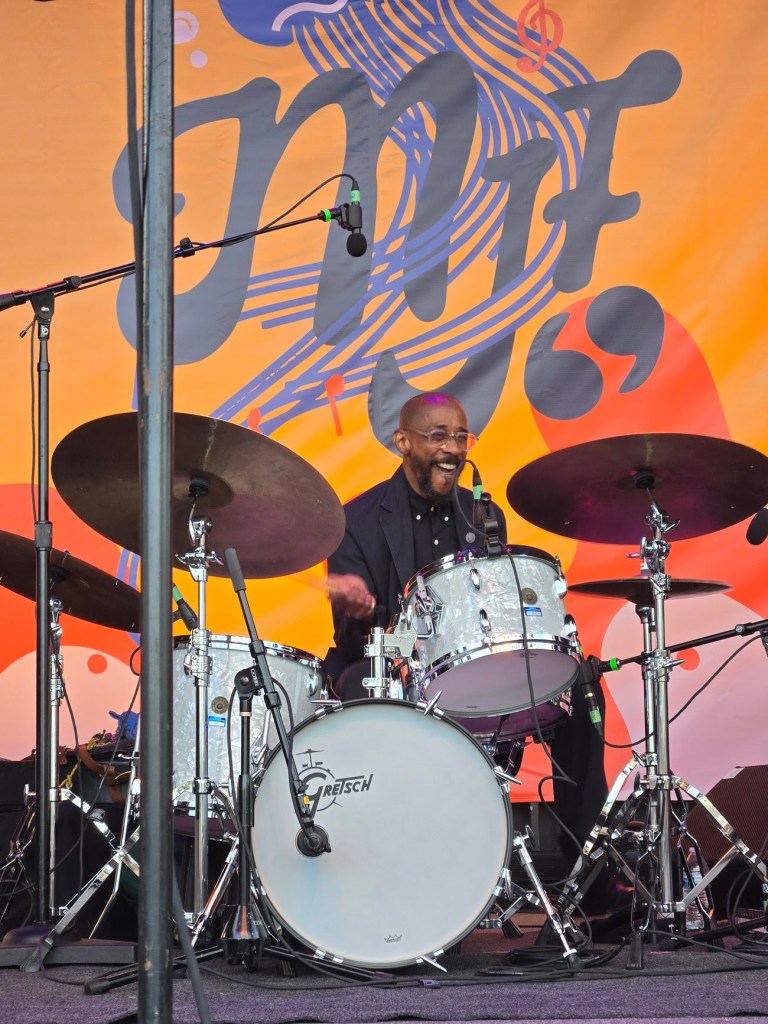
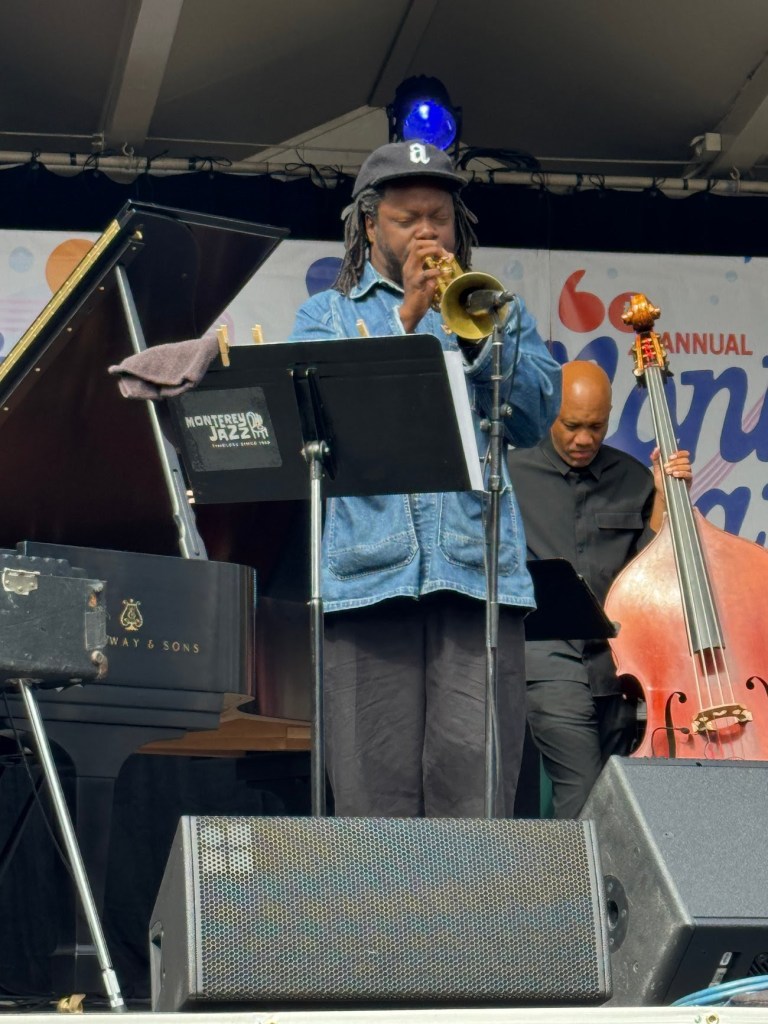
Back at the Fairgrounds, yes, there were plenty of strong artists of the male persuasion at the festival, who made significant impacts and helped further the history of America’s greatest indigenous art form. A short list would include Lloyd, the Herbie Hancock–Ron Carter tribute to Miles Davis, in whose unparalleled mid-sixties quintet they were an important part; Wynton Marsalis, making his final appearance as head of the Jazz at Lincoln Center Orchestra (coming to the Granada on February 13, 2027), albeit in a weirdly conservative and baby-stepping set; and such striking younger sensations as the gospel truth of Brian Blade, and muscular seeker, trumpeter (and artist-in-residence) Ambrose Akinmusire.
But some of the strongest impacts were made by artists of the other gender persuasion. For one, there was the remarkable and chameleonic Cécile McLorin Salvant, who never ceases to amaze, and who showed up both as featured guest of the JALC band, leading her own quartet, and cameo’d at the special “1958” all-star group celebrating the birth year of this festival (and this scribe, it so happens); fascinating maverick pianist Kris Davis; the multi-talented Meshell Ndegeocello, whose hypnotic minimalist commissioned work, America 250 further cemented her position as a prime socio-cultural adventurer; and subtle tenor sax powerhouse Melissa Aldana, whose Wayne Shorter–esque powers as player and composer with fresh ideas puts her in an upper echelon in her jazz generation.
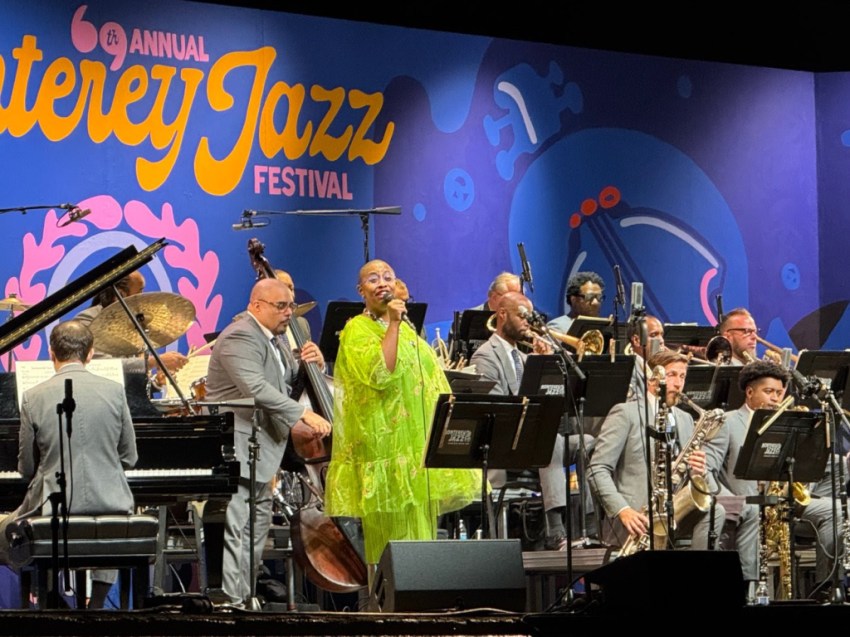
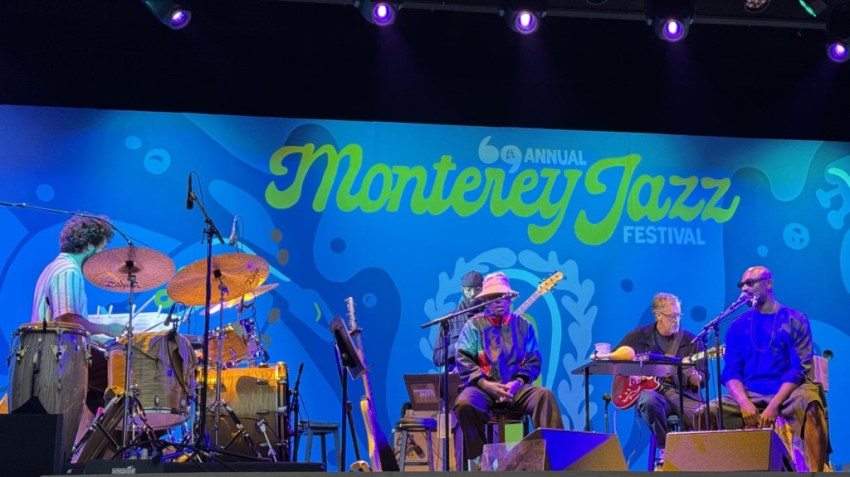
In an interview with the Monterey Weekly, Ndegeocello was asked about the power of music to effect change, or reflect social values beyond the world of words and notes. Her answer touches on the importance of events like the MJF: “I am trying to be a good citizen, but I don’t know. ‘This weapon kills fascists,’ to quote my brother Woody [Guthrie].
“In most cultures it is something that brings a community together, that gives catharsis. It is a celebration; we use it for mourning; we use it for praise. It is, to me, the foundation of truly remaining human.”
As First Presbyterian pastor Peake would say, “Amen.”
On Grand on State
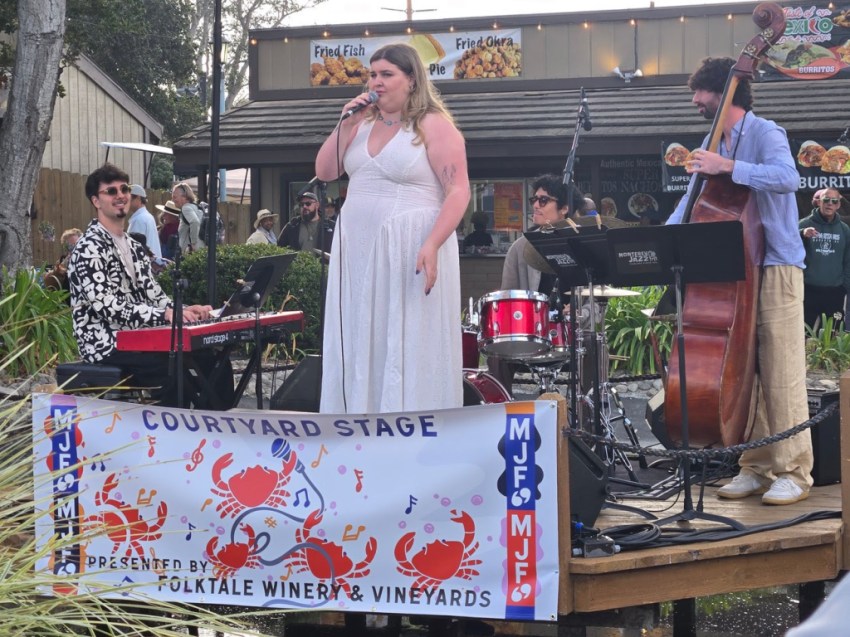
Speaking, tangentially but substantially, about Monterey and her connection to Santa Barbara … our brave young jazz club Grand on State just had its first brush with the notion of catching MJF artists on the way up or down from the Big Show. The impressive young N.Y.C.-based pianist Caelan Cardello brought his robust trio to the Grand last Thursday, a stopover on their way up to perform in Monterey with vocalist June Calvan.
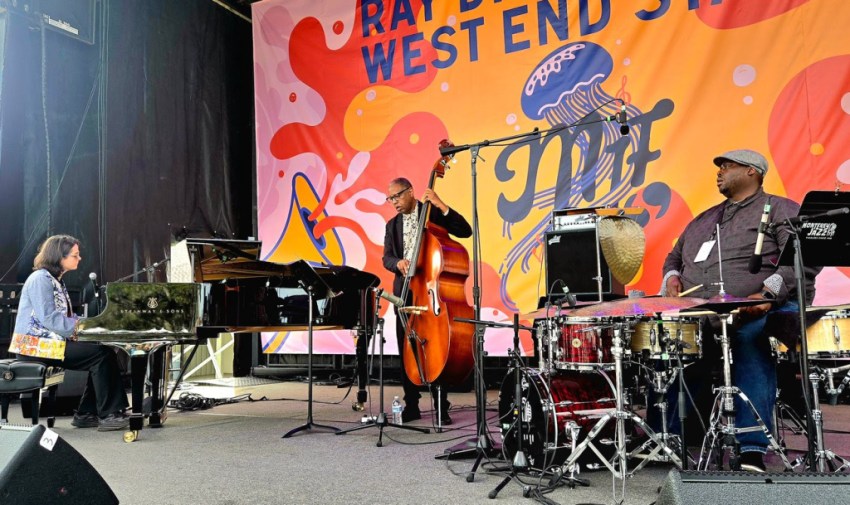
It was a hot night out at the Grand, before a couple of Sunday afternoon sets on the small Courtyard Stage at the festival, with rapt and eagerly attendant ears on both occasions. Later that night in Monterey, Cardello could also be heard showing his dazzling wares on the large Ray Drummond West End stage, during a tribute to the late bassist Drummond.
As Grand co-owner (and fine pianist himself) Brian Mann explained, he and his partner and wife, Jenna, were in the planning stages of their own club when they caught a set by Cardello, fast gaining attention as one of the rising new piano voices in New York, at the Black Cat Club in San Francisco and took note of his powers and composure. “Jenna had never been to a jazz club,” Mann said with a grin, “and we thought we should check one out. I have been to a few,” he said slyly, having played in many during his time as Larry Carlton’s keyboardist in the back when. “We heard Caelan and I was blown away, and wanted to have him play at our place.” Voilà, the circle completed last week.
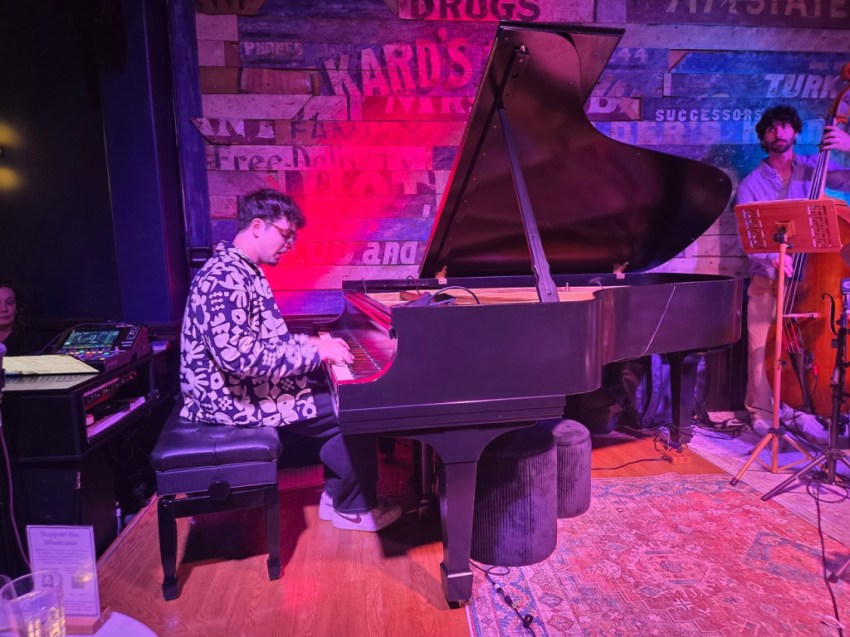
I could only catch a brief snippet of Thursday’s set as I was getting my head in a blues mood to head over to the Santa Barbara Blues Society showdown with Nick Moss, but caught a good whiff of what makes Cardello and crew special. In honor of John Coltrane’s recent 100th birthday, he called on one of the untitled originals from the 2018 Coltrane release Both Directions at Once: The Lost Album (hear here), and Cardello summoned up proper McCoy Tyner’s sinew and invention on the tune’s heated turf.
Turning the temperature down, the trio then laid nicely into the easy-does-it medium swing heat of Tommy Flanagan’s “Beyond the Blue Bird.” Cardello put the Grand’s Steinway grand through some magnificent paces last week, with a jazz historical sweep and command seemingly beyond the ken of his agile 26-year-old hands. He made a room full of fans in this town last week.
TO-DOINGS:
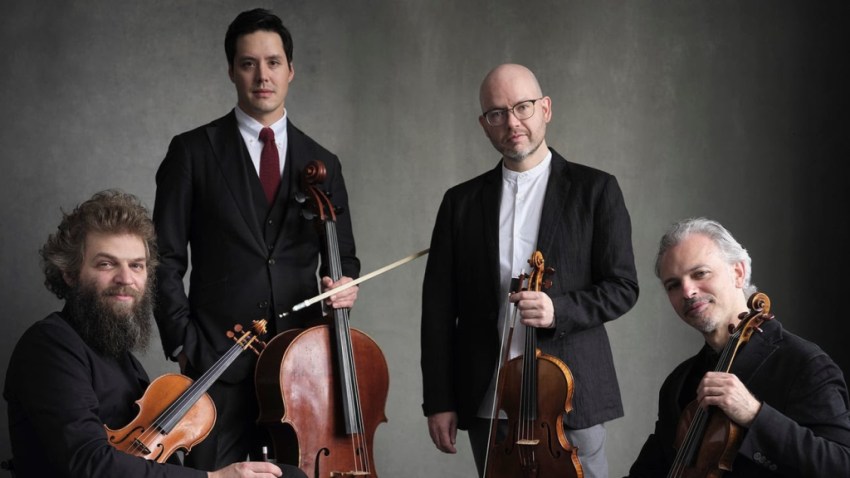
Count the string quartet Brooklyn Rider among a clutch of sharp, accomplished and expansive-thinking young ensembles making the rounds, who we have been lucky to catch live in town — at Campbell Hall and Hahn Hall. To this list we can add the enchantingly intimate sanctuary of Los Olivos’s St. Mark’s-in-the-Valley, when the modest but important Santa Ynez Valley Concert Series brings them to the valley on Friday, October 2.
Expansive is the word in describing their program, in the valley. For historical classical grounding, they will perform string quartet-architect Haydn’s “Sun” Quartet and Beethoven’s “Razumovsky” Quartet, but then add to that foundation a heady party mix of an arrangement of Bob Dylan’s “The Times They Are A-Changing” and newly commissioned pieces (commissioning being one of their admirable in-house practices) by jazz clarinetist Don Byron, Angélica Negrón, and Ted Hearne. In short, this is a hot ticket for adventurous listeners.
It’s another big weekend of music demanding attention in town. Isla Vista–launched, semi–Santa Barbara–based friendly neighborhood pop star Jack Johnson eases into a two-night stand at the Santa Barbara Bowl, Saturday and Sunday, bringing his globe-trotting SURFILMUSIC tour back home, after giving us preview tastes at the Arlington and the Lobero.
This Saturday at the Stow House in Goleta, the much-prized and 54-year-old (!) Santa Barbara Old-Time Fiddler’s Festival (formerly the “Old Time Fiddler’s Convention”) brings its deeply rootsy and rustic musical goodness to this historic property, always worth a visit, but especially at Fiddler’s Fest time.
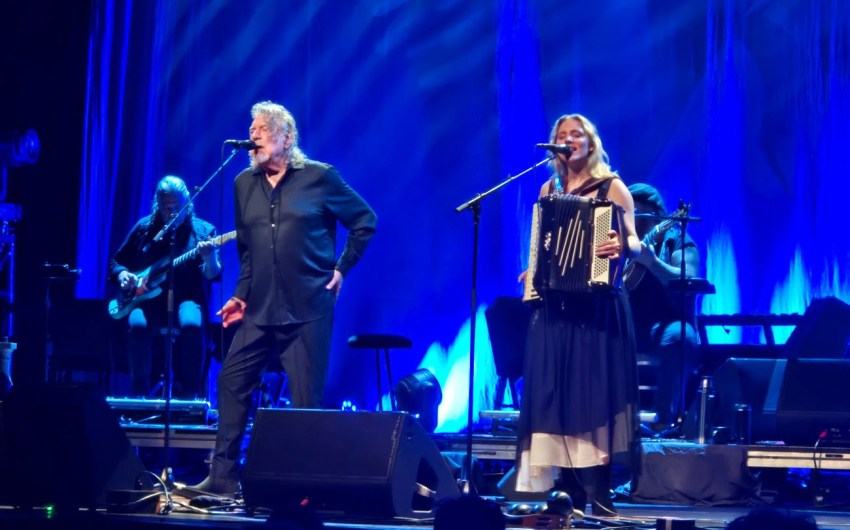
Rickie Lee Jones is in love … with the Lobero Theatre. Or she should be, given the warm connection of this artist and that room, where she returns on Sunday, October 4. Tonight, October 1, at the Arlington Theatre, Robert Plant brings his latest Americana project, Saving Grace, with co-lead singer Suzi Dian. SOhO’s week includes Sunday’s always welcome return visit from blues-rocker Alastair Greene, who grew up here and is touring the world with his steamy fine blues-rockin’ guitar shredding and vocal style.
And not to forget, Santa Barbara Acoustic continues its 10th anniversary season with noted British guitarist-singer Sarah McQuaid, at the Parish Hall of the Unitarian Church downtown.
Once again, no excuse for being a couch potato this weekend, if good live music is your jam.




You must be logged in to post a comment.