

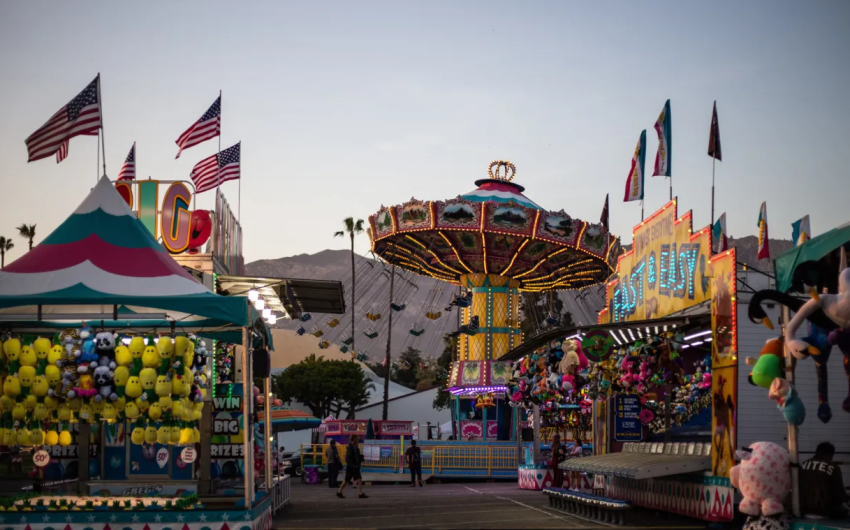
They could have gone anywhere. After all, who could stop a bunch of circus elephants determined to make a dash for freedom in the dark? The Ringling Brothers’ elephants could have headed for the beach, the Bird Refuge, or the mansions of Montecito. But no. They headed for the palm trees. (Maybe the trees reminded the elephants of home.)
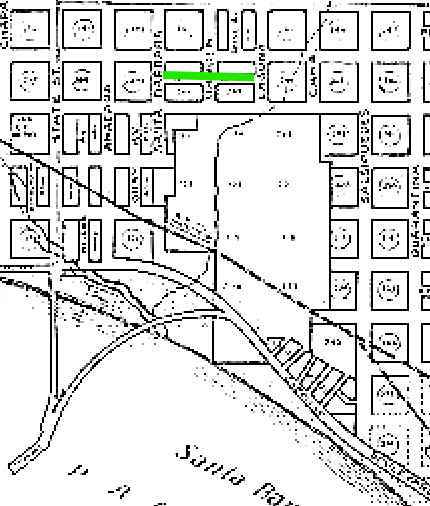
Palm Avenue is right next to the Funk Zone, which was a vacant area where visiting circuses set up their tents and grandstands way back when. (This tiny street is sandwiched between the 101 Freeway and Gutierrez Street, and is bisected by Garden Street.)
The elephants’ midnight scramble in 1909 made headlines across the country. The descriptions of their escape varied from terrifying to ho-hum. “Lions added their roars to the wild trumpeting of the elephants. In a few seconds, eight of the elephants were tearing through the canvas sides of the tent and making off down the road. They stopped for nothing” (Pomona Daily Review, September 20, 1909).
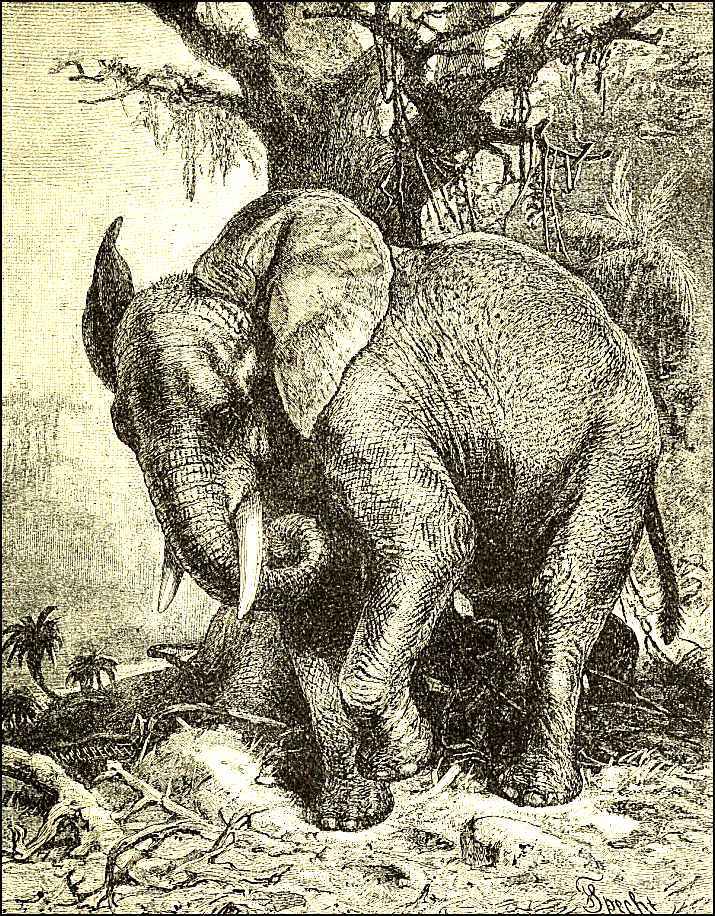
“The gigantic animals did considerable damage in the vicinity of Palm Avenue and East Montecito Street, rooting up trees that barred their way, trampling down flowers, lawns and shrubbery, tearing down fences and tents, and demolishing chicken houses and sheds in their path. And all this, besides the panic that they caused in the neighborhood” (Santa Barbara Morning Press, September 21, 1909).
“The district which the elephants invaded, today presents a devasted appearance. The damage done was estimated at several hundred dollars.” (San Francisco Bulletin, September 20, 1909).
“The animals were merely playful and made no attempt to harm any person” (Nevada State Journal, September 21, 1909).
Finally, the keepers collected the perambulating pachyderms and herded them back to the circus. Fortunately, no one was injured, but property owners expected the Ringling Brothers to pay for the damage. (The bros took offense and avoided our city for years.)


Palm Avenue People
Okay, enough about the midnight miscreants on Palm Avenue. On to the humans. Some of the former residents were mighty interesting. Although today there are only two or three homes left on the street, there were more than a dozen in the past.
One of the homes was the residence of the family of José Espinosa (1844-1926) in the early 1900s. Nicknamed “El Vaquero Viejo,” he was a foreman on Santa Cruz Island for many years. “He was an artist with a riata [lariat], a fine rider and knew cattle…. José was a grand old man…. He could not read the printed page, but he could read a track in the dust as well as any Indian” (Clifford McElrath, Noticias, spring 1962).
Soon after the freeway came through this area, the street began to transition from residential to commercial. In 1948, there was even — gasp! — a neon sign on Palm Avenue.
There were a few families living on Palm Avenue in the 1960s. Teofilio Arrellanes (1884-1967) was a longtime resident of the street with deep roots in Santa Barbara. He was a direct descendant of a soldier who arrived at the Presidio in 1782. “Noted for his encyclopedic memory concerning old Spanish and Mexican history in the Santa Barbara area, Mr. Arrellanes contributed heavily to several of Walker A. Tompkins’ books of local history, and also was instrumental in identifying many historical photographs” (Santa Barbara News-Press, January 19, 1967).
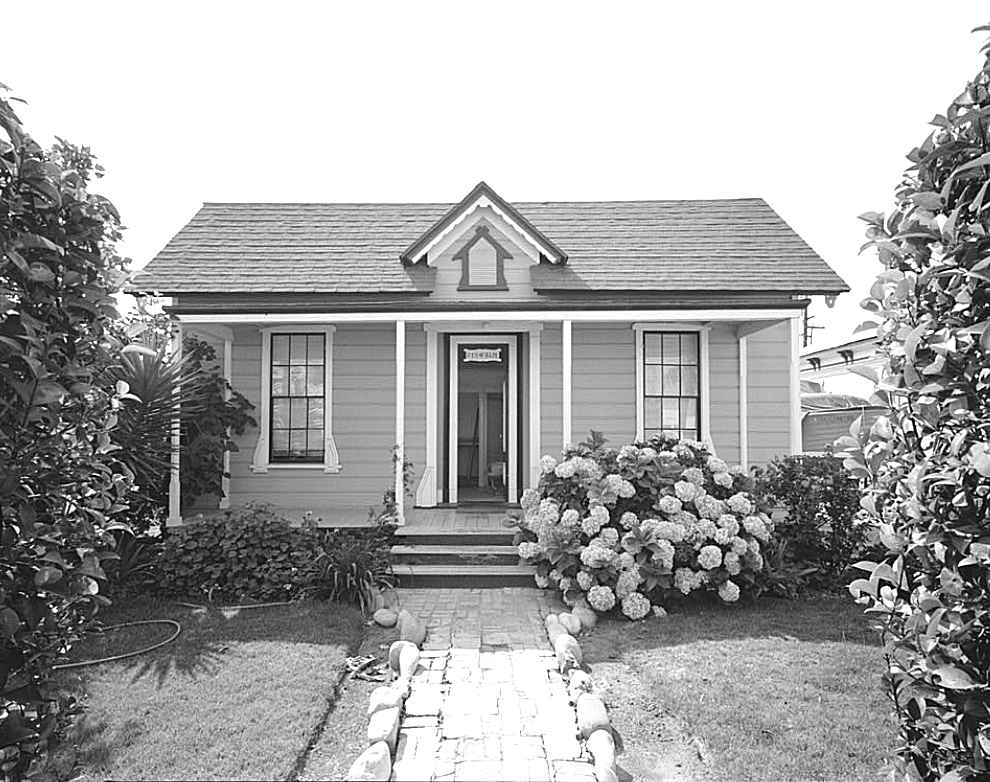
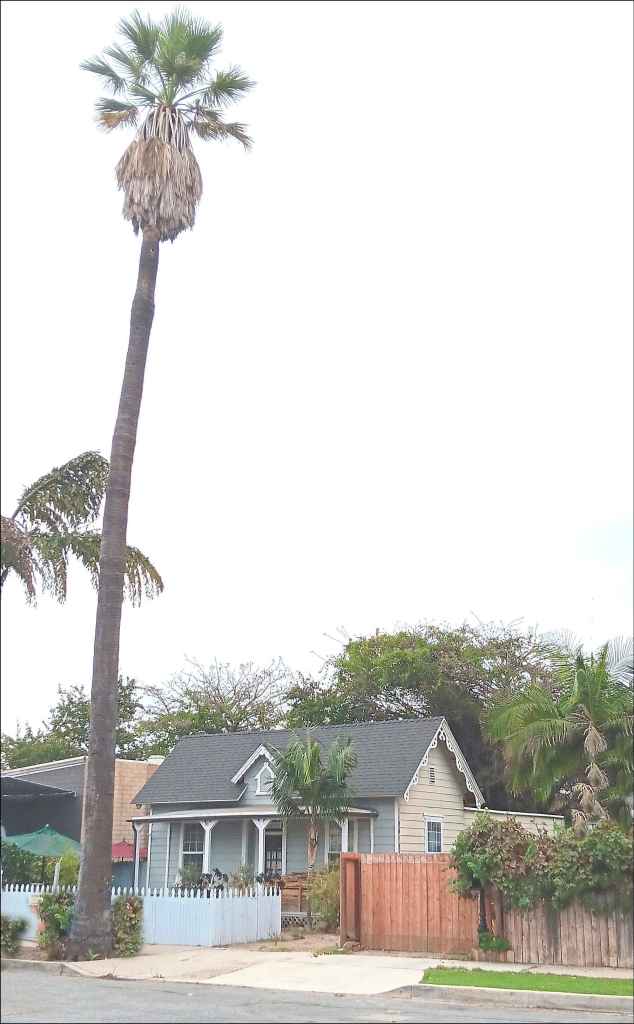
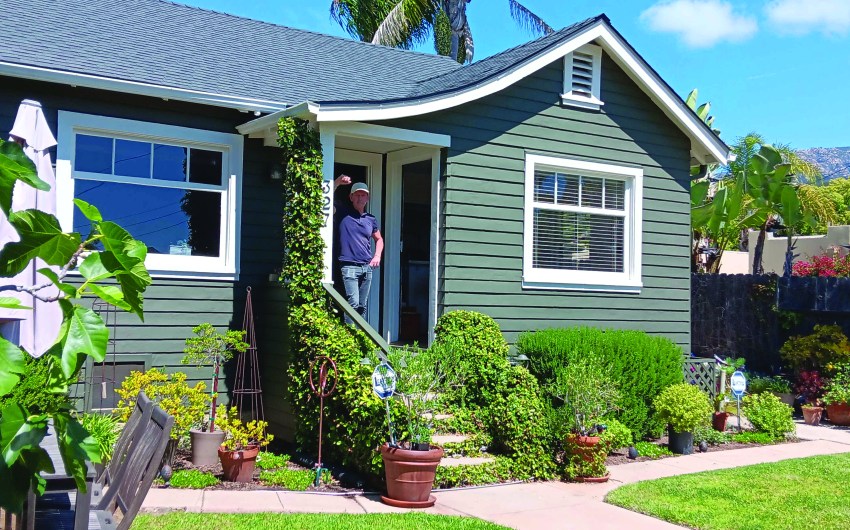
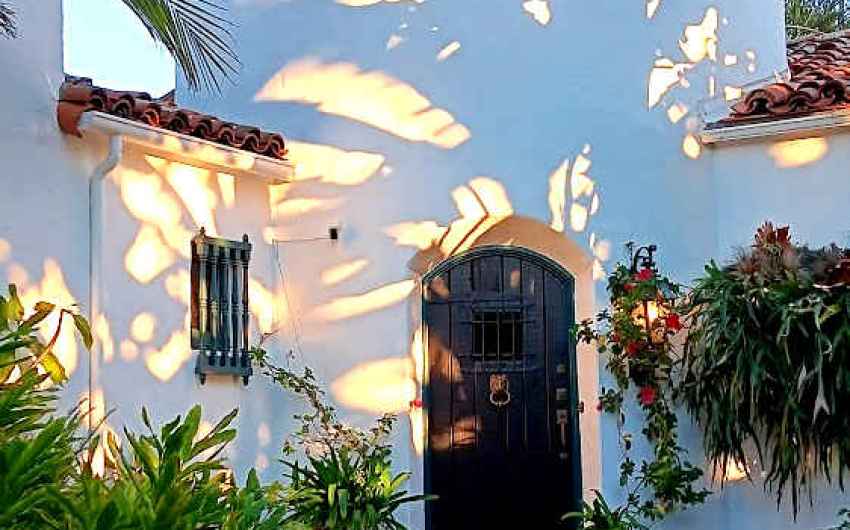
A couple of the original homes (c. 1890s) still stand at 212 and 208 Palm Avenue. The home at 212 is a city-designated Structure of Merit.
Please do not disturb the residents of these homes.
Betsy J. Green is a Santa Barbara historian, and author of Discovering the History of Your House and Your Neighborhood, Santa Monica Press, 2002. Her website is betsyjgreen.com.



You must be logged in to post a comment.