
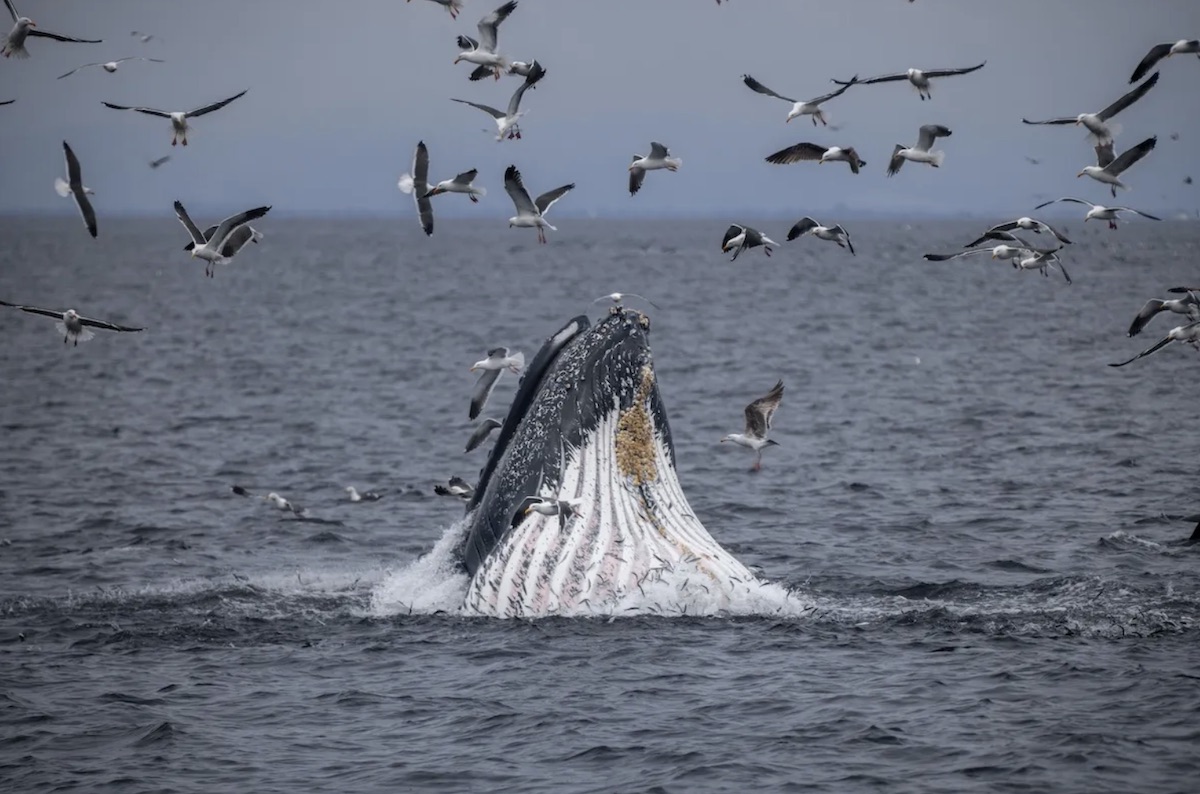
Just off the coast of Carpinteria, where sharks and surfers play in the waves and fishing boats dot the horizon, a new line is being drawn in the Pacific.
It marks one of California’s newly approved Marine Protected Areas (MPAs), adding to the state’s network of regulated ocean zones (dubbed “underwater state parks”) for the first time in 12 years.
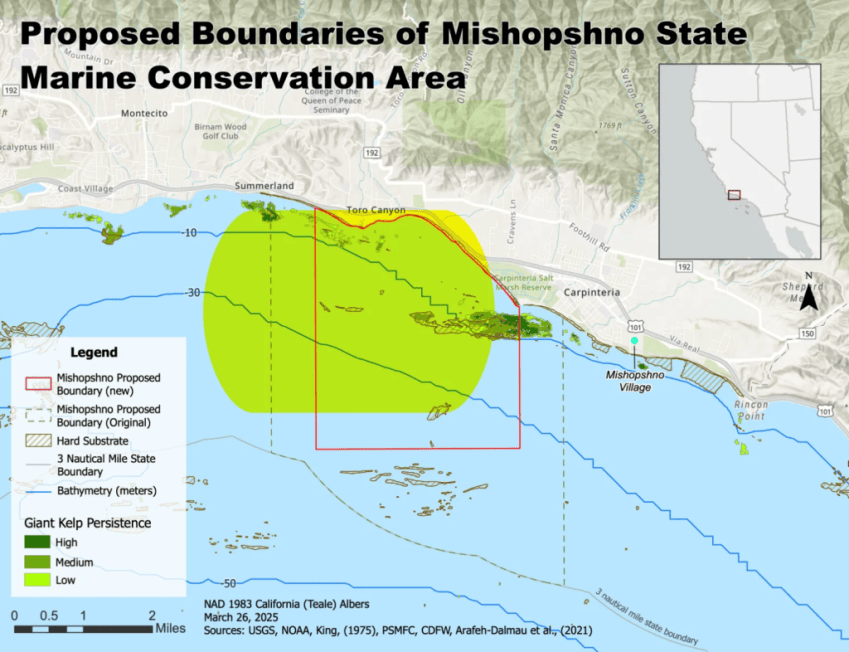
Carpinteria’s new MPA covers nine acres from Toro Canyon to the Carpinteria Salt Marsh, stretching almost 3 nautical miles offshore. It was named “Mishopshno” after the ancient Chumash village that neighbors it, and it will be tribally co-led with the Santa Ynez Band of Chumash Indians. The state’s Fish and Game Commission approved it and other new MPA’s during its meeting on Thursday.
Mishopshno was an important coastal village and was closely connected with maritime traditions such as the building of tomols, said Tribal Chairman Kenneth Kahn.
“Our connection with the ocean is a living relationship stretching back thousands of years, carrying with it a responsibility to protect these waters and the life they sustain,” Kahn said.
He continued, “Protecting this area honors that history while ensuring future generations can maintain a relationship with these waters.”
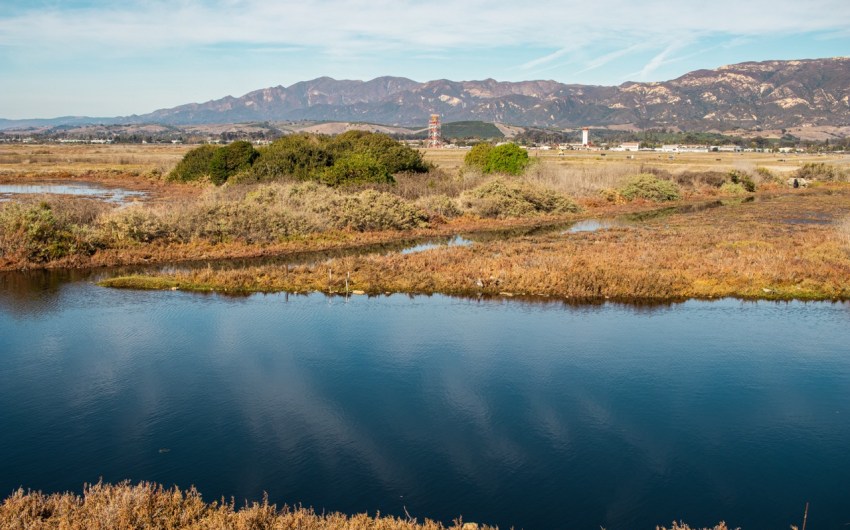
Conservationists said that the new “Mishopshno State Marine Conservation Area” (SMCA) — an SMCA is just a specific type of MPA — will protect Carpinteria’s offshore rocky reefs, salt marsh, and kelp forests, all teeming with life. It harbors a newfound nursery for juvenile great white sharks, they said, as well as opportunities for human recreation.
The Santa Ynez Band submitted the petition for the new MPA alongside the Environmental Defense Center and the Natural Resources Defense Council.
With its creation, extractive uses — such as drilling and trawling — will be prohibited. The goal is to protect and study the marine life that live there while honoring Chumash stewardship and heritage, according to the petitioners. Recreational fishing from shore and tribal take by Chumash people will still be allowed, as well as recreational uses such as surfing and diving.
The approval came after several public hearings, thousands of public comments, and conflicting recommendations from state agencies.
Back in 2023, the public submitted 15 petitions proposing to significantly alter existing MPAs or create new ones as part of the state’s decadal review of its MPA network.
The state wasn’t expecting to receive such a hefty pile of proposals, submitted by nonprofits, tribes, and commercial fishermen. Nonetheless, it embarked on the task of sorting and reviewing them. A years-long bureaucratic process followed.
It’s been divisive since the beginning. The state’s Department of Fish and Wildlife was the first to review the proposals, and recommended the commission deny all of them. The Ocean Protection Council was next, and recommended the approval of petitions that would strengthen the network. However, the Fish and Game Commission had the final say.
More than 50 members of the public spoke for or against Mishopshno during the commission’s Thursday meeting. It was a healthy mix of arguments that have echoed throughout the process. Conservationists were in full support. Fishermen, however, described it as another “nail in the coffin.”
Recreational and commercial fishermen said they have already lost ground to state and federal restrictions, pushing them to fish in smaller and smaller areas.
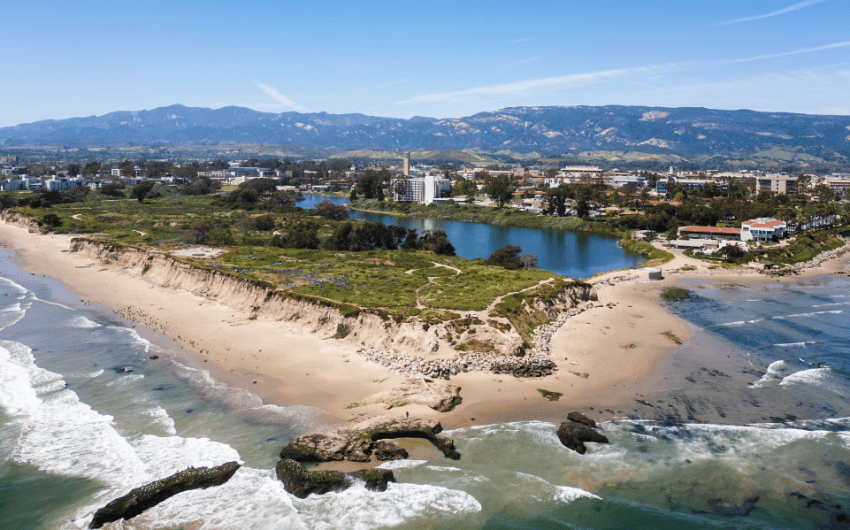
The waters off Santa Barbara County, including the Channel Islands region, already had 20 established MPAs. Campus Point SMCA near UC Santa Barbara is one of the most well-known.
Devin O’Dea with the Coastal Conservation Association of California said he went to UC Santa Barbara before the MPAs were established. “All the locations where I fished when I went to school there are now an MPA,” he said during public comment. “This is the last location that I fished when I went to school that is not a Marine Protected Area,” he said of the Mishopshno proposal.
Others claimed a new MPA along Carpinteria’s coastline is “biologically unnecessary” and unsupported by adequate scientific analysis. They also called out the potential economic impacts. Why add more stress to fisheries that are already highly regulated? Why further risk people’s livelihoods?
“Why can’t we all just enjoy this place?” asked Jason Diamond, a Carpinteria-based sportfisher who runs Santa Barbara Landing with his wife, Jaime. Their family-run charter business leads educational and community programs, alongside fishing excursions. The new MPA threatens their small business, the memories it creates, and the people it employs, Jaime Diamond said.
Conservationists and Chumash representatives, on the other hand, argued that the area’s marine life and overall health should be protected for future generations; and also noted it is “living” Chumash homeland, involving a group of people who have been historically disenfranchised in land decisions.
Speakers also said Mishopshno was originally proposed to encompass 18 square miles, but its area was cut in half in March 2025 as a “compromise” after community outreach.
Conservation opportunities of this scale are rare, many emphasized, noting it will help meet the state’s goal to conserve 30 percent of California’s coastal waters by 2030. According to the California Natural Resources Agency, as of June 2026, 27 percent of California’s lands and 21 percent of its coastal waters are conserved.
Conservationists were pushing for the commission to approve the new MPAs to inch those numbers up, especially considering growing threats to the ocean in the form of marine heatwaves and global overfishing. Studies from the state show that the MPA network supports bigger and more abundant fish populations than its unregulated counterparts and increases the ocean’s ability to stabilize itself in the face of various stressors.
Ultimately, the commission approved creating the Mishopshno SMCA in a 3–2 vote.
The commission also approved a new 9.18 square mile SMCA at Point Sal in Santa Barbara County near Vandenberg Space Force Base, with a name to be determined after consultation with the Chumash people. Point Sal, cosponsored by the Northern Chumash Tribal Council and NRDC, will protect the waters around the Point Sal headland, which include sacred Chumash cultural resources, the NRDC said.
Other proposals to expand the MPA network at Santa Cruz, the Channel Islands, Cabrillo, and Catalina were denied or withdrawn. Nevertheless, Point Sal and Mishopshno are major wins for conservation efforts, the NRDC said in a press release.
“Chumash Tribes asked California to protect their ancestral waters, and today the state said yes,” said Sandy Aylesworth, director of the Pacific Initiative at NRDC.
“While the Trump administration pushes new oil drilling off our coast, California just chose to protect it, and to do so alongside the people who have stewarded these waters and called them home for thousands of years,” Aylesworth said.
But the lines are not drawn automatically. According to the NRDC, there will be a series of regulatory meetings before the new MPAs take effect — contributing to a regulatory process that could take a couple of years before the protections are in place.
The Fish and Game Commission will hold three hearings to address next steps and then the California Department of Fish and Wildlife will handle the process of creating the regulations.
Related Posts



Premier Events

Sat, Oct 17
9:00 AM
Santa Barbara
Mesa Harmony Garden Fall Plant Sale Continues…
Fri, Oct 23
2:00 PM
Santa Barbara
Music & Meditation: Clarinetist Nancy Mathison & Pianist Antonio Artese
Sat, Oct 24
9:00 AM
Santa Barbara
Mesa Harmony Garden Fall Plant Sale Continues…

Sun, Oct 18
9:00 AM
Santa Barbara
“Move with MADD” Santa Barbara 3K Community Walk & Fundraiser to Prevents Impaired Driving
Sun, Oct 18
11:00 AM
Santa Barbara
17th Annual Asian American Neighborhood Festival

Sun, Oct 18
1:00 PM
Santa Barbara
Lincoln Elementary School 150th All Year Reunion
Sun, Oct 18
3:00 PM
Santa Barbara
Seaworthy Author Talk -Will Sofrin

Sun, Oct 18
3:00 PM
Goleta
Free Concert Offers Journey Through Italian Music

Mon, Oct 19
7:00 PM
Santa Barbara
PFLAG Santa Barbara October Meeting: “Schools and Inclusive Practices – What creates a safe and inclusive school?”

Tue, Oct 20
7:00 PM
Santa Barbara
Get Out the Vote Night @ SOHO, Music Performance by Loyal Defense Workers

Wed, Oct 21
6:30 PM
Santa Barbara
Teflon Comedy/Non-Schtick – Evening of Comedy

Thu, Oct 22
5:30 PM
Santa Barbara
Best Fest: A Celebration of the Best of Santa Barbara® Readers’ Poll 2026
Sat, Oct 17 9:00 AM
Santa Barbara
Mesa Harmony Garden Fall Plant Sale Continues…
Fri, Oct 23 2:00 PM
Santa Barbara
Music & Meditation: Clarinetist Nancy Mathison & Pianist Antonio Artese
Sat, Oct 24 9:00 AM
Santa Barbara
Mesa Harmony Garden Fall Plant Sale Continues…
Sun, Oct 18 9:00 AM
Santa Barbara
“Move with MADD” Santa Barbara 3K Community Walk & Fundraiser to Prevents Impaired Driving
Sun, Oct 18 11:00 AM
Santa Barbara
17th Annual Asian American Neighborhood Festival
Sun, Oct 18 1:00 PM
Santa Barbara
Lincoln Elementary School 150th All Year Reunion
Sun, Oct 18 3:00 PM
Santa Barbara
Seaworthy Author Talk -Will Sofrin
Sun, Oct 18 3:00 PM
Goleta
Free Concert Offers Journey Through Italian Music

Mon, Oct 19 7:00 PM
Santa Barbara
PFLAG Santa Barbara October Meeting: “Schools and Inclusive Practices – What creates a safe and inclusive school?”
Tue, Oct 20 7:00 PM
Santa Barbara
Get Out the Vote Night @ SOHO, Music Performance by Loyal Defense Workers
Wed, Oct 21 6:30 PM
Santa Barbara
Teflon Comedy/Non-Schtick – Evening of Comedy
Thu, Oct 22 5:30 PM
Santa Barbara


You must be logged in to post a comment.