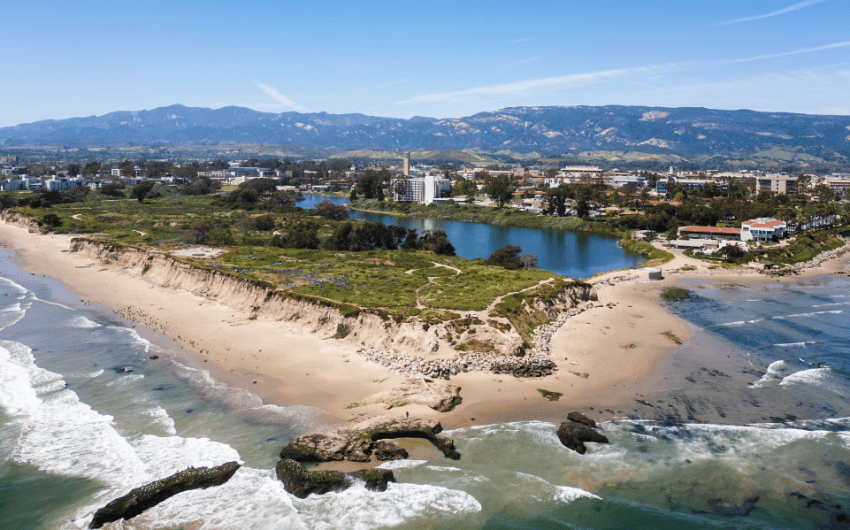
California’s coastline has been sectioned off like a puzzle, the pieces of which fall under two broad categories: protected or not.
Marine protected areas (MPA) encompass 16 percent — about 852 square miles — of state waters. Like underwater state parks, they are safe havens for marine life while supporting recreational activities, and in some cases, limited fishing. Many groups would like to see them expanded, but others think their current size suffices. The “bigger is better” camp is countered by fishermen who say their livelihoods are already restricted within tight boundaries. As the state considers changing its MPAs as part of a decadal review process, petitions have come from both sides to reshape the MPA puzzle.
Public hearings are currently underway for the proposed changes to the MPA network, including two regional California Fish and Game Commission meetings in Goleta on May 5 and 6.
In total, the public submitted 20 petitions to modify the state’s MPA network, each containing dozens of unique requests for regulation changes. For example, two petitions, submitted by the Environmental Defense Center (EDC), aim to expand protections off the Central Coast.
A new, tribally led MPA is suggested for the coastal waters of Carpinteria. Named Mishopshno, it refers to the adjacent Chumash village of the same name, a thriving community where the Chumash built tomols. It would cover nine acres and prohibit the take of all living, geological, or cultural marine resources, except for the recreational take of finfish from shore using hook-and-line. Non-extractive activities such as swimming would also be allowed.
An existing MPA, around Anacapa Island, is petitioned for expansion to protect eelgrass, a foundational plant species that benefits water quality and serves as a refuge and nursery for marine life. The petition is seeking to restrict seasonally occurring lobster trapping and anchoring that is “destroying eelgrass beds that are otherwise thriving in the adjacent Anacapa” State Marine Reserve, according to the EDC.
Now, the state is faced with a choice: To expand or not to expand?
The California Department of Fish and Wildlife has already recommended denying a majority of the petitions. So far, 10 of 15 petitions to significantly modify the MPA network — including expansions and reductions — have been recommended for denial, while the remaining five are tribally led and still under evaluation.
The negative recommendation is a red flag for environmentalists and Chumash leaders. At a tribal committee meeting on April 14, people from both sides of the issue spoke out.
Tribal leaders cited an “enduring relationship with the ocean” and the “magical” coastlines that not only are beautiful but also support marine animals and plants essential to the coast’s ecological health. If these places are lost, it’s not just habitat that is affected, but also longheld emotional ties to the ocean. Fishermen and some recreational seafarers were grateful for the state’s efforts to protect marine life, but expressed concern that their access is already limited, and that more restrictions would reinforce barriers already disproportionately faced by some groups.
Chris Voss, president of the Santa Barbara Commercial Fishermen, said they support tribes in reestablishing their management and stewardship of the coast, but they would like to reduce the friction between management and fishermen, who have “already learned to live and flourish around the existing network.”
These recommendations are the first step in the decision-making process to approve or deny the proposed changes to the state’s MPA network. Following the regional public meetings in May, the California Fish and Game Commission plans to decide how it would like to move forward on June 17, 2026.
Learn more about the MPA petition process and timeline here. Instructions on joining the Fish and Game Commission meetings are here.