
State Street Ballet’s
Dracula Brings the
Ultimate Gothic Story to Life
Season Opener Features Philip Glass Score,
Nicolas Blanc Choreography, and the Kronos Quartet Live
By Jatila van der Veen | October 29, 2026
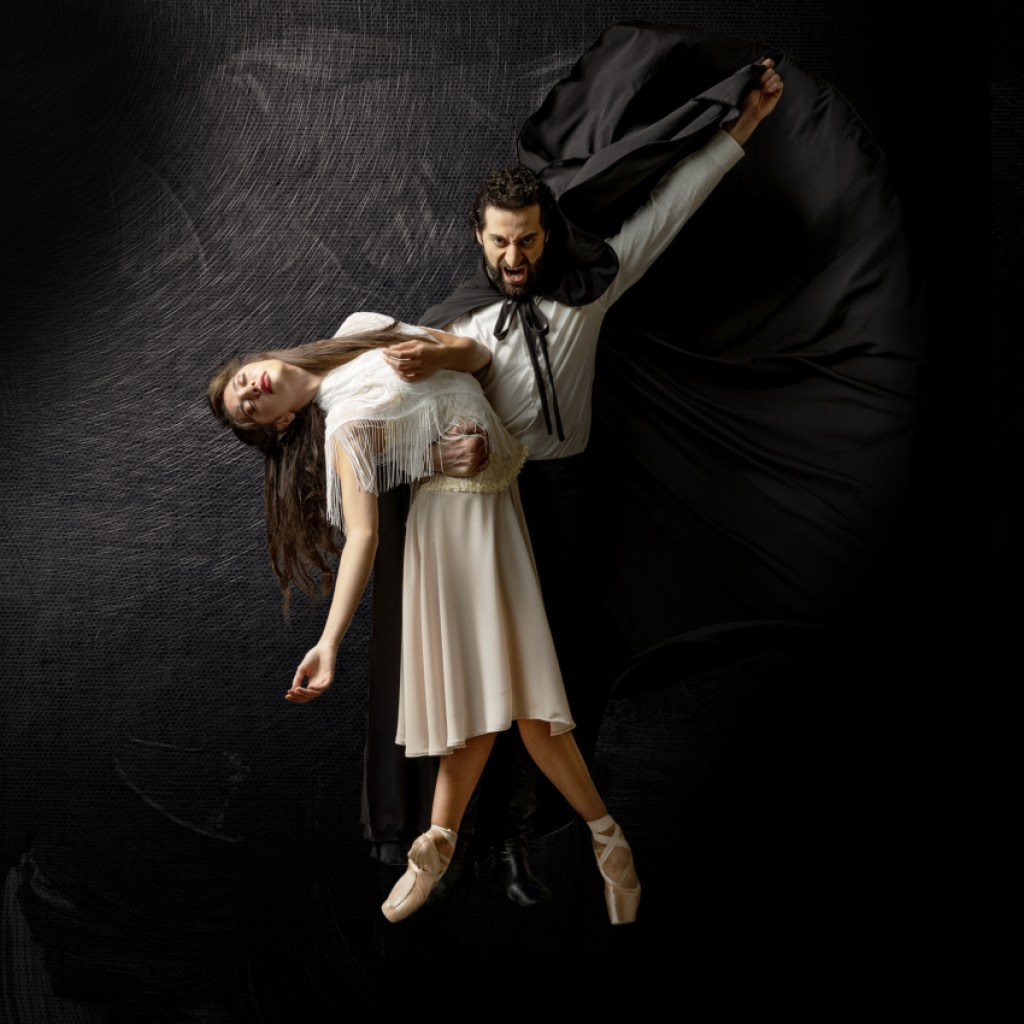
More than a ballet, State Street Ballet’s Dracula: A Dark Shadow — which opens the 2026-27 season on October 30-31 at the Granada — is a magical syzygy: a perfect alignment of celestial bodies in which music and musicians, choreographer and dancers, costumes and lighting come together in a powerful conjunction that will take your breath away. As I watched rehearsals in the studio, the Nicolas Blanc choreography matched the Philip Glass music so perfectly and was executed so powerfully, with such precise musicality by the dancers, that I literally “felt it” in my solar plexus!
This gut-punch, stomach-in-the-throat phenomenon happens when one’s brain and nervous system collaborate to create an intense physical sensation. State Street Ballet’s (SSB) Dracula combines intrigue, magic, beauty, and the irresistible attraction of the strictly forbidden to present the ultimate Halloween experience.
Even in rehearsal, it is frightening. Imagine how it will be with costumes, sets, lighting, and the Kronos Quartet playing ON STAGE.
The story begins on the eve of St. George’s Day, or Gjurgjovden, which in the Carpathian Mountains (Dracula’s home) is considered the most dangerous time of year for black magic, when “all the evil things in the world will have full sway” (Dracula, Chapter I).
Meet the Cast of Characters
The artists of State Street Ballet keep getting better and with Dracula, they are all pushing their limits, technically with Nicolas Blanc’s neo-classical choreography, and emotionally with their portrayals of the complex characters of this story. “What’s amazing … is that they are really intuitive … and I think that what’s interesting with those dancers is that very soon on, they dived into the story, [trying] to make sense of the story with me, and not just do steps,” said Blanc.
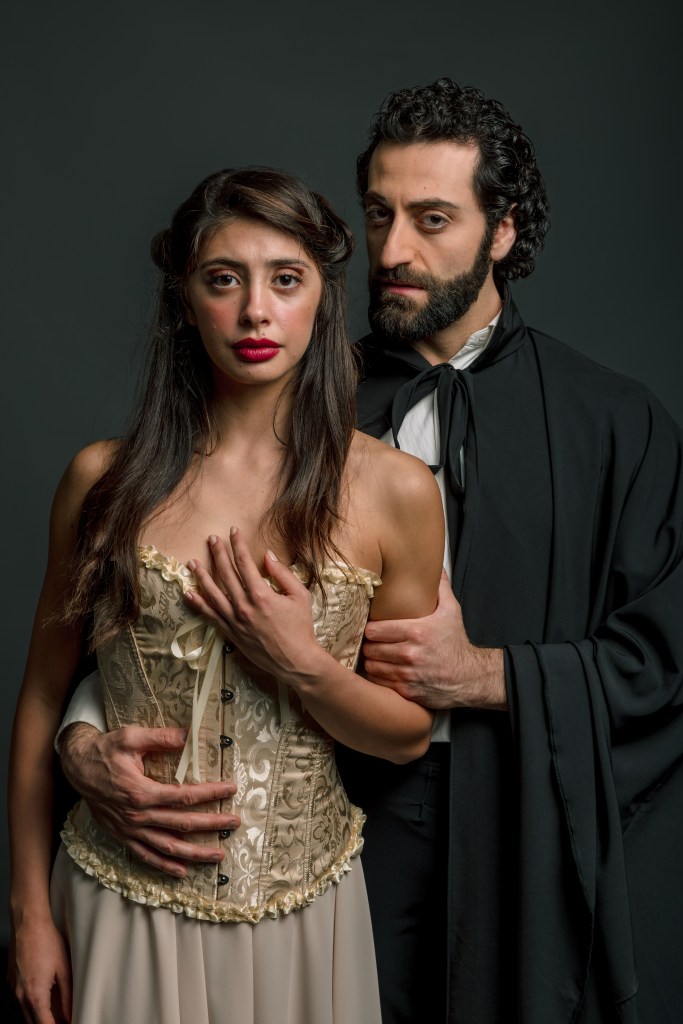
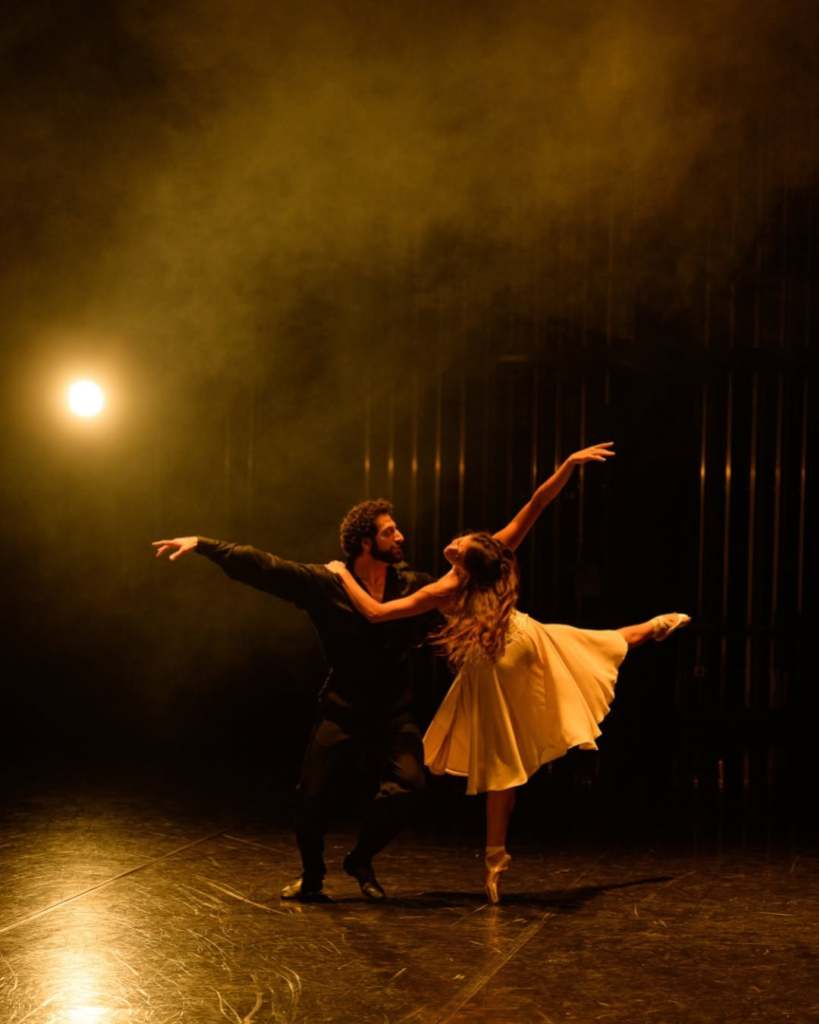
Count Dracula will be danced by the majestic Tigran Sargsyan, originally from Yerevan, Armenia. SSB’s rehearsal director, choreographer, and principal dancer with SSB and numerous other companies, known for his stellar portrayal of Tybalt last fall, Sargsyan is the quintessential Dracula. He not only looks the part — tall, dark, handsome, and buff-to-the-max — but his every movement is powerful, yet he moves silently, without weight, as if he really is a spirit without a body, from another world. As Sargsyan put it, “Like a cat.”
Literary critics describe Bram Stoker’s Dracula as a reaction to the Victorian era repressiveness toward sexuality, full of metaphors and innuendos regarding illicit desire. Sargsyan exudes sexuality from his very core, whether he is partnering men or women or dancing solo. His Dracula is controlling but irresistible. His victims, both female and male, are inexorably drawn to him, while he treats them with equal parts desire and contempt. He is mouthwateringly evil….
Mina will be danced by the exquisite Maria Rita Rapisarda, originally from Rome, Italy. Her lusciously long extensions and willowy flexibility belie her character’s inner strength. Rapisarda described Mina as “a very strong and fierce woman,” whose “intelligence and knowledge stands out for a woman born [in] Victorian times.” It is Mina who collects the journals that help the group track down Dracula, a detail I did not know.
Rapisarda further described Mina as “a very loyal woman, friend, and wife, always providing comfort to the men and her best friend, Lucy.” In shaping her character, Rapisarda “felt Mina’s despair.” She further explained, “I felt her kind heart … her strength in resisting the strong attraction to Dracula … her wisdom … love and loyalty to Jonathan, her husband, and her love in making this world a better place and not a world full of scariness and danger.”
Lucy will be danced by the lovely Saori Yamashita, originally from Sapporo, Japan, whose portrayal of Juliet last season captured the hearts of Santa Barbara.
Yamashita described her connection to her character: “I think Lucy and I share a similar bright and outgoing personality. There are moments when I almost feel like I’m not even acting, as if I’m simply being myself.”
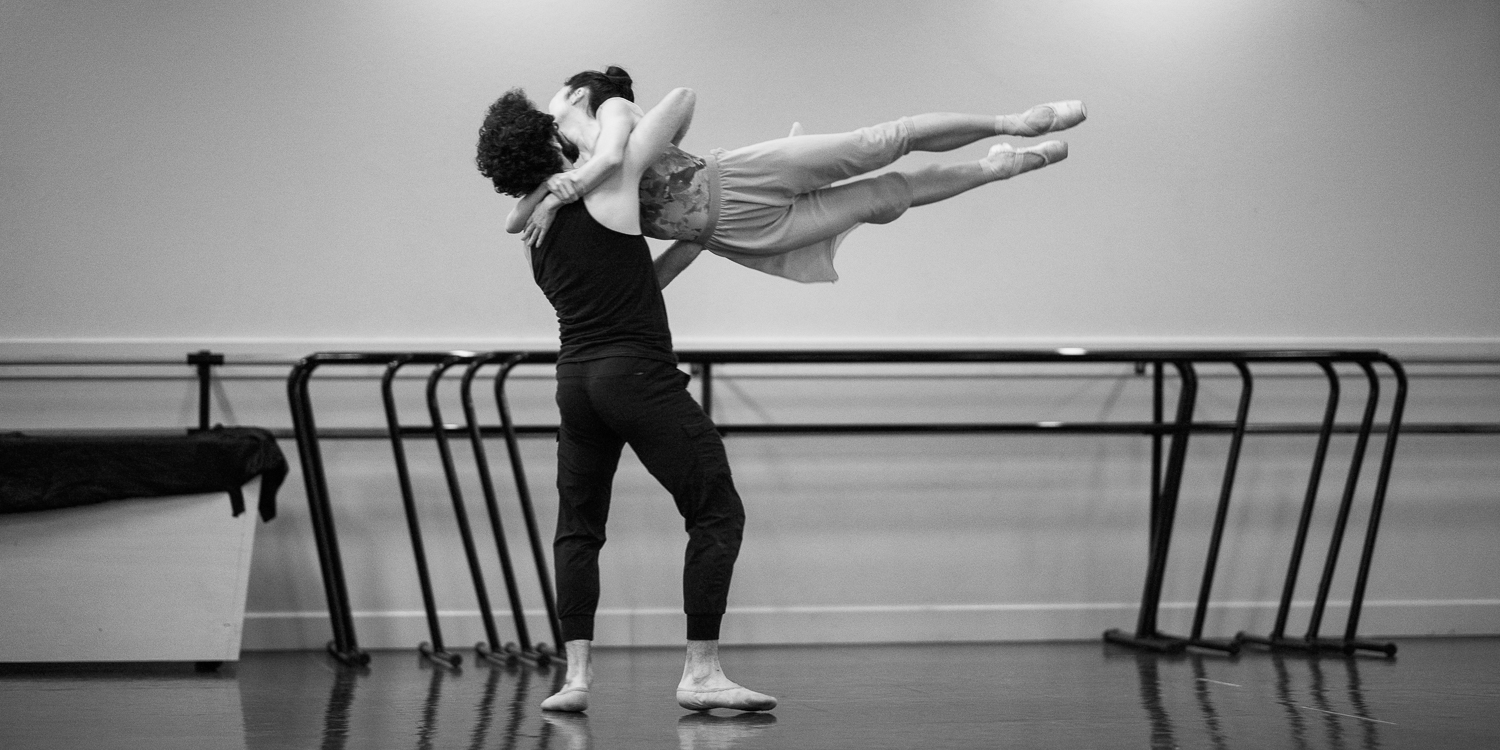
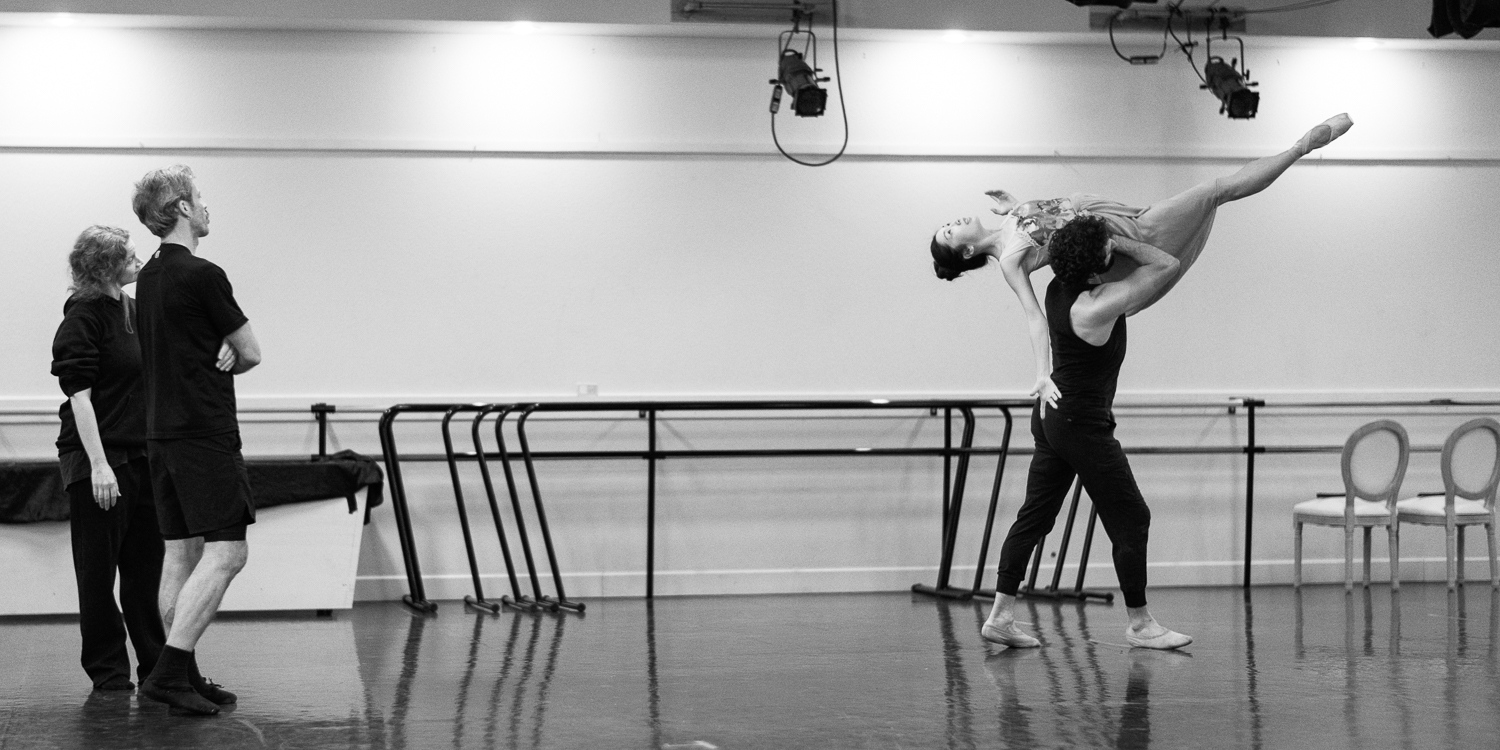
Tigran Sargsyan and Saori Yamashita | Credit: Andre Yew
She added, “Storytelling is such an important part of this ballet, and acting without dialogue can be especially challenging. I want to make sure I truly understand Lucy’s emotions and what she’s going through.” More than her beautiful technique, Yamashita’s portrayal of Lucy will make you cry. When Dracula comes for her, I felt her agony, like I was also trying to escape.
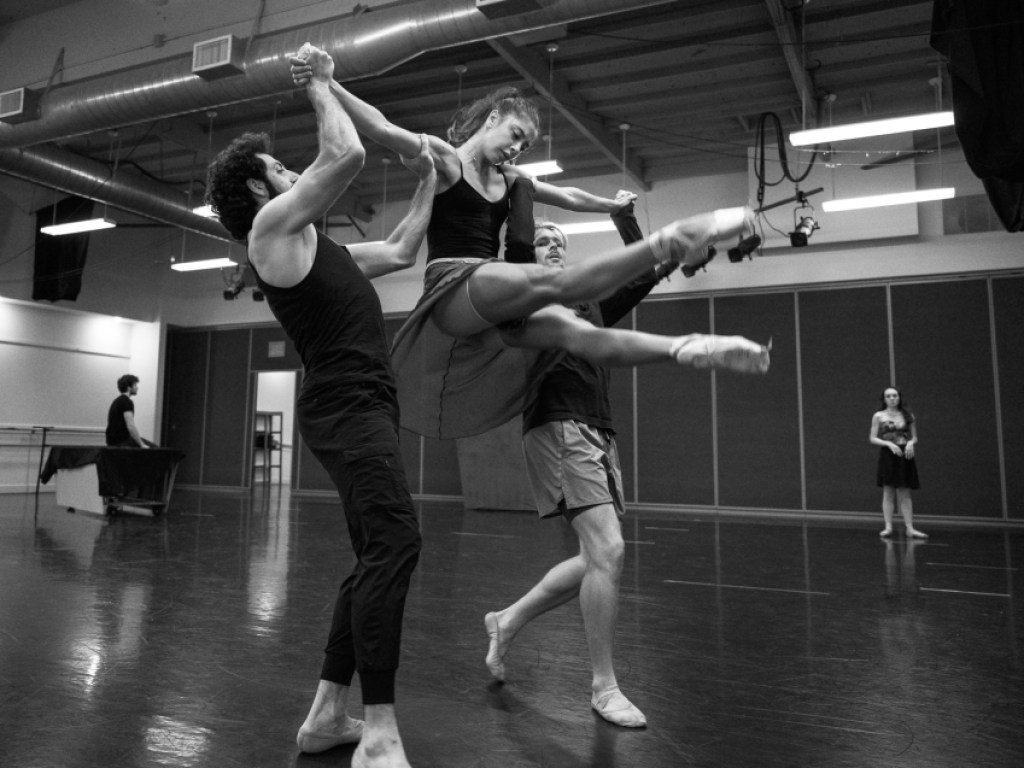
Jonathan Harker, the hapless solicitor and Mina’s fiancée, will be danced by the versatile Ethan Ahuero. Well known for his performances as the charming Mercutio, handsome Owen the Lighthouse Keeper, and tragic Chaplin, in dancing Jonathan Harker, Ahuero stretches his already-broad technical and dramatic prowess even further. His extensions have gotten higher, and his turns are so controlled as to be perfectly timed with the music. From an emotional pas de deux with Mina, to being beset by four wolves who carry him aloft, to being Dracula’s object of desire in a sensual male-on-male pas de deux that transcends all boundaries, Ahuero will have you on the edge of your seat.
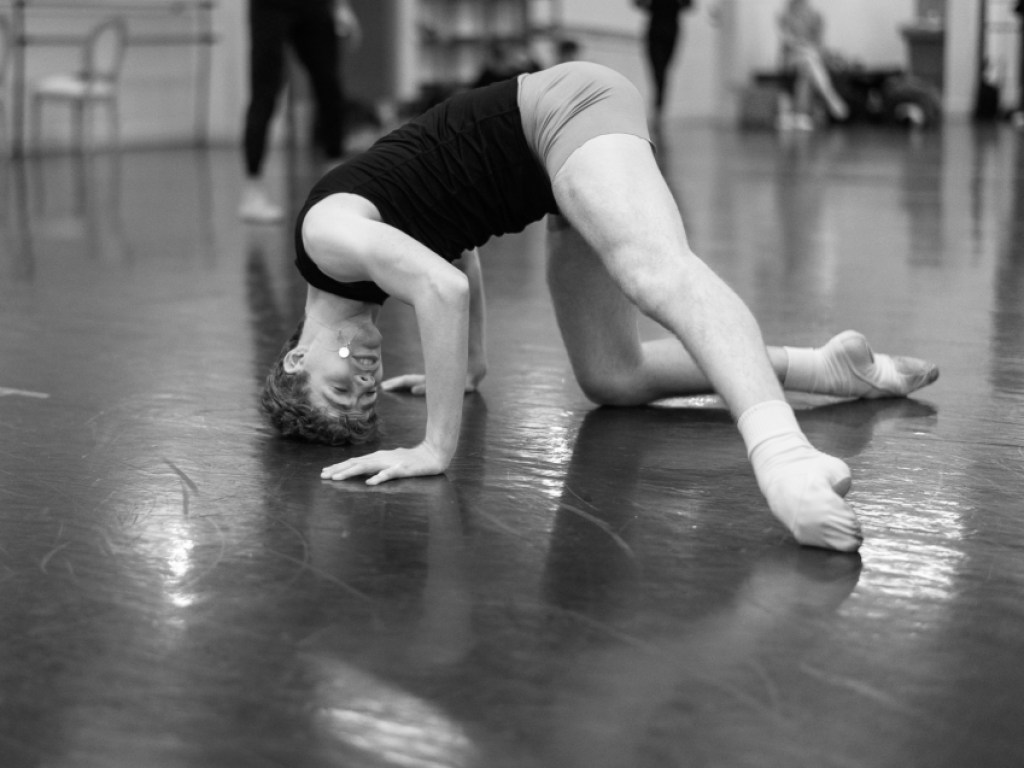
Renfield, Dracula’s deranged attaché, will be danced by Paul Rivard, new to SSB this season. Blanc has brilliantly given us Renfield’s backstory: He starts out as a friend of Mina and Lucy, a normal chap, before he meets Dracula. “In Act I, he is simply a young man among friends, laughing,” said Rivard. “And then, so slowly that no one could name the moment it begins, another mind creeps into his.” In an elegant ballroom scene Renfield is irresistibly drawn to Dracula when the Count enters, uninvited. In a passionate, frightening pas de deux, Dracula turns Renfield with a bite, so that he goes mad. Rivard described Renfield’s mental decline: “By Act II, the madness has arrived, and it has a life of its own.”
When I watched a studio rehearsal, I felt Rivard’s entire gestalt was that of a madman. His wide eyes, the way he sticks out his tongue to lick little birds and bugs, the way he wraps his arms around his head and curls his long body into a ball present a clear picture of one who has lost all sense of reason. Rivard noted how dancing Renfield demanded a new form of expression. “A dancer’s instinct is to speak through the line of an arm, the arc of a leg. Here, the story lives in a glance, in a held breath, in the small stillness before a gesture.”
Ryan Lenkey, premier danseur, best known in Santa Barbara for his portrayal of Romeo (and on-stage proposal to Juliet!), will dance the part of Dr. Abraham Van Helsing. “I relate to Van Helsing’s determination,” said Lenkey. “He’s completely committed to what he believes, and he cares deeply about the people around him. He knows exactly how dangerous Dracula is, and he walks toward that danger anyway.” He added that, as dancers, “We choose something hard and keep showing up for it.”
Lenkey’s portrayal of Van Helsing, an older gentleman and scholar, is spot-on believable. His initial solo, danced in front of what looks like a medical office, is very different from the rest of Blanc’s choreography. It looks almost jazzy, with hip twists and other Broadway-looking moves, but done to the Glass music, with Lenkey’s ultra-precise technique and laser-focused characterization, it feels quite disturbing.
Lenkey added, “Van Helsing’s movement is very different from the upright, princely posture we often associate with classical ballet. He needs a more grounded, deliberate approach, and I’ve been discovering how even the smallest gesture or shift in energy can reveal who he is and shape how the audience sees him.”
Notable supporting roles include a forest witch (Hayley Maynard); four powerful, beautiful, frightening wolves (Felipe Covarrubias, Noam Tsivkin, Noah Gnes, and Gael Rodriguez); three luscious, lascivious vampire brides (Amara Galloway, Brenna Chumacero, and Gina Quiodettis); and a host of ghastly undead.
A Magical Team Brings Dracula to Life
Artistic Director Megan Philipp and Executive Director Cecily MacDougall described the creation of Dracula as a magical team that came together.
Having booked the Granada for Halloween weekend, and after considering various seasonal ideas, they settled on Dracula. Then Philipp found the Philip Glass score for Universal Pictures’ 1998 remake of the original 1931 film, and obtained the rights. She said of the Glass score, “[The] music motivates the work!”
Glass wrote his score for the Kronos Quartet, one of the most celebrated and influential groups of our time. Glass and Kronos performed together for a number of years, so when Philipp reached out to Kronos about coming to play for the SSB production, they were happy to oblige. They will be costumed, on stage, seated on a platform eight feet up. Choreographer Nicolas Blanc wanted to make sure Kronos is featured equally with the dancers, declaring, “They are Dracula’s Quartet.”
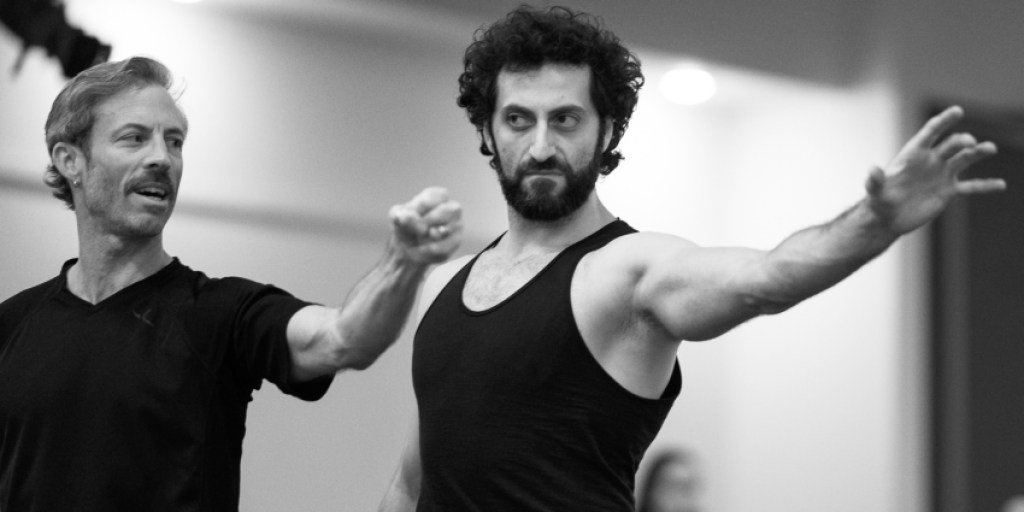
Philipp knew Blanc at Joffrey in Chicago and was impressed with his unique style, combining classical ballet and contemporary dance. When Philipp learned that Blanc had recently retired as principal dancer with Joffrey to become a full-time choreographer, she contacted him about creating Dracula: A Dark Shadow. “When I asked him if he would like to do something darker, his eyes lit up!”
Dracula is Blanc’s first full-length story ballet, and he has created an out-of-this-world masterpiece. In addition to his breathtaking neoclassical choreography, he has introduced nuances that fill out the story. For example, dancing wolves in elegant suits, a ballroom scene introducing Dracula to London society, and various creatures of the night who scare Jonathan out of his mind. Blanc chose passages from the diaries of the main characters in Stoker’s original book that were recorded by actors, adding a verbal dimension to the production.
And Blanc is not afraid to use sound effects on stage. The occasional sonic outburst from the dancers cuts through the music like a sharp blade. A wolf howls; Dracula slams a table with a loud slap; Renfield screams. Prepare to be frightened!
The costumes, supremely engineered for the dancers’ comfort and mobility by former SSB dancer and atelier extraordinaire Ben-Oni Cortes, add yet another dimension to the story. Cortes describes his costume design as “Victorian Fusion Haute Couture.” He began with the concept of historically accurate Victorian garments, recognizable through proportions and detail, but “reimagined through the lens of modern haute couture.” Cortes described hours-long meetings with Blanc, who was deeply involved in the design process, but also allowed Cortes the freedom “to create what I’m known for: creating stories within the story.”
Cortes described his design process as “a balance between storytelling and engineering.” In Dracula, “the costumes need to suggest the structure and volume associated with Victorian fashion, while accommodating Nicolas’s highly physical, neoclassical choreography.” Certain bodices contain up to 30 individual pattern pieces, one costume is constructed from 36 separate layers, and one costume has 878 grommets, all individually placed. Through his costume artistry, Cortes gives depth to the characters beyond what the audience sees.
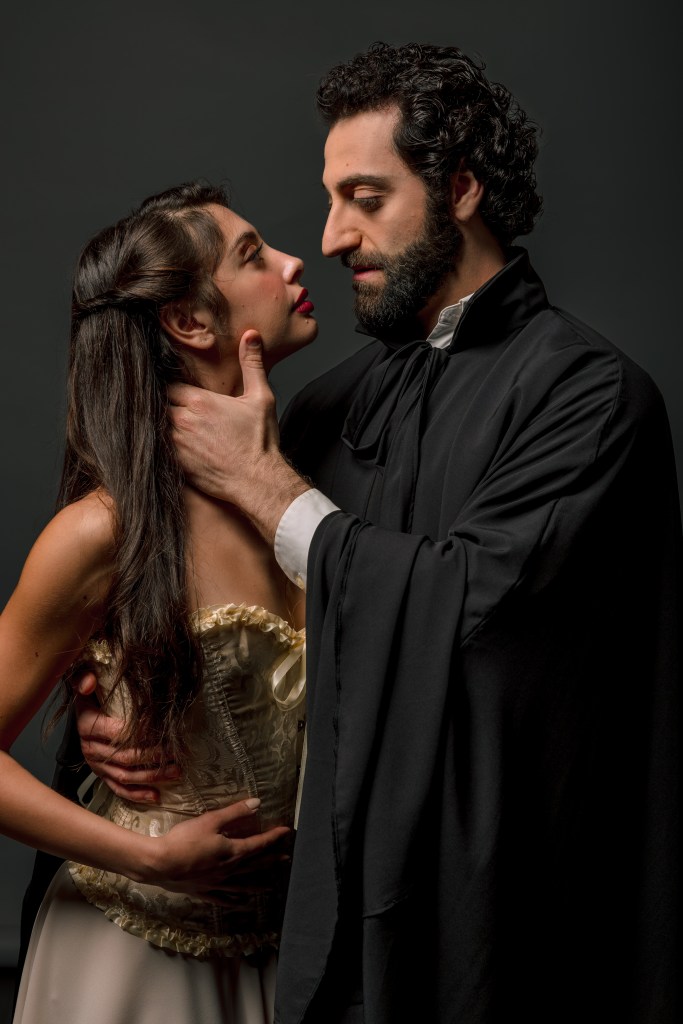
Cortes also designed the costumes for the Kronos Quartet, a different process from designing for the dancers. Through their costuming, he wanted to integrate them into the world of Dracula, “in a slightly later time, reminding us of how long Dracula has been around.”
The lighting and sets are designed by internationally acclaimed Jack Mehler. Blanc has worked with him on many pieces at Joffrey, and explained that “for Dracula, Mehler will match the minimalism of the Glass music with his designs.”
SSB is fortunate to have a new ballet mistress and rehearsal assistant, Sarah Hay, internationally acclaimed ballerina and award-winning actress, known for her starring role in the Starz miniseries Flesh and Bone. The dancers all expressed their appreciation of her help in shaping their performances. “She sees everything, the tilt of a head, the weight of a pause, the difference between a moment that is performed and one that is lived. Her attention to detail, in the dancing but above all in the acting, has been a gift,” said Rivard.
Finally, Dracula would not be possible without the generous funding of the Nora McNeely Hurley Fund, Cheryl Goldberg, and SSB Board President Dr. Nicole Callahan.
See State Street Ballet’s Dracula:A Dark Shadow at the Granada, Oct. 30 at 7:30 p.m. and Oct. 31 at 2 p.m. statestreetballet.com/dracula


You must be logged in to post a comment.