

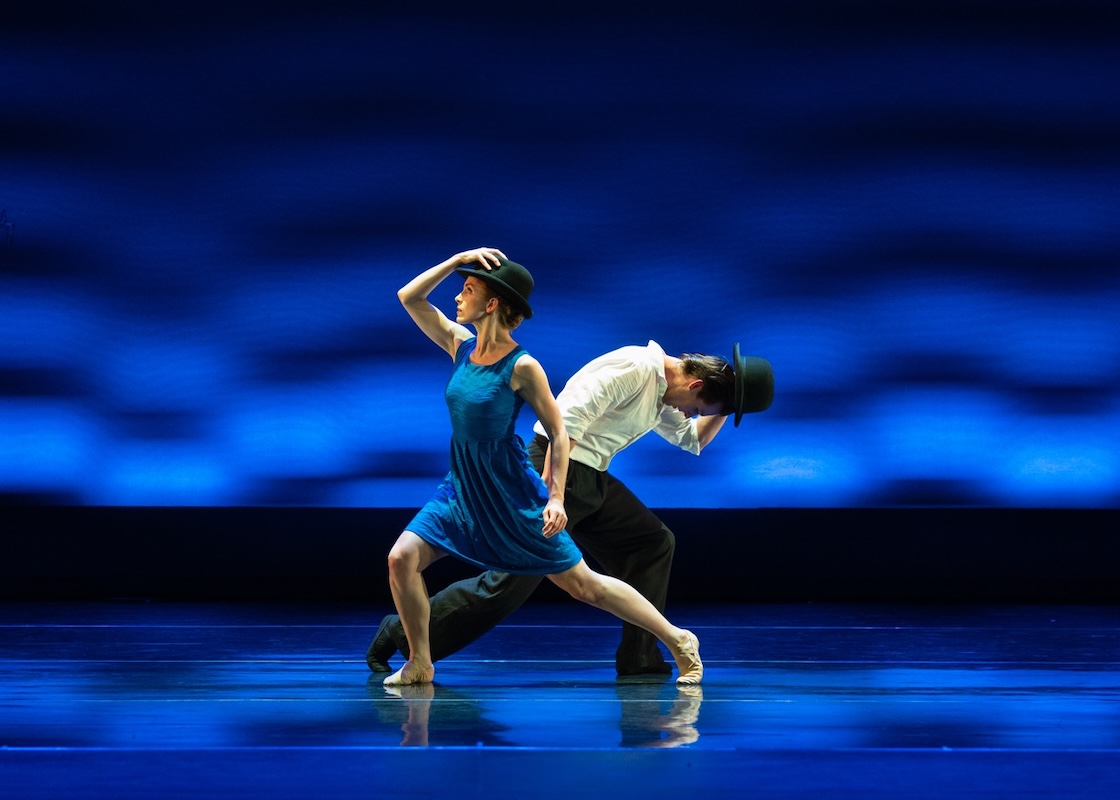
More than a ballet, Chaplin is totally captivating, immersive dance-theater. Three brilliant choreographers — William Soleau, Kevin Jenkins, and Edgar Zendejas — blended their vast knowledge of dance, music, history, and cinema to capture the essence of one of the most famous yet least understood icons of Hollywood.
Through their athletic, lyrical, precise technique, impeccable musicality, and focused character portrayals, the dancers of State Street Ballet (SSB), with guest artist Ahna Lipchik, made the story come to life.
The production had the feel of a silent movie. The soundscape, a fascinating, smoothly edited blend of classical and contemporary music, layered with an array of sound effects, created a cinematic, almost surreal, experience.

The story begins at Lincoln Center in New York, where a young Girl, wearing a blue dress, holding a red balloon, is captivated by a Chaplin film festival. As the other movie-goers disappear, she is left alone in a spotlight. We hear an eerie, whooshing sound as her journey into Chaplin’s life begins.
The idea for Chaplin began in 2018 when SSB founding director Rodney Gustafson, who had danced in Geneva for many years, where Chaplin has a more prominent presence than he has here, had a vision to create a full-length ballet based on his life. He brought Jenkins and Zendejas together with Soleau, SSB’s resident choreographer, a team he described as a “magical combination of creators.” Jenkins insisted on bringing in Ahna Lipchik, one of the most versatile ballerinas in the U.S., then dancing in San Diego, to play the Little Tramp. She was instrumental in creating the role and, as was apparent, Ahna is the quintessential Little Tramp. Her intricate footwork and impeccably timed nuances were so smooth that she looked absolutely natural as Chaplin.
Jenkins, Soleau, and Zendejas tell the story of Chaplin’s life as witnessed by the Girl-becoming-the-Tramp in a series of tableaux from his childhood in London, to the creation of his Tramp costume, his movies, his marriages, his exile from the U.S., and his acceptance of an honorary Academy Award, his ultimate reconciliation with the country that scandalized him.
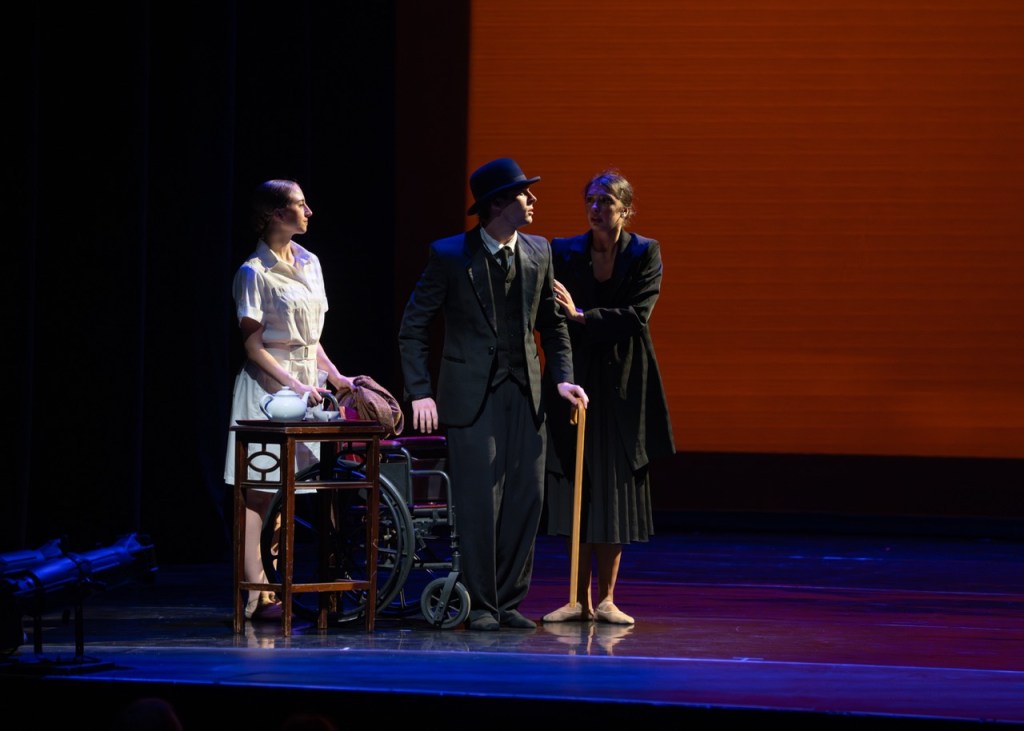
As the Girl’s journey begins, we see an aging Chaplin (Ethan Ahuero) seated in a wheelchair in a spotlight, with his fourth and most beloved wife, Oona (Maria Rita Rapisarda). A cane draped over his arm falls with a loud crash; lights out, and suddenly the cane appears on the other side of the stage, in a spotlight, with the Girl in the blue dress. Her journey continues.
She finds herself in London at the turn of the 20th century, amidst the characters of Chaplin’s childhood. We see the young Charles and his brother Sydney making fun of the townspeople, encouraged by their mother.
As this pleasant scene ends, the lights dim and the sweet piano music becomes dark and electronic. The townspeople disrobe. The Hat appears, making its way through the shape-shifting mélange of bodies, finally finding Chaplin.
Chaplin described how, as he developed the costume, he began to feel the character, so that by the time he walked on stage, the Little Tramp was born.
The journey continues as two Chaplins (Ahuero and Lipchik) each contemplate their hats, surrounded by a sea of dancing red balloons and Chaplin look-alikes. Jenkins explained that the balloons symbolize childhood and innocence, qualities that Chaplin’s character maintained throughout his films.
In a scene reminiscent of an art installation at MOMA, high on a screen, in black and white, we see a bizarre film of a nose and mouth twitching. Simultaneously, in a pool of light, a male figure (Noah Gnes) appears, wearing only black trunks and black socks, his Greek-god-like physique standing out in the harsh light. As the Mustache slowly grows above the twitching mouth, the Little Tramp is finally born.
Now we are on a movie set with the two Chaplins. The ‘real’ Chaplin (Ahuero) sits in a director’s chair, while the Little Tramp (Lipchik) performs Chaplin’s famous slapstick routines with a New York cop (Noam Tsivkin). The music by Scott Joplin is punctuated by the sounds of breaking glass whenever the cop is thrown offstage.
Later, we find ourselves on another movie set. A young woman (Amara Galloway), representing the actress Virginia Cherrill, Chaplin’s co-star in City Lights, dances with the shy Tramp. Lipchik and Galloway played off each other delightfully, Lipchik’s Chaplin-esque movements, furtive glances, and shrugs perfectly mirrored by Galloway.
The ballet is filled with juxtapositions of comedy and tragedy, delight and sadness, joy and pain. The second act focuses on some of the painful aspects of Chaplin’s life: his marriages to much-younger women, the rise of fascism, and Chaplin’s exile from the U.S.
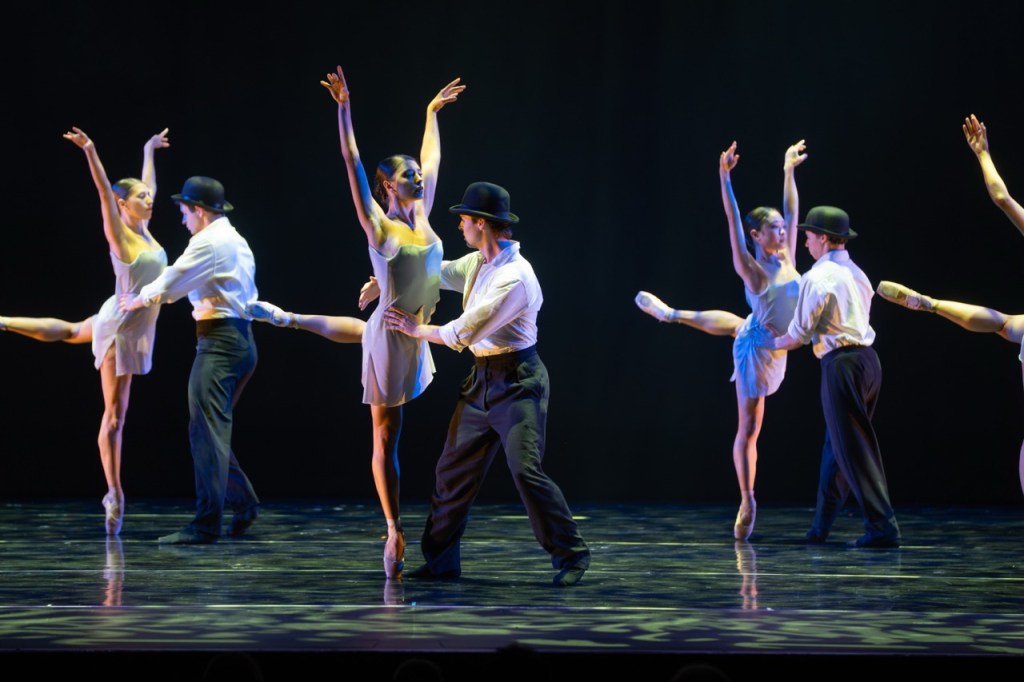
A haunting pas de dix depicting five Chaplins and five wives, set to Bach’s Chaconne, is followed by the appearance of men in black. Dissonant, terrifying sounds, images of soldiers, Hitler, and more soldiers scream World War II. The Tramp enters, playing with a large, bouncing Earth ball. In come refugees dressed in rags, dancing to a macabre waltz. Gunfire. The Tramp covers his head.
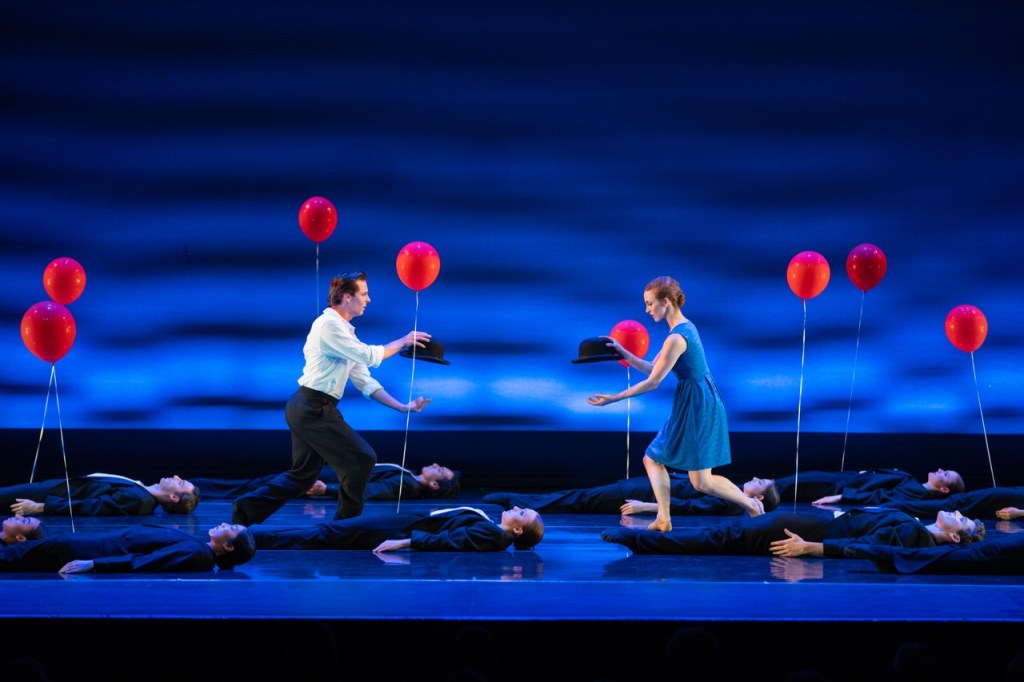
Two Chaplins with Balloons. Left: Ethan Ahuero as Chaplin; Right: Ahna Lipchik as the Girl. | Photo: Heidi Bergesteren 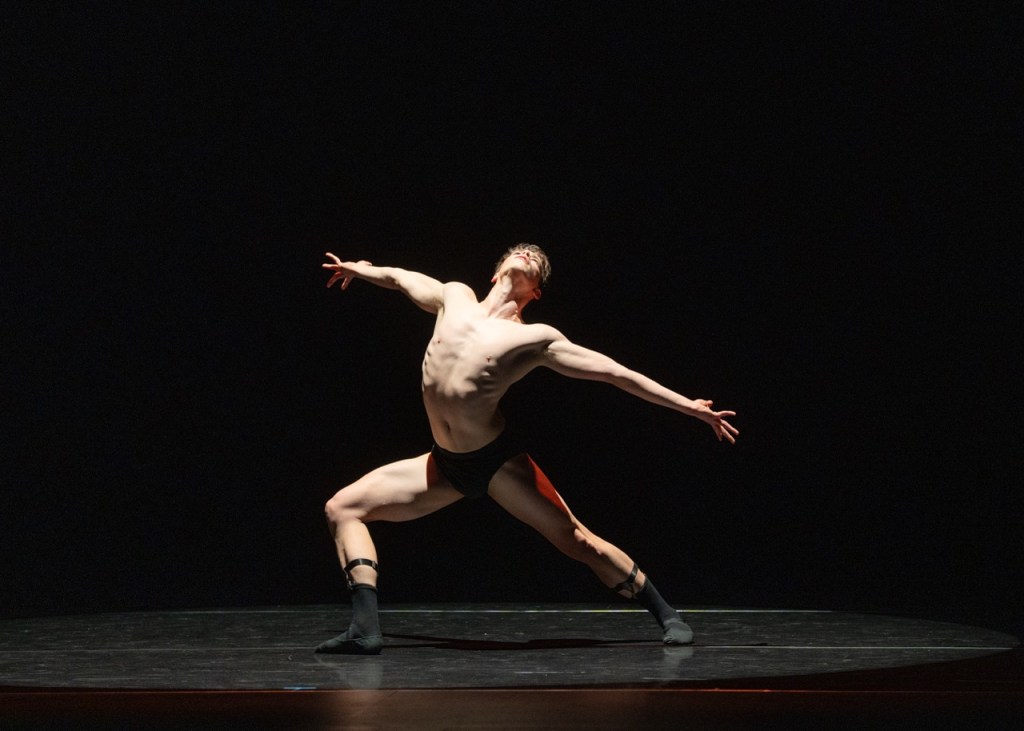
Birth of the Mustache. Noah Gnes. | Photo: Heidi Bergesteren 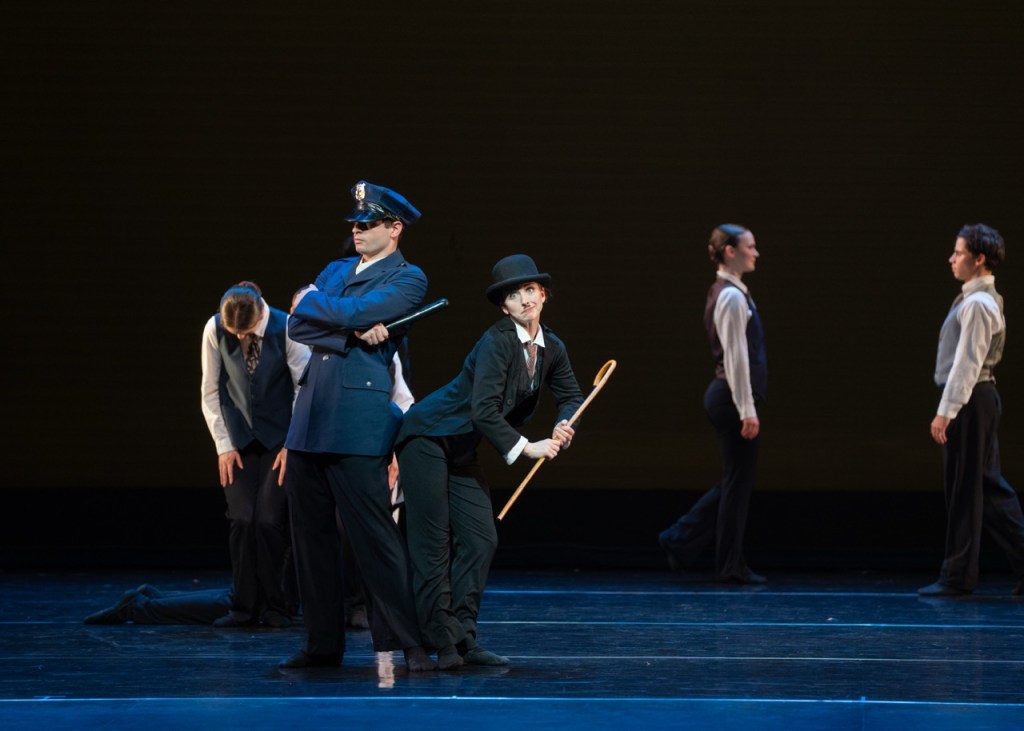
Chaplin (right, Ahna Lipchik) and the Cop (left, Noam Tsivkin). | Photo: Heidi Bergesteren 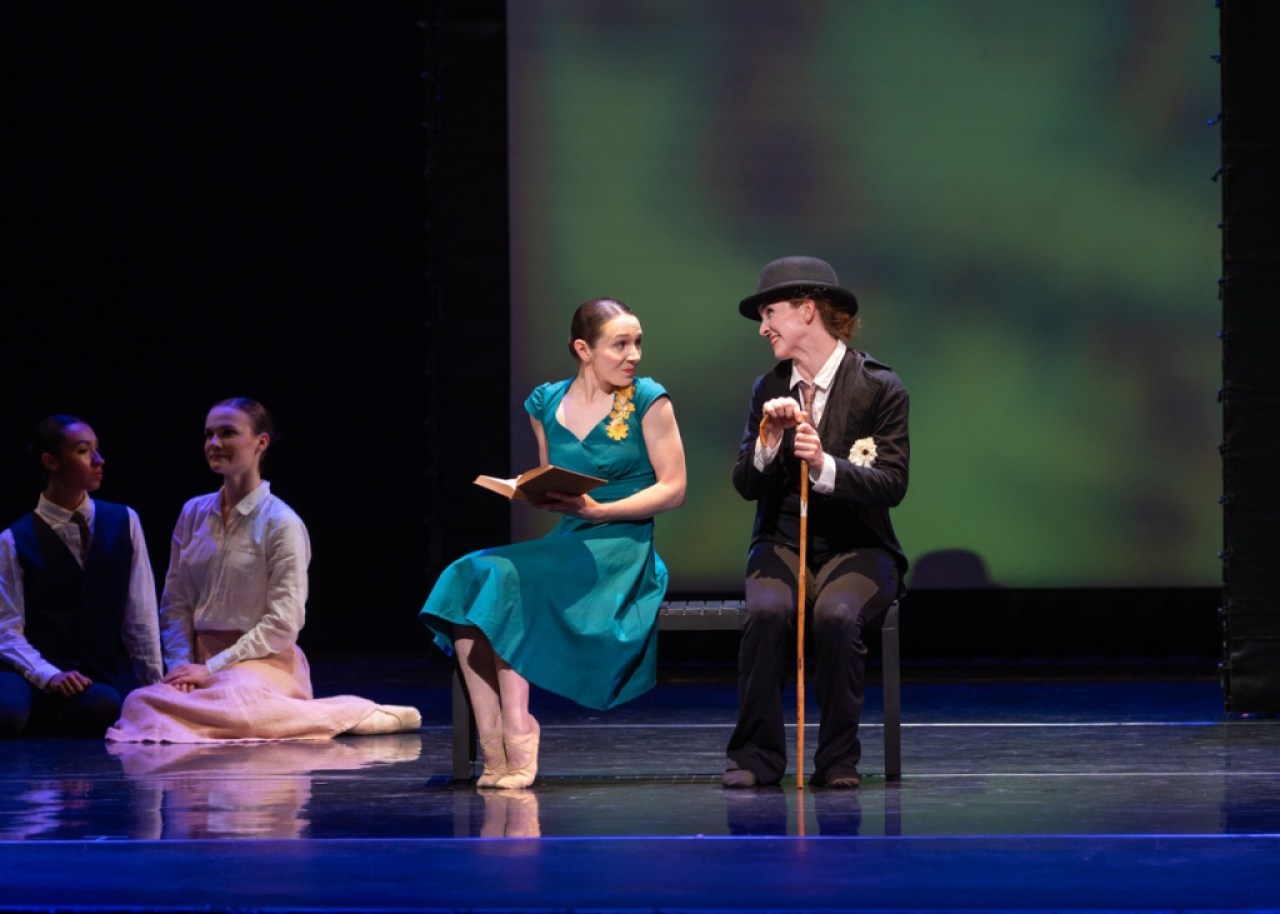
City Lights. Left: Amara Galloway. Right: Ahna Lipchik. | Photo: Heidi Bergesteren 
Chaplin’s many wives. Center: Ethan Ahuero as Chaplin and Maria Rita Rapisarda as Oona. | Photo: Heidi Bergesteren 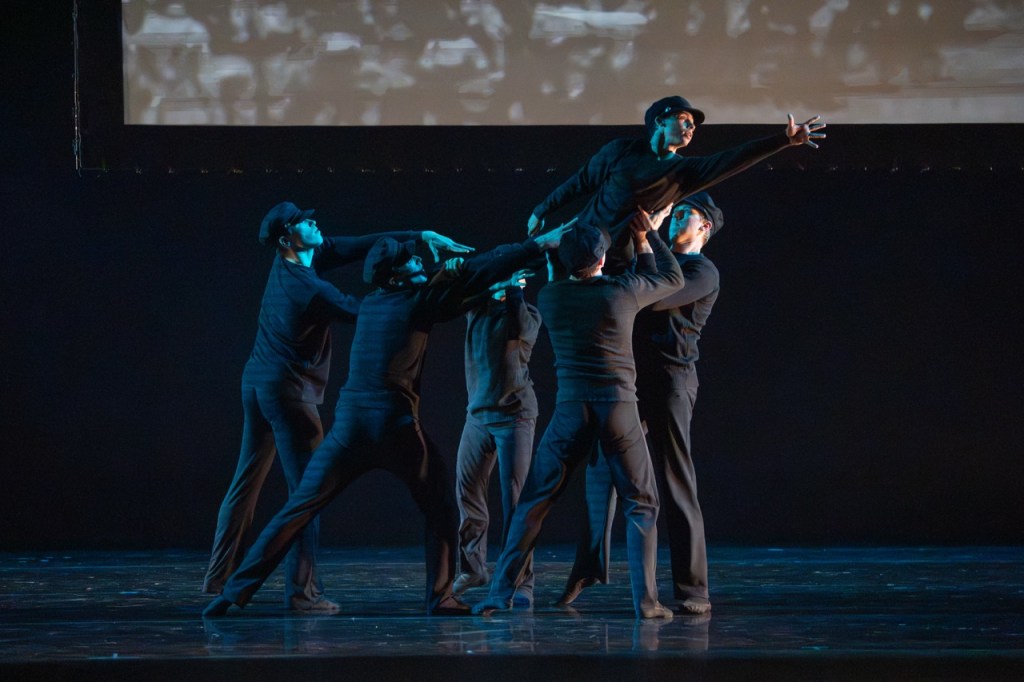
Photo: Heidi Bergesteren 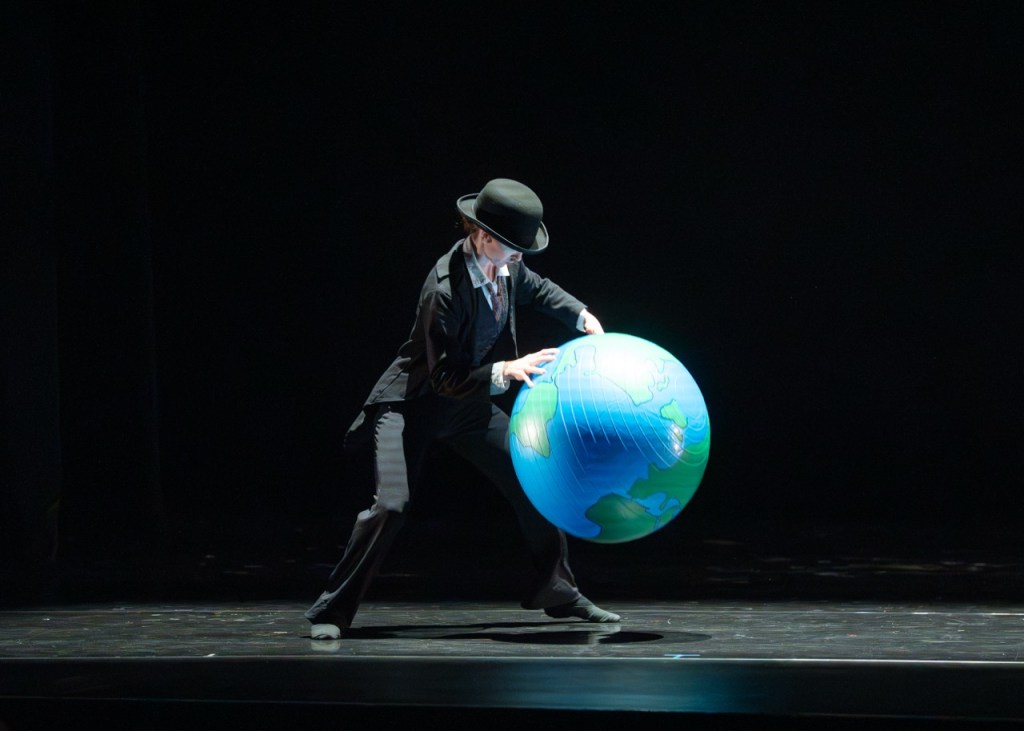
Ahna Lipchik as the Little Tramp. | Photo: Heidi Bergesteren 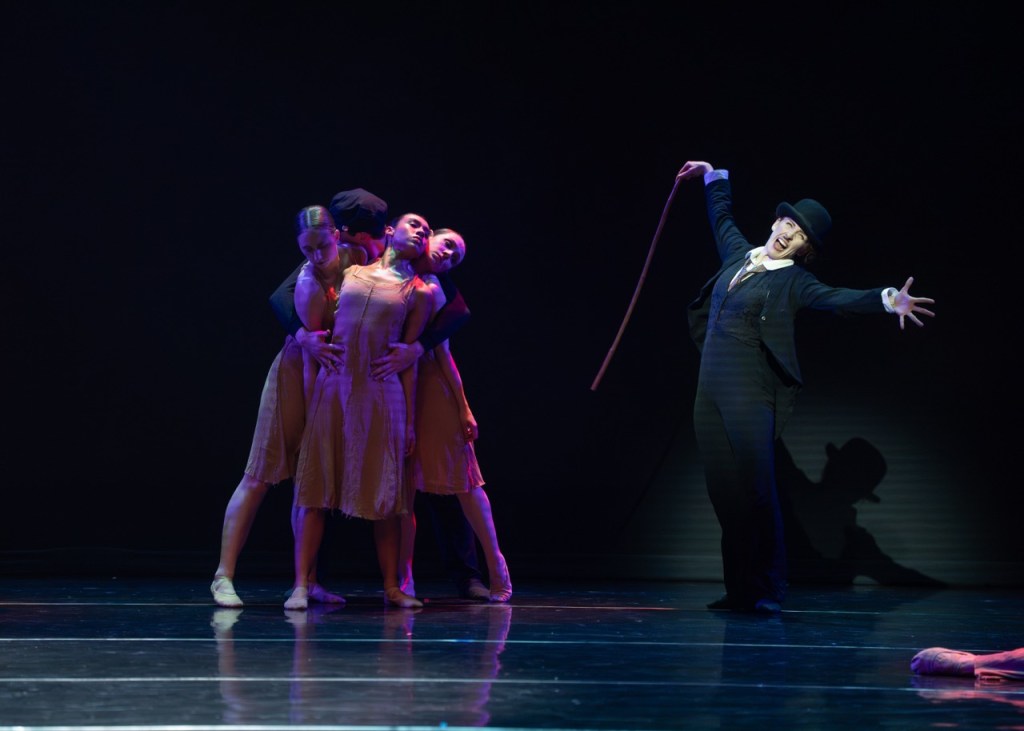
Chaplin and Refugees. Right: Ahna Lipchik as Chaplin. Left: Refugees, Gina Quiodettis, center. | Photo: Heidi Bergesteren. 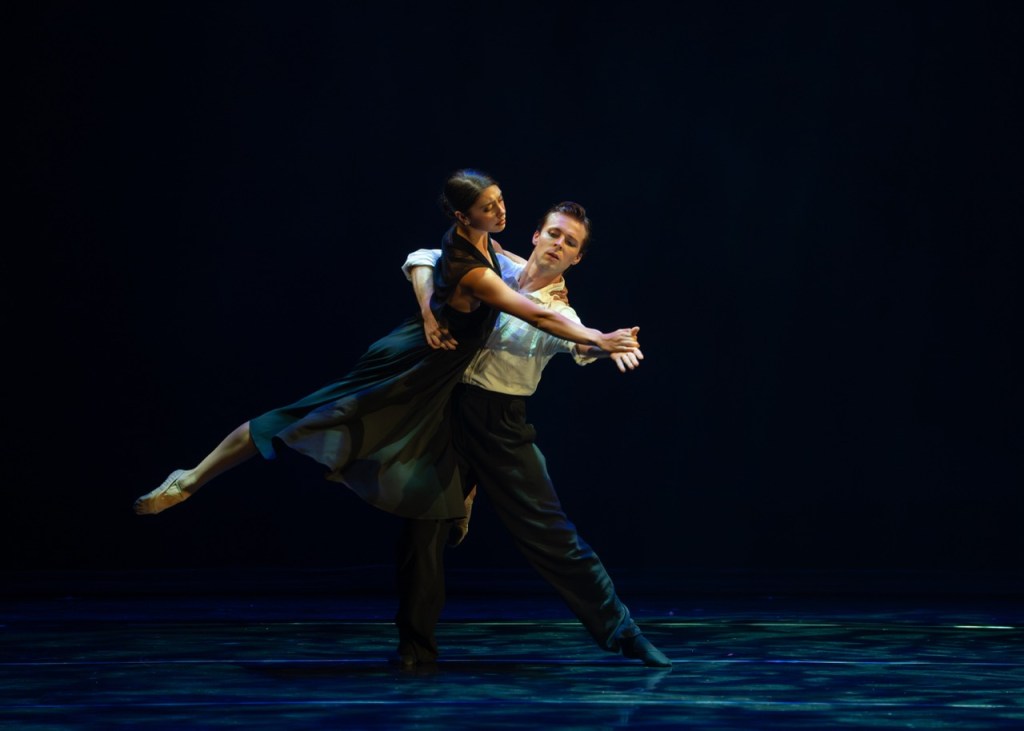
Chaplin and Oona | Photo: Heidi Bergesteren 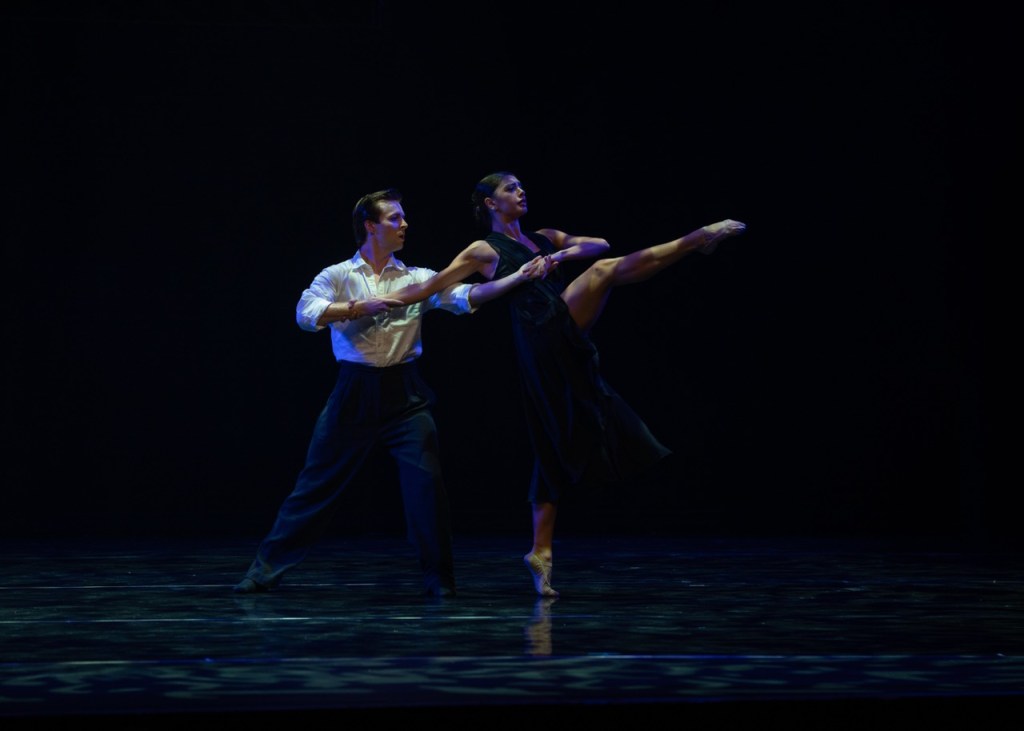
Chaplin and Oona | Photo: Heidi Bergesteren 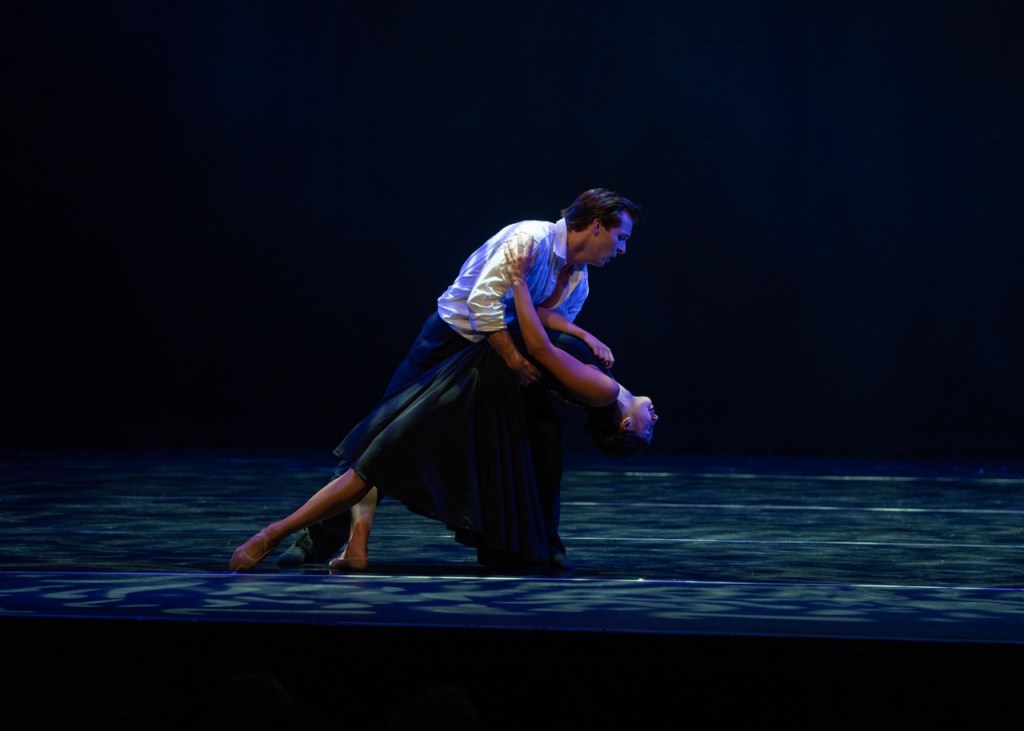
Chaplin and Oona | Photo: Heidi Bergesteren 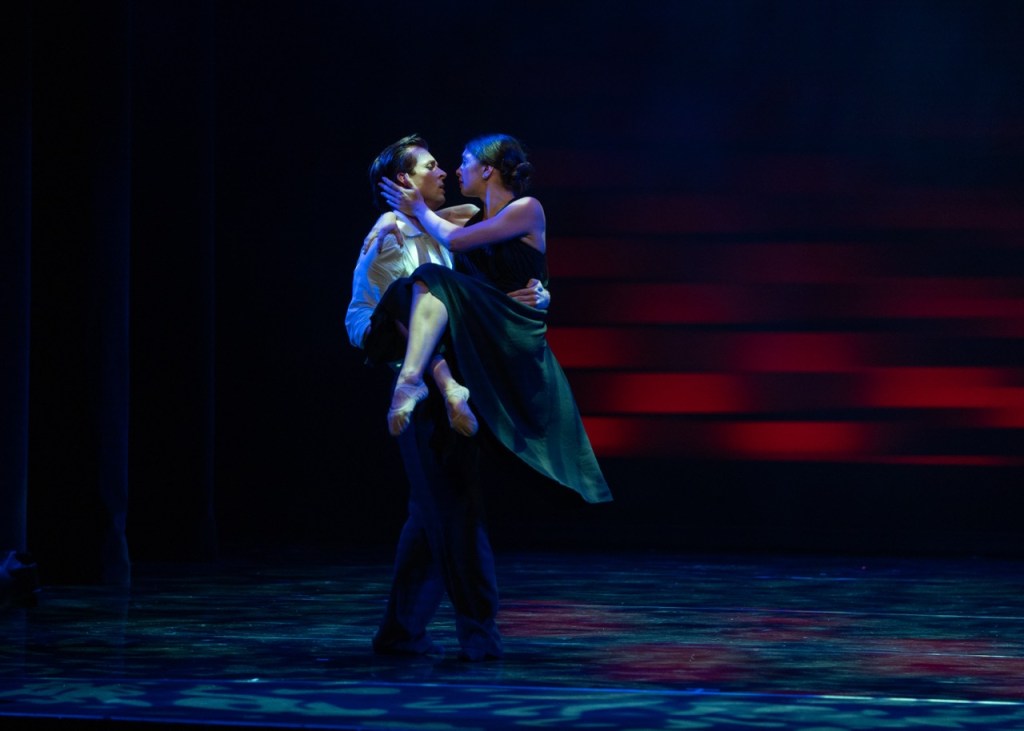
Chaplin and Oona | Photo: Heidi Bergesteren 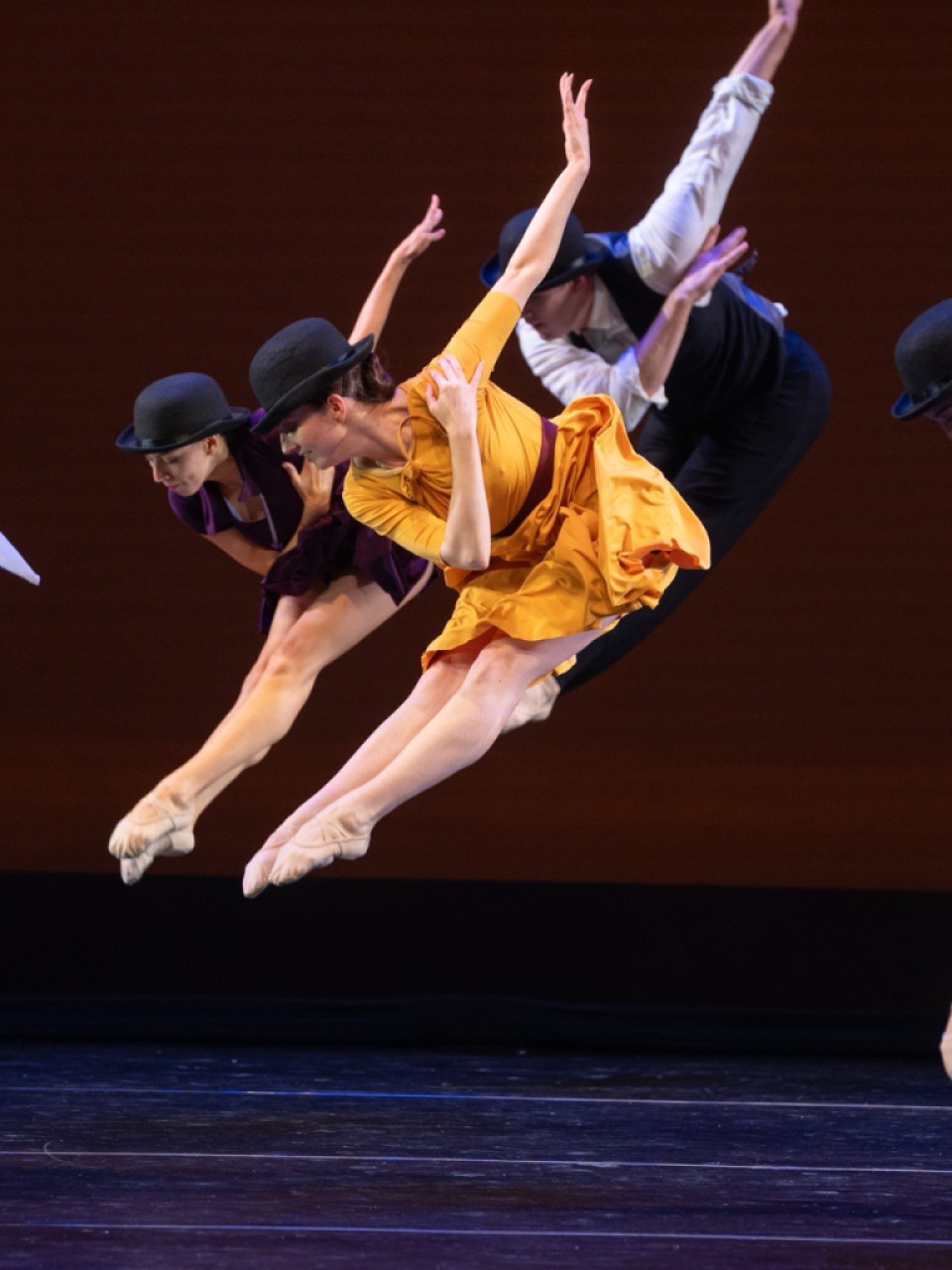
Academy Awards Gala. | Photo: Heidi Bergesteren.
This scene references Chaplin’s 1940 film, The Great Dictator, a parody of Hitler, which ultimately led to Chaplin’s being banned from the U.S. in 1952.
Chaplin settled in Switzerland with Oona, where he lived until his death in 1977. Their departure from the U.S. is portrayed by Ahuero and Rapisarda in an emotional pas de deux to exquisitely sad music. As they embrace, headlines denouncing Chaplin flash above them.
Finally, in 1972, the Academy awarded Chaplin an honorary Oscar. In a grand finale, Chaplin, now in a wheelchair, lovingly tended by Oona, receives his award amidst a standing ovation.
The dream ends as it began, with Chaplin seated in his wheelchair, with his beloved Oona. The Little Tramp enters behind them, slowly crossing the stage, shedding Chaplin piece by piece. Finally back in her blue dress, as she grasps a red balloon and turns — Chaplin disappears. The sounds of New York City return.
One cannot help but be moved to tears.
The 2026-27 season of SSB will begin October 30-31 at the Granada with Dracula.
Related Posts

Premier Events

Sat, Oct 17
9:00 AM
Santa Barbara
Mesa Harmony Garden Fall Plant Sale Continues…
Sat, Oct 17
2:00 PM
Santa Barbara
A New America: Phoenix Rising- Conversation with Dr. James Tepfer
Fri, Oct 23
2:00 PM
Santa Barbara
Music & Meditation: Clarinetist Nancy Mathison & Pianist Antonio Artese
Sat, Oct 24
9:00 AM
Santa Barbara
Mesa Harmony Garden Fall Plant Sale Continues…

Sat, Oct 17
8:00 AM
Goleta
Isla Vista Elementary Rummage Sale Fundraiser

Sat, Oct 17
9:00 AM
Santa Barbara
No Kings: Vote Early Carpinteria
Sat, Oct 17
10:00 AM
Santa Barbara
No Kings: Vote Early Lompoc
Sat, Oct 17
12:00 PM
Santa Barbara
No Kings: Vote Early Rally S.B
Sat, Oct 17
1:30 PM
Santa Barbara
Screening of “Unseen” A Documentary and Q&A with Director Set Hernandez and Subject Pedro

Sat, Oct 17
2:00 PM
Santa Barbara
Halloween Costumes, Decorations Workshop & Games
Sat, Oct 17
3:00 PM
Montecito
Author Talk & Signing Lorenzo DeStefano ”The Magic Hour” Photography
Sat, Oct 17
5:00 PM
Santa Barbara
“Lucy Darling – All That and More”

Sun, Oct 18
9:00 AM
Santa Barbara
“Move with MADD” Santa Barbara 3K Community Walk & Fundraiser to Prevents Impaired Driving
Sun, Oct 18
11:00 AM
Santa Barbara
17th Annual Asian American Neighborhood Festival
Sat, Oct 17 9:00 AM
Santa Barbara
Mesa Harmony Garden Fall Plant Sale Continues…
Sat, Oct 17 2:00 PM
Santa Barbara
A New America: Phoenix Rising- Conversation with Dr. James Tepfer
Fri, Oct 23 2:00 PM
Santa Barbara
Music & Meditation: Clarinetist Nancy Mathison & Pianist Antonio Artese
Sat, Oct 24 9:00 AM
Santa Barbara
Mesa Harmony Garden Fall Plant Sale Continues…
Sat, Oct 17 8:00 AM
Goleta
Isla Vista Elementary Rummage Sale Fundraiser
Sat, Oct 17 9:00 AM
Santa Barbara
No Kings: Vote Early Carpinteria
Sat, Oct 17 10:00 AM
Santa Barbara
No Kings: Vote Early Lompoc
Sat, Oct 17 12:00 PM
Santa Barbara
No Kings: Vote Early Rally S.B
Sat, Oct 17 1:30 PM
Santa Barbara
Screening of “Unseen” A Documentary and Q&A with Director Set Hernandez and Subject Pedro
Sat, Oct 17 2:00 PM
Santa Barbara
Halloween Costumes, Decorations Workshop & Games
Sat, Oct 17 3:00 PM
Montecito
Author Talk & Signing Lorenzo DeStefano ”The Magic Hour” Photography
Sat, Oct 17 5:00 PM
Santa Barbara
“Lucy Darling – All That and More”
Sun, Oct 18 9:00 AM
Santa Barbara
“Move with MADD” Santa Barbara 3K Community Walk & Fundraiser to Prevents Impaired Driving
Sun, Oct 18 11:00 AM
Santa Barbara



You must be logged in to post a comment.