
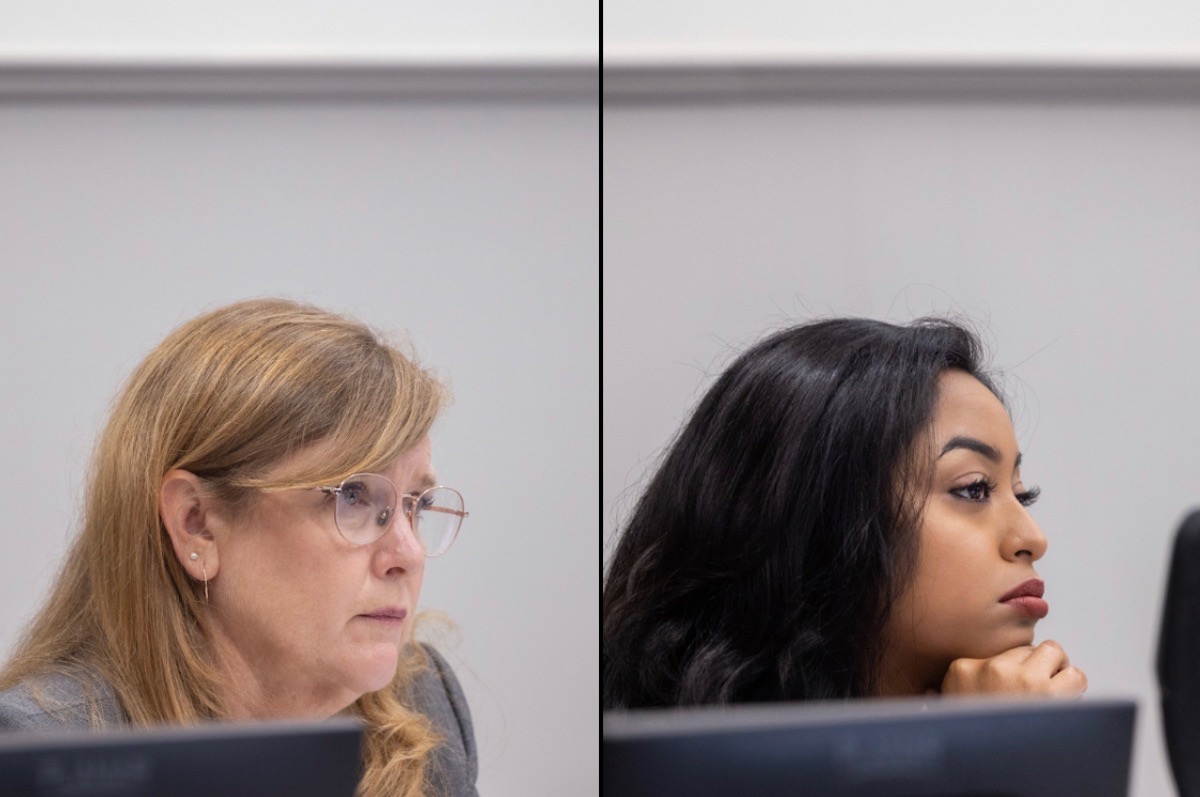
Santa Barbara City Councilmembers Kristen Sneddon and Wendy Santamaria filed a two-person memo on Monday, September 29, officially requesting that the City Council agendize a discussion on rent stabilization and consider moving toward passing a citywide ordinance capping annual rent increases.
In the memo, the two councilmembers argue that a rent stabilization policy is a “critical need” to address the city’s ongoing housing affordability crisis and could serve as a guardrail against the displacement of the city’s working-class renters.
“[Santa Barbara] rents are among the highest in California, while wages in key sectors such as education, hospitality, healthcare, and service work have not kept pace,” the joint memo states. “Without protections, long-term tenants who have built their lives and families here can be forced out by rent hikes, destabilizing neighborhoods and weakening the community fabric.”
According to data published by the Santa Barbara County Association of Governments, more than half of the city’s renters are rent-burdened — paying more than 30 percent of their income on housing alone — while a quarter of renters (more than 5,100 households) are severely rent-burdened, paying more than half of their income on rent. The most recent rent survey conducted by the city shows the average price of a studio apartment in 2025 has jumped to $2,350 a month, while a one-bedroom apartment is going for $2,880 and a two-bedroom costs more than $3,800 a month.
Tenant rights advocates have been pushing for citywide rent stabilization for several years now. Councilmember Santamaria, a fierce housing advocate whose presence on the council tipped the scales in favor of tenant protections, campaigned and was elected on a platform heavily based around the prospect of rent stabilization.
In their joint memo, Santamaria and Sneddon make the argument that rent stabilization provides more predictability for both tenants and landlords, creating an environment with fewer unexpected rent hikes that outprice essential workers like teachers, nurses, firefighters, police officers, and service workers. These higher rents can create longer commutes for workers, which can complicate emergency response during natural disasters.
“Without affordable options, many must commute from Ventura, Lompoc, or Santa Maria, which increases traffic congestion, greenhouse gas emissions, and reduces quality of life for workers and residents alike,” the memo states. “If our essential workers are forced to live outside the area, they may not be able to reach us when we need them most. Ensuring essential workers can live in Santa Barbara is not just about affordability, it is also about public safety and community resilience.”
The memo — which was filed with City Administrator Kelly McAdoo on Monday, September 29, and sent out to the rest of the council on Tuesday — details the suggested rent stabilization ordinance, which has a maximum allowable rent increase tied to 60 percent of the California Consumer Price Index (CPI) increase. Currently, Santa Barbara follows the statewide cap that allows rent increases of 5 percent plus CPI.
The suggested 60 percent of CPI is the same figure used by several other California jurisdictions and is intended as a way to ensure the rates of increase smooth out over time. It is likely the City Council will debate the details of the suggested cap, but under the currently proposed standards, with this year’s state CPI of 3.8 percent, a landlord charging $2,500 a month could potentially be limited to an annual increase of $57. In years with a higher CPI of 5 percent, the maximum increase on a $2,500 unit would be closer to $75.
Property owners have voiced their opposition to any form of rent stabilization during prior council discussions over tenant protections. Some have worried that any newly imposed limits would force a stop on maintenance and costly repairs, since landlords might not want to spend money if they know they cannot raise the rents and make a return on their investments.
In response, the proposed ordinance includes an option for property owners to apply for a “rent stabilization petition and hearing process” to potentially get approval for an “upward adjustment” if they can prove they need to raise rents above the maximum allowable increase. This adjustment could be determined based on a recent increase in property taxes, unavoidable increases in maintenance or operating costs, or other specific circumstances.
The two-person memo is just the first step of the process. City staff will now schedule a discussion about the memo at a future city council hearing — expected sometime in mid-October — during which the council will decide whether to formally deliberate the rent stabilization amendments. If a majority of council votes in support, council could direct staff to develop the plan to administer, fund, and enforce a rent stabilization program for adoption later this year or early 2026.
Rent stabilization has been one of the most hotly debated topics at City Hall over the past several years, though this most recent push for a citywide ordinance has come with a renewed sense of momentum with four councilmembers who have previously voiced support for the issue.
Councilmember Sneddon said she hopes an amended rent stabilization ordinance will help preserve the city’s cultural vibrancy and diversity.
“Rent stabilization isn’t just about keeping roofs over people’s heads, it’s about protecting the community of Santa Barbara,” Sneddon told the Independent. “When families, workers, and seniors can afford to stay, our neighborhoods remain strong, our economy thrives, and the character of our community is preserved. Stable housing also strengthens our resilience in times of natural disaster, ensuring that the very people who keep our city running can stay rooted here and help us recover together.”
Related Posts




Premier Events

Fri, Sep 18
12:00 AM
Santa Barbara
Yesterday: A Tribute to The Beatles at SOhO

Fri, Sep 18
All day
Solvang
Solvang Danish Days

Fri, Sep 18
7:00 PM
Carpinteria
West Coast Premier: “Gloria’s Old Haunt”
Sat, Sep 19
All day
Solvang
Solvang Danish Days

Sat, Sep 19
9:00 AM
Santa Barbara County
Coastal Cleanup Day

Sat, Sep 19
10:00 AM
Santa Barbara
8th Annual Santa Barbara County Farm Day

Sat, Sep 19
6:30 PM
Santa Barbara
Feng E – Teen Ukulele Sensation at SOhO

Mon, Sep 21
5:30 PM
Santa Barbara
S.B. Independent: Santa Barbara City Council District 6 Forum

Tue, Sep 22
1:00 PM
Santa Barbara
“The Lost Weekend” – The Photography of May Pang

Wed, Sep 23
7:30 PM
Ojai, CA
Laurie Anderson at the Libbey Bowl
Fri, Sep 18 12:00 AM
Santa Barbara
Yesterday: A Tribute to The Beatles at SOhO
Fri, Sep 18 All day
Solvang
Solvang Danish Days
Fri, Sep 18 7:00 PM
Carpinteria
West Coast Premier: “Gloria’s Old Haunt”
Sat, Sep 19 All day
Solvang
Solvang Danish Days
Sat, Sep 19 9:00 AM
Santa Barbara County
Coastal Cleanup Day
Sat, Sep 19 10:00 AM
Santa Barbara
8th Annual Santa Barbara County Farm Day
Sat, Sep 19 6:30 PM
Santa Barbara
Feng E – Teen Ukulele Sensation at SOhO
Mon, Sep 21 5:30 PM
Santa Barbara
S.B. Independent: Santa Barbara City Council District 6 Forum
Tue, Sep 22 1:00 PM
Santa Barbara
“The Lost Weekend” – The Photography of May Pang
Wed, Sep 23 7:30 PM
Ojai, CA

