
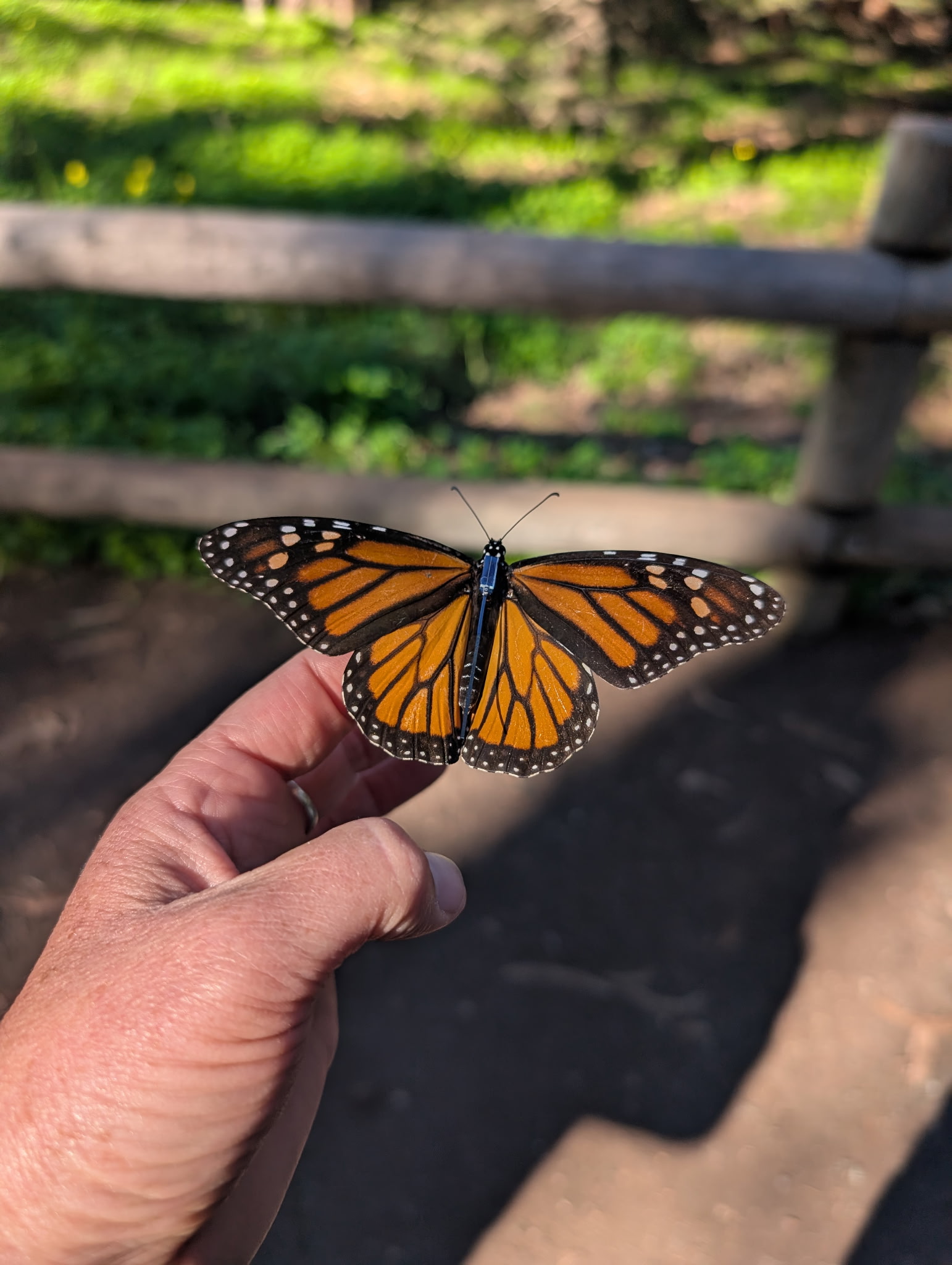
Scientists are putting backpacks on butterflies at Ellwood Mesa.
These “backpacks” are brand new, solar-powered radio tags that weigh about as much as a few grains of rice. For the first time ever, scientists can use them to track individual monarch butterflies across North America.
It will help them learn more about the poorly understood life cycles of disappearing butterflies, bees, and other flying insects as populations hit historic lows.
Thousands of butterflies once visited the Goleta Monarch Butterfly Grove at Ellwood Mesa every winter. But now, due to human influences including pesticide use and habitat degradation, butterfly numbers in once-popular groves nationwide have dropped to the single digits. This November, an official count revealed only nine butterflies throughout Ellwood Mesa.
The new tags will give an unprecedented look into how these butterflies move, migrate, and survive, and inform ongoing conservation efforts in the hopes that they may make a comeback.
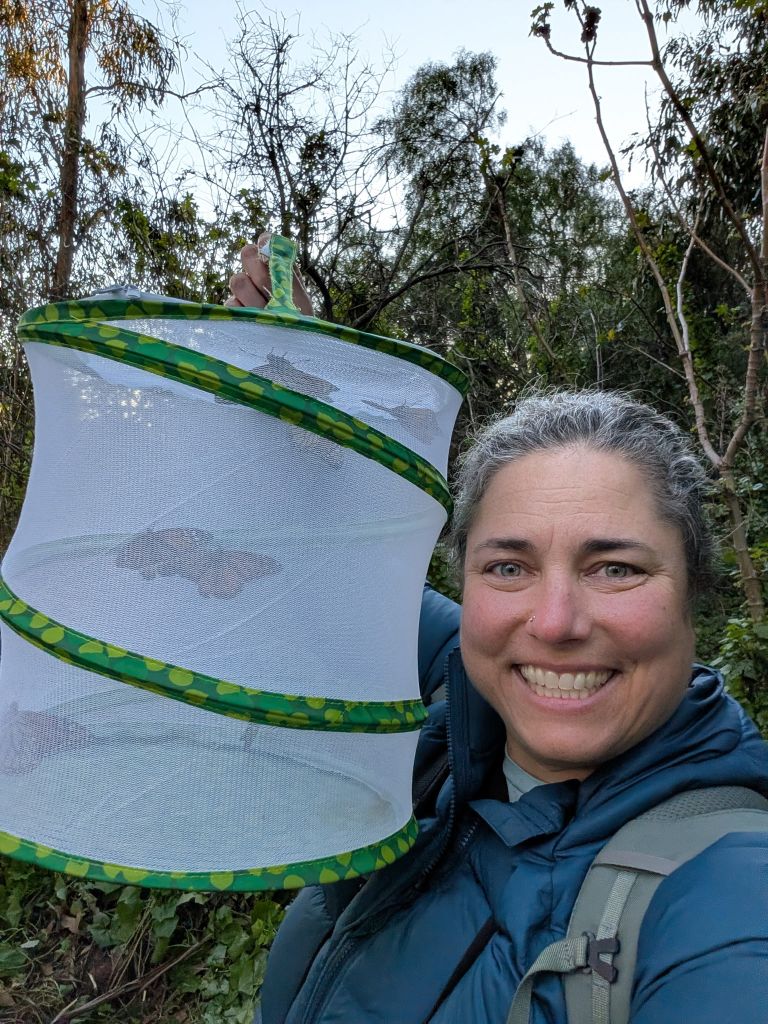
“Maybe there’s one spot where they like to go for nectar, so that can tell us where we should plant more,” said Charis van der Heide, a senior biologist and project manager with Althouse and Meade Inc., who’s been catching and tagging butterflies at the Goleta grove.
Van der Heide got her start at Cal Poly, tagging monarchs by numbering their wings in Sharpie and trying to find them later with a spotting scope, “like a needle in a haystack,” she said. This new, breakthrough tagging method is much easier, far more reliable, and way more informative.
“I think we’re going to see behavior patterns that help us ask questions we might not have thought to ask before,” she continued. For example, using the City of Goleta’s weather stations, they can learn more about monarch movement before and after storms. They can also study the Western monarchs’ mysterious journey back up North after overwintering — migrating south to sheltered areas in California to survive the winter months — from October to February.
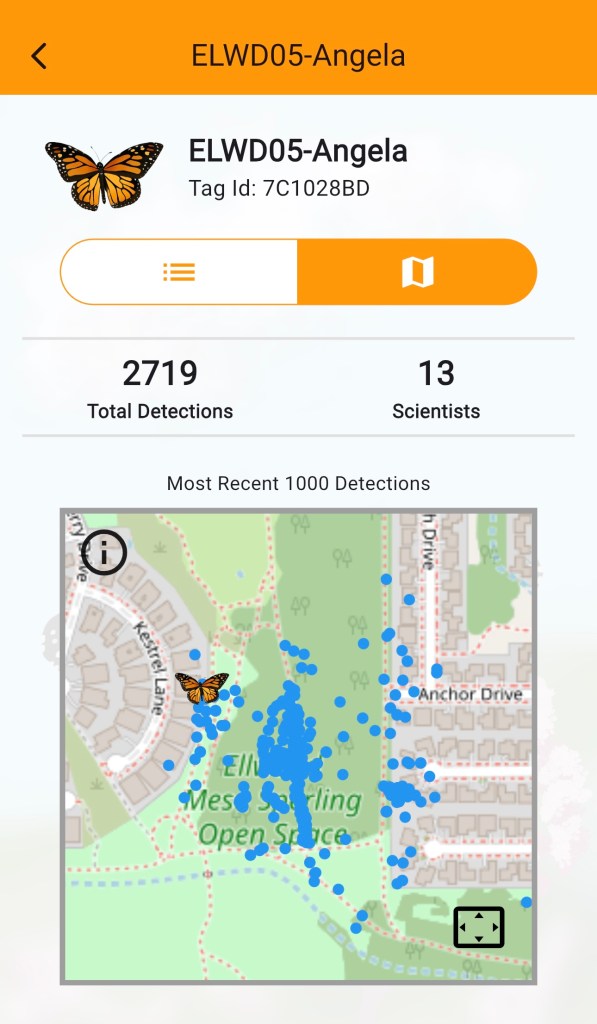
Each 60 milligram tag sells for $200. So far, at Ellwood, they’ve tagged five monarchs (joining more than 400 tagged nationwide this year). People can then track the butterflies through a free cellphone app created by the New Jersey–based company that makes the tags, Cellular Tracking Technologies. Walking through the park on Wednesday, Van der Heide pulled up the app, Project Monarch Science, to check on any nearby butterflies. One popped up: Angela was in her area. A couple seconds later, orange and black wings fluttered by.
So, how does one tag a butterfly like Angela? The answer is: very carefully.
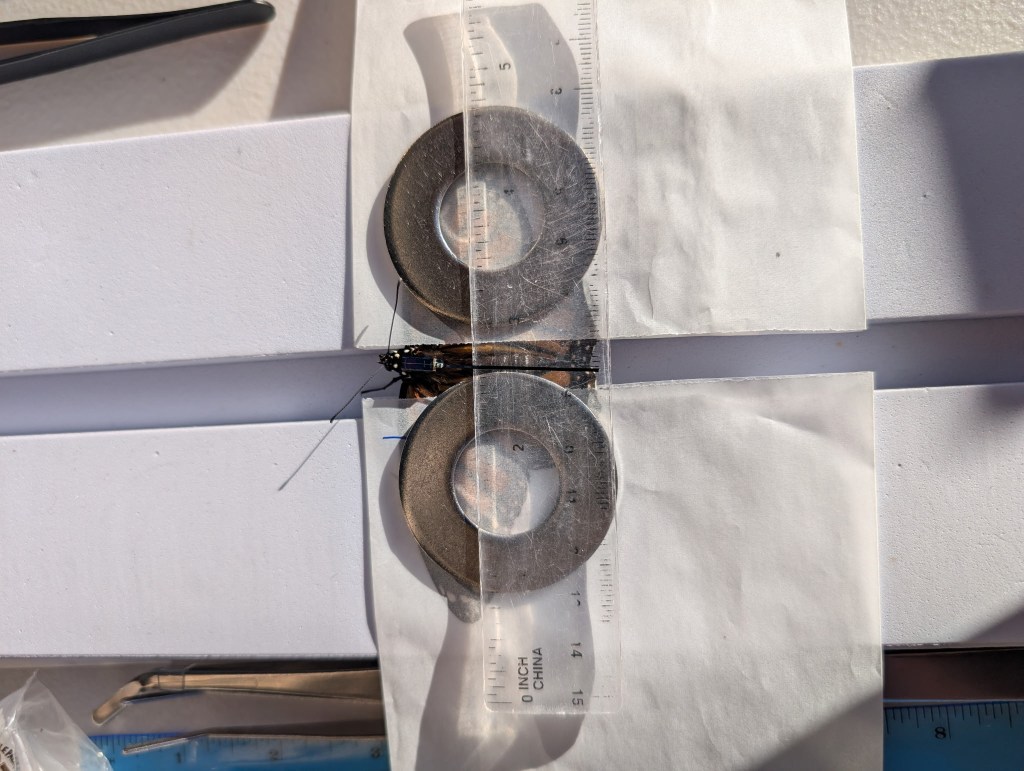
Van der Heide and her team have a scientific collection permit and follow a precise method to keep the butterflies safe, she said. They catch the butterflies early in the morning when it is too cold for them to fly — when they literally “chill out.” They then weigh the butterfly and make sure it’s in good condition, pin down its wings with small weights, and gently attach the tag using eyelash glue.
It is roughly equivalent to a 20-pound backpack on a human, van der Heide said. But tagged butterflies, even with the weight, have still been able to migrate from Ontario to overwintering sites in Central Mexico. “They’re gonna feel it, but the monarchs are still flying,” van der Heide said.
With fewer butterflies at the Goleta grove — partially due to dried-out eucalyptus trees as a result of drought conditions, according to city staff findings from 2017 — scientists are expanding the study north and south along the Central Coast to collect more comprehensive data on overwintering movement and spring dispersal.
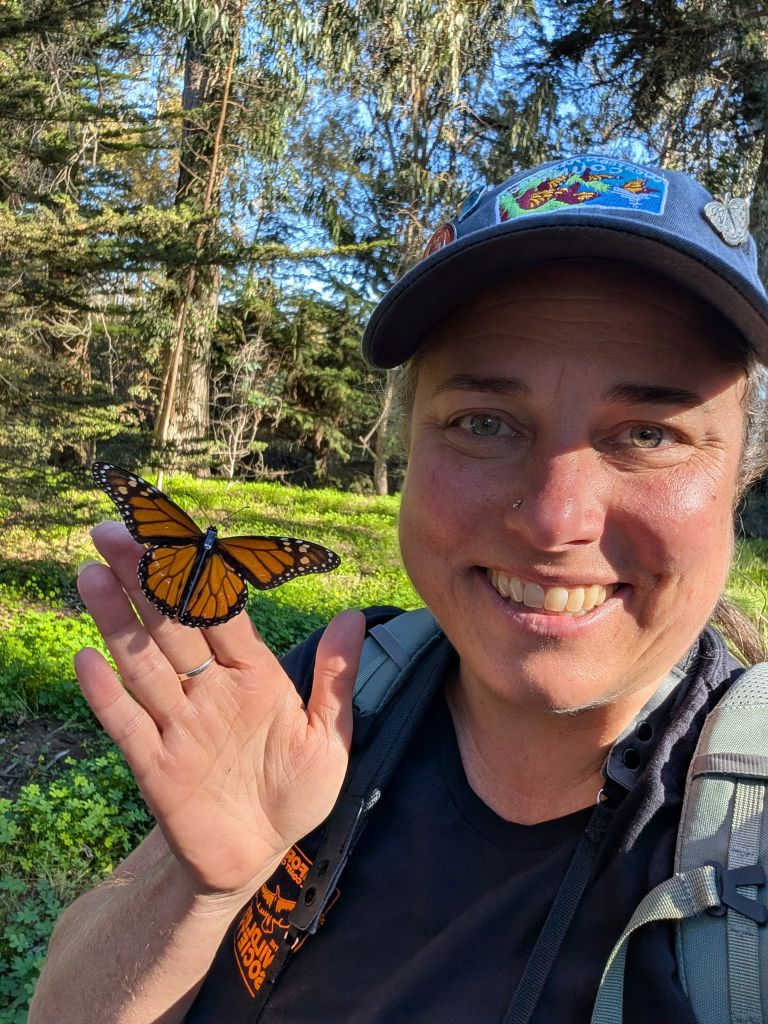
“Monarch populations do fluctuate, and we also know that their populations are stressed,” said Melissa Fontaine, director of Ellwood Friends, a group working to conserve and revive Ellwood Mesa. Alongside the U.S. Fish and Wildlife Service, they are helping fund the tagging effort.
Not all monarchs survive their perilous migrations, and even those that do may not live to see spring. “But this technology is going to give us information about where they visit and rest, and then we’ll know where to protect and invest in,” Fontaine said.
It’s sad to see such sharp population declines, she noted, but the Ellwood Friends are holding out hope. An individual female butterfly, such as Angela, can lay up to 700 eggs in her lifetime. People have also been volunteering to plant eucalyptus and native trees at the grove, pulling out weeds while walking their dogs, educating themselves and donating to the cause.
“The turnout has been really just beautiful from our community,” Fontaine said. “I think people who have seen the huge numbers of monarchs here understand the magic and peacefulness of that experience. Of course, we want to protect Ellwood because it’s a natural place, but also we want to try and bring that back.”
Community members can also donate to name a monarch, Fontaine said, which will help fund tracking tags, community engagement and research at Ellwood and other neighboring overwintering sites. Learn more at ellwoodfriends.org.
Related Posts





Premier Events

Fri, Sep 18
12:00 AM
Santa Barbara
Yesterday: A Tribute to The Beatles at SOhO

Fri, Sep 18
All day
Solvang
Solvang Danish Days

Fri, Sep 18
7:00 PM
Carpinteria
West Coast Premier: “Gloria’s Old Haunt”
Sat, Sep 19
All day
Solvang
Solvang Danish Days

Sat, Sep 19
9:00 AM
Santa Barbara County
Coastal Cleanup Day

Sat, Sep 19
10:00 AM
Santa Barbara
8th Annual Santa Barbara County Farm Day

Sat, Sep 19
6:30 PM
Santa Barbara
Feng E – Teen Ukulele Sensation at SOhO

Mon, Sep 21
5:30 PM
Santa Barbara
S.B. Independent: Santa Barbara City Council District 6 Forum
Tue, Sep 22
1:00 PM
Santa Barbara
“The Lost Weekend” – The Photography of May Pang

Wed, Sep 23
7:30 PM
Ojai, CA
Laurie Anderson at the Libbey Bowl
Fri, Sep 18 12:00 AM
Santa Barbara
Yesterday: A Tribute to The Beatles at SOhO
Fri, Sep 18 All day
Solvang
Solvang Danish Days
Fri, Sep 18 7:00 PM
Carpinteria
West Coast Premier: “Gloria’s Old Haunt”
Sat, Sep 19 All day
Solvang
Solvang Danish Days
Sat, Sep 19 9:00 AM
Santa Barbara County
Coastal Cleanup Day
Sat, Sep 19 10:00 AM
Santa Barbara
8th Annual Santa Barbara County Farm Day
Sat, Sep 19 6:30 PM
Santa Barbara
Feng E – Teen Ukulele Sensation at SOhO
Mon, Sep 21 5:30 PM
Santa Barbara
S.B. Independent: Santa Barbara City Council District 6 Forum
Tue, Sep 22 1:00 PM
Santa Barbara
“The Lost Weekend” – The Photography of May Pang
Wed, Sep 23 7:30 PM
Ojai, CA


You must be logged in to post a comment.