
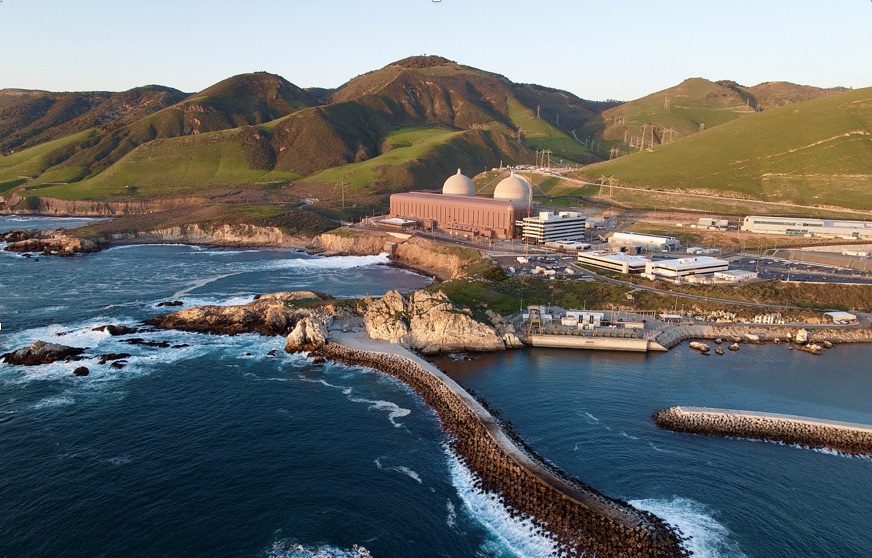
California’s last nuclear power plant is staying open longer than planned. Good or bad, the decision reflects a bigger question of competing priorities — a question of what goes into the jar first to make it all fit: the rocks, the pebbles, the sand, or the water? When it comes to energy policy, what is the rock: California’s expanding power needs or its coastal ecosystems?
On Thursday, the California Coastal Commission voted to approve a permit allowing the Diablo Canyon Power Plant, perched above Avila Beach of San Luis Obispo County, to continue operating through at least 2030. The controversial decision was conditioned on Pacific Gas & Electric (PG&E), the plant’s operator, agreeing to permanently conserve 4,000 acres of surrounding land from commercial or residential development.
The decision carries powerful consequences for the state’s energy future. Diablo Canyon is California’s single largest power plant and its only remaining nuclear facility. It provides 9 percent of the state’s total electricity, nearly 20 percent of its zero-carbon power. California is the fourth-largest economy in the world, with a $4.1 trillion GDP, 58 Fortune 500 companies headquartered here, and 13.9 percent of U.S. manufacturing. It’s also home to 18 percent of global R&D. As energy demand climbs, particularly from artificial intelligence and electrification, the state is expected to need 21 gigawatts of new capacity by 2040 (equivalent to 10 more Diablo Canyons.)
What complicates the picture is that Diablo is advancing along two parallel regulatory tracks: The state only authorized operation through 2030 under Senate Bill 846, while PG&E is also seeking a 20-year license renewal from the Nuclear Regulatory Commission, which would allow the plant to operate until 2045. That federal application triggers a consistency review under the federal Coastal Zone Management Act, giving the Coastal Commission dual authority over the five-year and 20-year scenarios.
While Diablo now awaits federal relicensing for an additional 20 years, nine of the commission’s 12 voting members supported the five-year extension. They cited grid reliability and the state’s growing power demands.
Inside the Hearing
The dramatically long public comment period on Thursday — 54 people signed up to speak — showed that the issue is set firmly in a gray area. Commenters were all over the proverbial map. Environmental concerns and the argument that native tribes reserve rights to the land were brought into conflict with energy needs and defenses of PG&E being so-called good neighbors and responsible stewards of the land, citing mitigation measures.
To the plant’s opponents, those measures fall far too short. During the deliberations on Thursday, Commissioner Ray Jackson brought up PG&E’s profits: $2.2 billion in 2023 and $2.3 billion in 2024. He said he appreciated the company’s contributions to the local economy, but “that does not erase the ecological debt still owed.” He was one of the commission’s three “no” votes.
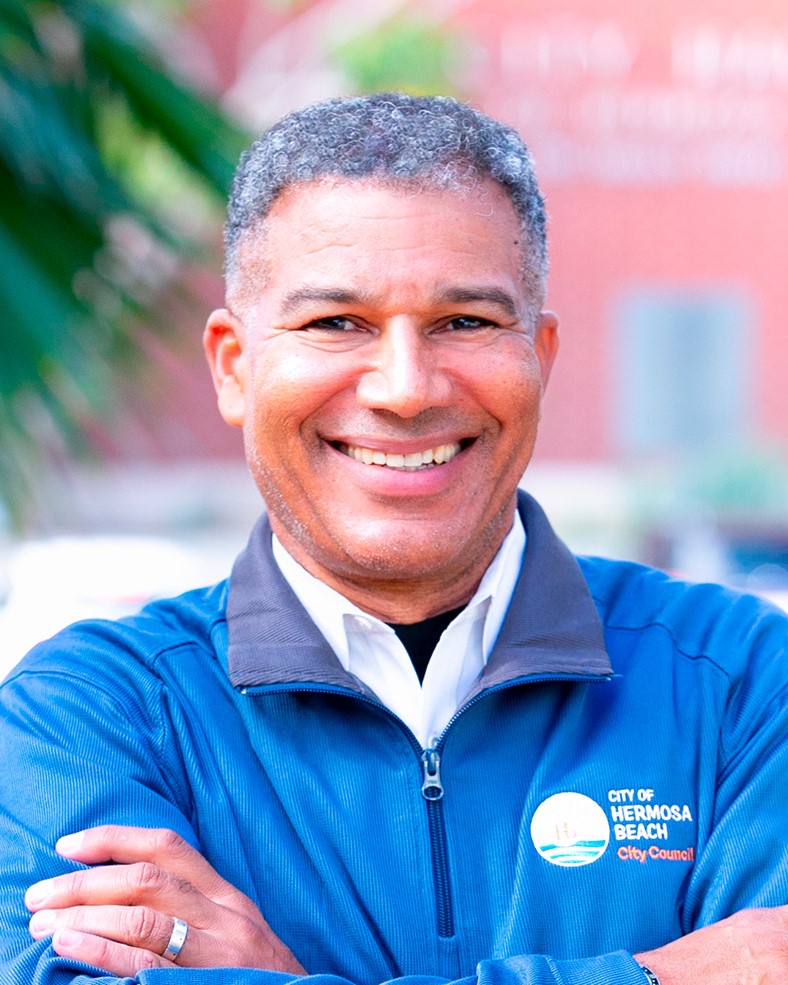
“When we consider the decades of harm already inflicted on the ecosystem and the continued destruction that will continue at a minimum through 2030 under the plant’s extended operations, protecting the entire 12,000 acres of Diablo Canyon lands is far more than justified; it’s essential,” he said. “We have no idea what the future is going to hold.”
Still, despite many commissioners sharing this expressed uncertainty toward the future, a majority of Jackson’s colleagues were enthused over keeping the lights on. Last month was the first hearing on PG&E’s permit extension, but it was continued to December 11 due to an hours-long public comment period and suggested revisions to the proposal.
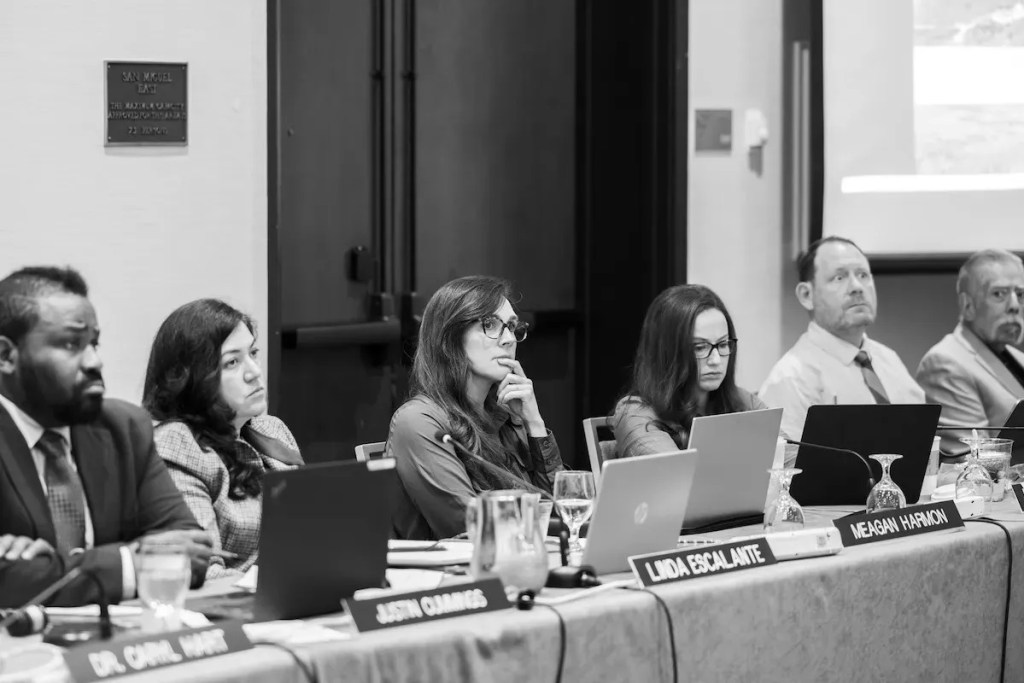
“Both our staff and the team from PG&E went away from that hearing, and they put their heads together — in a good-faith, collaborative way — to chart a path forward,” said Commission Chair Meagan Harmon, who sits on the Santa Barbara City Council.
Additional proposed mitigation operations were added between the two hearings, including upping the North Ranch conservation easement from 1,100 acres to 4,500 acres; adding 15 miles to public trail easements, now totaling 25 miles; and nearly doubling funding for mitigation from $5.6 million to $10 million. Additionally, it was proposed that nonprofits and tribal organizations be added to the list of potential owners and managers of the conserved lands.
“Diablo Canyon implicates many, many complexities,” Harmon said. “Many of them are far outside our purview … but for my part, I share the belief that the increased mitigations will be of significant benefit to the State of California for years to come.”
A Rocky Tradeoff
For critics like David Weisman, executive director of the Alliance for Nuclear Responsibility, the Coastal Commission missed the point. “The alliance still doesn’t believe trading land for sea life is a full measure of mitigation,” Weisman said in an interview, criticizing the staff’s decision to forgo further research into alternatives like reef or wetland restoration. “You’re the Coastal Commission … and it doesn’t help the fish.”

Weisman pointed to Diablo’s massive cooling system as the culprit: “The plant is taking in two to two and a half-billion gallons of water a day,” he said. “What gets sucked in — fish larvae and small marine life — experiences 100 percent mortality.” Larger creatures aren’t spared either, often “impinged” on intake screens and scraped off dead, he said. “A former senior scientist at the Coastal Commission [Tom Luster] once called Diablo California’s largest marine predator.”
Those concerns are echoed more forcefully by Mothers for Peace, which called the commission’s vote “a deeply disappointing day for California’s coast.” In a statement, spokesperson Linda Seeley said, “The Commission had a chance to put safety and marine life above corporate convenience — and it failed. PG&E’s cooling system destroys marine ecosystems every single day, and its seismic data are decades old. Approving this permit unnecessarily places the Central Coast at great risk.”
As for the group’s contention that the permit relies on outdated seismic data, PG&E maintains that the plant is built to withstand the hazards of nearby faults, including the Hosgri and Shoreline Faults, located roughly 2.5 miles and one mile away. Based on a seismic hazard assessment in 2024, PG&E — backed by the Nuclear Regulatory Commission — determined the plant is safe to operate through at least 2030. Even so, the Coastal Commission staff concluded that longer operations would require additional seismic review.
The permit vote follows a staff recommendation that acknowledged Diablo Canyon’s inconsistency with the state’s Coastal Act, which requires protection of marine life; for PG&E’s cooling system degrades more than 14 square miles of near shore waters annually. Despite that, the commission utilized the rarely used Section 30260 of the Coastal Act, which allows industrial projects with significant impacts to move forward — essentially saying that the public benefit outweighs the harm. Outside of environmental costs, however, there is a financial one as well.
Follow the Money
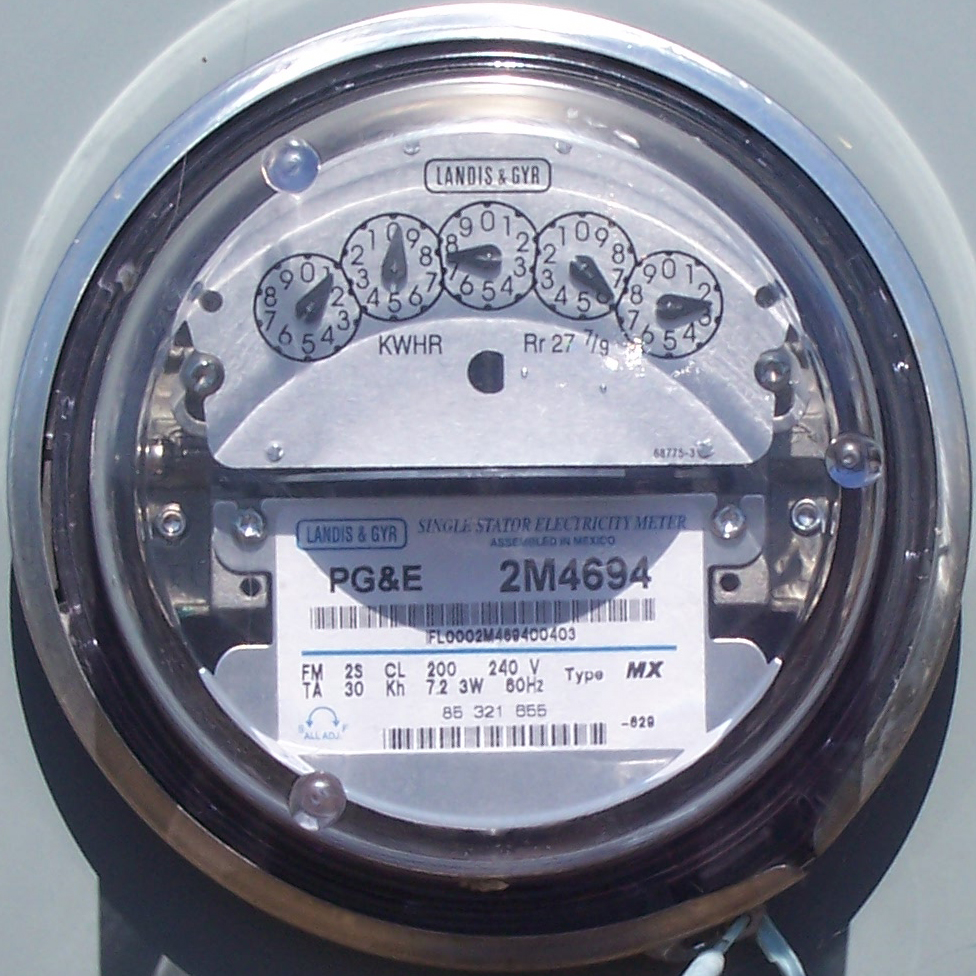
And for customers in Santa Barbara County, the cost of keeping Diablo open isn’t just a Northern California or S.L.O. County debate. This will hit Santa Barbara County residents’ bills too. Under state law SB 846, ratepayers across California must help cover the $6.5 billion PG&E expects to spend operating Diablo through 2030. That includes customers of Southern California Edison (SCE), which serves most of Santa Barbara.
In 2025 alone, SCE customers will pay more than $150 million toward Diablo Canyon’s continued operation — 44.7 percent of PG&E’s $337 million funding request for the year. According to a 2022 rate filing, the average SCE residential customer using 500 kWh per month will see their bill go up by $1.26 per month — a 0.7 percent increase. Each year, PG&E operates Diablo, it will file again with the CPUC to keep recovering costs.
Weisman called the CPUC’s sign-offs “rubberstamps” for above-market power that’s no longer needed. “The CPUC continues to say cost-effectiveness is not a relevant issue, as ratepayers struggle with rising utility bills. Maybe Governor Newsom will explain why in the New Hampshire primary,” Weisman said, alluding to the apparent presidential aspirations of the governor, who has pushed to keep Diablo open past its shutdown deadline.
Approved by the state in 2022 after heatwaves and rolling blackouts spooked lawmakers, the deal to keep Diablo Canyon running was sold as a short-term fix. The plant had been set to fully shut down by 2025, under a 2016 agreement between PG&E, environmental groups, and labor unions. But since then, PG&E has received or requested at least $6.5 billion to support extended operations. That includes $723 million in ratepayer-funded cost recovery for 2025-26 approved by the California Public Utilities Commission, and a $1.4 billion state loan that was supposed to be repaid through federal support.
That repayment now looks increasingly unlikely. According to the loan agreement, the only repayment sources allowed are Department of Energy awards, profits from Diablo Canyon’s final year, or separate federal funds for nuclear waste storage. PG&E’s own filings suggest none of these may fully cover the cost. In a January update, PG&E projected it would overspend the loan by $157 million, and federal awards may fall short by as much as $588 million. The remaining gap could ultimately be forgiven by the state.
Meanwhile, PG&E spokesperson Carina Corral says customers are saving money, not losing it. In an email interview, Corral said the CPUC’s decision will lower electric bills starting in January 2026, cutting average residential bills from $3.21 to $2.23 per month for Diablo operations.
“California policymakers have found it prudent and cost-effective to operate Diablo Canyon through 2030,” she wrote. “The CPUC estimated in a September report that extending Diablo Canyon’s operations beyond 2030 would deliver billions of dollars in savings to electric customers across California.”
Supporters of the plant emphasize its scale and reliability. “We’re proud to answer the call from state leaders to preserve Diablo Canyon’s safe, reliable, and clean energy,” said Paula Gerfen, PG&E’s chief nuclear officer.
Wind, Sea, and AC/DC
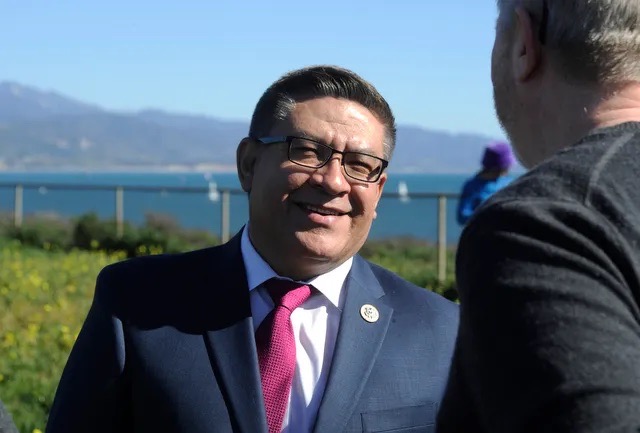
Congressmember Salud Carbajal tied Diablo Canyon to the future of renewables, specifically a proposed wind farm off the coast of Morro Bay.
“The Morro Bay offshore wind project represents a transformative opportunity for the Central Coast,” Carbajal said in a written statement. “As the project moves forward, Diablo Canyon will continue supplying reliable power to the region, and its transmission lines will serve as vital infrastructure for the Morro Bay wind farm once it comes online.”
But critics argue that Diablo’s extension is unnecessary, costly, and actively harmful to the state’s renewable goals. Weisman questioned the very premise that Diablo is needed through 2030, pointing to a September 2025 presentation by California Energy Commission analyst David Erne. “We should have enough resources to get through that situation,” Erne said, referencing future demand projections. Beyond 2030, the decline is only because “we just don’t have insight into what those [future] resources might be.”
“With deference to the honorable Congressman,” Weisman added, “we’ve crossed that bridge.”
Yet in the broader political context, Diablo is one of few energy issues to see bipartisan consensus. Even Donald Trump, famously hostile to wind energy — particularly after losing a legal battle over offshore turbines near his golf course in Scotland — has taken aim at renewable subsidies. In that climate, some lawmakers see nuclear as a necessary compromise, as seen in Trump’s executive order ushering in a “Nuclear Renaissance.”
Whether Diablo Canyon is needed or not, it comes with undeniable trade-offs. The plant produces radioactive waste, its cooling system kills billions of marine organisms, and it sits near two active fault lines. But as Governor Gavin Newsom and others have argued, California may not have the luxury of turning away a single reliable energy source. With fossil fuels phasing out, more renewables in the works, and demand projected to skyrocket, Diablo Canyon isn’t just a rock — it may be one of many the state needs to pile in first.
So what goes into the jar? Is the priority long-term environmental harm or the immediate need to power a $4.1 trillion economy? Can California build solar, storage, offshore wind fast enough to replace what Diablo provides?
Rocks, pebbles, sand, water. The answer, at least according to the Coastal Commission whose job is to protect the water, is that the rock may be the Diablo Canyon Power Plant.
Related Posts

Premier Events

Sat, Oct 24
2:00 PM
Santa Barbara
Japanese Sacred Architecture: Shinto and Buddhism

Sat, Oct 24
10:30 AM
Santa Barbara
Picnic in the Cemetery: A Live Historical Event

Sat, Oct 24
11:00 AM
Goleta
2nd Annual Charger Cup to Benefit DP High Golfers

Sat, Oct 24
12:00 PM
Santa Barbara
Makers Hive Market
Sat, Oct 24
2:00 PM
Santa Barbara
Japanese Sacred Architecture: Shinto and Buddhism

Sat, Oct 24
2:00 PM
Santa Barbara
Thriller 2026 – Get Scary for Charity!

Sat, Oct 24
3:00 PM
Santa Barbara
Downtown Santa Barbara Trick-or-Treat

Sat, Oct 24
5:00 PM
Santa Barbara
15th Annual DSASBC Halloween Hoedown

Sat, Oct 24
5:30 PM
Solvang
Solvang Haunted House and Street Fair

Sat, Oct 24
7:00 PM
Santa Barbara
Anima: Theater of the Feminine Underground

Sun, Oct 25
11:00 AM
Santa Barbara
Free Family Day: Día de los Muertos
Sat, Oct 24 2:00 PM
Santa Barbara
Japanese Sacred Architecture: Shinto and Buddhism
Sat, Oct 24 10:30 AM
Santa Barbara
Picnic in the Cemetery: A Live Historical Event
Sat, Oct 24 11:00 AM
Goleta
2nd Annual Charger Cup to Benefit DP High Golfers
Sat, Oct 24 12:00 PM
Santa Barbara
Makers Hive Market
Sat, Oct 24 2:00 PM
Santa Barbara
Japanese Sacred Architecture: Shinto and Buddhism
Sat, Oct 24 2:00 PM
Santa Barbara
Thriller 2026 – Get Scary for Charity!
Sat, Oct 24 3:00 PM
Santa Barbara
Downtown Santa Barbara Trick-or-Treat
Sat, Oct 24 5:00 PM
Santa Barbara
15th Annual DSASBC Halloween Hoedown
Sat, Oct 24 5:30 PM
Solvang
Solvang Haunted House and Street Fair
Sat, Oct 24 7:00 PM
Santa Barbara
Anima: Theater of the Feminine Underground
Sun, Oct 25 11:00 AM
Santa Barbara


You must be logged in to post a comment.