

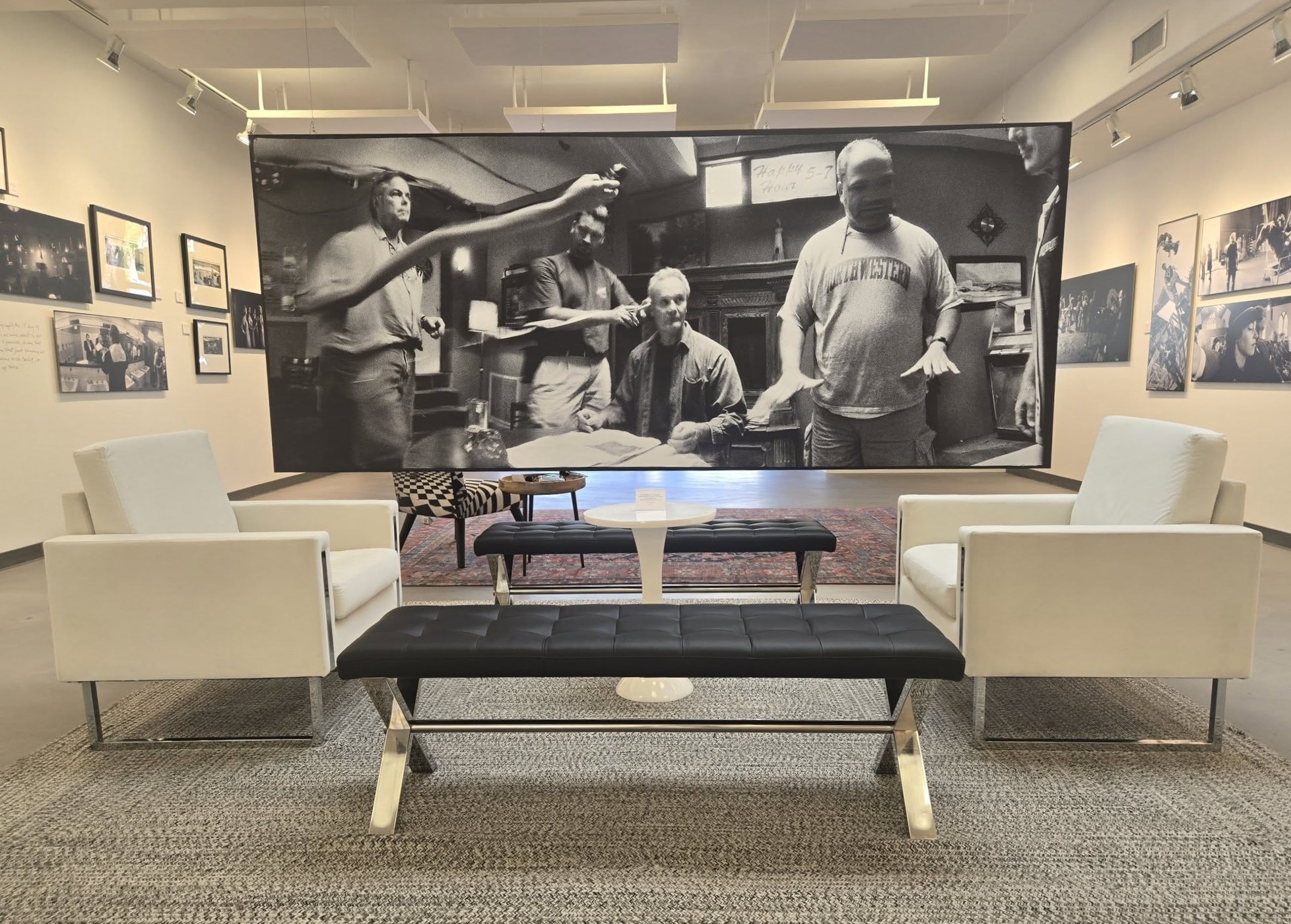
Over the few decades since Jeff Bridges has made a happy home in Santa Barbara, the world has known him largely through his prominent — and also blissfully offbeat — persona as an actor. He was, and ever shall be, “The Dude,” the iconic slacker character in the Coen brothers’ quirky classic The Big Lebowski, and countless other characters going back to the 1970s, up through his late career, Oscar-winning (for best actor) role as a soused late career musician in Crazy Heart. More recently, he took on an age-appropriate role in TV’s Old Man.
But there is much more to Jeff Bridges than the cavalcade of characters he has played, and Santa Barbara has come to know some of the many facets of his creative and philanthropic life. He has tended the personal fires of being a recording and touring musician, a visual artist, advocate for battling child hunger, and a passionate photographer, the latter role he’s currently going public with.
Bridges’s fascinating exhibition, called simply Pictures, is extending its Tamsen Gallery run through May 30, and it both exposes locals to this long-standing avenue of Bridges’s work, and champions something presently seizing his attention: the Widelux cause.

Both he and his photographer wife, Susan, have been strong advocates for and users of this esoteric panoramic format for many years, and the couple has taken its passion to an entrepreneurial manufacturing stage. Disappointed that the original Widelux Company had gone out of business, Bridges teamed up with a German manufacturer to rebirth the specialized camera, now available as the WideluxX.
For more direct testimony, proceed to the gallery on Saturday, May 16, when Bridges will appear in a discussion with his daughter Jessie for two sessions, at noon and at 4 p.m. — the first time he will speak publicly about this avenue of his creative being.
I caught up with Bridges last week to discuss matters at hand, and in the past. It’s a past enriched by countless stories and characters, far beyond the realm of The Dude.
Among your recent public appearances in Santa Barbara was at the Santa Barbara International Film Festival, where you presented an award to Ethan Hawke at the Arlington. It made perfect sense, since you two are similar in a way. You are both actors who take chances and also like to work in different media. Did you feel a strong connection with him?
Yeah, it was wonderful. We share managers, David Schiff, and I’ve known that for years, but as just the way things go, we never connected. So it was great to have that chance to tell him how much I enjoyed his work and everything about him. I think he’s a wonderful artist.
I sensed that it was a mutual admiration society situation.
Oh, yeah. We had a good time.
You were also at the Arlington to speak before the screening of Heaven’s Gate in its uncut version, which you worked on at the age of 30. And then Susan showed photographs she took on the set of the film, at the Tamsen.
That was, again, another high point for me. I watched Heaven’s Gate again with my dear old buddy, whom I met on that show, T-Bone Burnett. We sat next to each other, watching that movie, and relived all those experiences. He leaned over to me, and he said, “This is like we’re watching the news.” It was so pertinent to what’s going on today. [He’s referring to the themes of institutional racism and manifest destiny-related land grabs in the film.]
Watching the film must have triggered a strange wave of déjà vu for you. Or have you watched it much?
No, I hadn’t. And after the movie, T-Bone just spontaneously called Sam Waterstone, whom I don’t think I’ve seen since that movie. Sam and I go back even before that — we did a movie together called Rancho Deluxe. That’s where I met my wife — I guess that’s over 50 years ago now.
Was Susan officially a photographer on the set of Heaven’s Gate?
Well, I don’t know. She was certainly embraced by Michael Cimino, the director, and Vilmos Zsigmond, the cinematographer on the show. And both of those guys were mentors to her and really welcomed her to take as many pictures as she’d like. She took some real beauties. Either before or shortly after that, she became a professional photographer and received many assignments from magazines and so forth.
We were married in 1977, and before that, we would mess around with photography. We built a little dark room in our Malibu house, up in the hills. Yeah. We got into that together.
Did she seed your interest in photography, or had you already been into it?
It was kind of the other way around. I think she had worked with some photographers when we were living in Montana, or maybe it was even in Fargo, where she’s from. But then I kind of got her into photography. We had this darkroom together, and we would develop and print and listen to all that great music of the time, in the red light of the darkroom. We had a wonderful time with all that.
Was photography a creative outlet for you on movie sets, waiting for your shots?
Yeah, absolutely. Some actors will knit sweaters or read books or whatever, because there’s a lot of downtime. You can only prepare for a scene for so long and then it becomes kind of counterproductive in a way, or so I’ve found, anyway. So, you find ways of relaxing or being creative. And you’re absolutely right: Photography was a way that I did that. I started my photography back in high school. Then I did movies where I actually had a camera, in my character. I said, “I might as well put some bullets in there and shoot some pictures.”
And then my wife ended up giving me a Widelux camera for a wedding gift, and that became just about the only camera that I used. That was in 1977, man, almost 50 years. We’re going on our gold. We can’t believe it. We almost got our golden wedding anniversary.
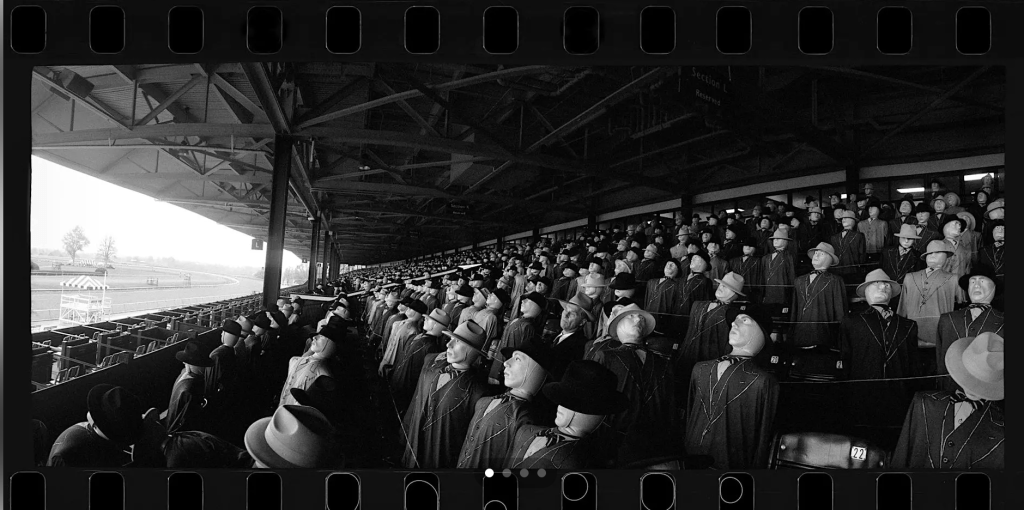
So, this camera has more significance to you than just an object or tool?
Oh, absolutely. I can go on and on about it. I’m having a presentation of my photography at the Tamsen Gallery and will give a talk about it — the first time I’ve done that. [I’ve had a lot of] exhibits, but talking about the photographs is something I’ve never done before. This is gonna be kind of a wild day for me.
My daughter Jessie is going to host it. It’s wonderful to do something with my daughter. Jessie and I have done several projects together when I had my band, the Abiders. Jessie would open the shows with us or sing with us. So, it would be great to get together and play with Jess.
Is she still at it, musically?
Well, she’s doing the mom thing now primarily. She’s got a great kid, Leon, my grandson. I’m having a lot of fun being a grandfather. Beautiful. He’s developing into quite a drummer.
Widelux is still fairly esoteric, and it’s this niche that you got into, and now you’re reviving the technology and creating this camera again. Is that right?
Absolutely. They’re gonna be hand-built in Germany. The first batch will be 350. We sold just about all of ‘em. [Link to website here.] It’s great to bring our baby back to life, because the factory burned down about 30 years ago, and it’s hard to get parts and so forth. You can go on eBay and get an old one, but you never know what condition it’d be in, and it’s hard to get parts and repair. And we’re bringing that all back to life.
I don’t know if this is a good analogy, but I love the story about Neil Young, who became obsessed with toy trains, as did his son Ben, who has cerebral palsy. So Neil up and bought Lionel, and created train sets that were more usable for people with disabilities.
Oh, I didn’t know that story. That’s a great story. I remember Lionel Trains. Wow. I played at one of his Bridge School benefits. It was a T-Bone thing, an amazing concert, with Elton John, Leon Russell, and Elvis Costello. It was just amazing.
Speaking of your musical life, it really was the buzz around Crazy Heart that became a pivotal force, didn’t it, and the catalyst for you playing music out in public and putting out a record on Blue Note? Is that the way it went?
Well, I’ve been making music since high school. But it was really right around the time of Crazy Heart when it really stepped up into a high profile. But when Scott Cooper sent me a script, I read it, and it was fine, but there was no music in it. I kept saying, “Oh, there’s no music in it.” The music was so important. I kept turning the script down or not even getting back to him.
And then I ran into T-Bone on the street one day, and he said, “What do you think about this Crazy Heart script?” I said, “There’s no music to it.” And he said, “Oh, that’s the easy part.” [Laughs.] I said, “Are you interested?” He says, “Well, I’ll do it if you’ll do it.” Then that was too cool to turn down. So I jumped in, and that kind of started the whole [music] thing.

“50 The Big Lebowski” by Jeff Bridges | Photo: Courtesy Jeff Bridges 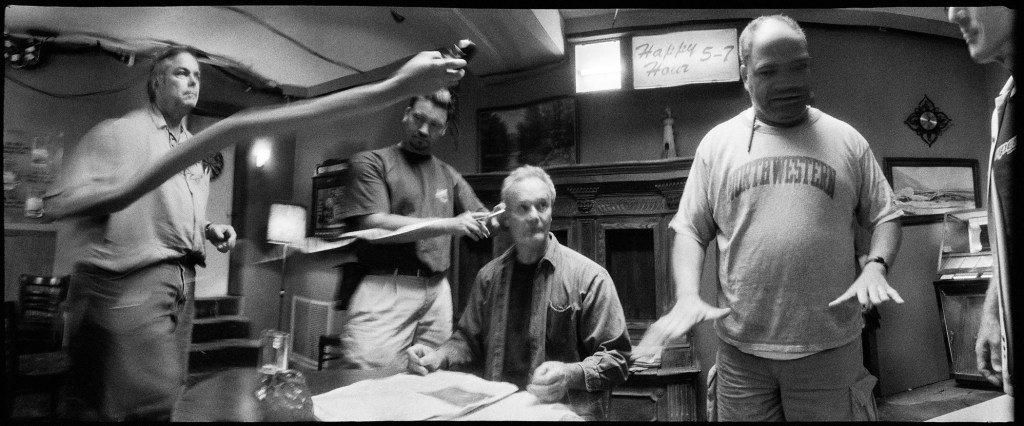
‘The Amateurs’ by Jeff Bridges | Photo: Courtesy Jeff Bridges 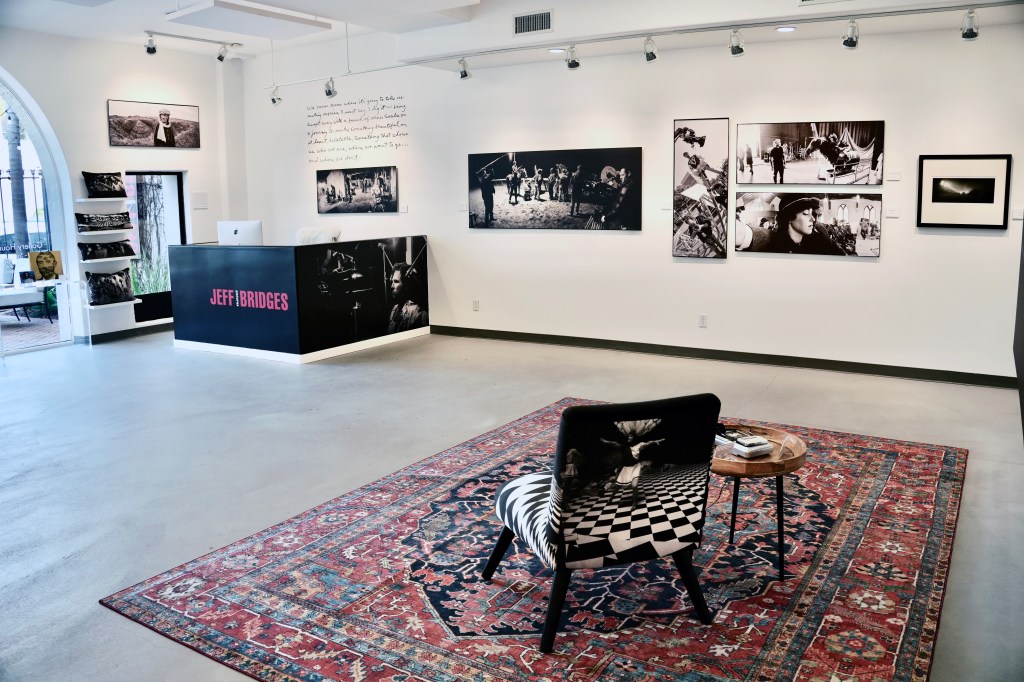
Jeff Bridges ‘Pictures’ at Tamsen Gallery | Photo: Courtesy 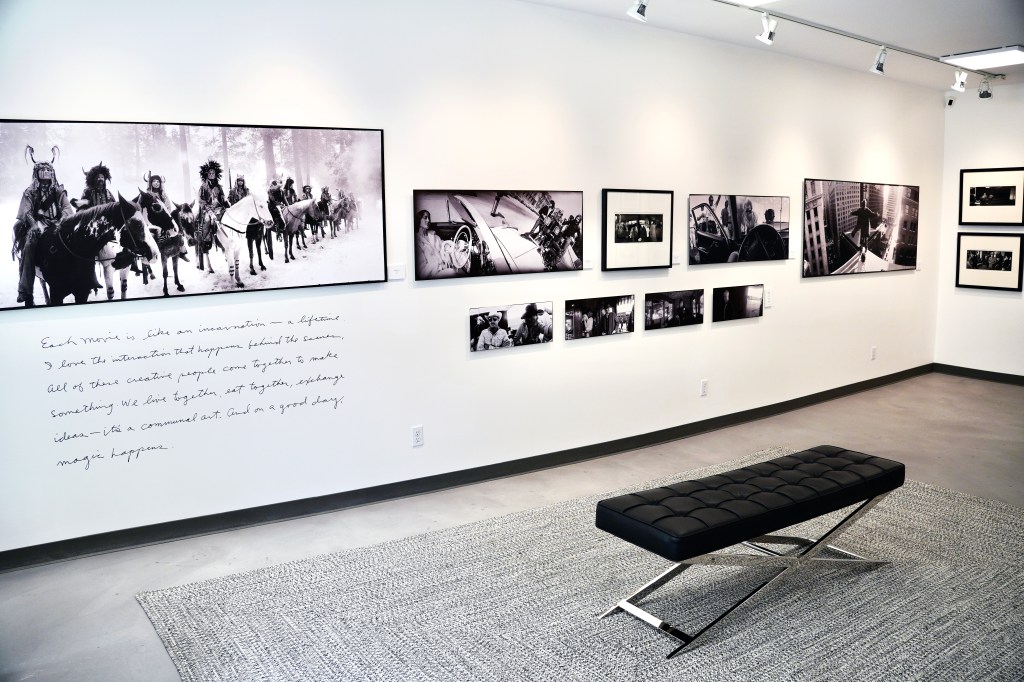
Jeff Bridges ‘Pictures’ at Tamsen Gallery | Photo: Courtesy 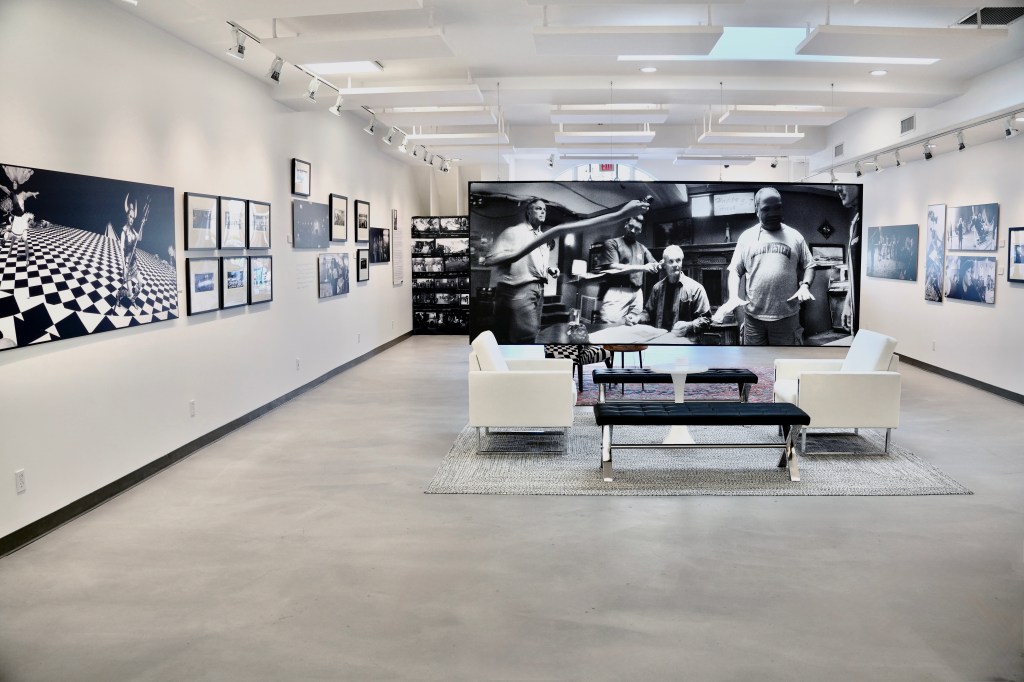
Jeff Bridges ‘Pictures’ at Tamsen Gallery | Photo: Courtesy 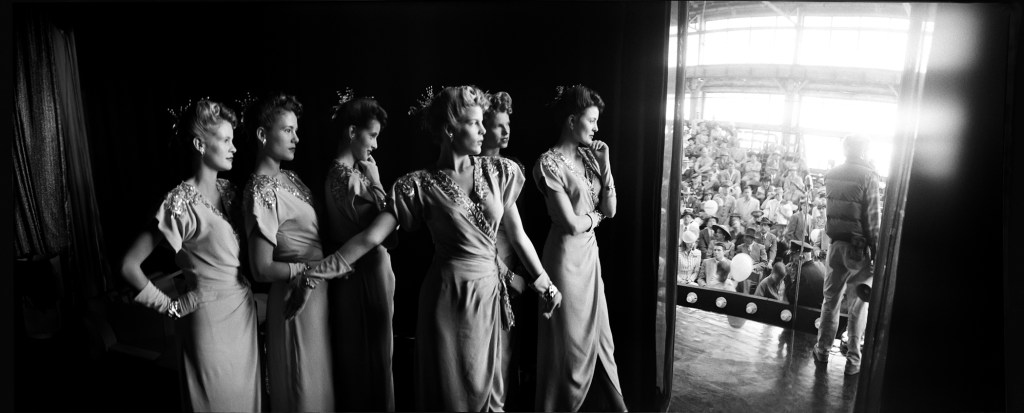
“Tucker” by Jeff Bridges | Photo: Courtesy Jeff Bridges
You juggle so many different projects, or get your creative juices going in different directions, so to speak.
It’s funny. Yeah, that’s true.
Thinking of your earlier work, before more mainstream hits, I’m a big fan of Cutter’s Way and feel it should be more widely appreciated. And it’s probably the best film made in and about Santa Barbara, though one that is dark and noir-ish.
That was my first time working or really being in Santa Barbara. I lived in L.A. most of my life, and I would just drive through Santa Barbara on my way to Big Sur, or something. But Cutter’s Way was when I really got into Santa Barbara. And when our house got shook apart by that earthquake [the Northridge Earthquake], I said, “Let’s check out Santa Barbara.”
And man, I love Santa Barbara. What a town.
You made such interesting and unusual movies in the ‘70s, like John Huston’s Fat City and The Last Picture Show — of course. Fat City is another film deserving more love, I feel.
Yeah. That was amazing. I just made a birthday video for Stacey Keach [star of the boxing-related film], who’s turning 85. He was so brilliant, and it was great working with John Houston. Yeah. That’s an amazing film.
What are you up to now? Is Old Man over now?
Yeah. We did two seasons of that. Right now, I’m focused on this photography thing, with Sue’s photography and my photography, and doing this thing at the Tamsen with Jessie. That’s what I’m creatively centered on these days. I also like doing ceramics and painting.
There’s a lot more to “The Dude” than the dude.
[Laughs.]
One way to see your life beyond the screen is to visit your website (link here), which is itself kind of a creative project.
That was something I really got into. I should update it a little more than I do. Maybe you’re inspiring me to get back on that. [Laughs.] That was a fun thing to do during the pandemic.
[Regarding music,] I had all these songs that weren’t polished, but I said, “Oh, I’m not gonna go to the studio right now. I’m just gonna put these songs out.” And I ended up putting some visuals to ‘em. It’s called Emergent Behavior.
Do you feel like this is a good period in your long, ongoing creative life?
I do feel very creative these days. It’s a new creative season for me. The photography is really kicking in, and getting to work with my daughter Jessie again spurs excitement. So, yeah, I’m in a nice creative period.
See Jeff Bridges’s exhibit at the Tamsen Gallery (1309 State St.) through May 30. For more information about the exhibit and his appearance for the Q&A on May 16, visit tamsengallery.com and bit.ly/4nqQipS for tickets, which are $200.
Related Posts
Premier Events
Sat, Oct 24
2:00 PM
Santa Barbara
Japanese Sacred Architecture: Shinto and Buddhism
Sat, Oct 24
10:30 AM
Santa Barbara
Picnic in the Cemetery: A Live Historical Event
Sat, Oct 24
11:00 AM
Goleta
2nd Annual Charger Cup to Benefit DP High Golfers
Sat, Oct 24
12:00 PM
Santa Barbara
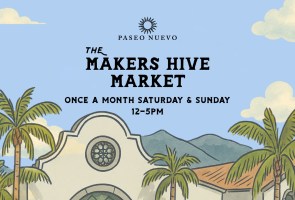
Makers Hive Market
Sat, Oct 24
2:00 PM
Santa Barbara
Japanese Sacred Architecture: Shinto and Buddhism

Sat, Oct 24
2:00 PM
Santa Barbara
Thriller 2026 – Get Scary for Charity!

Sat, Oct 24
3:00 PM
Santa Barbara
Downtown Santa Barbara Trick-or-Treat
Sat, Oct 24
5:00 PM
Santa Barbara
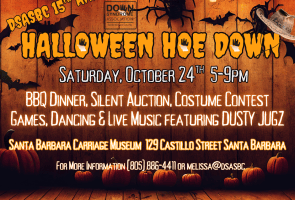
15th Annual DSASBC Halloween Hoedown
Sat, Oct 24
5:30 PM
Solvang
Solvang Haunted House and Street Fair
Sat, Oct 24
7:00 PM
Santa Barbara
Anima: Theater of the Feminine Underground
Sun, Oct 25
11:00 AM
Santa Barbara
Free Family Day: Día de los Muertos
Sat, Oct 24 2:00 PM
Santa Barbara
Japanese Sacred Architecture: Shinto and Buddhism
Sat, Oct 24 10:30 AM
Santa Barbara
Picnic in the Cemetery: A Live Historical Event
Sat, Oct 24 11:00 AM
Goleta
2nd Annual Charger Cup to Benefit DP High Golfers
Sat, Oct 24 12:00 PM
Santa Barbara
Makers Hive Market
Sat, Oct 24 2:00 PM
Santa Barbara
Japanese Sacred Architecture: Shinto and Buddhism
Sat, Oct 24 2:00 PM
Santa Barbara
Thriller 2026 – Get Scary for Charity!
Sat, Oct 24 3:00 PM
Santa Barbara
Downtown Santa Barbara Trick-or-Treat
Sat, Oct 24 5:00 PM
Santa Barbara
15th Annual DSASBC Halloween Hoedown
Sat, Oct 24 5:30 PM
Solvang
Solvang Haunted House and Street Fair
Sat, Oct 24 7:00 PM
Santa Barbara
Anima: Theater of the Feminine Underground
Sun, Oct 25 11:00 AM
Santa Barbara
Free Family Day: Día de los Muertos



You must be logged in to post a comment.