
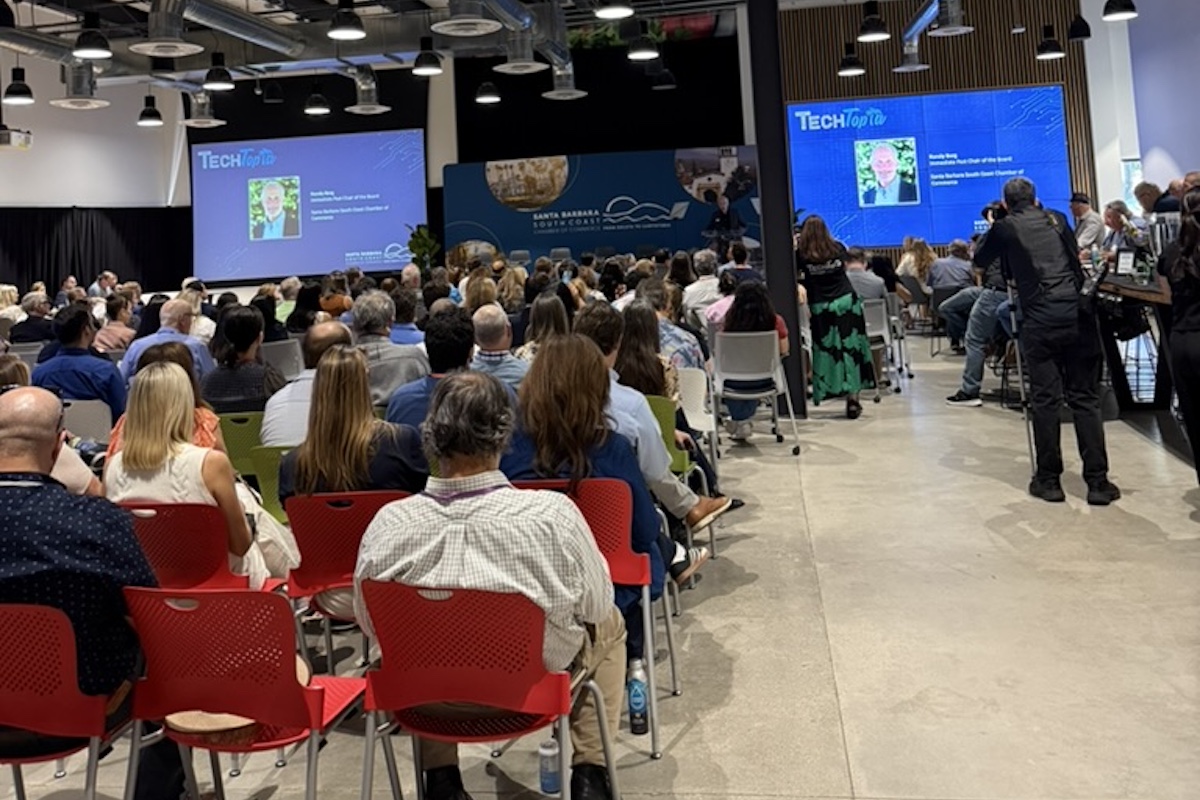
If Deltopia was Santa Barbara’s annual monument to playing hard, then TechTopia may be its answer on the other side of the coin: Work hard.
On Wednesday afternoon, less than a mile from UC Santa Barbara and just off the highway, the Santa Barbara South Coast Chamber of Commerce gathered business leaders, engineers, researchers, and executives at OASIS, a newly opened innovation hub in Goleta, to make a point that locals do not often make loudly enough: Santa Barbara is not simply an expensive surf town with good weather. It is also a place where companies are building quantum computers, cancer diagnostics, semiconductor packaging systems, and software meant to shape entire industries.
“We are home to the highest concentration of PhDs per capita outside Silicon Valley,” said Kristen Miller, president and CEO of the Santa Barbara South Coast Chamber of Commerce. “What we learned was that each individual entity was pulling a lot of weight, attracting talent, and attracting investment, changing the world, and putting out advancements in technology. But there was a longing to work together.”
That desire for collaboration was the through-line of TechTopia 2026, a half-day summit featuring tours, demonstrations, and talks from leaders tied to UC Santa Barbara, Google Quantum AI, Agilent Technologies, AppFolio, and other firms with roots on the South Coast.
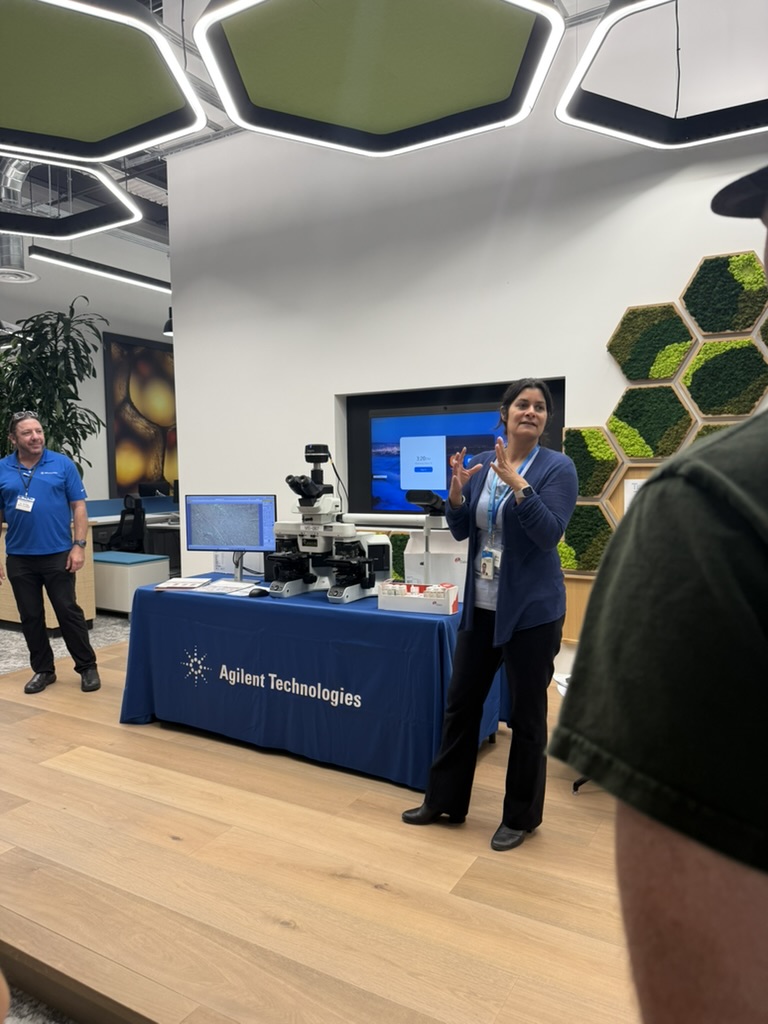
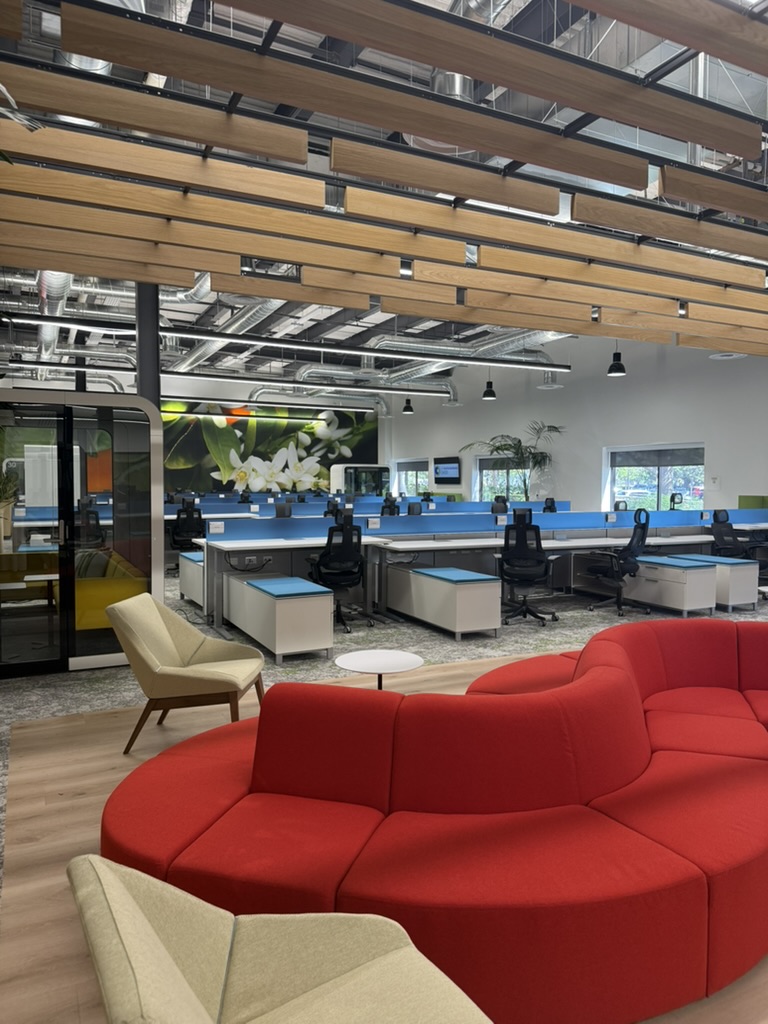
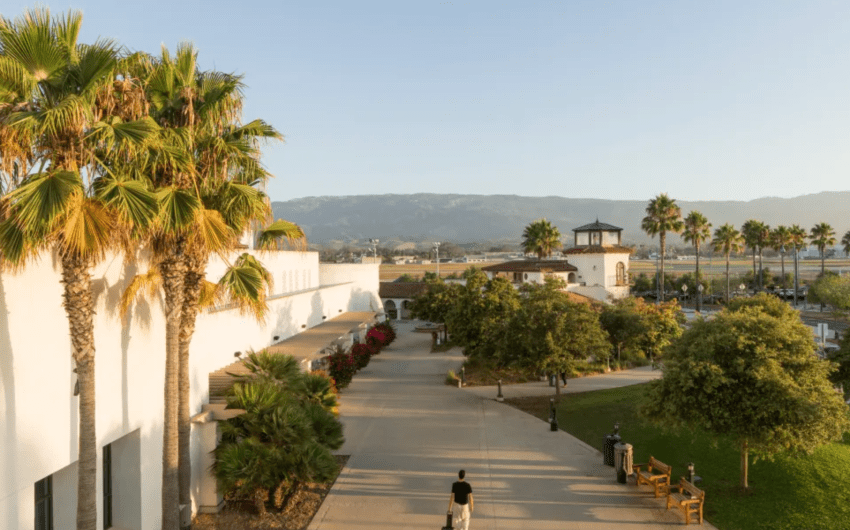
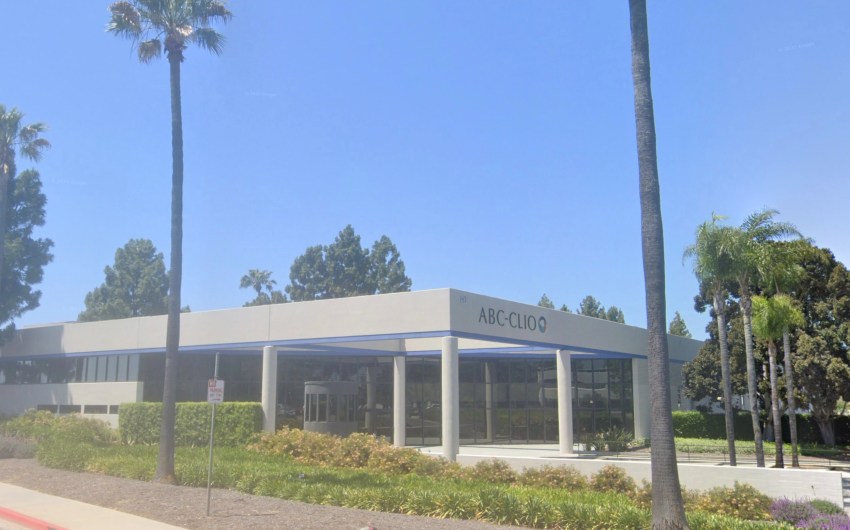
It also doubled as something of a public unveiling for OASIS, UCSB’s new 105,000-square-foot research and development facility at 71 South Los Carneros Road. Announced last year, the building is intended to bridge the gap between campus research and industry deployment — a place where faculty researchers, startup companies, and more established firms can work in closer proximity.
Tal Margalith, executive director for scientific initiatives and innovation at the California NanoSystems Institute, led one of the day’s tours through the facility, which includes open office space, wet labs, startup incubation areas, and future semiconductor-packaging infrastructure. Apeel Sciences still occupies part of the building, but UCSB has begun moving research operations into the space.
“OASIS is UCSB’s new venture,” Margalith said, describing it as an extension of the research enterprise on campus that brings university work “a lot closer to the industry” that ultimately adopts new technologies.
The building, he explained, is meant to function as a kind of “step-up incubator” for companies outgrowing smaller campus startup spaces but not yet ready to fully enter the commercial real-estate market. The first startup tenant has already arrived from Virginia, drawn by Santa Barbara’s concentration of photonics, materials science, and semiconductor expertise.
Margalith pointed to one lab under construction for semiconductor packaging — the process that turns fabricated chips into usable devices by connecting them to wires, optical fibers, and other systems — as an example of the infrastructure OASIS hopes to provide.
“This is a gap in, honestly, not just the California infrastructure, but the national infrastructure,” he said.
For chamber leaders, the building represents more than real estate. It is an argument about Santa Barbara’s identity.
Randy Berg, past chair of the South Coast chamber board, urged attendees to retire the idea that Santa Barbara’s professional culture is somehow soft-edged.
“No one will ever, if I catch you, say that Santa Barbara’s a laid-back place for development,” Berg said. “We might be reserved, we might be understated, but this region is not laid back, and you saw that today.”
He called OASIS “the before picture,” predicting that the building will soon fill with “the next generation of ideas.”
The summit’s presentations offered a fast-moving glimpse of what that next generation might look like.
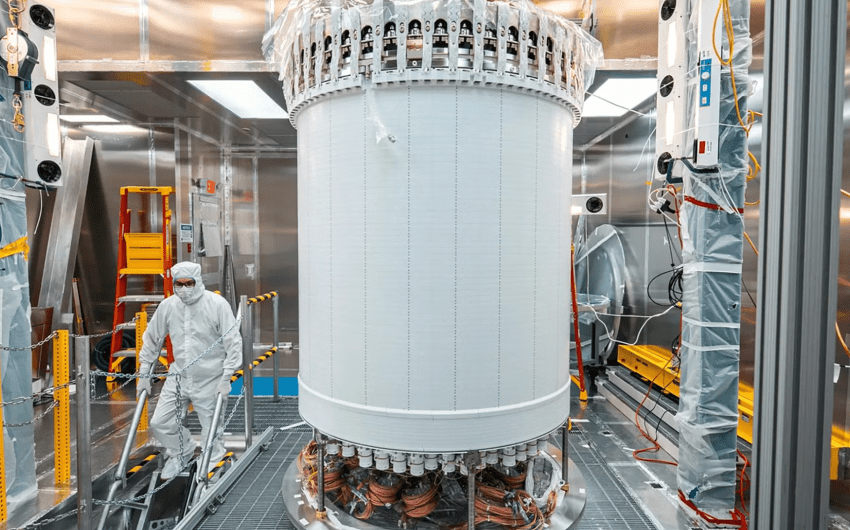
A Google Quantum AI talk by quantum fabrication engineer Jenna Bovaird pushed the room into the outer edges of physics. Bovaird, a UCSB graduate who said she originally joined the team because she “wanted to live in Santa Barbara” and have “a cool engineering job,” explained Google’s work on superconducting qubits — quantum bits that operate at temperatures so cold they require elaborate dilution refrigerators.
“You can basically say you live in the same city as one of the coldest points in the universe,” she said.
If the finer points of quantum mechanics left some audience members blinking into the fluorescent lights, the broader point landed clearly enough: Google is pursuing computer systems in Santa Barbara designed not to improve on classical computing, but to solve problems once considered out of reach.
Elsewhere, Agilent Technologies highlighted precision diagnostics and therapies intended to better target cancer while limiting the collateral damage of chemotherapy. The work, representatives noted, is being developed in Carpinteria. AppFolio, whose headquarters later hosted one of the day’s tours, showcased the scale of its local presence as a property-management software company with about 90,000 square feet of office space and room for roughly 500 employees.
Jessica Star, who led the AppFolio tour, said, “We are literally in one of the best places on the planet.” I believed her, given that the tour steered us away from the fitness center because some employees were receiving onsite massages.
The company has also tried to tie its workplace design to local and environmental commitments, she said, from supporting Santa Barbara coffee roaster Handlebar to reducing water use through landscaping changes and helping clean up a nearby creek.
There was a recurring message throughout the afternoon that Santa Barbara’s tech sector draws unusual strength from its proximity to UCSB — especially its engineering and materials-science pipeline — and from the way industry and academia have grown together rather than in isolation.
As Berg put it, if anyone still needed convincing: Santa Barbara is not laid back. It is simply very good at disguising how hard it works.
Related Posts



Premier Events

Tue, Sep 15
7:30 PM
Santa Barbara
Institute of World Culture (IWC) September Study Circle

Tue, Sep 15
10:00 AM
Santa Barbara
Volunteer Open House – S.B. Museum of Natural History and Sea Center

Tue, Sep 15
6:00 PM
Santa Barbara
Chaucer’s Books Hosts Ellen O’Connell Whittet

Tue, Sep 15
6:00 PM
Santa Barbara
Embroidered Brooch Workshop

Thu, Sep 17
5:30 PM
Santa Barbara
S.B. Independent: Santa Barbara City Council District 5 Forum
Thu, Sep 17
7:00 PM
Santa Barbara
Téka Brazilian Jazz at The Grand On State
Fri, Sep 18
All day
Solvang
Solvang Danish Days
Fri, Sep 18
12:00 AM
Santa Barbara
Yesterday: A Tribute to The Beatles at SOhO

Fri, Sep 18
7:00 PM
Carpinteria
West Coast Premier: “Gloria’s Old Haunt”
Sat, Sep 19
All day
Solvang
Solvang Danish Days
Sat, Sep 19
9:00 AM
Santa Barbara County
Coastal Cleanup Day
Tue, Sep 15 7:30 PM
Santa Barbara
Institute of World Culture (IWC) September Study Circle
Tue, Sep 15 10:00 AM
Santa Barbara
Volunteer Open House – S.B. Museum of Natural History and Sea Center
Tue, Sep 15 6:00 PM
Santa Barbara
Chaucer’s Books Hosts Ellen O’Connell Whittet
Tue, Sep 15 6:00 PM
Santa Barbara
Embroidered Brooch Workshop
Thu, Sep 17 5:30 PM
Santa Barbara
S.B. Independent: Santa Barbara City Council District 5 Forum
Thu, Sep 17 7:00 PM
Santa Barbara
Téka Brazilian Jazz at The Grand On State
Fri, Sep 18 All day
Solvang
Solvang Danish Days
Fri, Sep 18 12:00 AM
Santa Barbara
Yesterday: A Tribute to The Beatles at SOhO
Fri, Sep 18 7:00 PM
Carpinteria
West Coast Premier: “Gloria’s Old Haunt”
Sat, Sep 19 All day
Solvang
Solvang Danish Days
Sat, Sep 19 9:00 AM
Santa Barbara County


You must be logged in to post a comment.