


The original version of this newsletter was sent out on Tuesday, March 24.
Sign up for All Booked, our bi-monthly newsletter exclusively for book lovers.
Hello, fellow bookworms! I hope everyone has been enjoying this early-summer weather and staying cool.
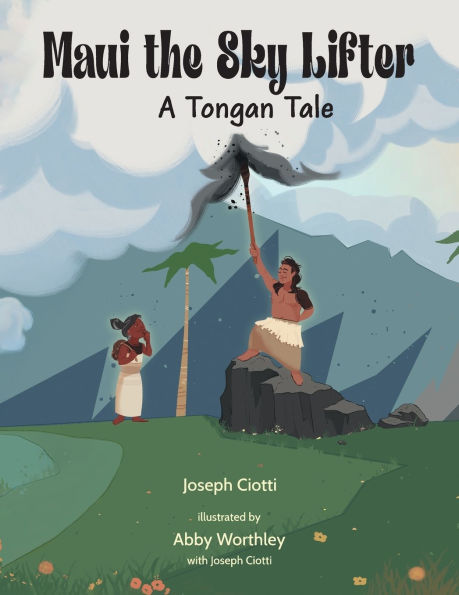
This week, I have a sweet children’s book to share: Maui the Sky Lifter: A Tongan Tale by Joseph Ciotti. If a child has ever asked you why the sky is so far away from the ground, offer an explanation from ancient Tongan legend!
In the old days, the sky touched the earth and made it hard to see and live comfortably, so the creatures of the earth tried their best to lift the sky away from the earth, but nothing worked. That is, until Maui ‘Atalanga, son of the Underworld’s fire-keeper, inspired by tales of heroes and wanting to help the people around him, was able to lift the sky just a little with the help of an ‘akau-ū, or fire poker stick. When a cunning old woman encourages Maui to lift the sky even higher, he rises to the challenge, climbing higher and higher to the tallest mountain in order to lift the sky in an incredible feat of courage, will, and strength.
Maui the Sky Lifter is a beautiful version of a story passed down through generations, with the wonderful message of belief in yourself and working to help your fellow man. Abby Worthley’s gorgeous illustrations bring the story to life, and only serve to remind the reader that even the sky is not the limit — with a little daring and determination, you can change the world!
This week, our outstanding reporter Ryan P. Cruz brings us a roundup of translated works from authors who hail from Poland, Japan, and Mexico for a taste of the talent brewing in other parts of the world. I definitely need to add these to my list!
Happy reading!
—Tessa, allbooked@independent.com
Like many in the news business, my day-to-day life — and the flood of media I take in — can cloud my perspective of things, sometimes making me forget the world is a big, beautiful place with people from all kinds of backgrounds, whose ways of thinking are not shaped by the same American culture I’m surrounded by every day. In my quest to widen my world view beyond the borders of the U.S., I’ve been trying to read more contemporary books translated from other languages, written by authors who can whisk me off to places my American-centric mind wouldn’t have ever imagined. Below are just a few translations from some of my favorite living authors who are offering a different way of looking at things, with unique styles that can help remind readers of the diversity, variety, and potential of creative expression across the planet.
The Empusium by Olga Tokarchuk (translated by Antonia Lloyd-Jones)
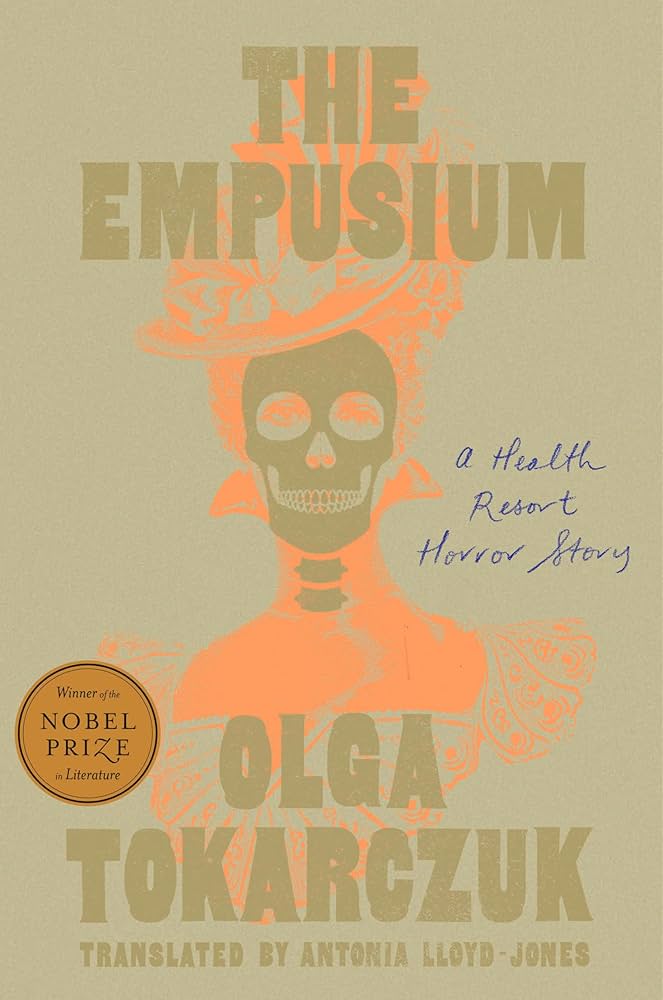
One of my absolute favorite contemporary authors is Polish writer Olga Tokarchuk, winner of the 2018 Nobel Prize in Literature. Somehow, I hadn’t heard of Tokarchuk until I stumbled upon her short story “Late Saturday to Early Sunday,” a humorous telling of what it might have been like for a weary God to make a last-minute addition to the world in the wee hours of the night between the sixth and seventh day of creation. “God created drugs with an addendum, a few minutes after midnight on Saturday night — in other words, on Sunday, when he wasn’t supposed to be doing anything anymore,” she writes in the story’s opening lines.
Tokarchuk’s witty tone and folksy way of storytelling piqued my interest immediately, and I went on to check out her three available English translations, each time getting more impressed at the way she is able to draw readers into her darkly funny, mysteriously magical yet extremely authentic worlds. While I also recommend her novels “Drive Your Plow over the Bones of the Dead” and “Flights” — both of which were selected as finalists for the Booker Prize — I think the ultimate Tokarchuk read is her newest work The Empusium, a horror-centric novel that gives a taste of her ability to blend historical fragments, folk tales, and commentary on modern-day social sexual stereotypes all in one rollercoaster ride of a story.
The book, which is a spin on Thomas Mann’s The Magic Mountain, follows a young man stricken with tuberculosis, who is sent to recover at a sanatorium deep in the mountains of Poland in 1913. The men at this resort waste their nights gossiping over hallucinogenic beverages, debating the merits of women, religion, and politics while a voyeuristic stranger in the surrounding woods creeps in on their little world.
It’s an excellent introduction to Tokarchuk’s style, a blend of psychology, spirituality, history, monster tales, and magical realism. The book pulls you along into nature, the mountains, the darkness surrounding the sanatorium, while subtly poking fun and picking apart the too-familiar misogyny and inequality that presents itself in every part of the world. The story culminates with Tokarchuk laying everything bare in the acknowledgments section, hammering the ideas she’s been building along every page and proving why she has been recognized as one of the most talented authors of our generation.
The Factory by Hiroko Oyamada (translated by David Boyd)
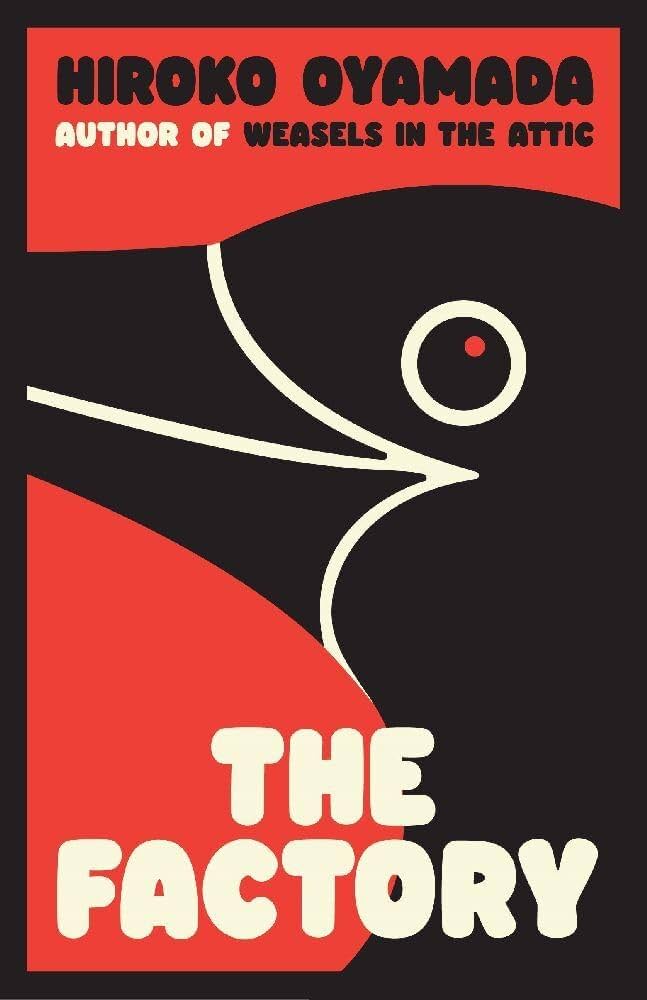
Anybody who’s ever had to report to a dull office job knows the mind-melting delirium that can come with bureaucratic business work. Days blend together, interactions are repetitive and formulaic, and the tasks given to workers can be confusing and sometimes downright pointless.
Japanese author Hiroko Oyamada’s first English translation The Factory creates a world where the boredom of worker life is taken to an extreme, taking readers on a journey through the eyes of three workers at a capitalist-nightmare industrial factory. Oyamada’s deadpan descriptions draw readers into the bleak workers’ worlds, where one employee’s job is shredding endless supplies of documents, another worker proofreads jargon-heavy technical reports, and a third is tasked with biological studies that have no discernable purpose.
Just like a nightmare day at the office, the narrative slowly falls apart as strange occurrences plague the workers and their sense of space and time dissolve. All throughout, there is a pervasive feeling that workers are just going through the motions, without a sense of why or what they are even accomplishing.
Oyamada’s talent shows in her restraint, and in her ability to create a surreal sense of surroundings in just a few short chapters. The book is just over 120 pages long, and in the three short sections, she is able to give readers the overriding sense that the human race has willingly walled itself into this industrial nightmare, convinced that work itself is what humans are made to do.
The book has many obvious debts to Franz Kafka, the originator of the surreal critique into the human condition, and Oyamada has an excellent way with continuing Kafka’s teardown of society by picking apart its illogical origins: Why do we work? What are we accomplishing? What would we do if we did not have to work? The Factory raises all these questions, and reminds us that we might be more than worker bees creating capital for the corporations.
You Dreamed of Empires by Álvaro Enrigue (translated by Natasha Wimmer)
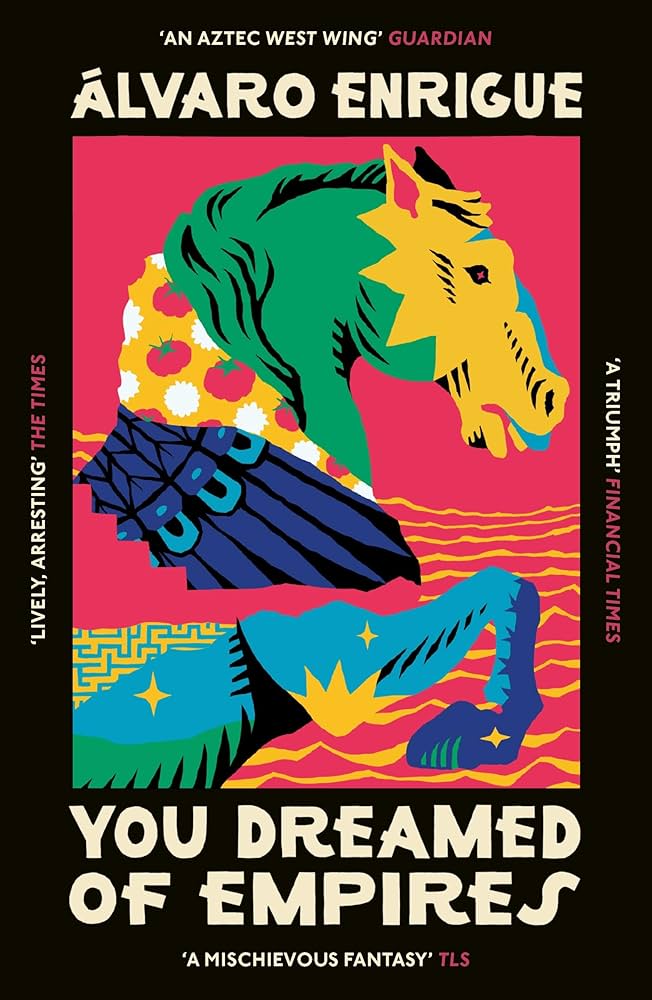
Any list of international authors wouldn’t be complete, in my mind, without the inclusion of at least one Mexican author. I’ve been reading as much contemporary Mexican writing as I can in recent months, and it’s clear that there’s something amazing happening with literature from south of the border.
I could recommend any number of Mexican-based authors churning out amazing prose — read my previous All Booked contribution for more Spanish-language recommendations — but lately, I’ve been singing the praises of Álvaro Enrigue’s You Dreamed of Empires, a historical reimagining of the meeting between Spanish conquistadores and Emperor Moctezuma in 16th-century Tenochtitlan (modern-day Mexico City).
In Enrigue’s retelling, he dives deep into historical details, bringing ancient Tenochtitlan to life in vibrant fashion by melding documented facts with his own “what-if” scenarios. Readers follow Spanish military leader Hernan Cortés and his cohort of soldiers, translators, and priests as they make first contact with the Aztec royalty.
But Enrigue’s story takes a new direction by considering what would have happened if the results of this interaction resulted in an entirely different future.
The book flips between the players, hinting at political subterfuge while the Aztec emperor floats between diplomatic meetings and boredom in a hallucinogenic haze. The emperor’s affinity for mind-bending substances is a cause for concern for his doubters, but as we learn, he just might be a genius pretending to play the fool for his new guests.
Enrigue’s writing is funny, biting, and full of dense historical facts woven together to give us a picture of what life was like — and could’ve been like — for the people who lived in pre-colonial Central America. If you are into magical realism, historical fiction, or looking at the past in a new light, this is a great addition to your reading list.
—Ryan P. Cruz
UPCOMING BOOK EVENTS
Below, you will find a few bookish events coming up in Santa Barbara. If you are hosting a bookish event in Santa Barbara, be sure to submit the event to our online events calendar.
Library on the Go 2.0 Launch Event
Wednesday, March 25, 11 a.m. | S.B. Central Library
S.B. Central Library Story Creators
Wednesday, March 25, 4 p.m. | S.B. Central Library
Book Signing: Cheryl M. Kelmar, The Judge’s Oath
Wednesday, March 25, 5 p.m. | Unity of S.B.
Godmothers Gather: Jill Wintersteen, Spirit Daughter: Own Your Power, Change Your Life
Wednesday, March 25, 6 p.m. | Godmothers
SBPL Poetry Series Reading with David Oliveira and Laure-Anne Bosselaar
Friday, March 27, 5:30 p.m. | S.B. Central Library
Storytime at the Sea Center
Saturday, March 28, 10:30 a.m. | S.B. Museum of Natural History Sea Center
Storytime at the Sea Center
Sunday, March 29, 10:30 a.m. | S.B. Museum of Natural History Sea Center
Godmothers Gather: Tom Junod & Amy Wallace, In the Days of My Youth I Was Told What It Means to Be a Man
Sunday, March 29, 6 p.m. | Godmothers
S.B. Central Library Social Justice Book Club
Wednesday, April 1, 5:30 p.m. | S.B. Central Library
SBMAL Open House
Saturday, April 4, 9:30 a.m. | S.B. Mission Archive-Library (SBMAL)
Storytime at the Sea Center
Saturday, April 4, 10:30 a.m. | S.B. Museum of Natural History Sea Center
Godmothers Little G’s LuLu the Rescue Pup, with The Elephant Project
Saturday, April 4, 11 a.m. | Godmothers
S.B. SPOTLIGHT
We at the Independent get many books sent to us by area authors, sometimes too many! It’s practically impossible for us to read and review them all, but just because we are busy bees does not mean that they aren’t worth the attention. In an attempt to not completely drop the ball, we have compiled a list of books here that are either written by a Santa Barbara author, feature someone in our community, or have another tie to Santa Barbara. I urge you to look through this list. Perhaps you will find your new favorite read!
The following are the most recent titles that have been sent to us.
If you are a local author and would like us to feature your book in this section, please email allbooked@independent.com with the subject line “S.B. Spotlight.”
Book Reviews Courtesy of CALIFORNIA REVIEW OF BOOKS*
Thanks to the generous contributions of David Starkey, Brian Tanguay and their team of reviewers at California Review of Books, we are able to provide a steady stream of book reviews via our content partnership. Recent reviews at Independent.com include:
*At the present time, all of the Independent’s book reviews are provided in collaboration with California Review of Books (calirb.com).







You must be logged in to post a comment.