
This article was underwritten in part by the Mickey Flacks Journalism Fund for Social Justice, a proud, innovative supporter of local news. To make a contribution go to sbcan.org/journalism_fund.
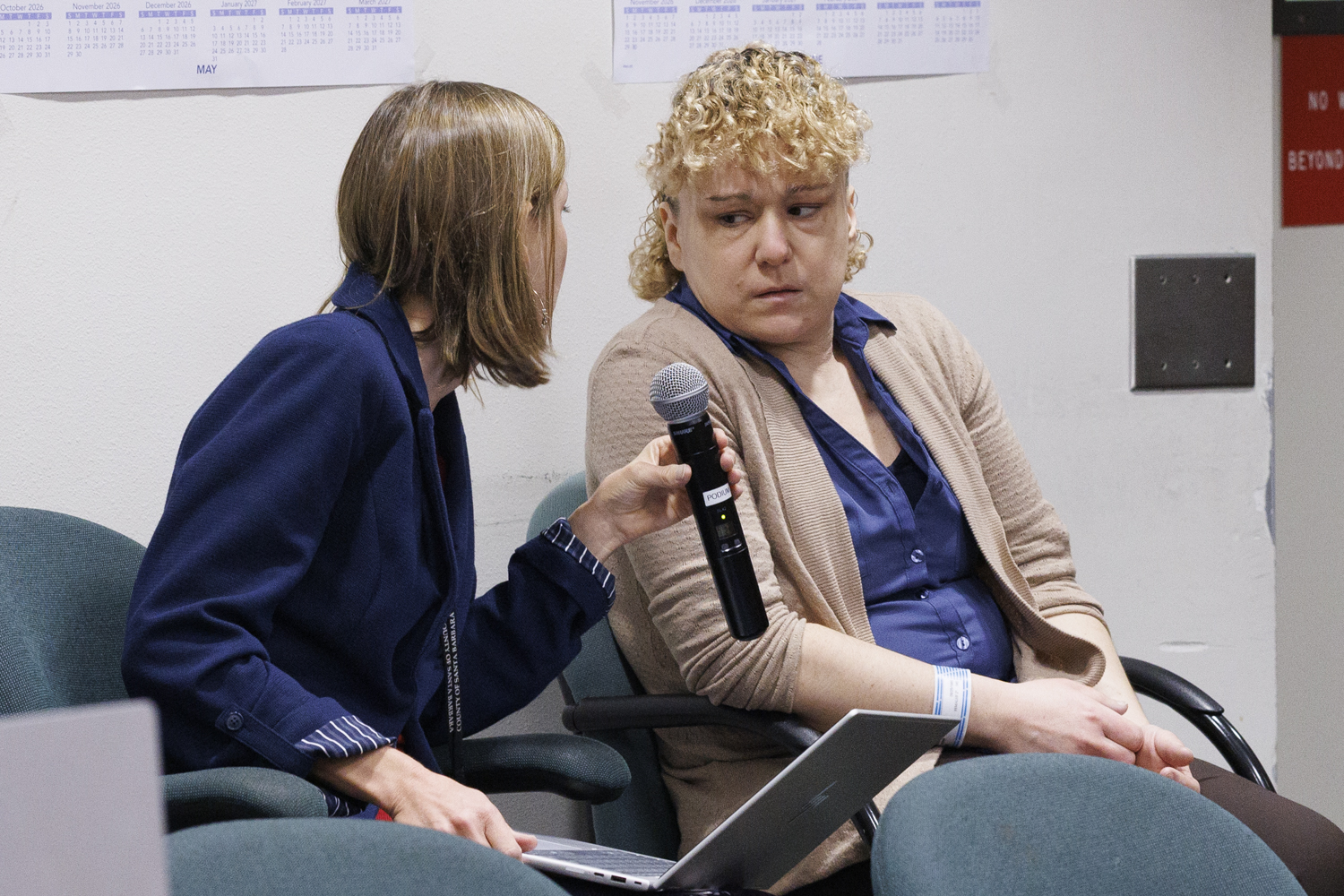
In two hearings this week, Santa Barbara Superior Court judges ruled that a search warrant in the Ashlee Buzzard murder trial will stand as evidence and that the prosecution does not need to provide more evidence to the defense.
On May 6, Santa Barbara Superior Court Judge Denise Hippach ruled that a search warrant the defense had challenged was supported by probable cause and not overly broad. The following day, Judge Stephen Dunkle denied the defense’s motion to compel the prosecution to disclose discovery, including forensic data, to the defense. Buzzard is charged with the murder of her 9-year-old daughter, Melodee.
The Case
Law enforcement began investigating Melodee Buzzard’s disappearance on October 14, after a Lompoc Unified School District administrator reported her prolonged absence from school. For the next 10 weeks, investigators from the Santa Barbara County Sheriff’s Office and the Federal Bureau of Investigation searched for Melodee. As part of that investigation, Judge Hippach signed a search warrant for the Buzzard home in Vandenberg Village.
Repeatedly, the Sheriff’s Office stated in press releases that Ashlee Buzzard was uncooperative with law enforcement, refusing to provide information on the whereabouts of her child. Video evidence showed Buzzard leaving with Melodee on October 7. Law enforcement said in public statements that they suspected Buzzard drove Melodee to the Nebraska area and then looped back toward Lompoc. Melodee was last seen on video footage on October 9, near the Colorado–Utah border.
On December 23, the Sheriff’s Office and FBI held a joint press conference where they announced they had found what they believed to be Melodee’s remains in Wayne County, Utah. At the press conference, Sheriff Bill Brown said that a couple had discovered the body in early December. He said that ballistic evidence and DNA evidence tied the body to Buzzard. Law enforcement had arrested Buzzard the day before.
The Warrant Ruling
A search warrant is a paper signed by a judge that authorized someone, usually a law enforcement officer, to search something in connection to an investigation. For a valid search warrant, the investigators need sufficient evidence that a crime has been committed, called probable cause. Warrants also need to be specific. If a police officer has a search warrant to look for a stolen car, the warrant does not allow them to search a suspect’s kitchen drawers, for example.
Buzzard’s defense, headed by Senior Deputy Public Defender Erica Sutherland, challenged the validity of a search warrant in the case on March 2.
Other local news sources reported that at Wednesday’s hearing, Sutherland argued that investigators relied on suspicions for the warrant, which came 24 hours after the search began.
In California, if the validity of the search warrant is challenged, the judge who authorized the warrant evaluates it. On Wednesday, Judge Hippach said that law enforcement had probable cause to search Buzzard’s residence and that the affidavit “adequately specified the items to be seized in connection with locating the missing 9-year-old child.”
The Ruling on the Motion to Compel Discovery
The following day, Judge Dunkle denied the defense’s motion to compel additional evidence from the prosecution.
In March, the defense filed a motion stating that it was missing forensic information from three laboratories, the Utah Bureau of Forensic Services, the FBI Laboratory, and the Department of Justice Bureau of Forensic Services in Santa Barbara. The missing evidence included lab accreditation from all three labs, analyst résumés and other competency metrics, data on unexpected results, and other statistics.
Other Santa Barbara County news outlets reported that Sutherland said she was also missing body camera footage.
The prosecution, led by Deputy District Attorney Jordan Lockey, argued in its written opposition that the court doesn’t have the legal authority to force the prosecution to provide what the defense asked for. The prosecution also said the information the defense requested is not typically provided before a preliminary hearing.
Ultimately, Judge Dunkle ruled that the requested material from the defense did not alter the Judge’s determination of probable cause in a preliminary hearing. He denied the motion.
Buzzard’s next court appearance is scheduled for May 27 to set her preliminary hearing.
Editor’s Note: The May 27 court appearance was a preliminary hearing setting, not a preliminary hearing as originally reported.
Related Posts


Premier Events
Fri, Oct 23
2:00 PM
Santa Barbara
Music & Meditation: Clarinetist Nancy Mathison & Pianist Antonio Artese

Thu, Oct 22
5:30 PM
Santa Barbara
Best Fest: A Celebration of the Best of Santa Barbara® Readers’ Poll 2026 – Rain or Shine
Thu, Oct 22
6:00 PM
Santa Barbara
Chaucer’s Books Author Talk & Signing- Daniel M. Jaffe “Russian Silhouette: A Memoir of Activism and Identity”
Fri, Oct 23
5:30 PM
Solvang
Solvang Haunted House and Street Fair
Fri, Oct 23
7:00 PM
Santa Barbara
Beth Amine’s 20th Anniversary Wildcat Dance Variety Show
Fri, Oct 23
7:00 PM
Santa Barbara
This & That Performs at Roy

Fri, Oct 23
9:00 PM
Santa Barbara
Casa de la Raza Fundraiser: Brasscals! with DJ Darla Bea
Sat, Oct 24
10:30 AM
Santa Barbara
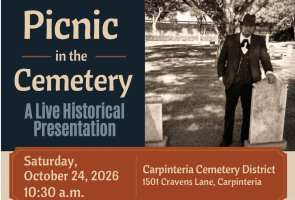
Picnic in the Cemetery: A Live Historical Event
Sat, Oct 24
11:00 AM
Goleta
2nd Annual Charger Cup to Benefit DP High Golfers

Sat, Oct 24
12:00 PM
Santa Barbara
Makers Hive Market

Sat, Oct 24
2:00 PM
Santa Barbara
Japanese Sacred Architecture: Shinto and Buddhism
Fri, Oct 23 2:00 PM
Santa Barbara
Music & Meditation: Clarinetist Nancy Mathison & Pianist Antonio Artese
Thu, Oct 22 5:30 PM
Santa Barbara
Best Fest: A Celebration of the Best of Santa Barbara® Readers’ Poll 2026 – Rain or Shine
Thu, Oct 22 6:00 PM
Santa Barbara
Chaucer’s Books Author Talk & Signing- Daniel M. Jaffe “Russian Silhouette: A Memoir of Activism and Identity”
Fri, Oct 23 5:30 PM
Solvang
Solvang Haunted House and Street Fair
Fri, Oct 23 7:00 PM
Santa Barbara
Beth Amine’s 20th Anniversary Wildcat Dance Variety Show
Fri, Oct 23 7:00 PM
Santa Barbara
This & That Performs at Roy
Fri, Oct 23 9:00 PM
Santa Barbara
Casa de la Raza Fundraiser: Brasscals! with DJ Darla Bea
Sat, Oct 24 10:30 AM
Santa Barbara
Picnic in the Cemetery: A Live Historical Event
Sat, Oct 24 11:00 AM
Goleta
2nd Annual Charger Cup to Benefit DP High Golfers
Sat, Oct 24 12:00 PM
Santa Barbara
Makers Hive Market
Sat, Oct 24 2:00 PM
Santa Barbara

