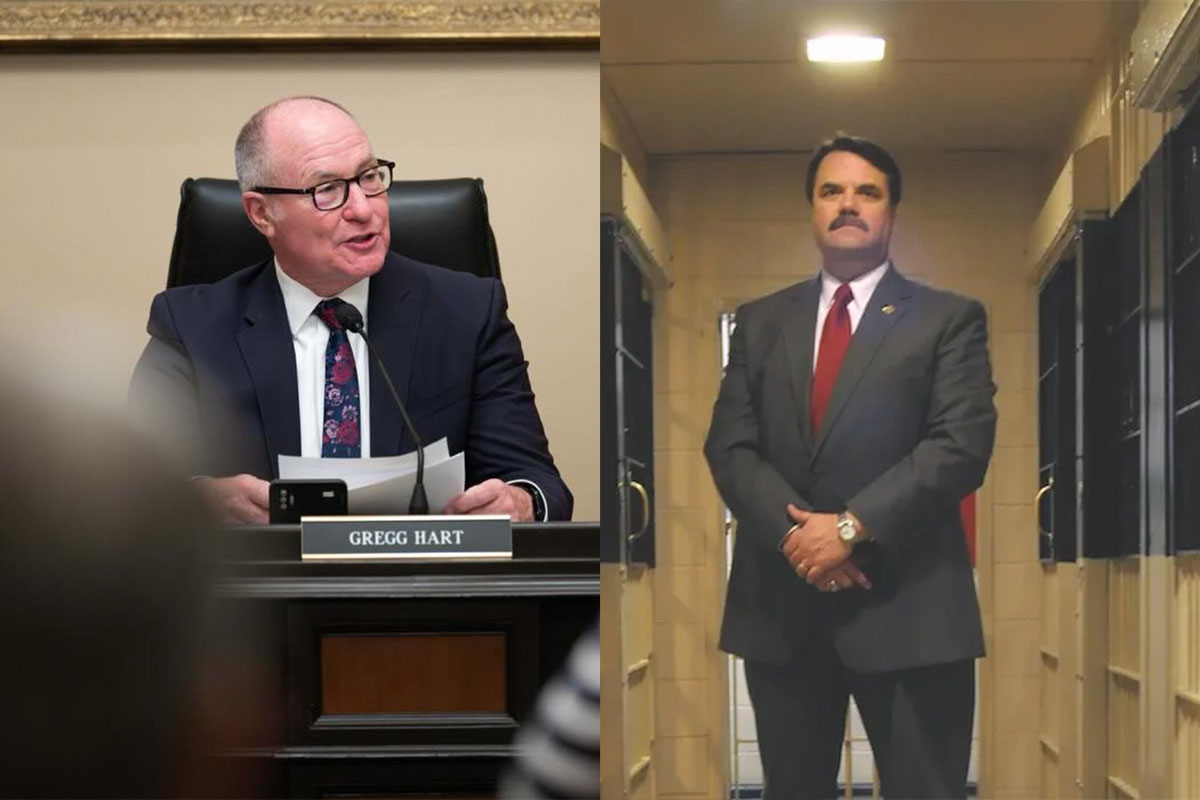
A much-amended bill proposed by Assemblymember Gregg Hart to give county supervisors statewide the potential for greater oversight of their county jails passed the Assembly last week by a vote of 41-25 with 14 members either not voting or abstaining.
If the bill, AB 2257, is approved by the State Senate and signed by the governor, it would give county supervisors the option of wielding more direct leverage in the appointment of county jail executive administrators. Translated into plain terms, supervisors could require their sheriff to submit the names of jail executives to the supervisors for their approval. County supervisors would not be allowed to submit the names of their own nominees. In addition, jail administrators going through this approval process would serve for terms of three years. After that, they would have to go through the process of approval again.
For county supervisors who feel their county jails are out of control, Hart’s bill is designed to provide some leverage. Initially, Hart had proposed a bill that would give county supervisors the latitude of hiring someone other than their county sheriff to run their county jail. According to Hart’s District Director Ethan Bertrand, this was regarded as too extreme an expression of frustration as to be unusable. “We heard people say this was ‘the nuclear option,’ that it was off the table. We wanted something that could be usable.”
Hart’s bill stemmed from his own perception of the Santa Barbara County Jail, where costs kept skyrocketing, medical contractors failed to provide services paid for, and the number of jail beds actually needed has been the focus of protracted political dispute.
Sheriff Bill Brown has described Hart’s effort as a solution in search of a problem, noting that as independent elected official he is immediately and directly accountable to the voters who put him in office. The statewide Sheriffs Association strongly opposes the bill, stating it politicizes jail administration and that sheriffs — as elected officials — should be allowed to appoint their own executive team.
Bertrand noted that Hart has no interest in expanding such intervention into the realms of other independently elected county positions, such as district attorneys, assessors, appraisers, or election czars. “We are zeroing in on the jail because the jail costs more to run — by itself — than all the other departments run by independently elected department heads combined.”