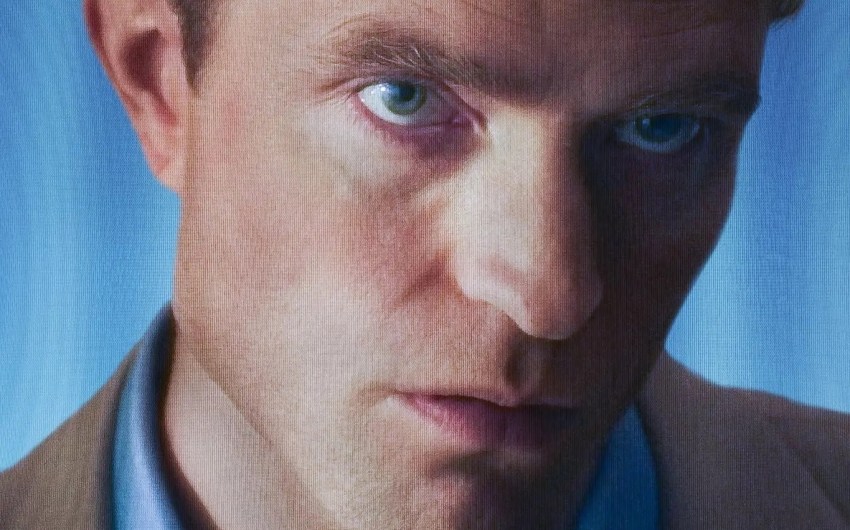
Willem Dafoe, the man who would be Jesus Christ and Van Gogh, has found an ideal role in his 70-something era, in the small indie film gem Late Fame. Dafoe’s unique and eccentric charms have been capitalized on through work with Martin Scorsese, Lars von Trier, Wes Anderson, and other heat-seeking directors, and he belongs in the outlier company of such actors as Christopher Walken. He deserves a worthy spotlight and makes good use of this one, just as he put his weathered face and talent to good use in 2019’s The Lighthouse and Yorgos Lanthimos’ Poor Things.
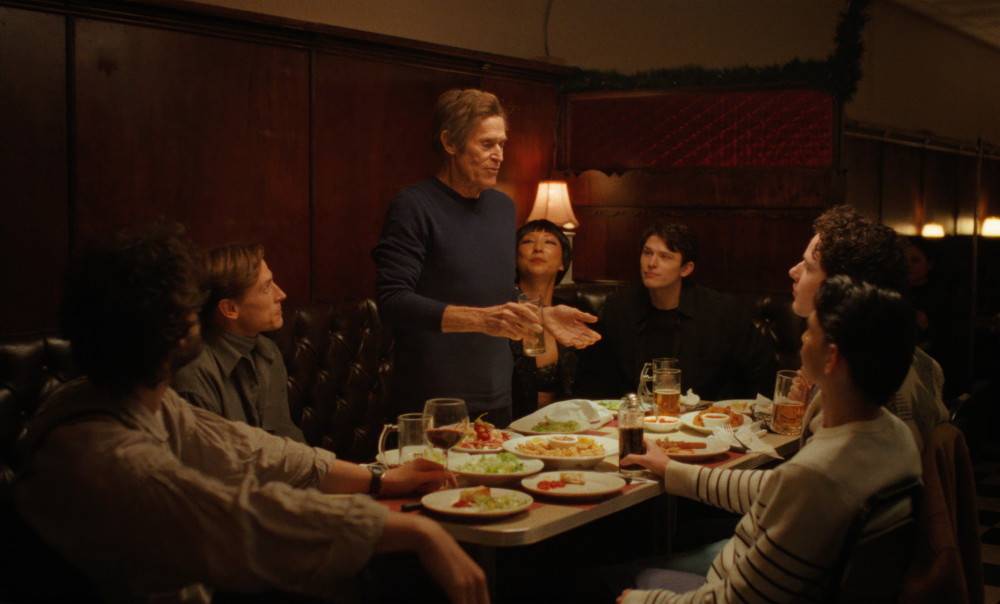
With Late Fame, director Kent Jones — working from Samy Burch’s screenplay based on a novella by Arthur Schnitzler — has created a modest but distinctive slice-of-life drama, laced with artful deceptions. It will also be remembered as a ripe late career showcase in Dafoe’s filmography.
Enter Late Fame’s central protagonist Ed Saxberger, a career postal worker in N.Y.C. (such as Bukowski) whose fleeting past life as a bohemian poet suddenly bubbles up to meet him again. Early in the film, Saxberger is approached by a reverential young writer, Meyers (Edmund Donavan) and treated, to the former poet’s halting delight, as literary royalty, or more specifically as a lost sage who wrote a minor masterpiece in 19 and now deserves to be rescued from obscurity.
We learned that, for years, his social circle has shifted from the Greenwich Village poets and artists of his early days to the pool hall hangout of his coworkers. Suddenly, he is being treated as a special case by a young agent who exclaims “you are not a discovery — you are a rediscovery and that’s precious.” A review of his poetry reading deems him to be “an old village Bard.”
Saxberger finds himself inducted into the company of young, entitled pretenders to the literary salon concept, which they have named The Enthusiasm Society. “Sounds Victorian,” says Saxberger. His interest level in this new cross-generational coterie grows considerably once the free-spirited actress Gloria (Greta Lee, in a magnetic turn) appears on the scene and revitalizes his dormant romantic fantasies. But that fantasy turns out to be fraught with disappointment. As Gloria asserts, “I am an artist and I belong to no one, just my art.”
As it turns out, although we never do learn the actual artistic merit of the fledgling writers in the group, her talent is the real thing, as demonstrated her cabaret performance of the Brecht/Weill song “Surabaya Johnny” (to the film’s credit, we are privy to the full splendor of the song, uncut).
Starting with the semi-ironic title, Late Fame is a study of artistic matters and mannerisms in which things are not necessarily as they seem. Much of the scenario we encounter turns out to be based on illusion and artifice, woven through with youthful pretensions. Finding comparisons to similar films is tricky business with this film, but we might point to Factotum, with Matthew Dillon as a sodden Charles Bukowski surrogate.
Late Fame is a film whose essence marinates after you’ve left the theater. It is a refreshingly — and deceptively — relaxed film without much conflict, at least on the surface, and a lack of formulaic cinematic moves. It eases into being, fueled by conversation and the buzz of a creative community, with pitfalls intact.
Not incidentally, its principal charm is etched into the weather countenance of the vino that is Dafoe. We can add Ed Saxsberger to his rogues gallery of roles, which includes Jesus Christ and Vincent van Gogh.
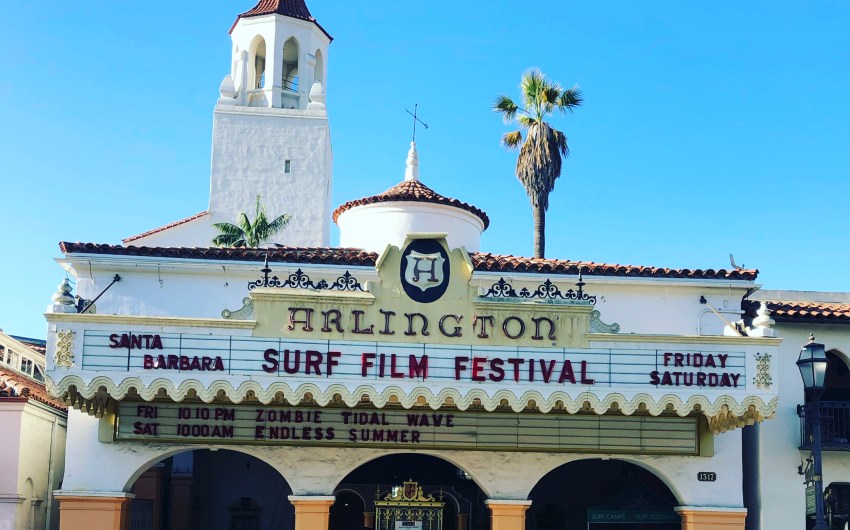
Late Fame is currently on view at SBIFF’s Film Center. View trailer here.