
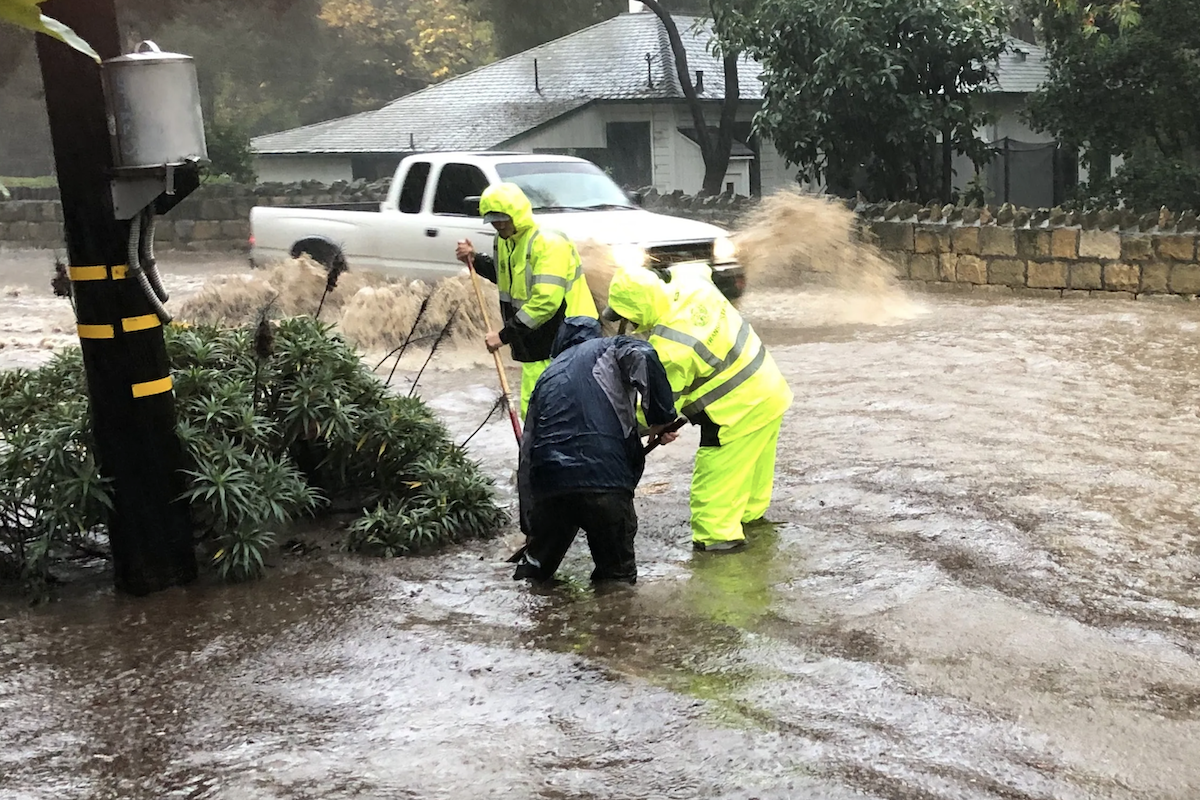
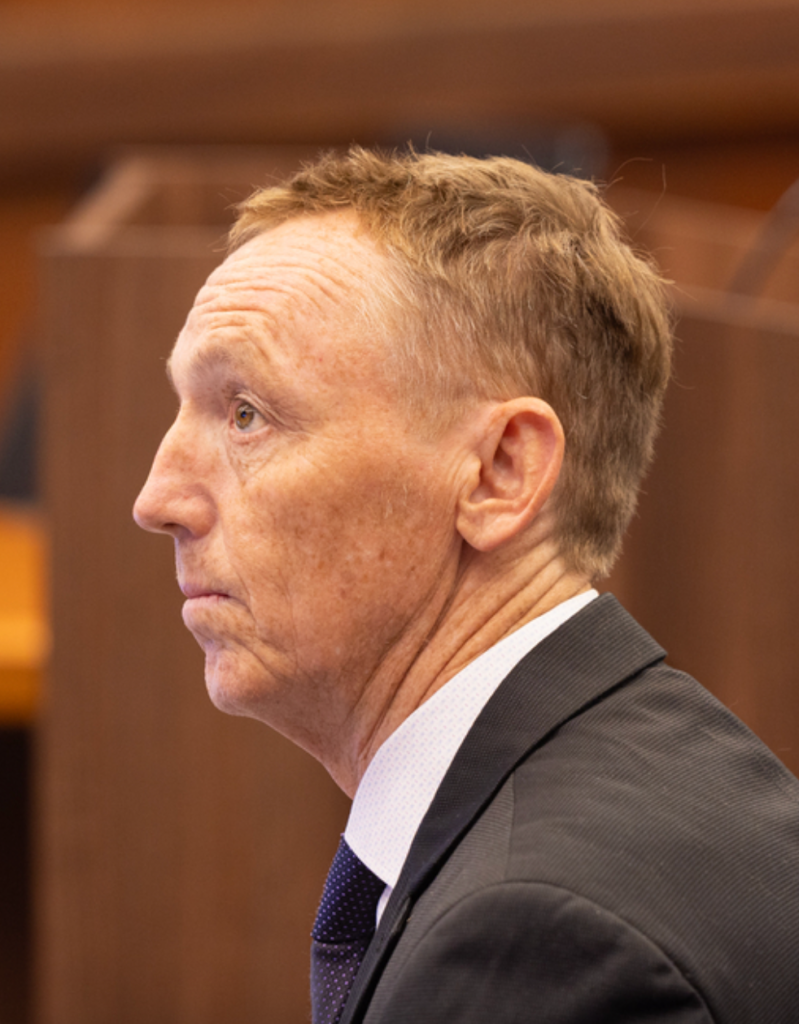
A potentially powerful El Niño winter storm season has Santa Barbara County advising residents to prepare now: check properties to ensure gutters, drains, and culverts are clear; get a go kit ready; and even get flood insurance. One reason was because FEMA was likely to bring less funding for any disaster, said Public Works Director Chris Sneddon, as it has higher thresholds for disaster declarations.
During the 2023-24 storms, the county incurred $60 million in costs of response, but of that the Federal Emergency Management Agency reimbursed only $4 million, Sneddon said, which has affected Public Works’ reserves for flood control and transportation. Public Works is doing its own work to prepare waterways for an influx of rain, he said, clearing creeks, fixing drainage, and making sand bags available to the public as of November 1. Community Services will be ready to open emergency shelters in November, said Jesus Armas, who leads that department.
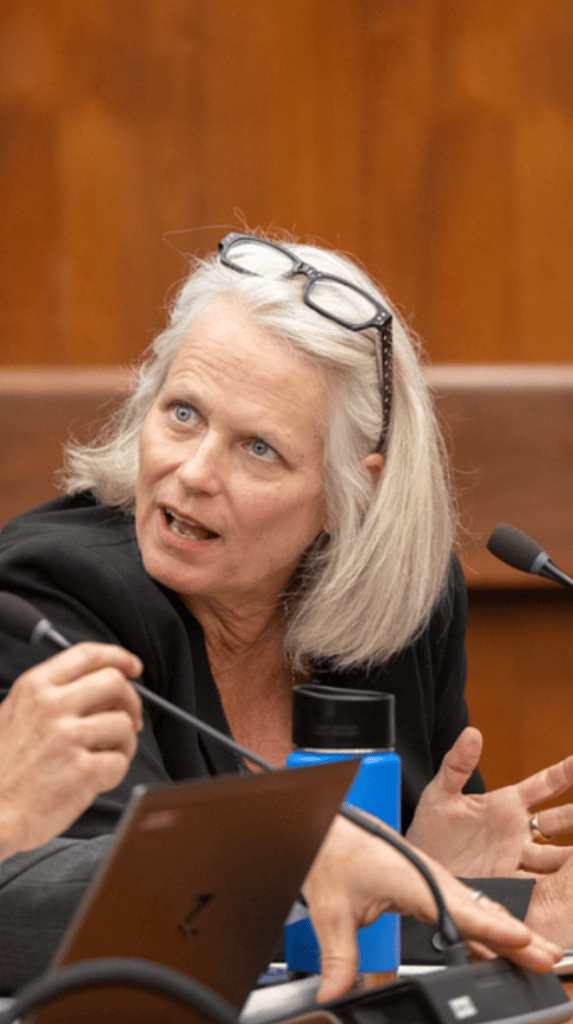
The bluffs and cliffs in densely populated Isla Vista are what concerned Supervisor Laura Capps, as they have disappeared from below apartment decks in recent years. Her staff flies a drone along the cliffs to get a baseline of their condition, said Planning Director Lisa Plowman, as well as walking the beaches after each storm. This was necessary as 100 percent of the 70 landowners on the Isla Vista cliffs have not complied with a new rule to submit distance-from-edge measurements to the county. “None,” Plowman said.
Weather predictions aim best toward accuracy about seven days before a storm, but NOAA’s Climate Prediction Center forecasts that the county’s winter weather is “leaning” toward a 40-50 percent chance of above-normal rainfall for November-January. During the typical rainy season of January-March, the prediction is a more positive 50-60 percent “likely” chance of above-normal rain.
“This winter in Southern California is going to be pretty wet. I can’t say exactly when or how many storms are going to hit, but it’s probably going to be more than average,” observed Samantha Stevenson, who has varied studies at UC Santa Barbara in climate, tropical atmosphere, ocean variability, and weather extremes.
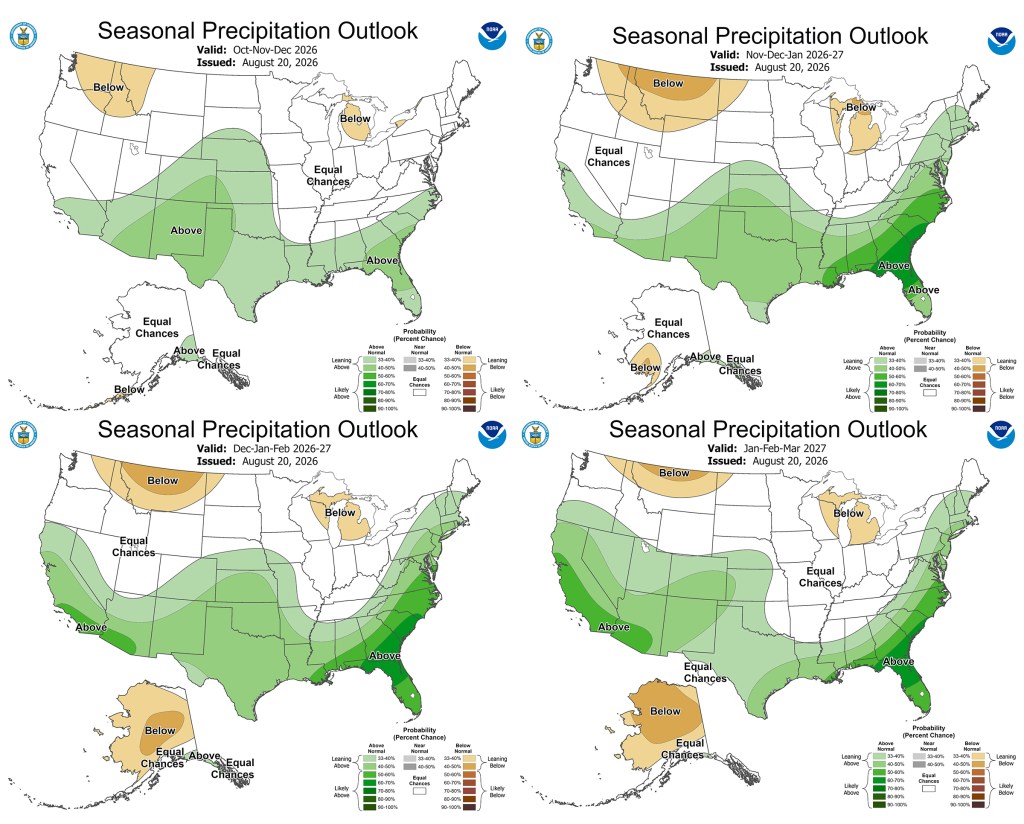
NOAA’s Climate Prediction Center’s August 20 summary of how the rainy season could shape up. These early forecasts can change as complex weather patterns form. https://www.cpc.ncep.noaa.gov/products/predictions/long_range/seasonal.php?
The heat in the ocean causes the water to expand in size and also fuels atmospheric storm energy, which translates to larger waves. That could affect cliff erosion from storm surge, Stevenson said, as well as the flooding and debris flows that the county is all too well acquainted with.
Whether or not this year’s El Niño is related to the warming planet from climate change, Stevenson couldn’t say. But she took note of a new paper that describes rising temperatures in the region where El Niños are born — the equatorial Pacific off South America. Led by Julia Cole, a coral paleontologist at the University of Michigan, a team collected coral on the Galapagos Islands, working to find corals through time and combine them with the coral fossil record, “We were able to piece together what was going on over the course of the last thousand years. It was very exciting,” Stevenson said.
“What we found is that there’s a pretty clear increase,” she said. Prior to 1850 or so, in pre-industrial times, temperature variations were flat, “and then it started accelerating, especially in the last 40 to 50 years.”
The climate link was seen in the ratio of oxygen isotope uptake, a ratio that reflected the temperature of the seawater the coral was growing in. “Corals are made up of calcium carbonate, which has oxygen in it, and they kind of take up the oxygen from the sea water around them as they grow, just like trees take up the water from the soil that they’re growing in,” Stevenson explained. “So, if it is warmer, it is wetter, the currents are changing around that coral, that’s all due to [El Niño] variability in the Galapagos. The coral are directly recording that as they grow.”
For the coming winter, Stevenson said to watch the weather forecasts: “You never know exactly how things are going to develop.” She had an idea of what the following year might bring, however. “The El Niños tend to be followed by La Niñas,” she said, “so watch out for the drought coming back after this.”
Related Posts


Premier Events

Mon, Sep 21
5:30 PM
Santa Barbara
S.B. Independent: Santa Barbara City Council District 6 Forum
Tue, Sep 22
1:00 PM
Santa Barbara
“The Lost Weekend” – The Photography of May Pang

Wed, Sep 23
7:30 PM
Ojai, CA
Laurie Anderson at the Libbey Bowl

Thu, Sep 24
5:30 PM
Santa Barbara
Book Talk and Reception: Annabelle Gurwitch on Her New Memoir
Thu, Sep 24
7:30 PM
Santa Barbara
SB Blues Society Presents Nick Moss Band w/guest

Fri, Sep 25
3:00 PM
Santa Barbara
Family Movie Night at the Eastside Library: “Encanto”
Fri, Sep 25
7:00 PM
Santa Barbara
Patio Sessions at Carr Winery Presents: The Genuine Article

Mon, Sep 28
5:30 PM
Santa Barbara
S.B. Independent: Santa Barbara City Council District 4 Forum
Tue, Sep 29
7:00 PM
Santa Barbara
Birds of California’s Channel Islands – Lecture and Book Signing

Wed, Sep 30
12:00 PM
Santa Barbara
Origins of Fashion in France: Zoom Lunch & Learn
Mon, Sep 21 5:30 PM
Santa Barbara
S.B. Independent: Santa Barbara City Council District 6 Forum
Tue, Sep 22 1:00 PM
Santa Barbara
“The Lost Weekend” – The Photography of May Pang
Wed, Sep 23 7:30 PM
Ojai, CA
Laurie Anderson at the Libbey Bowl
Thu, Sep 24 5:30 PM
Santa Barbara
Book Talk and Reception: Annabelle Gurwitch on Her New Memoir
Thu, Sep 24 7:30 PM
Santa Barbara
SB Blues Society Presents Nick Moss Band w/guest
Fri, Sep 25 3:00 PM
Santa Barbara
Family Movie Night at the Eastside Library: “Encanto”
Fri, Sep 25 7:00 PM
Santa Barbara
Patio Sessions at Carr Winery Presents: The Genuine Article
Mon, Sep 28 5:30 PM
Santa Barbara
S.B. Independent: Santa Barbara City Council District 4 Forum
Tue, Sep 29 7:00 PM
Santa Barbara
Birds of California’s Channel Islands – Lecture and Book Signing
Wed, Sep 30 12:00 PM
Santa Barbara


You must be logged in to post a comment.