

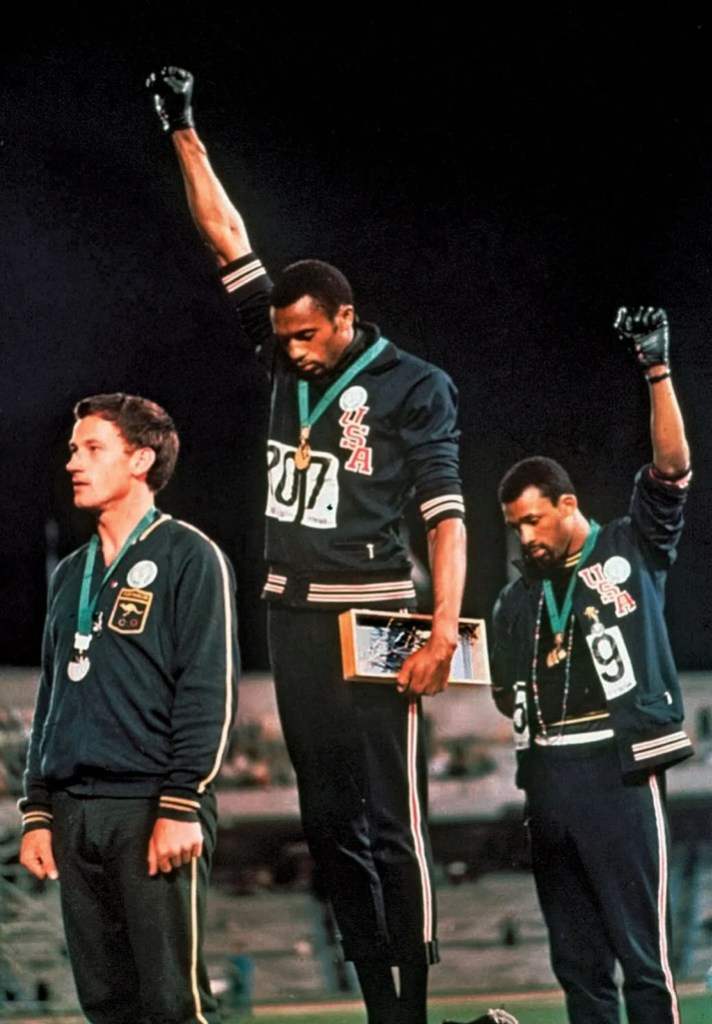
On October 16, 1968, Tommie Smith and John Carlos bowed their heads and raised black-gloved fists while the Star-Spangled Banner was played during the medal ceremony for the men’s 200-meter run at the Mexico City Olympic Games.
When the 60th anniversary of that unforgettable — and controversial — moment approaches, I’d like to see Smith and Carlos ignite the Olympic flame at the opening ceremony of the 2028 Games in Los Angeles.
It would be a feel-bad moment for people who’ve never come to understand that those American athletes were acting out of patriotism.
It would be a feel-good moment for the rest of us, remembering the courage it took to speak out when the times called for it.
The gesture by Smith and Carlos was not impulsive. It had been a year in the making after they joined the Olympic Project for Human Rights, founded by Harry Edwards, a sociology professor at San Jose State College.
“It was organized at the right time,” Edwards said in a phone interview. “The country had the most murderous, violent five years since the Civil War.” He mentioned the murder of Medgar Evers, the Sunday school bombing that killed four girls in Birmingham, the lynching of three civil rights workers, and the assassinations of Martin Luther King Jr. and Bobby Kennedy — all of it happening amid calls for an end to racial inequality.
Edwards had proposed that Black athletes make a statement by boycotting the Olympics. Some did not participate, including basketball star Kareem Abdul-Jabbar, but track and field athletes were invested in the quadrennial Games as their ultimate competition.
Smith and Carlos took it upon themselves to amplify the cause of human rights on the Olympic stage.
“‘We are better than this’ — that’s what Smith and Carlos were saying,” Edwards expounded. “We recognized the violence of the era. There was an imperative to make the statement that we are better. It began a discussion of the role and impact of sports in modern democracy. It’s no longer the toy department of human activity. It signifies competitiveness, discipline, character, physical, and mental fitness.”
Smith was a fantastic competitor, as I witnessed at the 1967 Santa Barbara Easter Relays. Running anchor for San Jose State in the 880-yard relay, Smith took the baton some 15 yards in arrears of USC’s Fred Kuller, a world-class sprinter.
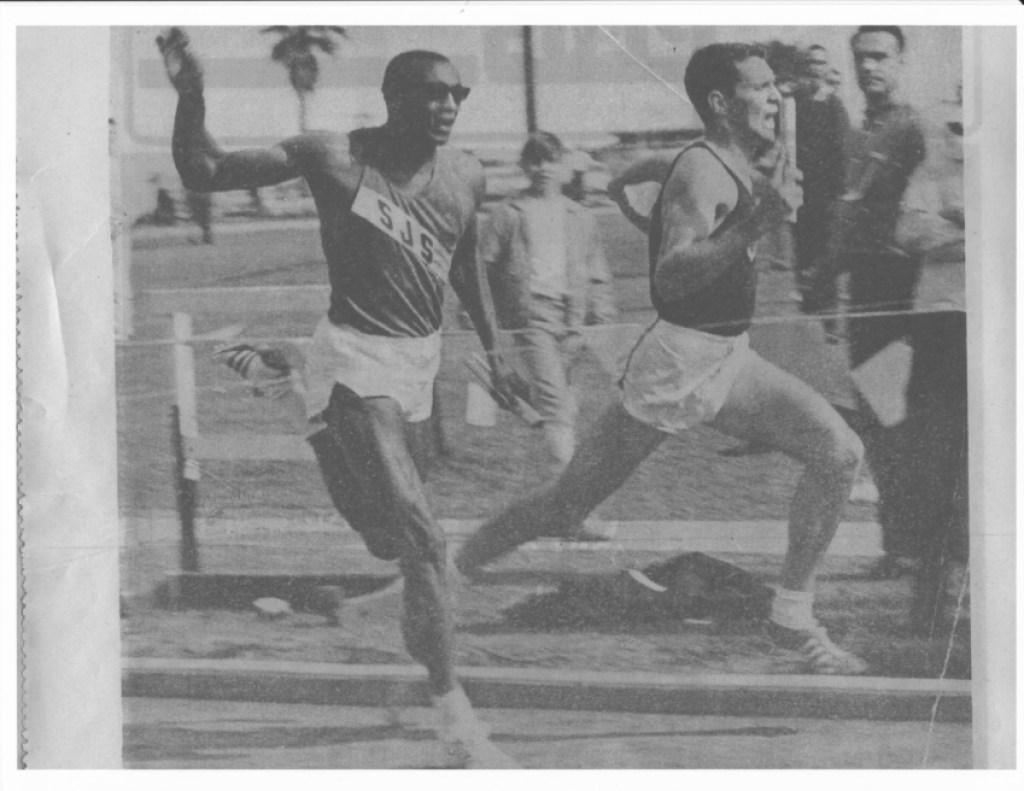
It was electrifying to see Smith chase Kuller around the turn at La Playa Stadium. He had to move into an outside lane, yet with every furious stride on the dirt track he was gaining ground, his legs and arms pumping; his sunglasses hardly budged, his face was so concentrated.
“Wooooh!” chorused the crowd as they dashed down the homestretch. Kuller managed to finish about a foot ahead of Smith, who was unofficially clocked in 19.6 seconds, a jaw-dropping time. It was the most exciting race I’d ever seen.
A year later, Steve Grant had a similar experience in Mexico City. Grant, the owner of Santa Barbara’s 7 Day Nursery, was then an 18-year-old sociology student at American University. He had a seat in the Olympic stadium during the men’s 200 final. “Watching Tommie Smith come around that turn, all 6-foot-4 of him — wow! — I can visualize it like yesterday,” Grant said. “That was the highlight for me.”
Smith’s winning time of 19.83 seconds shattered the world record. Peter Norman of Australia edged out Carlos for second place. On the medal stand, Norman wore an Olympic Project for Human Rights badge that had been given to him by an American rower. Smith and Carlos were shoeless to symbolize poverty. They had a single pair of gloves, Smith raising one on his right hand, Carlos the other on his left. The scene produced what Edwards called “the most iconic sports image of the 20th century.”
Smith returned to Santa Barbara several times as coach of the Santa Monica College track and field team. Before the Easter Relays in 1998 — 30 years after Mexico City — he was prompted to talk about the incident.
“It had nothing to do with a black power salute,” he said of the raised fists. “We were two young guys who saw a need to bring attention to the inequality in our country. I didn’t hate white people. It was not antagonistic. We respected the flags. It was a silent gesture. I’d rather have not survived if I could not show what I felt about the country. It’s one of the greatest countries in history, but if you don’t think things can improve, you’re dead. Would I do it again? With all my heart.”
Avery Brundage, head of the International Olympic Committee, decried what he considered an intrusion of politics into the Games, and he prevailed on the USOC to boot Smith and Carlos out of the Olympic Village.
Grant, the American student, recalled that there was abhorrent political violence in Mexico City just weeks before the Games began. “Mexican students protesting the Olympics were machine-gunned down by government troops,” he said. “It was chilling.” Yet Brundage and the International Olympic Committee said nothing about the carnage, while condemning the non-violent demonstration of Smith and Carlos.
The two athletes and Edwards knew there would be consequences. “We showed we were willing to sacrifice,” Smith said. “Carlos’s wife committed suicide. Mine left me. We got letters, death threats, go back to Africa. Harry Edwards’s dog was cut up and hung, blood all over the place.”
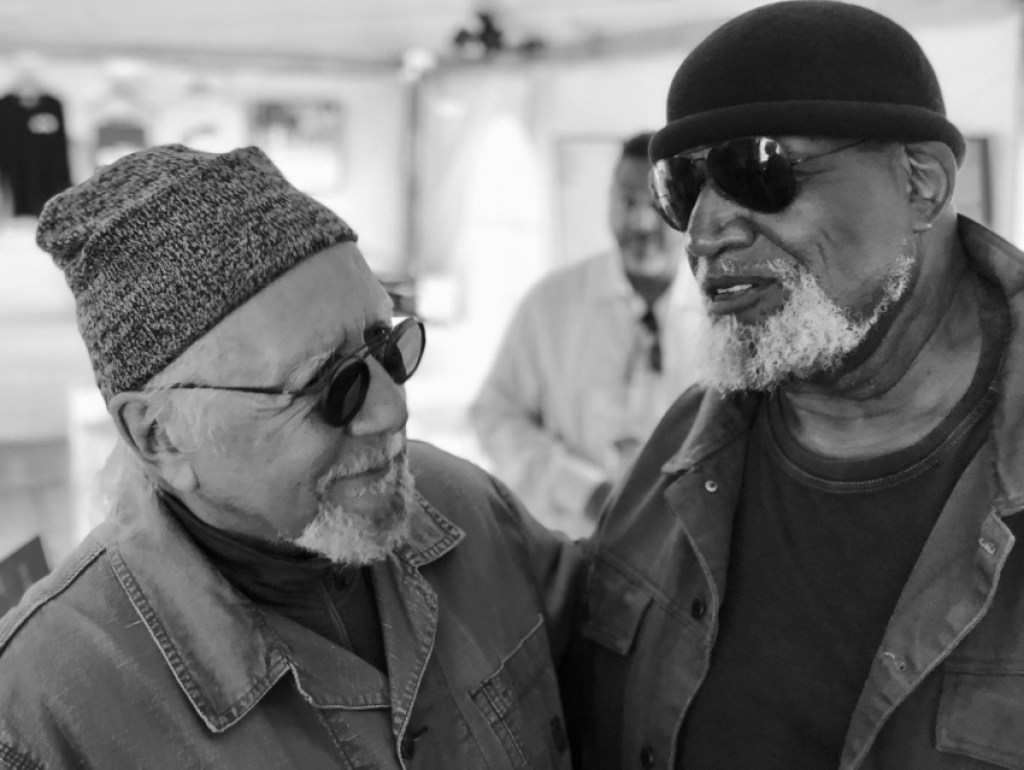
Edwards said he found some solace in the music of Charles Lloyd, an expressive jazz saxophonist in the Bay Area who later moved to Santa Barbara. “After 1968 I was in a knot,” Edwards said. “I overdosed on Charles Lloyd and his music. He brought me back down. We got to embrace each other.”
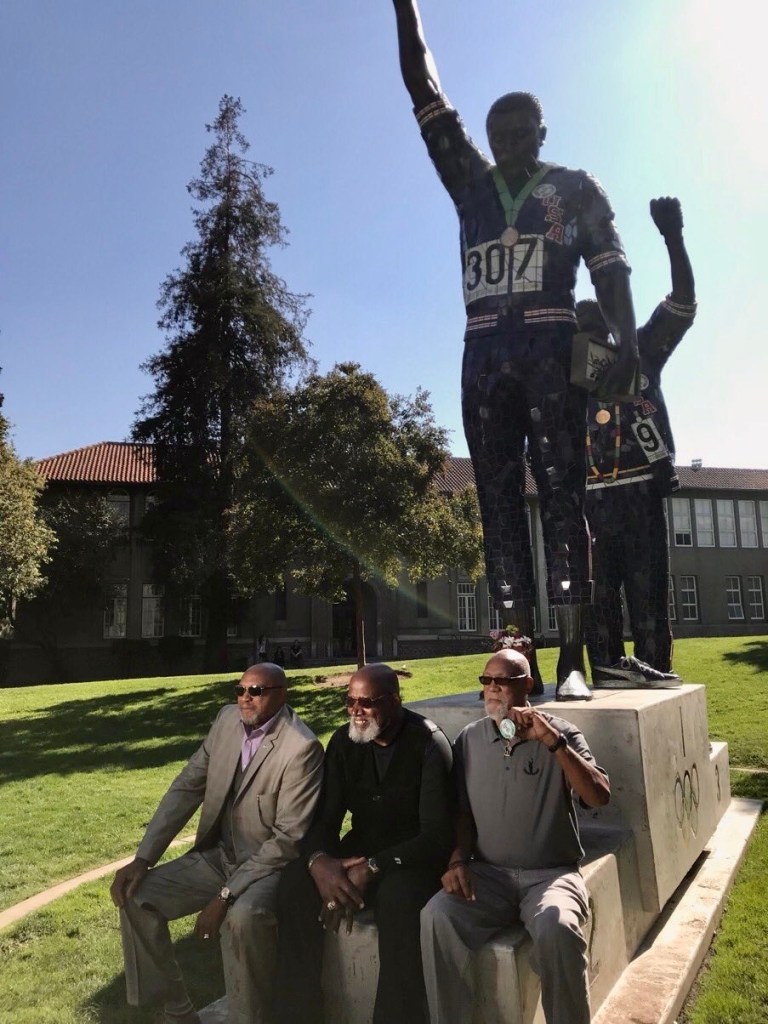
Their friendship endures to this day, although the 83-year-old Edwards said his health prevents him from making it to Lloyd’s concert this week (November 12) at the Lobero Theatre.
Lloyd heartily endorses the prospect of Smith and Carlos carrying the Olympic torch in 2028.
“It would be really wise to invite them to L.A.,” the musician said. “It would be healing for our country. It should happen. That would be so beautiful. The country needs it. The world needs it. Make that happen. That would be so healing. Healing is the word.”
“Absolutely,” Grant said. “They should light the flame just like Ali.” Muhammad Ali, another Olympic champion who fought for his beliefs against the establishment, memorably set the cauldron afire at the Atlanta Olympics in 1996.
It goes without saying that Edwards would like to see Smith and Carlos in the spotlight in 2028, with the caution that both will be well into their 80s. “It would be a memorial to the statement they made, a memorial to the sacrifices they made,” he said. “When Tommie and John light the flame, I hope they can stand up.”
Like they did in 1968.
Related Posts

Premier Events
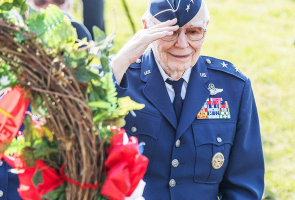
Wed, Nov 11
11:00 AM
Santa Barbara
S.B. Veterans Day Ceremony: Honoring Our Men and Women in Uniform
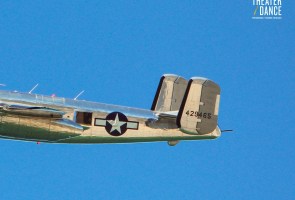
Thu, Nov 12
7:30 PM
Santa Barbara
UCSB Theater and Dance Presents All My Sons
Fri, Nov 13
2:00 PM
Santa Barbara
Music & Meditation SB presents Lina Bahn violin
Fri, Nov 13
6:00 PM
Santa Barbara
Fall Opening Party at SBMA

Sat, Nov 14
9:00 AM
Santa Barbara
Holiday Makers Market
Sun, Nov 15
2:00 PM
Santa Barbara
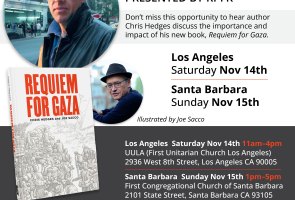
Book Talk with Chris Hedges – “Requiem for Gaza”
Mon, Nov 16
7:00 PM
Santa Barbara
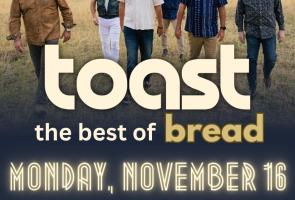
Toast – The Best of Bread at the Arlington
Tue, Nov 17
7:00 PM
Santa Barbara
CWC Screening and Conversation: “Criminal Minds” James T. Clemente
Wed, Nov 18
12:00 PM
Santa Barbara
UCSB Son Jarocho
Wed, Nov 18
7:00 PM
Santa Barbara
Outside+ Showing of “Warren Miller’s Days Off”
Wed, Nov 11 11:00 AM
Santa Barbara
S.B. Veterans Day Ceremony: Honoring Our Men and Women in Uniform
Thu, Nov 12 7:30 PM
Santa Barbara
UCSB Theater and Dance Presents All My Sons
Fri, Nov 13 2:00 PM
Santa Barbara
Music & Meditation SB presents Lina Bahn violin
Fri, Nov 13 6:00 PM
Santa Barbara
Fall Opening Party at SBMA
Sat, Nov 14 9:00 AM
Santa Barbara
Holiday Makers Market
Sun, Nov 15 2:00 PM
Santa Barbara
Book Talk with Chris Hedges – “Requiem for Gaza”
Mon, Nov 16 7:00 PM
Santa Barbara
Toast – The Best of Bread at the Arlington
Tue, Nov 17 7:00 PM
Santa Barbara
CWC Screening and Conversation: “Criminal Minds” James T. Clemente
Wed, Nov 18 12:00 PM
Santa Barbara
UCSB Son Jarocho
Wed, Nov 18 7:00 PM
Santa Barbara



You must be logged in to post a comment.