

Camerata Pacifica is nothing if not an equal opportunity programming adventure, as designed by flutist/founder Adrian Spence. While the season launched last month on the foursquare basis of Rachmaninoff and Schubert, this month’s agenda boldly stepped forward into the land of living composers. What we heard at Hahn Hall on Friday was mostly modern and minimally Mozartean (pardon a little alliteration).
Among the highlights of the contemporary composer elements were entries by Sarah Gibson, who briefly taught at UCSB and the Music Academy of the West before her tragic early death of cancer at age 38, and a world premiere piece by Iranian composer Niloufar Nourbakhsh, The Innocence of Life.
We also heard a short, hypnotic piece by currently hot scene-maker Missy Mazzoli, a serendipitously timed presence on the program given her status in the world at the moment. Mazzoli was a composer-in-residence at the Music Academy last summer, and she spoke about the challenge of writing her widely praised new opera adaptation of George Saunders’s strange masterpiece novel Lincoln in the Bardo. Fast-forward to now, and her opera was officially birthed recently at the Metropolitan Opera, to rave reviews. The performance is available for streaming on the Met YouTube channel (and free through November 18, here).
Suiting the contemporary, left-of-traditional classical music context, the concert came equipped with a creative and elaborate lighting scheme and rig, with color-beaming rods descending just over the musicians’ heads.
It all commenced in a friendly bustle of post-minimalist energy by trustily accessible contemporary composer Michael Daugherty, who can be relied on for delivering contemporary music without the sting of audience skepticism. Firecracker, with oboist Nicholas Daniel soloing in the midst of a septet, lives up to its title, with a driving mesh of rhythmic parts easing into a mellower Middle Eastern–tinged mid-section and back to fervor to close.
As it happened, Mazzoli’s atmospheric Vespers for Violin (played by Alexa Hove, with treated violin and electronic accompaniment) demonstrated another feature of technology, which Mozart never had to contend with. Technical difficulties ensued, with technicians scurrying around the hall to find resolution, and the downbeat. It came and the result was a luxuriant exercise in elegiac tone poetry, with the reverb-lathered violin floating above drone tones of ghostly recorded voices.
Gibson’s I Prefer Living in Color, for sextet, was winningly evocative, a collection of swirls and pockets of musical energy speckled by rhythmic flurries. Interestingly, the piece was inspired by David Hockney’s famous painting of Mulholland Drive, a SoCal connection for a title that can seem to have a posthumous poignancy given her youthful passing.
On a related note, Nourbakhsh’s sextet work The Innocence of Life is conceptually a mediation on polarities of life and death, commissioned by the family of the late George Stephens, a longtime supporter of Camerata Pacifica. The Hahn Hall performance was actually its fourth appearance, after the Camerata played it in its three earlier concerts around Southern California. Bearing the telling movement titles “A Procession,” “The Act of Death,” and “The Act of Birth,” the score involves a pensive harmonic palette and ensemble weave, treated as flotation clouds of sound.
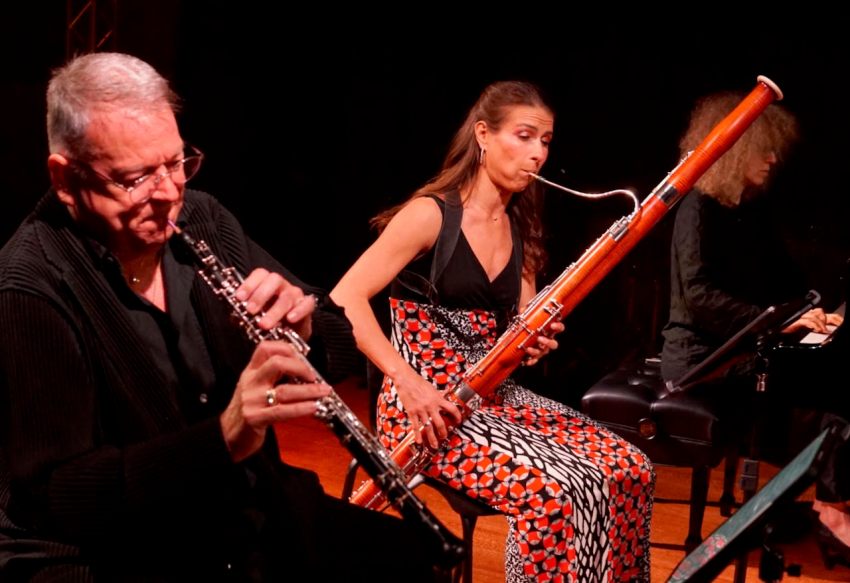
(L-R) Nicholas Daniel, oboe; Eleni Katz, bassoon; and Irina Zahharenkova, piano, Nov. 8-13, 2026 | Photo: Courtesy Camerata Pacifica 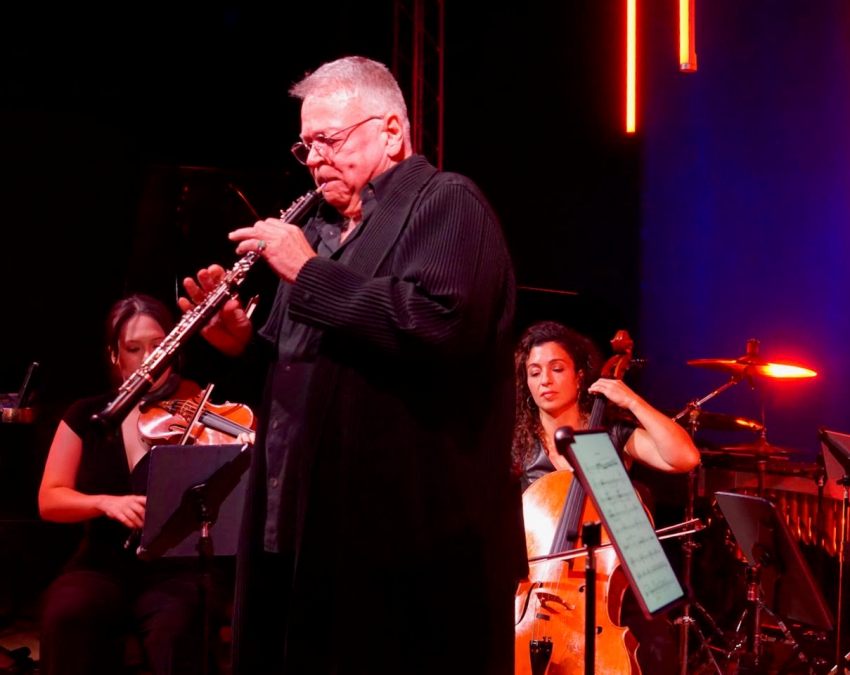
(L-R) Alena Hove, violin; Nicholas Daniel, oboe; and Ani Aznavoorian, cello, Nov. 8-13, 2026 | Photo: Courtesy Camerata Pacifica 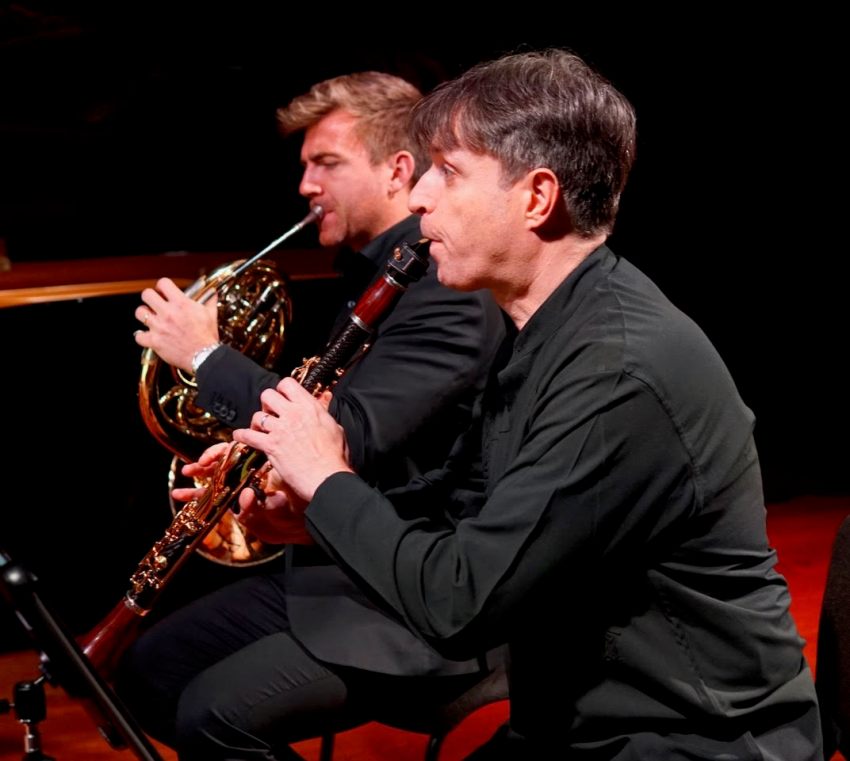
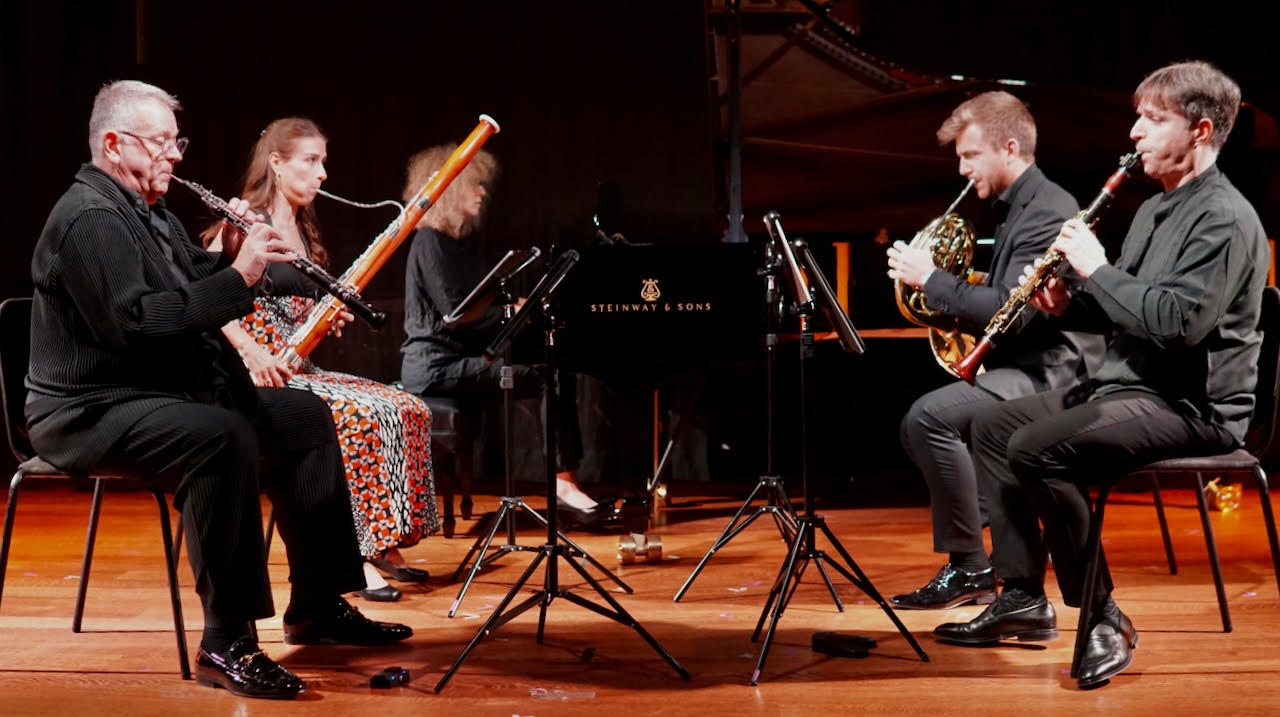
(L-R) Ben Goldscheider, horn and Jose Franch-Ballester, clarinet, Nov. 8-13, 2026 | Photo: Courtesy Camerata Pacifica 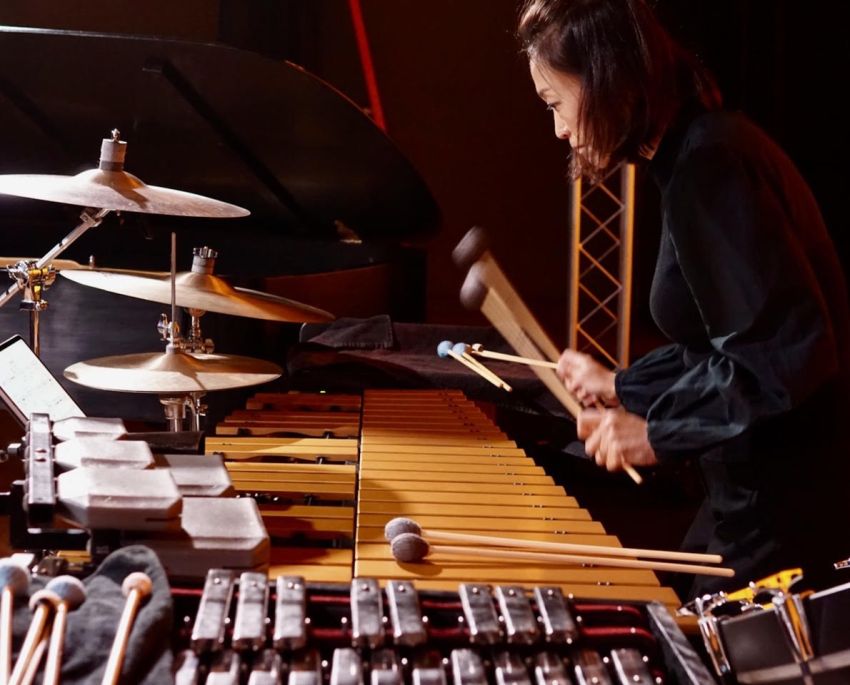
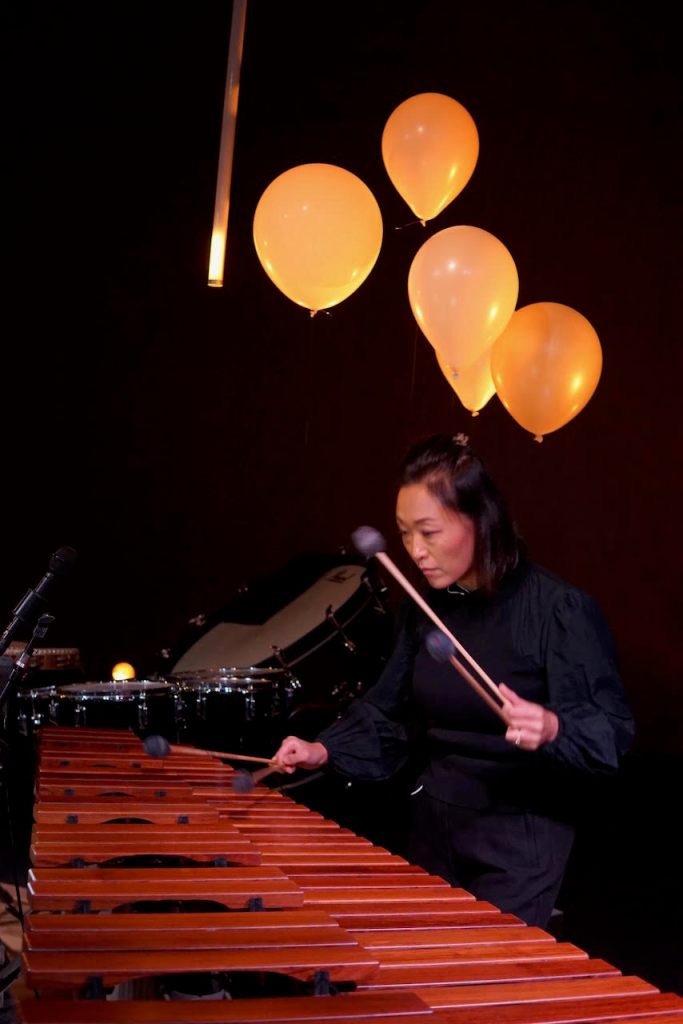
Ji Hye Jung, percussion, Nov. 8-13, 2026 | Photo: Courtesy Camerata Pacifica
An air of suspension and enigma, reasonable musical allegories for the ambiguities of existence, shift into a more rhythmic grid, akin to minimalism or at least in that stylistic neighborhood in the “birth” movement. Here, a happy and hopeful suggestion arises, tinted by temporarily quelled anxiety.
Anxiety of a more 18th-century kind slips into Mozart’s “Quintet for Piano and Winds in E-flat, K. 452,” which closed the concert on a tidier — and exquisitely played — classical-era-steeped note. Featured on piano was one of the Camerata’s new voices, the dynamic and wild-haired Estonian pianist Irina Zahharenkova. As demonstrated with her potent reading of Rachmaninoff’s Variations on a Theme of Chopin and this Mozart outing, Zahharenkova may be on her way to becoming a fresh new reason not to miss a CamPac show.
And the next show (December 7 at Hahn Hall) leans deeply into the piano literature, specifically Beethoven, as another dazzling Camerata-connected pianist, Gilles Vonsattel, continues his gradual journey through the entire self-contained world of Beethoven Sonatas.
Info here.
Related Posts
Premier Events
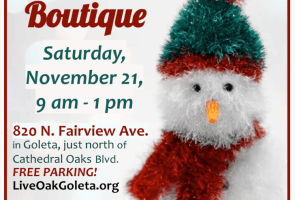
Sat, Nov 21
9:00 AM
Goleta
Holiday Gift Boutique in Goleta
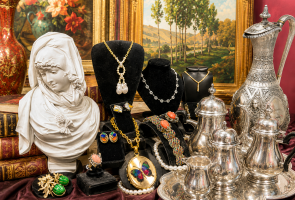
Fri, Nov 20
11:00 AM
Santa Barbara
Santa Barbara Antique & Vintage Show

Sat, Nov 21
10:00 AM
Solvang
56th Annual Holiday Open House
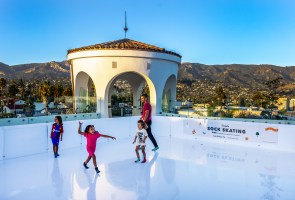
Sat, Nov 21
10:00 AM
Santa Barbara
MOXI’s Seaside Sock Skating
Sat, Nov 21
11:00 AM
Santa Barbara
Santa Barbara Antique & Vintage Show
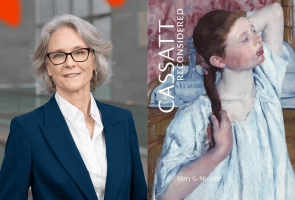
Sat, Nov 21
11:00 AM
Santa Barbara
Cassatt Reconsidered: Lecture with Mary G. Morton
Sat, Nov 21
7:30 PM
Santa Barbara
Juilliard String Quartet & Simone Dinnerstein
Sat, Nov 21
7:30 PM
Santa Barbara
Santa Barbara Blues Society Presents Teresa James and the Rhythm Tramps
Sun, Nov 22
11:00 AM
Santa Barbara
Santa Barbara Antique & Vintage Show
Sun, Nov 22
2:00 PM
Goleta
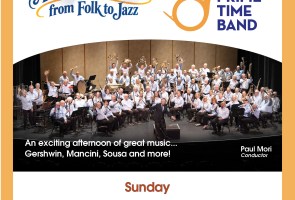
Prime Time Band Fall Concert
Sun, Nov 22
5:00 PM
Santa Barbara
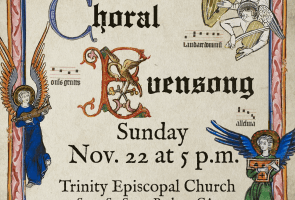
Choral Evensong: Sung by the Trinity Choir
Sat, Nov 21 9:00 AM
Goleta
Holiday Gift Boutique in Goleta
Fri, Nov 20 11:00 AM
Santa Barbara
Santa Barbara Antique & Vintage Show
Sat, Nov 21 10:00 AM
Solvang
56th Annual Holiday Open House
Sat, Nov 21 10:00 AM
Santa Barbara
MOXI’s Seaside Sock Skating
Sat, Nov 21 11:00 AM
Santa Barbara
Santa Barbara Antique & Vintage Show
Sat, Nov 21 11:00 AM
Santa Barbara
Cassatt Reconsidered: Lecture with Mary G. Morton
Sat, Nov 21 7:30 PM
Santa Barbara
Juilliard String Quartet & Simone Dinnerstein
Sat, Nov 21 7:30 PM
Santa Barbara
Santa Barbara Blues Society Presents Teresa James and the Rhythm Tramps
Sun, Nov 22 11:00 AM
Santa Barbara
Santa Barbara Antique & Vintage Show
Sun, Nov 22 2:00 PM
Goleta
Prime Time Band Fall Concert
Sun, Nov 22 5:00 PM
Santa Barbara



You must be logged in to post a comment.