Leaf Blowers’ Legacy
Leaf Blowers Cause Dust, Pollution, and Hearing Loss

The leaf blower is 27 years old, having hit the market in the early 1970s; the controversy over its use is just a few years younger. As early as 1975, Carmel and other cities were discussing banning them or regulating their use. While their design and efficiency may have improved slightly, to many people, they still seem like an idea in need of serious refinement or abandonment altogether.
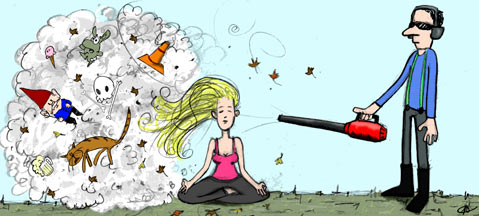
Leaf blowers in general (and we’ll get to specifics about gas-powered versus electric ones shortly) do one thing-move lots of air (at 185 miles per hour or more) and anything else that can go along with it. Their designers imagined that those things would be leaves, grass, and other clippings and finer debris. What they may not have considered is how much else they could be expected to transport as well. These include dust, pollen, animal fecal matter, herbicide and pesticide residues, and other toxic chemicals related to any other pollution source such as paved roadways with lead and carbon residues. The effect of this dust cloud, composed of particulate matter that is 10 microns in diameter or smaller, can last for hours. The California Environmental Protection Agency’s Air Resources Board (ARB) has estimated that a single leaf blower can put five pounds of particulate matter per hour into the air. About half of that is in this size class. The ARB states that such particulate matter can create health risks similar to other pollutants such as exhaust.
Their other, very unpleasant, attribute is their noise. Most leaf blowers emit a minimum of 63 decibels at a distance of 50 feet and significantly more (some near 90 decibels) for the operator. Hearing damage is cumulative, and gardeners who do not use ear protection designed for this high level of sound will impact their hearing significantly. Then there are the people in homes and businesses nearby who are affected by this noise. Irritating enough to healthy adults (loss of concentration and plain old aggravation), kids, elderly, and the ill particularly are impacted by this trauma.
All leaf blowers pollute by blowing particulate matter into the air and adding to noise levels, but gas-powered ones add another level of pollution. Most of them still are running on two-cycle combustion engines that burn a mixture of gasoline and oil (a few new models have four-cycle engines that run on gasoline only), producing carbon monoxide, nitrous oxides, hydrocarbons, and other particulate matter. It has been calculated that the pollution from one leaf blower in use for one hour is equivalent to that from 17 car engines running during the same time period. The particulate matter from combustion is particularly insidious because of its small size (2.5 or microns or less). These particulates remain suspended in the air for hours, even days, and are assimilated easily in the lungs and are harmful particularly to people with asthma and other breathing problems. In Orange County, the ARB calculated that leaf blowers inject more than two tons of combustion pollutants (those insidious small particles) per day countywide. An additional 20 tons of larger particles (those 10 microns in size) also are made airborne.
What did we do before 1976, anyway? Interestingly, the rise in popularity of leaf blowers was in large part due to the serious drought California had been facing. Prior to that, hosing down landscape surfaces was pretty normal. All that water wasted, only to flow into the gutter and down the storm drain. Although many of us were sweeping and raking, leaf blowers were attractive to many others. In light of our increased awareness of the contribution of carbon emissions to climate change, along with no relief in water demand issues, maybe it’s time to go back to mechanical ways. Some professionals will claim that they will go broke by abandoning leaf blowers. Experience is proving otherwise when concerned and intelligent landscapers turn back the clock. When all the costs, obvious ones like the high initial and ongoing maintenance expenses, as well as the extended costs due to air and water pollution are taken into effect, leaf blowers may not come out on top. For example, the City of Claremont, California, decided not to use leaf blowers in 1990. Officials calculated that the increase in workload using rakes and brooms was only 6 percent more than with the use of blowers in the maintenance of city property.
Within Santa Barbara city limits, gas-powered leaf blowers have been banned since 1997. Leaf blowers may not be used within 250 feet of a “residential zone” and all leaf blowers must be certified to meet a decibel limit of 65 and carry a sticker to that effect. In addition, leaf blowers may only be used between 9 a.m.-5 p.m., Monday through Saturday; never on Sunday, nor on holidays. Everyone admits that enforcement of this ordinance is problematic. If you want to report an infraction, you must call the police department at 897-2410. Chances are that, given all the other important issues our men and women in blue need to respond to, the offending leaf blower will have already moved on to the next job. Educating yourself and the landscape service providers you use or encounter could go a long way to turning the tide.
What gardeners everywhere, whether they do their own landscape maintenance or hire others to do it, need to know and remember is that just blowing the debris around does not get rid of it. Organic matter in the shape of grass and hedge clippings, fallen leaves, and other plant debris can, and should, be collected and returned to the nutrient cycle. Even if you don’t compost your own garden refuse, we have an excellent green waste recycling program to deal with it. And most leaves and certainly grass clippings can be left in place under the plants that produced them without removal at all. Sure, sweep the walk and the large bits off the driveway, but don’t rake (or blow!) leaves out from under trees and shrubs. Leave them to return their organic matter and nutrients back into the soil to nurture your garden.