Spreading the Green Gospel
Surfers Without Borders Take Sustainability to Barra de la Cruz and Beyond


Generally speaking, the legacy of the traveling surfer is a pretty crappy one. Armed with surfboards, cameras, and cash, passport-toting wave hunters have been leaving behind their home breaks for decades now and jetting, sailing, or driving to far-flung exotic locales in the name of surf discovery. In and of itself, this act of stoke-searching exploration is beautiful; unfortunately, what the single-minded surf junkie typically leaves along foreign shores is anything but. From plastic bottles and steaming piles of poop to greedy land grabs and unintentional culture bashing, the ugly blowback of selfish surf travel can be seen firsthand from Mexico to Micronesia. Luckily, like modern-day Johnny Appleseeds of environmentalism leaving composting toilets, worm castings, and water bottle recycling programs in their wake, two born-and-raised Santa Barbara surfers are on a mission to change that legacy.
The story of Surfers Without Borders (SWoB) began nearly two years ago when Loren Luyendyk, acting “on a whim,” entered an essay contest sponsored by Keen Footwear, which wanted to know: “How does your passion support sustainability?” A certified permaculture designer and consulting arborist, the 35-year-old Luyendyk was in a unique spot to answer the question and, as a result, made a winning case for the intersection of his surfing addiction and sustainable pursuits. In short, he pitched the idea of SWoB as a nonprofit organization that would travel to developing world surf spots to spend some time, assess the conditions, and introduce the Earth-minded tenants of permaculture to the communities. “It was always my wildest dream to travel, surf, and teach sustainability,” said Luyendyk, adding with a laugh, “And then I actually won that contest and it was a real possibility.”
Shortly after getting a check from Keen, Luyendyk and his girlfriend Aubrey Falk (the couple is now engaged) put the wheels in motion to get SWoB’s first mission underway. An accomplished artist and professional surfer, Falk had just wrapped up her first year of being a fully sponsored pro, an experience she enjoyed but was far from satisfied with, often finding herself on foreign beaches with other pros just wanting to get photos and go home. “It was so unfulfilling to me,” said the 25-year-old regular foot. “We come from one of the wealthiest and luckiest countries in the world. It’s our duty to do something more. We owe it. : With SWoB, we have a chance to do more than your average surf trip and actually give back a little.”
So with a little extra help from Falk’s sponsors Volcom and Channel Islands Surfboards, the duo outfitted a late-model diesel Dodge Ram named Ellie and stuffed it to the gills with surfboards, art supplies, tools, and dozens of Spanish-translated copies of Bill Mollison’s legendary Introduction to Permaculture. More importantly, they intended to bring something often left behind on surf trips: open minds.
On July 27, 2008, the SWoB team finally rolled out of town and headed south to Baja at a time when stories of carjackings, kidnappings, brutal murders, and other drug-fueled violence along the dusty roads of Baja Norte were making international headlines. Throughout the course of the summer, Ellie rumbled slowly and safely down toward the tip of Baja, through places such as Scorpion Bay and Todos Santos, into the American-flavored urban sprawl of Cabo San Lucas, and up the east cape to La Paz. Along the way were unending amounts of trash, huge piles of plastic, and community planning that seldom considers the health of the environment.
“Traveling along the coast,” said Luyendyk, “it was just so apparent the ways that permaculture could help.” Unfortunately, besides meeting some like-minded organic farmers and sharing their translated copies of Mollison’s book with them, it wasn’t until they hit the more rural and remote coastline of mainland Mexico that the SWoB crew were able to get their hands dirty.
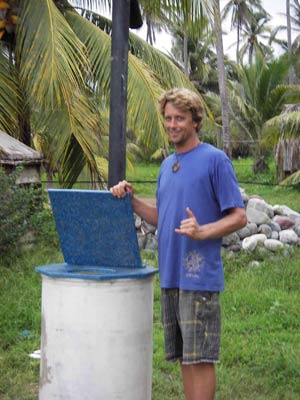
In the surf-rich town of Rio Nexpa, Luyendyk went out to a popular campground on the point and built a composting toilet out of a 50-gallon plastic drum, worm castings, and entirely salvaged materials. The waterless, flush-less toilet can support two adults for six months before it needs to be set aside to decompose; six months later, it’s perfect food for plants and trees. In small coastal villages where waste and water sources all too often come together in a nasty and potentially deadly swirl, such a simple solution not only saves money and water quality, but it is also a heck of a lot more practical than the traditional, flushing alternative. The camp hosts were, of course, stoked, and neighbors quickly took notice. “All they need are the big blue buckets, some worms, sawdust, and a little bit of knowledge,” said Luyendyk.
From Nexpa, SWoB continued onto Barra de la Cruz, a modest fishing village that has gained international fame for its sandy-bottomed, practically perfect right-hand point break. With a forward-thinking community mindset and a refreshing commitment to protect their natural resources-not to mention the bevy of good waves peeling nearby-Barra was an ideal match for the mission. In fact, they were able to make so much headway that they stayed for two months. Once again, they built a composting toilet to much fanfare at Pepe’s Cabanas, a popular resting spot for gringos owned by the town’s vice president. Luyendyk also used the “ubiquitous” 50-gallon plastic drum to construct a slow sand water filter that helped make the town’s water supply potable. Filling the drum with rocks, charcoal, and sand, the easily made contraption removes 99 percent of the disease-causing pathogens. Costing less than $50 to make, the filter is big enough to serve two families for an entire year.
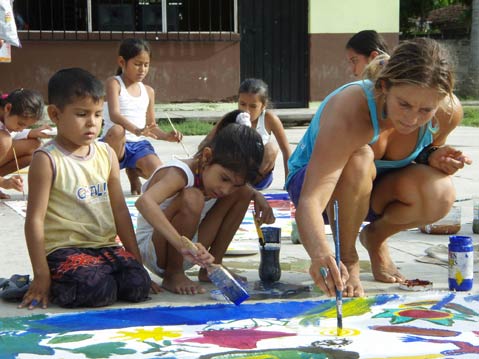
Looking to solve the plastic water bottle problem that plagues all of Central America, Luyendyk and Falk convinced a restaurant in Barra to set up a clean drinking water station, where patrons now pay five pesos to refill their own water bottles. It made sense economically, too, because the water was cheaper than bottled water for the customers, but allowed the restaurant to turn a profit on water sales. “No matter where you are, the bottom line is everyone wants the best deal as far as money goes,” said Falk. “And the refill idea not only saves people money and makes people money, but it also uses way less plastic. : And everyone is stoked with that.” Taking the refill program one step further, Falk rounded up dozens of the metal Jumex bottles littering the town, sanitized them, painted them basic colors, and then gave them to schoolchildren to decorate as their own water bottles, thereby jumpstarting the refill program for the villagers themselves. With toilets, filters, and water refill stations, Barra proved to be SWoB’s first truly successful story and, if you travel there today, you’ll see the sustainable seeds they planted beginning to bear fruit.
After more than three months on the road, SWoB returned to Santa Barbara in early November. Inspired, broke, and buoyed by their success in Barra, Luyendyk and Falk currently are preparing for their second trip later this year. Funds permitting, they are aiming to take their grassroots environmental act to the coasts of Nicaragua and El Salvador before retracing their tracks back into Mexico and visiting the sites they established last year. The latter will be a key component to helping SWoB grow because, as Luyendyk put it, “If people don’t continue to use the stuff we helped put in place after we leave, we need to find out why.”
Besides continuing to spread the permaculture gospel, the couple hopes to add water quality testing to their quiver of projects and, eventually, create a network that will allow similarly inclined surfers to lend a helping hand in outposts the world over. They know their plans are ambitious, but they remain undeterred. “I thought I wanted to do a lot before [the first trip],” said Luyendyk recently, “but now I have seen how much more there is to be done and I feel like we have to do even more.” It sounds, in fact, like they’re more inspired than ever.
4•1•1
Learn more about Surfers Without Borders during a night of education and fun on February 21, in Santa Barbara Public Library’s Faulkner Gallery. Expect food, drinks, a film on their first trip, and an auction to raise money for the second trip.