Beetroots and Chard
Beta Vulgaris Is One of the Most Amazing Single Species of Vegetables

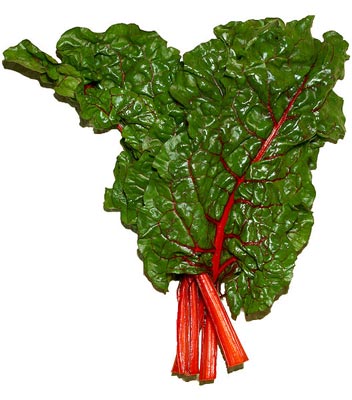
It shouldn’t be surprising that a plant that has been under cultivation since ancient Greek and Roman times (maybe longer in Arabia) has so many distinct personalities today. One of the most amazing single species of vegetables is Beta vulgaris. It has been selected in one direction for its succulent and sweet roots, but just as prolifically in the other direction for its colorful, tasty, and versatile leaves.
Those root vegetables are known as plain old beets on this side of the Atlantic, but our English brethren distinguish them further by calling them beetroots. This biennial-it flowers in its second year of growth-spends one whole year growing leaves above ground that process carbon dioxide and sunshine to make sugars and starches. This abundance of product gets transported down to the root and the result is a swollen underground tuber-the beet. Luckily for us, the ratio of sugar to starch definitely favors the sugary side, making beets such a delightful and sweet treat.
Most people think deep red when beets are mentioned; we even say “he turned red as a beet” about our embarrassed friend. And beet varieties in many shades of red abound. There are long cylindrical ones (variety ‘Cylindra’ or ‘Formanova’) as well as up to softball-sized round ones (‘Detroit Dark Red’ is ubiquitous, but there are many other selections as well). In addition to the red ones, however, beets come in a deep golden yellow (‘Burpee’s Golden,’ among others); pale, nearly white (‘Albina Vereduna’); and a variety that combines red and pale flesh in concentric rings (‘Chioggia’). When sliced raw, they look like bulls-eye targets, but may not retain their bright color once cooked.
Many people know that beet greens are edible and delicious, but may not know that the leafy vegetable most commonly called “chard” is simply a beet that never really forms an enlarged below-ground root. And these greens look to be on steroids. Tall stems can reach up to 30 inches with stiff, mid-ribs. Arrayed around this large vein is a wide, crinkled leaf having a mild yet robust flavor. While the leaves are generally some shade of vibrant green, the stems come in a rainbow of shades from pure white through golden yellow, pale pink, and deepest red. Names to look for are ‘Lucullus’ (named for a Roman epicure Lucius Licinius Lucullus) or ‘Fordhook Giant’ with broad white stems, and ‘Rhubarb’ or ‘Ruby Red’ with thick beet-red stems. Sometimes seen singly, but usually in a mix of colors, are ‘Bright Lights,’ with their stalks of every hue as well as leaves that approach burgundy red. Don’t relegate this one to the vegetable garden; it is highly ornamental and can hold its own in the flower bed, too.
Plant beets and chard in the early spring to take advantage of the cool conditions in which they thrive. In our mild winter climate, we can start another season of beets and chard in the fall. Start from seed sown in rows in nicely worked soil, and thin to 2-4 inches apart for beets (check seed packet for directions for the particular variety you are sowing) and to one foot for chard plants. Thinned plants of both beetroot and chard make tasty additions to a salad or stir-fry.
Most nurseries will carry a few kinds of chard and maybe some beets. Since beets are a root vegetable, transplanting them must be done very delicately. Chard is easy to plant from small starts, so you may choose to buy only the number of plants you have room for. Mulch thickly to keep rain from splashing the leaves with mud. Start cutting chard leaves after about two months. Beets can also be pulled after a couple of warm months, but winter crops will take longer to reach size. Have some baby beets and then allow others to continue growing. Don’t harvest the tops until you pull the beets, and then enjoy both hearty greens and sweet roots.
One cooking note: For quick-cooking, separate stems from leaves of chard and saute stems first until nearly tender. Add sliced or shredded leaves toward the end. If including chard in long-cooking dishes such as casseroles or soups, they can be added at the beginning together.