Mystery Props
A Voter’s Guide to Two Low-Profile Measures on the June Ballot
Thursday, May 10, 2012
As if conscientious voters don’t face enough challenges keeping up with the presidential race, Governor Jerry Brown’s tax-hike machinations, and the intricacies of the campaign for the 19th State Senate District, the June 5 primary election features two important initiatives that have generated scant media coverage.
With ballots arriving in Santa Barbara mailboxes this week, here is a look at the pros, cons, and money behind the two measures.

Jerry Roberts
PROPOSITION 28: At a time when political reform advocates already have passed two initiatives aimed at the dysfunction in Sacramento — nonpartisan primary elections and an independent redistricting process — Proposition 28 represents yet another effort to ease the Capitol’s culture of gridlock.
If passed, the measure would make incremental changes to California’s two-decade-old term-limit law, which has come under increasing criticism for failing in its starry-eyed stated goal of installing a “citizen legislature” and for shifting power from elected representatives into the hands of lobbyists and bureaucrats (see “How Term Limits Failed,” 7/28/2011, independent.com/termlimits).
Under current law, term limits are based on restricting the number of years a politician can serve in each legislative house — three two-year terms in the Assembly and two four-year terms in the State Senate. As a practical matter, it is not uncommon for a termed-out assemblymember to jump to the Senate, or vice versa, giving him or her a total of 14 years as a lawmaker.
Prop. 28 would change the system by capping the total number of years a pol could serve in the Legislature at 12, no matter which house. Thus, an elected official could be in the Assembly for six terms, or in the Senate for three, for example.
Supporters say that the current system results in politicians who start to look for their next job the moment they arrive in Sacramento, currying favor with special interests that can fund future campaigns; they also argue that term limits have created a dearth of institutional memory and expertise among elected officials, ceding power to the “Third House” of lobbyists.
The measure is backed by good-government organizations, including the League of Women Voters and Common Cause, with a $2.5-million assist from both business and labor special interests, including the Los Angeles County Federation of Labor ($1 million) and corporations controlled by developers Philip Anschutz ($100,000) and Ed Roski ($400,000), who have competing plans to build a new sports facility in L.A. to house the NFL San Diego Chargers.
Opponents have raised little money aside from a $45,000 contribution from the founder of U.S. Term Limits, the group that has led the national effort to reduce the influence of career politicians in states across the country.
They argue that Prop. 28 is a scam designed to undercut California’s original law by enabling the return of long-serving lawmakers in both houses who will quickly come to dominate the political process in Sacramento in the tradition of former speaker Willie Brown, whose long tenure as the “Ayatollah of the Assembly” was the impetus for term limits back in 1990. They also note the cynicism of Prop. 28 backers, whose campaign advertising trumpets the measure as a way to get rid of “career politicians.”
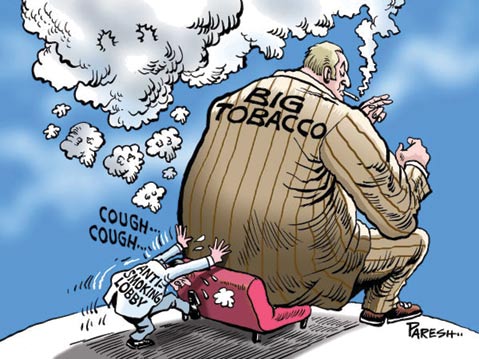
PROPOSITION 29: At first glance, Prop. 29 presents voters with a simple decision: Should the state increase its excise tax on a pack of cigarettes, from 87 cents to $1.87, in order to raise an additional $800 million a year to fund cancer research, health education, and other anti-smoking activities?
Backed by prominent medical groups including the American Cancer Society and the American Heart Association, which together have raised nearly $5 million to date —Prop. 29 would be the state’s third initiative to raise tobacco taxes for such purposes, after Proposition 99 in 1988 and Proposition 10 in 1998.
Not surprisingly, tobacco companies led by R.J. Reynolds Tobacco and Philip Morris U.S.A. have ponied up about $38 million so far to bombard the airwaves with advertising to defeat the measure, charging that it is deceptive, duplicates existing programs, and provides no money for clinical cancer treatment.
Beyond the health argument, some tax-reform groups raise other financial issues: Given the huge role that earlier ballot-box budgeting measures have played in shaping California’s chronic fiscal problems, they say Prop. 29 would enlarge and sustain a nonaccountable bureaucracy that would add to the state’s “auto-pilot spending” problem.

Related Links
Comments
Per prop 29.
I'm a nonsmoker and HATE the smell of tobacco smoke, but I'm not in support of this measure and the reason is because in addition to the fact that this tax hike won't even make a dent in the financial debt of California, it drives up the price of an addictive drug.
I've known of people who were former heroin addicts and cigarette smoker and they have said the quitting smoking was harder than giving up heroin. I know that well-meaning folks may raising the price of smokes will discourage people from smoking (and no doubt it will help some people quit) that hard-core addicts will do anything to get their nicotine fix and since we know what heroin addicts do to get *their* fix...you know where I'm going with this.
Also, I find it laughingly hypocritical that there is so much stigma against smokers while our culture celebrates booze...I'm sorry, I mean "fine wines" consumed by "discerning connoisseurs" to the point where Bacchus is the de facto god of S.B. County all the while the victims of drunk drivers pile up in the morgue.
Cigarettes?...bad; alcohol?...bad. But why the inconsistency? The booze peddlers have just as much blood on their hands as Phillp Morris.
The fact is there are way less smokers than drinkers yet all the opprobrium is aimed at the cigarette addicts. Hypocritical much?
billclausen (anonymous profile)
May 13, 2012 at 3:06 a.m. (Suggest removal)
billclausen, I believe you will find 100% public support of your anti-drinking&driving jihad -- no one likes a drinking driver, and increased penalties and enforcement, altered social and cultural behaviors, and declining fatalities prove the change is ongoing and significant.
From a public policy standpoint, however, your equivalencies and commentary are ill-informed and illogical.
First, to compare the impact of smoking to drunk driving as a public danger is laughable:
:: Smoking:
- In California approximately 36,000 people died from smoking-related deaths EVERY year, (2000-2004). That's just the population over 35.
http://www.cdph.ca.gov/programs/tobac...
- More deaths are caused each year by tobacco use than by all deaths from human immunodeficiency virus (HIV), illegal drug use, alcohol use, motor vehicle injuries, suicides, and murders combined
http://www.cdc.gov/tobacco/data_stati...
:: Drunk Driving deaths
- 1,198 total deaths caused in California where at least one driver had a BAC of 0.01% or above (2008)
http://www.dui-usa.drinkdriving.org/C...
:: On your wild, anecdotal proposition that increased taxes not only won't cut smoking, but will increase tobacco use:
- Since the 1988 passage of Proposition 99 in California, adult smoking rates declined by more than 40% from 22.7% to 13.3% in 2008.
Prop 99 was a huge hike in taxes on tobacco products, with the money recycled into environmental and health care programs, and anti-tobacco ads.
(from State-Specific Smoking-Attributable Mortality and Years of Potential Life Lost --- United States, 2000—2004. MMWR (2009). 58(02); 29-33.)
binky (anonymous profile)
May 13, 2012 at 9:40 a.m. (Suggest removal)
Great fact finding binky. Had no idea tobacco ranked that highly in terms of societal costs. I'm voting for Prop 29.
EastBeach (anonymous profile)
May 13, 2012 at 1:06 p.m. (Suggest removal)
Kudos to Roberts for his review of term limits as well.
So many voters have such knee-jerk reactions in favor of term limits. And many of those same people will say "government should be run more like business".
Yet I can't think of any business that recruits new employees only to fire them after training them for two years!
EastBeach (anonymous profile)
May 13, 2012 at 1:10 p.m. (Suggest removal)
Prop 29 is a tax on the poor, voting no. There's a lot of societal negative health impact from car exhaust as well (if not worse.) Can't nanny in healthy behavior.
Ken_Volok (anonymous profile)
May 13, 2012 at 1:20 p.m. (Suggest removal)
Again, I prefer health care initiatives and policy based on facts and science. In an era of limited resources and a range of community health challenges, priorities need to be set and broadest, best choices must be made.
Chronic Obstructive Pulmonary Disease is a major cause of disability -- the third leading cause of death in the United States. Air pollution is a common cause and irritant for this condition. Outdoor air pollution, of which, oil and gas exhaust and emissions form a major component, is well-monitored, regulated, and in significant decline.
But the major cause of COMD? Smoking.
This is just one reason why, Mr. Ken_Volok, car exhaust is NOT worse than smoking in "societal negative health impact."
As to a "tax on the poor," I suppose in essence it is a tax on all smokers, poor or otherwise, but not every decision made by your "nanny" is a bad one -- a swing and a miss on the buzz-word rhetoric.
Using increased expense to dissuade some users, while taking the collected revenues to further publicize the health risks seems logical and a smart use of government advocacy and power.
binky (anonymous profile)
May 13, 2012 at 3:09 p.m. (Suggest removal)
There seems to be a lot of debate about whether taxes like Prop 29 are progressive or regressive. When viewed purely from an economist's viewpoint (who make no value judgements about a consumer's choices) I think a case can be made that they are regressive:
http://www.ncbi.nlm.nih.gov/pmc/artic...
The above has more creedence given that a percentage of smokers find it difficult to quit.
But the practical considerations sway my opinion. First, dying a death from lung diease caused by smoking is a horrible way to go. Two of my neighbors and one of their spouses passed that way (latter from second-hand smoke).That may be an emotional viewpoint but so is using the phrase "nany state". Second, 20% of Prop 29 goes directly into a "cessation fund" and 60% go to research for treatment, etc.
That last part is enough to make me believe Prop 29 has the potential to be progressive, if not immediately, hopefully in the near future. I'm pretty sure the investment to do the research needed to get to that point won't come from RJ Reynolds grants.
EastBeach (anonymous profile)
May 13, 2012 at 3:22 p.m. (Suggest removal)
"billclausen, I believe you will find 100% public support of your anti-drinking&driving jihad"
A statement contradicted by the fact that so many people drink and drive.
My experience--based on my observation of people at all societal levels, is that there is much more drinking than smoking.
Drinking--like smoking--has a lot of $$$ wrapped up in it; just as I laughed when then-presidential candidate Bob Dole said with a straight face that he wasn't sure if tobacco was addictive, (I feel he got cheated out of an Academy Award for being able to keep from laughing when he said it) I have to laugh when you say that 100% of people are anti-drinking and driving. Tell that to the law enforcement who bust people (and many of those pulled over are well-educated adults--not just goofy teenagers) on a regular basis.
I'm 50 and and I believe you are older than I am, based on comments I've seen you make and as such you almost certainly remember when smoking was commonplace in all facets of life. Roll the clocks back 3 or 4 decades, compare then to now, you're aware--you get the idea.
Your sarcasm of my "Jihad" indicates either a personal dislike of me (gee, I can't understand why) or you're defending your own drinking. (?)
California is hands-down the big winner in the area of climate and scenery, but has become an economic dystopia and the nickel-and-diming of the cigarette industry (don't get me wrong, I think they're purely evil) may punish them to an extent, but will not dig us out of the bottomless pit of debt we are in.
While I realize we disagree more than agree--I'm going to assume based on your previous comments and overall ideology that you see the folly of the Drug War. Make the connection: Hyper inflated street values of illegal drugs applies here as well; addicts WILL get what they want--even if by force. (Addict with weapon vs. clerk in convenience store usually favors the addict winning)
We (you, Ken, myself, and others of a certain age) also look back now and are amazed at how a habit which we all know now is a disgusting and dangerous habit was so matter-of-factly accepted. Now that we are no longer used to second-hand smoke, we gag at the smell of it. (I of course am assuming we're all nonsmokers) When you're surrounded by something, you tend to get used to it and not see it as such a big problem.
Perhaps someday our culture will look at drinking the same way, but if history is a reliable teacher, it won't be before the death toll/toll on societies' health (not to mention the attendant staggering crime statistics as well as resultant lawsuits) become so noticeable that people will start to turn away from this form of self-medication as well.
billclausen (anonymous profile)
May 13, 2012 at 3:52 p.m. (Suggest removal)
Wwwat about us stoners? I'll smoke to that.
fivedolphins (anonymous profile)
May 16, 2012 at 2:34 a.m. (Suggest removal)