
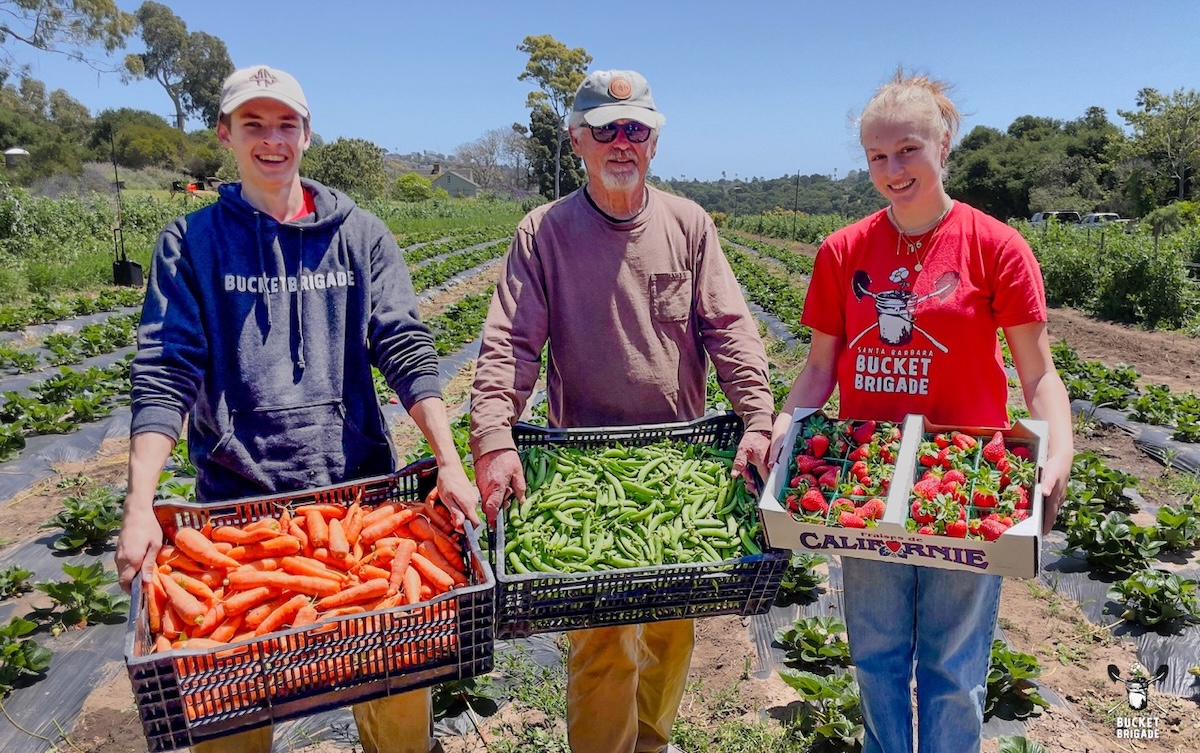
Seventeen thousand pounds of produce have come out of a single acre on the Mesa — the last remaining plot of agriculture in a neighborhood where farmland once blanketed the landscape. These days, it’s mostly teenagers picking strawberries, weighing produce, and wheelbarrowing freshly pulled carrots. Their harvest goes to local food pantries, where it lands on dinner tables by dusk.
On Sundays, the acre hums. Reggae plays from a speaker. A high schooler calls out instructions between bites of a raw zucchini. There is laughter and sunshine and hard work and broad-brimmed hats.
This is the Bucket Brigade Humanitarian Farm.
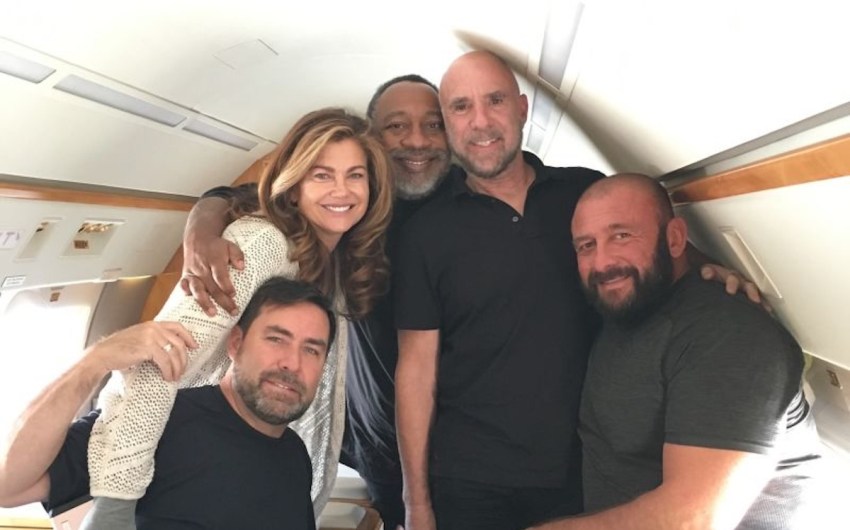
The project is the brainchild of Steve Hanson, Tom Shepherd, and Abe Powell — a trifecta of community power. It was Hanson, pro-surfer turned landscaper, who first saw the land’s potential. “I was hanging out with Spencer the Gardener when he told me, ‘I’ve got a piece of land for you,’” Hanson recalled. “The moment I saw it, I was blown away.”
Hanson visited again, this time bringing Shepherd, an organic farming legend who cofounded the Santa Barbara Farmers’ Market. “As a farmer, I just want to plant seed,” Shepherd said. “When I saw this land, I was totally amazed.”
Each of the three men brought something different: Hanson offered startup funding and vision. Shepherd brought five decades of farming expertise. Powell, cofounder and CEO of the Santa Barbara Bucket Brigade, brought the nonprofit infrastructure and a ready force of youth volunteers. Fortunately for them, Steve Luick, the property’s owner and a friend of Spencer Barnitz, a k a The Gardener, agreed to lease it for one dollar a year.
Together, they revived a patch of land in 2024 that had gone untouched for seven years. Once part of the historic Yankee Farm, a small-scale organic operation run by the Bowdish family, the lot had grown wild. Transformed, it yielded more than nine tons of produce in the first year alone — all of it donated to local food aid organizations like Veggie Rescue, Unity Shoppe, and the Food Pantry at Santa Barbara City College.
But it’s even more than that. What’s grown here goes beyond food.
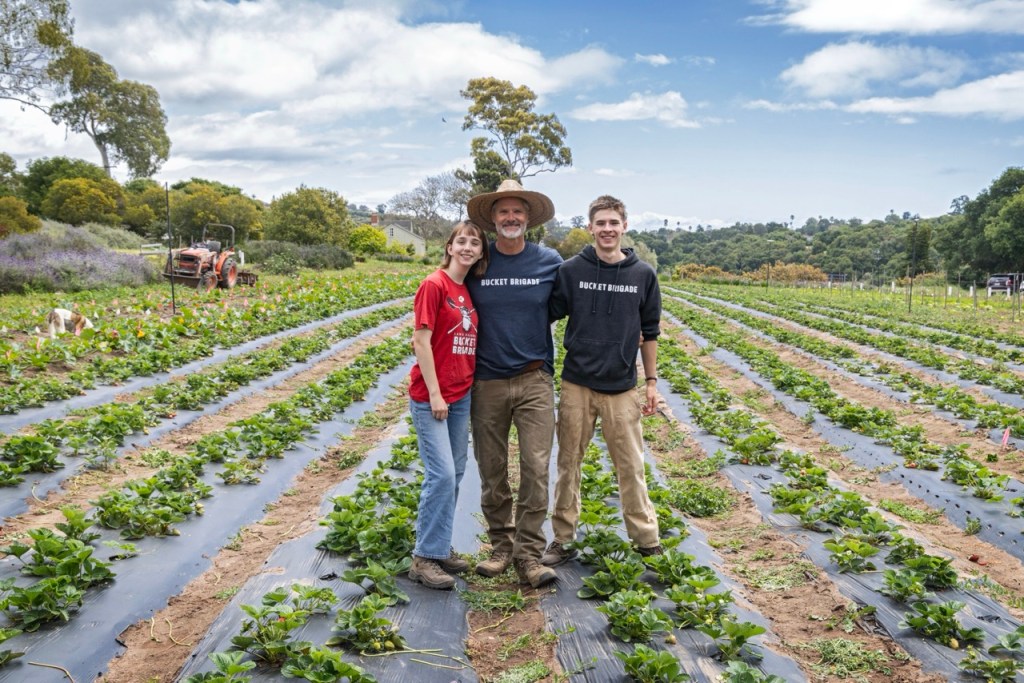
The farm is largely run by teenagers. Leo Powell, a senior at Santa Barbara High School and Abe’s son, and Amber Ross, a senior at Dos Pueblos, lead volunteer days every Sunday. They arrive early, set up tents, unload tools, and greet volunteers with coffee and donuts. Then, they circle the group up.
“I give a little speech when we circle up,” Leo said. “I tell people why we’re here. Why it matters. Then we hand out tools, and we get to work.”
Amber, the logistics lead, said, laughing, “I actually had no idea what I was doing when I started. My mom just signed me up. Now I’m here every Sunday.”
More than 700 volunteers have passed through since the farm opened — many of them students earning service hours, others just looking for something that feels real.
“It’s hands-on,” said Shepherd. “It’s outside. You don’t see kids on their phones here. They’re tasting what it means to grow something.”
The produce — carrots, garlic, zucchini, cilantro, and strawberries — is selected not just for climate compatibility, but for need. “People on food aid don’t get strawberries,” Shepherd said. “So, we grow the good stuff.”
But for Powell and the team, what’s growing here isn’t just produce. It’s a mindset. A generation of young people, learning how to take care of their neighbors, the soil beneath them, and even their own mental health.
In 2021, the Lancet Global Health published a study showing that 60 percent of people under 25 report anxiety, hopelessness, or despair over climate change. Abe Powell didn’t need a study to see the sadness.
“One of the biggest reasons people feel hopeless is because they don’t have agency,” he said. “So, the [Bucket Brigade] academy was a way to say: ‘You can do something, right now, right here.’ And if enough people do it together, it becomes something big.”
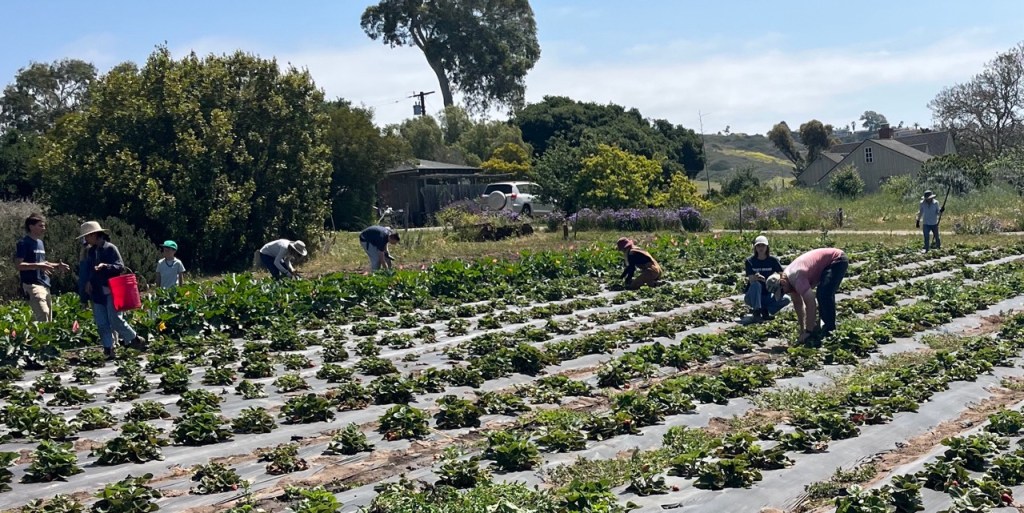
The academy, which trains high schoolers in disaster preparedness and community leadership, funnels its students directly into the farm and into hands-on roles that teach them how to grow food, lead groups, and build something tangible.
“We’re keeping our community wisdom in the community,” Powell said. “We’re creating a way to pass it down.”
The Bucket Brigade began not with a garden, but a shovel. In the wake of Montecito’s January 9 debris flow in 2018, Powell and a group of volunteers dug out homes by hand, starting immediately after the mudflows. That neighbor-to-neighbor ethic became a nonprofit, which now includes wildfire preparation, trail restoration, and climate action programs — all driven by residents.
The farm is the brigade’s newest chapter. Powell and his partners hope to raise an endowment to keep the farm running in perpetuity, and to encourage churches, schools, and cities to turn unused land into something edible.
“This is something that can be replicated anywhere,” Powell said. “You don’t have to solve global hunger. Start by growing food for your neighbors.”
As the world reflects on hunger and food access this May 28, the Bucket Brigade Farm serves as a timely reminder that impactful change can happen one row, one acre, one Sunday at a time.
“Ask not what your country can do for you,” Powell said, riffing on JFK’s famous words. “Ask what you can do for your community.”




You must be logged in to post a comment.