

This article was underwritten in part by the Mickey Flacks Journalism Fund for Social Justice, a proud, innovative supporter of local news. To make a contribution go to sbcan.org/journalism_fund.
At this point, most tenants probably don’t need the Independent to tell them that renting in Santa Barbara is expensive. As the state contends with what it calls a housing crisis, our area has grown increasingly cost prohibitive in the past decade. How expensive is rent, exactly? The City of Santa Barbara’s 2025 rent survey helps answer that question.
The Basics
Each year, the city contracts local economics consulting firm Robert D. Niehuas Inc. to collect data on rent prices for a given month of the year. This year, the firm looked at prices across the South Coast region in April. It tracked listings on websites like Zillow and Craigslist, as well as its own proprietary data feed, to determine the median rent price for a range of properties.
Overall, the survey reports that a median rent for a one-bedroom unit (whether that be an apartment, condo, townhouse/duplex or house) in the South Coast costs $2,890 — about a 5 percent increase from last year. Prices have gone up more than 75 percent in the past decade.
More details, including the kind of housing (apartment, condo, townhouse/duplex, or house), location, and size (the number of bedrooms), as well as affordability measurements, further complicate the story.

Affordability
The survey provides a short affordability analysis, which estimates the average hourly rate to afford the median rent of different property sizes (a studio or a three-bedroom, for example). For a one-bedroom unit, that amounts to $55.43 per hour, or an annual salary of about $115,00.
It also makes estimates on household incomes and affordability. No median household income is enough to rent without being considered rent burdened on the South Coast, meaning that no median income provided enough to avoid being rent burdened.
An individual making minimum wage and trying to afford a studio would fare the worst: 274 percent of their annual household income would have to go to rent to not be considered rent burdened.
Place and Space: Key Takeaways
The survey examines six areas on the South Coast: Santa Barbara, Goleta, Isla Vista, Montecito, Summerland, and Carpinteria. Santa Barbara had the most listings (it also has the largest population). Other areas had sparser data: some categories — such as two-bedroom apartments in Montecito or studios in Isla Vista — had no listings. This lack of data means that some of the medians and percentages rely heavily on one or two figures — that might not reflect reality.
But, the numbers can give a sense of cost. The survey shows a mix of prices in different areas. No area was consistently the most expensive when it came to the number of bedrooms. For example, for studio apartments, Santa Barbara and Montecito topped the list at $2,350 per month (Santa Barbara had 35 observed listings and Montecito had two). But for two- and three-bedroom apartments, Isla Vista takes the top spot with rent prices nearly double that of any other area. Isla Vista, a student enclave, is known for its crowded properties, where up to four students may share a room. There were only three and two observed listings in I.V. for these units, respectively.
The only listing costing less than $2,000 a month across all housing types in the area was in Summerland; one observed listing puts a studio apartment at $1,550 per month.
Condos, duplexes and townhomes, and single-family homes followed roughly the same pattern, or lack thereof, wherein one community was not consistently more expensive across all categories. Notably, there were far fewer listings in these categories, so many sub categories (for example, a two-bedroom single-family home in Goleta) had no data.

The Post-Pandemic Jump
The survey includes data from the past decade so people can see how rent prices change over time. On the South Coast, across property types, rent jumps from 2021 to 2022. Units with two bedrooms became approximately 31 percent more expensive while units with more than four bedrooms jumped 60 percent in rent.
Much of the country saw rent increases post-pandemic, and the population of rent-burdened tenants — those spending more than 30 percent of their income on rent — grew. Some researchers say the rapid increase in shelter inflation, or those costs associated with housing, may be in part due to changing demands for residential space prompted by the pandemic.
Other Questions
While the survey provides clear data collected over time — a valuable resource — it does not include information on rental requirements. Which areas are more likely to require proof of income that covers multiple months’ rent, for example?
The survey also removed all affordable and subsidized housing, to examine market rate. More data on where affordable units are located — and where developers plan to build them — could further help with understanding housing dynamics on the South Coast.
Related Posts

Premier Events

Mon, Mar 09
6:00 PM
Santa Barbara
ART 4 GRIEF Support Group

Sat, Mar 14
7:00 PM
Santa Barbara
Red, White, & Blues II: The American Songbook
Sun, Mar 15
3:00 PM
Santa Barbara
Red, White, & Blues II: The American Songbook

Thu, Mar 12
6:00 PM
Santa Barbara
Poetry, Typewriters, and Collage Workshop
Thu, Mar 12
6:30 PM
Santa Barbara
An Evening of Wild Hope: PBS Film Screenings
Thu, Mar 12
7:00 PM
Santa Barbara
Lights Up! Presents: “The Addams Family”

Thu, Mar 12
7:30 PM
Santa Barbara
UCSB Music of India Winter Concert

Fri, Mar 13
6:00 PM
Santa Barbara
GLOW X: A High-Definition Neon Experience

Fri, Mar 13
7:00 PM
Goleta
Folk Orchestra of Santa Barbara Celtic Concert
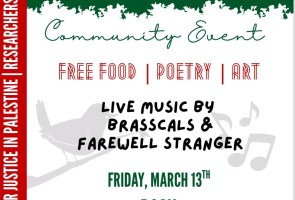
Fri, Mar 13
7:00 PM
Goleta
Peace Event

Sat, Mar 14
1:00 PM
Santa Barbara
St. Patrick’s Day Irish Firedance

Sat, Mar 14
1:00 PM
SANTA BARBARA
SBCC’s Science Discovery Day

Sat, Mar 14
3:00 PM
435 State St, Santa Barbara, CA 93101
☘️ Santa Barbara St Patrick’s Day Bar Crawl & Block Party
Mon, Mar 09 6:00 PM
Santa Barbara
ART 4 GRIEF Support Group
Sat, Mar 14 7:00 PM
Santa Barbara
Red, White, & Blues II: The American Songbook
Sun, Mar 15 3:00 PM
Santa Barbara
Red, White, & Blues II: The American Songbook
Thu, Mar 12 6:00 PM
Santa Barbara
Poetry, Typewriters, and Collage Workshop
Thu, Mar 12 6:30 PM
Santa Barbara
An Evening of Wild Hope: PBS Film Screenings
Thu, Mar 12 7:00 PM
Santa Barbara
Lights Up! Presents: “The Addams Family”
Thu, Mar 12 7:30 PM
Santa Barbara
UCSB Music of India Winter Concert
Fri, Mar 13 6:00 PM
Santa Barbara
GLOW X: A High-Definition Neon Experience
Fri, Mar 13 7:00 PM
Goleta
Folk Orchestra of Santa Barbara Celtic Concert
Fri, Mar 13 7:00 PM
Goleta
Peace Event
Sat, Mar 14 1:00 PM
Santa Barbara
St. Patrick’s Day Irish Firedance
Sat, Mar 14 1:00 PM
SANTA BARBARA
SBCC’s Science Discovery Day
Sat, Mar 14 3:00 PM
435 State St, Santa Barbara, CA 93101


You must be logged in to post a comment.