
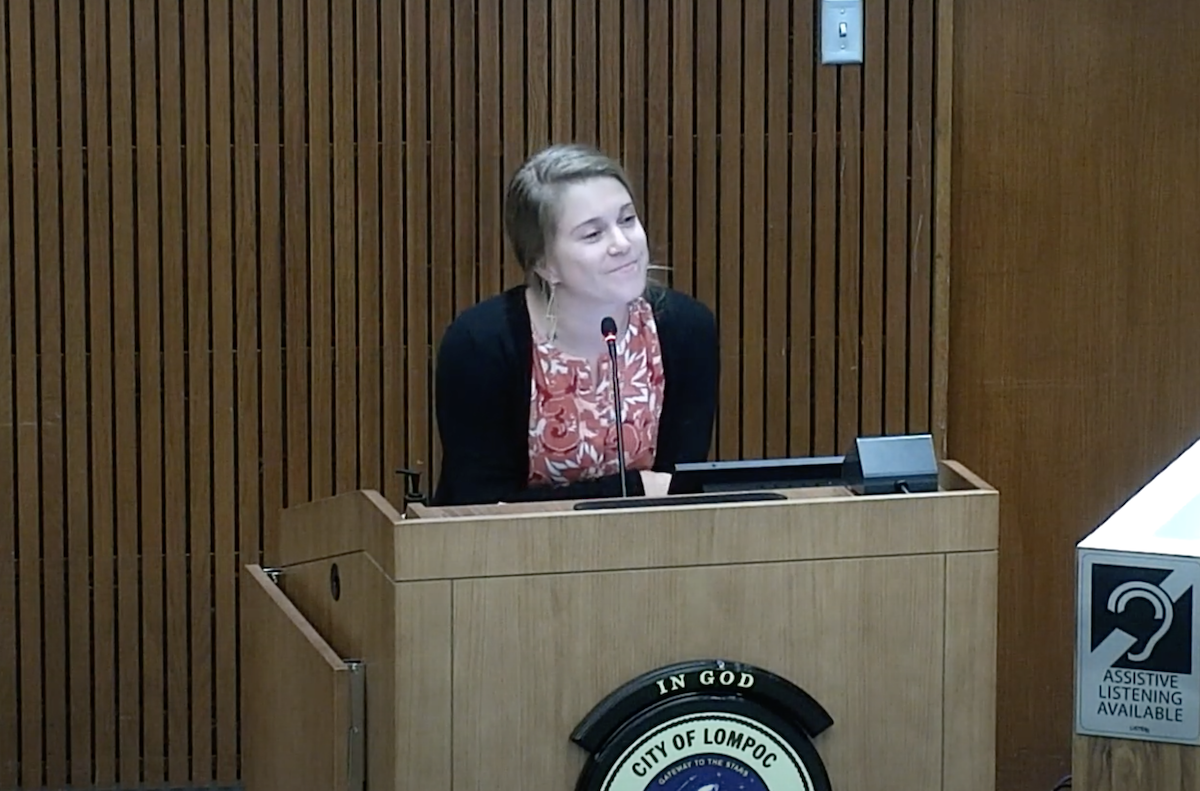
Maybe I should stop calling our all-male Lompoc City Council Rompin’, Stompin’ Dynamite.
On Tuesday, the guys executed a review positioning Lompoc’s Permit-Ready Accessory Dwelling Unit Program (PRADU) for a winter liftoff.
Even though the concept had been discovered and nurtured by the previous mayor.
Remember the example set in Washington. In January, 80 executive orders countermanded orders of the predecessor. Scrubbed out his name.
In Lompoc a conservative majority elected last November after six years of moderate rule seemed poised to do the same on the local stage. “Move fast and break things” was the rage.
In 2023, the city had alertly applied for $450,000 from the state to support the development of permit-ready site plans for Accessory Dwelling Units (ADUs), also known as granny flats. After delays, the City Council approved a contract with RRM Design Group of San Luis Obispo in February 2025.
RRM is a Central Coast economic development rock star. Founded in 1974 in San Luis Obispo by three architecture students and their professor, it now includes seven offices: S.L.O., Santa Barbara, Ventura, San Leandro, San Juan Capistrano, and as far as San Diego and Seattle. More than 170 architects, engineers, planners, landscape architects, and surveyors work at RRM. More than one-third have been with the firm for 10 years or more. All of them own stock in the company through its employee stock option plan (ESOP). Good people stay at RRM.
Despite state legislation encouraging them, Lompoc ADU applications have only trickled in, totaling approximately 55 that have received certificates of occupancy since 2017. Many here believe more uniform plans may ignite a surge as they will be quicker to process and thus cut costs.
RRM Senior Planner Rachel Hollander was in town Tuesday to give an update on RRM’s work chipping away at local bureaucracy. RRM has assisted more than 20 California jurisdictions challenge the housing logjam with preapproved ADU plans.
Hollander overviewed the various floor plans and architectural styles that emerged from the firm’s context study: Cottage Agrarian, Mediterranean Spanish, and California Ranch are popular with sizes from 350 to 650 square feet, but two garage conversion plans are cheaper and have been chosen by most Lompoc applicants.
Most California cities are now investing in permit-ready programs, she said. After Tuesday evening’s discussion, site plans will be finalized, and a Guide Book to the Permit-Ready ADU Program will be available to Lompoc homeowners. A public hearing this winter will see the council vote.
Councilmembers listened quietly. Councilmember Dirk Starbuck appeared skeptical. “Nine years ago, we had ADU plans,” he asserted. “Why not use them instead of paying you a lot of money for new ones?”
“Soil composition is always different, as well as architectural character,” Hollander replied, evenly referencing the context study map that showed the team’s review of the city to assess typical lot size to inform the plans.
Councilmember Jeremy Ball asked whether 55 applications showed low interest in comparison to other jurisdictions. “Santa Maria says they have 1,500,” chimed in Mayor Jim Mosby.
Councilmember Steve Bridge asked about parking. “It’s a real problem in the coastal zone since replacement parking is often required,” Hollander agreed. “But Lompoc is not in the coastal zone.” In Hollander’s experience of processing ADUs, some of her clients reserve space for parking.
“These are good questions that will either be available via a FAQ, project webpage, and/or in the ADU handbook,” she added.
Hard questioning, but nobody accused her of treason.
Related Posts




Premier Events

Wed, Dec 31
9:00 PM
Santa barbara
NEW YEAR’S Wildcat Lounge

Wed, Dec 31
6:15 PM
Santa Barbara
NYE 2026 with SB Comedy Hideaway!
Wed, Dec 31
9:00 PM
Santa barbara
NEW YEAR’S Wildcat Lounge

Wed, Dec 31
10:00 PM
Santa Barbara
In Session Between Us: Vol. I NYE x Alcazar

Wed, Dec 31
10:00 PM
Santa Barbara
NYE: Disco Cowgirls & Midnight Cowboys
Thu, Jan 01
7:00 AM
Solvang
Solvang Julefest
Thu, Jan 01
11:00 AM
Santa Barbara
Santa Barbara Polar Dip 2026

Sat, Jan 03
8:00 PM
Santa Barbara
No Simple Highway- SOhO!
Sun, Jan 04
7:00 AM
Solvang
Solvang Julefest

Thu, Jan 08
6:00 PM
Isla Vista
Legal Literacy for the Community

Fri, Jan 09
6:00 PM
Montecito
Raising Our Light – 1/9 Debris Flow Remembrance
Wed, Dec 31 9:00 PM
Santa barbara
NEW YEAR’S Wildcat Lounge
Wed, Dec 31 6:15 PM
Santa Barbara
NYE 2026 with SB Comedy Hideaway!
Wed, Dec 31 9:00 PM
Santa barbara
NEW YEAR’S Wildcat Lounge
Wed, Dec 31 10:00 PM
Santa Barbara
In Session Between Us: Vol. I NYE x Alcazar
Wed, Dec 31 10:00 PM
Santa Barbara
NYE: Disco Cowgirls & Midnight Cowboys
Thu, Jan 01 7:00 AM
Solvang
Solvang Julefest
Thu, Jan 01 11:00 AM
Santa Barbara
Santa Barbara Polar Dip 2026
Sat, Jan 03 8:00 PM
Santa Barbara
No Simple Highway- SOhO!
Sun, Jan 04 7:00 AM
Solvang
Solvang Julefest
Thu, Jan 08 6:00 PM
Isla Vista
Legal Literacy for the Community
Fri, Jan 09 6:00 PM
Montecito

