

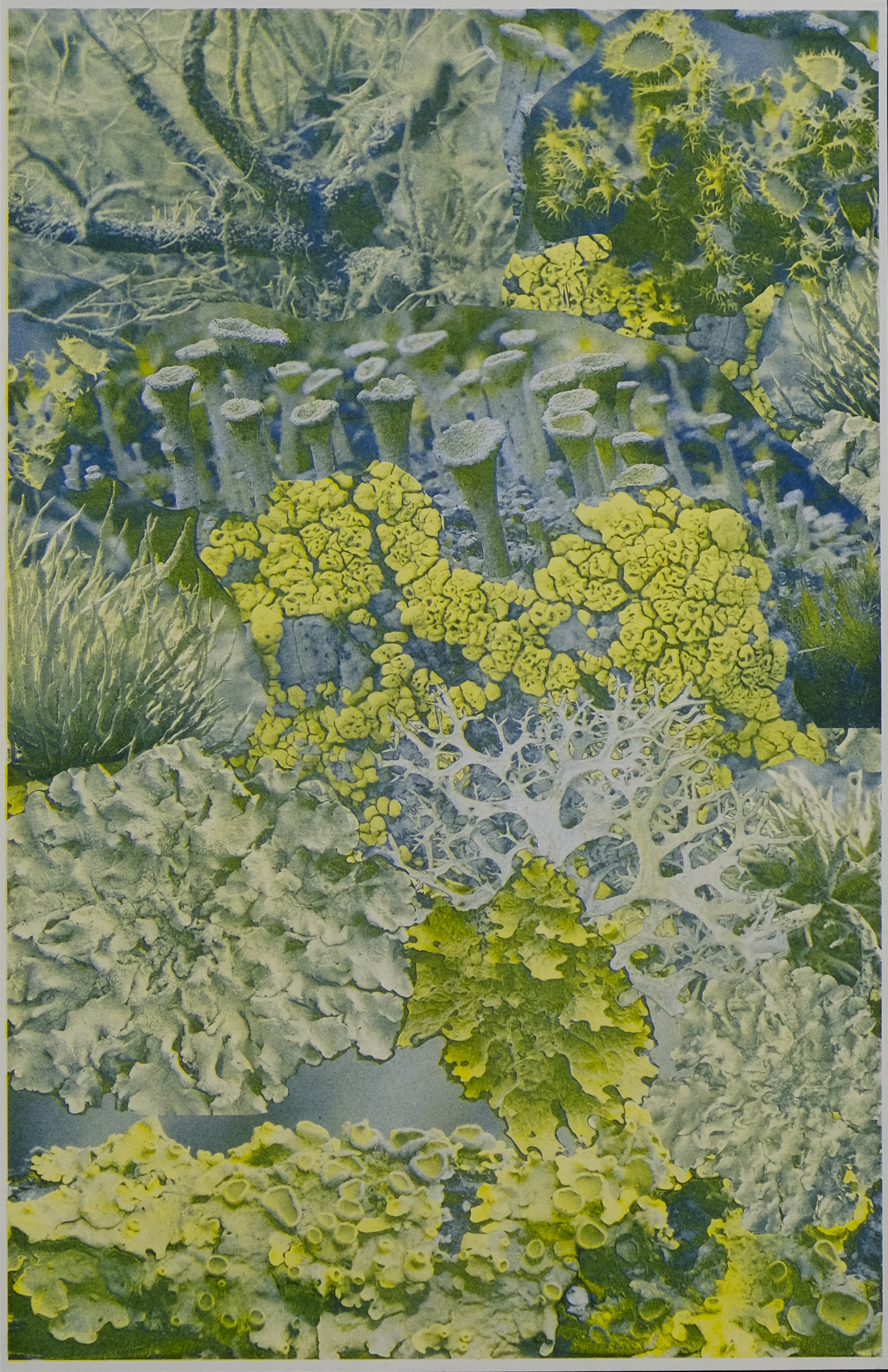
I can’t say I’ve ever paid too much attention to lichen in my life or thought about it ever, but after visiting the Join the Enlichenment exhibit at the Santa Barbara Botanic Garden, lichen has been on my mind. This exhibit at the Santa Barbara Botanic Garden, open through December 7, invites all to learn about the unnoticed, underappreciated organisms found on rocks, trees, and soil.
The Santa Barbara Botanic Garden has been a hub for scientific research and learning for nearly a century. The garden is divided into sections such as Desert, Meadow, and Redwoods. Island View, a section that features wild plants unique to the Channel Islands and Baja California, is home of the new lichen exhibit.
Walking into the exhibit, one thing is clear: This exhibit combines art with science to help visitors understand the world of lichen. Purple netting hanging on the exhibit wall mimics the design of a lichen, and the purple dye used was made with lichen. On the left wall, zines created by garden staff with the help of Bird in Hand Press, are displayed, showcasing different lichen niches that each staff member chose to highlight.
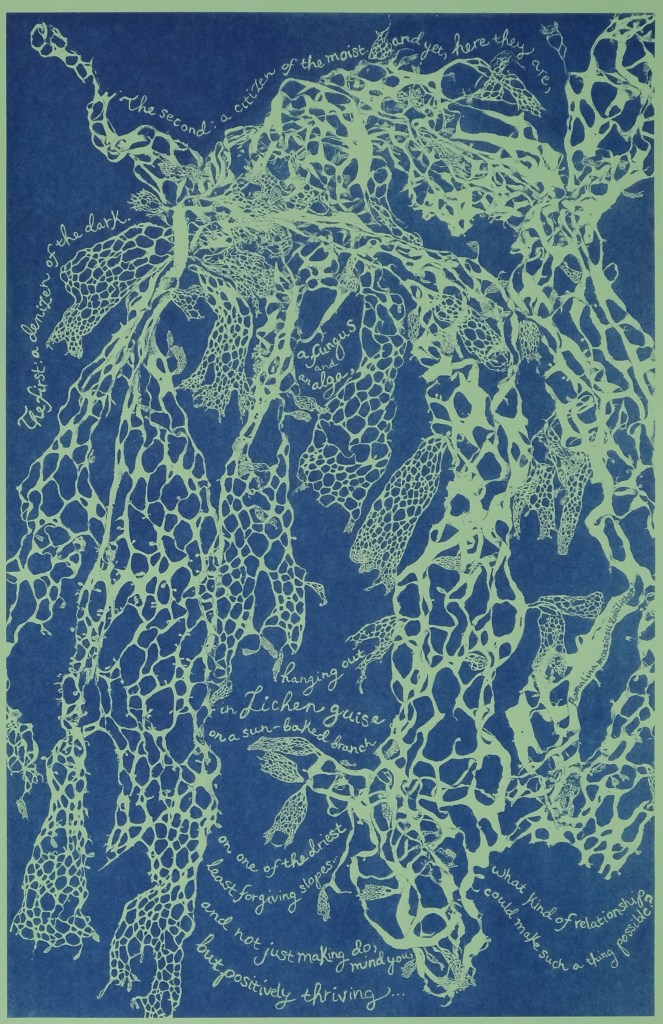
One zine, made by José Flores, an invertebrate biodiversity technician at the garden, focuses on sea-fog lichen of San Luis Obispo County. One page read, “Like a lighthouse standing guard at the edge of the ocean you can find many species of Sea-Fog Lichen [Niebla sp.] growing on rocks and soil along the coast.” The zine even unfolds into a poster with a list of songs that make up a playlist for a foggy day listen.
The exhibit explains how the workers obtain, identify, and then sort organisms found throughout California or even the world. The oldest lichen in the garden’s archive is from 1834 from Sweden. Kevin Spracher, the garden’s interpretation and exhibitions curator, said, “I was driven to share some of the behind-the-scenes work happening in the garden’s lichenarium. Lichens invite us to notice the small, often overlooked details that make ecosystems thrive.”
The research and understanding that comes from these small organisms is undeniable, prompting climate change research. “All these plants that have been collected from all over the world, mostly California and Channel Islands, they’re pressed and dried over the last like 100-plus years,” Spracher said, “It’s kind of like a time-lapse photography, where you can see how all these populations are changing over time.”
To further interact with the exhibit, an interactive art station is available for visitors to make their own zines or layered prints inspired by the collaborative nature of lichens. “It’s the kind of thing where you can follow what you’re interested in, but also keep coming back to make another print or make another zine and find new ways to engage with it. That’s what we want the garden to be, a community resource,” Spracher said.
For more information about the Santa Barbara Botanic Garden, visit sbbotanicgarden.org.




You must be logged in to post a comment.