

Before the opening of the 1972 Summer Olympics in Munich, I began to realize that this idealistically conceived gathering of the world’s athletes might not offer me an escape from the world’s problems.
Waiting in line with other journalists to get our credentials, I was confronted by a European reporter who noticed I was an American. He began scolding me about the Vietnam War.
Hey, aren’t we all here to enjoy watching beautiful young people strive to run faster, jump higher, and be stronger in a brotherly fashion?
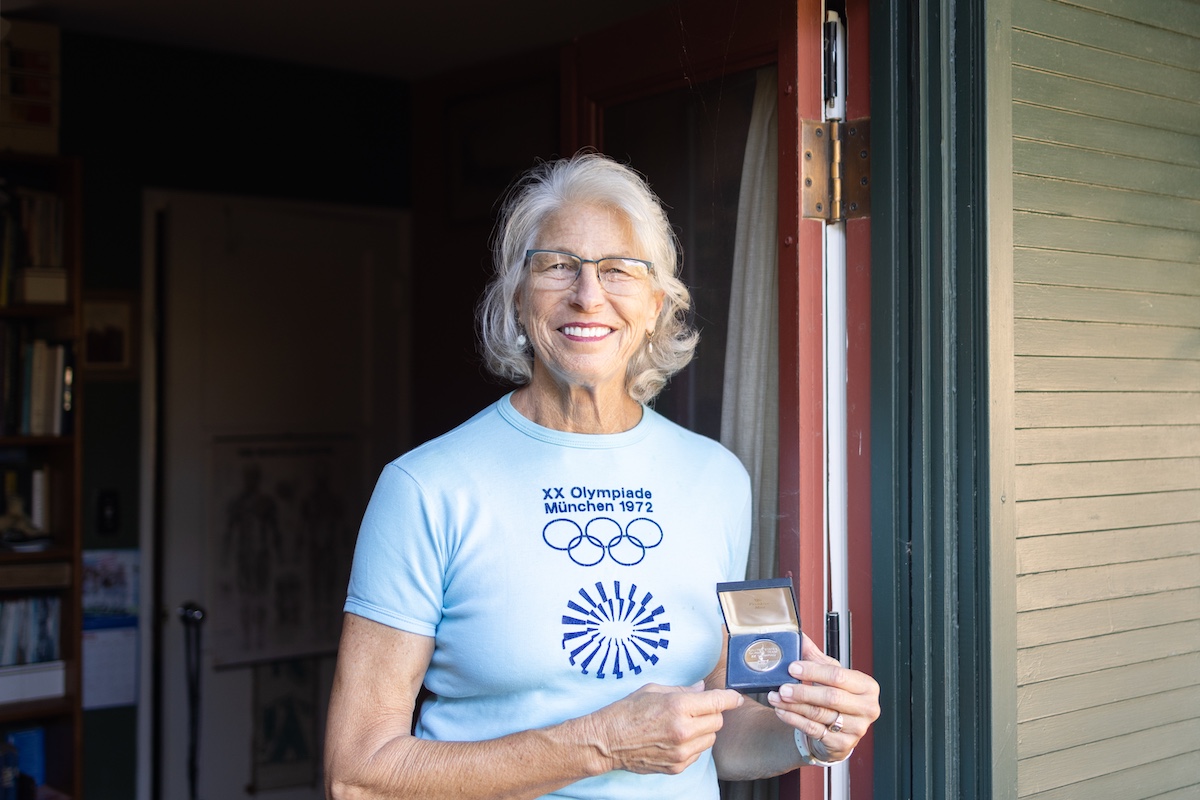
The opening ceremonies bolstered that optimism, as athletes from 121 nations paraded around the track in the gleaming new stadium. Jane Frederick was one of them, a 20-year-old U.S. track and field athlete, an Olympic first-timer like me.
“I was on cloud nine, like walking in sparkly stars,” she said. “I remember the pastel colors, beautiful lavender, turquoise, orange and yellow, pink. It was so festive. This was my first international competition, the first time I wore a U.S.A. uniform. I felt like one of those kids dancing in the flower fields high in the Alps.”
For 10 days, Germany’s vision of a “Games of Peace and Joy” prevailed, in vivid contrast to the militarized Nazi Olympics of 1936. ABC televised the events to the United States, extracting drama from the competition for medals. On September 4, the network featured swimmer Mark Spitz winning his seventh gold medal.
The next day, the show was murderously interrupted.
September 5, a film released early this year, tells what happened from the perspective of the ABC crew who found themselves facing the life-and-death drama of Black September terrorists slipping into the Olympic village, slaying two Israeli Olympians and taking nine hostages.
While the network was smuggling reporters and cameras close to the scene, I was in the press village — some 300 yards away — as a throng of sports writers received periodic briefings from Hans Klein, the press chief of the organizing committee. There were many conversations. A local reporter predicted it would “end bloody” because he was certain the German authorities would not give in to the terrorists.
Jane Frederick spent the day on a tour of the Alps in Innsbruck, Austria, and did not learn of the invasion until boarding an evening train back to Munich. Arriving at the Olympic Village, she was stopped at the entrance.
“A translator said, ‘I’m sorry, we have to close everything down because they are making a decision whether to shoot it out or transport them to the airport.’” she recalled. “I was stuck on a bridge. I look down and there’s a huge transport helicopter. It’s about 9:30. All these military buses start coming and going. Eventually one of them stops directly under me, opens up doors, and the hostages and terrorists walk out to get into that helicopter.”
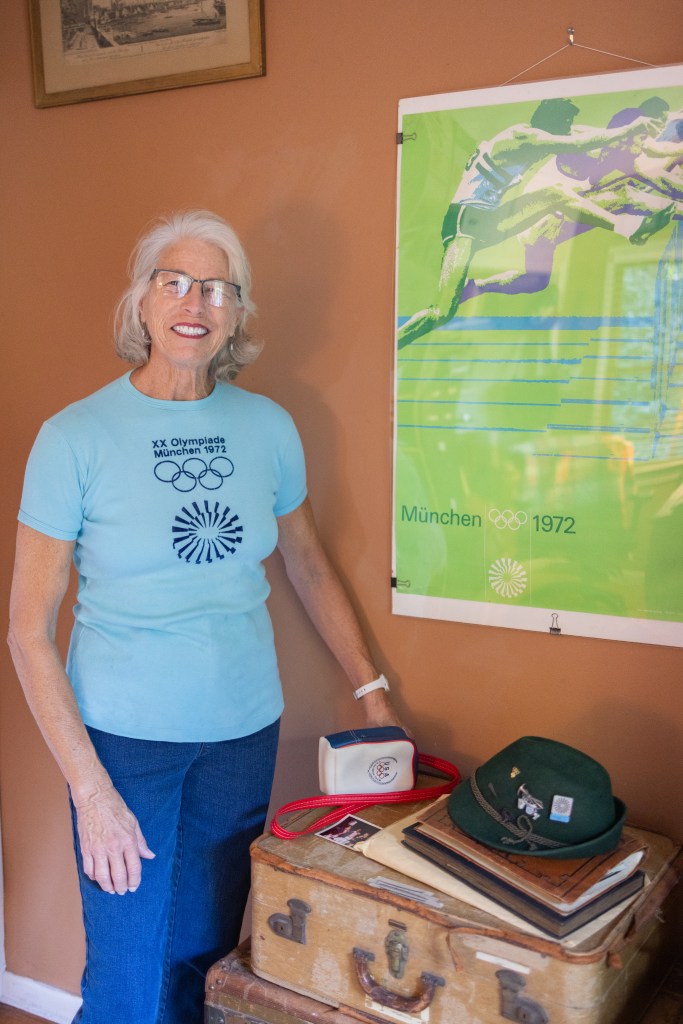
While she was peering from above, Frederick dropped a souvenir Tyrolean hat. A soldier picked it up. A second helicopter was on the other side of the entrance, and both of them thundered off into the sky.
“They open up the gates; the guy brings me my hat; they let us go into the village,” Frederick said. “We had to be escorted to get food and then had to stay in our rooms.”
Meanwhile, in the press lounge, I gathered with others watching televisions that carried the ABC news feed. There were reports of a shootout at the military airport where the helicopters had taken the hostages and their captors. A rumor spread that a successful operation had freed the Israelis. It wasn’t until 3 a.m. that the grim truth was revealed. ABC anchor Jim McKay said, “They’re all gone.”
Frederick received a different spin at 5 a.m. “The Village Voice, a little newspaper for the athletes, was slipped under the door,” she said. “It says all the hostages are safe. I went to the athletes’ lounge. Everybody was watching TV. That’s when we all learned the truth. The main thing for me was, what a betrayal by the Germans, telling us everything was okay.”
Olympic officials, led by outgoing International Olympic Committee president Avery Brundage, showed minimal sensitivity by suspending the Games for a day and holding a memorial. Frederick, who had already competed in the women’s pentathlon — a 21st-place finish — sympathized with the athletes who had yet to compete. “I felt it was proper to continue the Games,” she said. “But nothing would ever be the same.”
Rain started to fall during the remaining days in Munich, and misfortune befell several athletes. Jim Ryun, the world-record holder in the mile who had trained in Santa Barbara, got into a traffic jam on the track, stumbled, and fell out of contention in the 1,500 meters. The U.S. men’s basketball team, 62-0 all-time in the Olympics, lost to the Soviets in a controversial finish.
But as U.S. player Kenny Davis later told Sports Illustrated: “Think of being in a helicopter with your hands tied behind your back and a hand grenade rolling toward you … and compare that to not getting a gold medal. If that final game is the worst injustice that ever happens to the guys on that team, we’ll all come out of this life pretty good.”
After winning the college women’s pentathlon title while competing for Colorado in 1973, Frederick moved to Santa Barbara to train with Olympic hopefuls at the UCSB track. She experienced the fallout from Munich at Montreal in 1976. The Olympic Village was like a prison guarded by armed soldiers. “It was so depressing,” she said. She placed seventh in the pentathlon.
The U.S. boycott kept Frederick out of the 1980 Olympics in Moscow, and an injury at the Olympic Trials knocked her out of the 1984 L.A. Games. UCSB was then the site of a satellite Olympic Village for rowing and canoeing athletes, who competed at Lake Casitas. A double chain-link fence with electronic sensors encircled the campus dormitories.
Atlanta’s Centennial Olympics in 1996 were marred by an act of domestic terrorism, a bomb that was detonated in a public park.
The Olympics will return to Los Angeles in 2028, and the city hopes it can recapture the spirit of the 1984 Games, which went surprisingly well. The jingoism of the “U-S-A” chants was a bit excessive, but the American athletes did perform splendidly without the presence of the boycotting Soviets and East Germans.
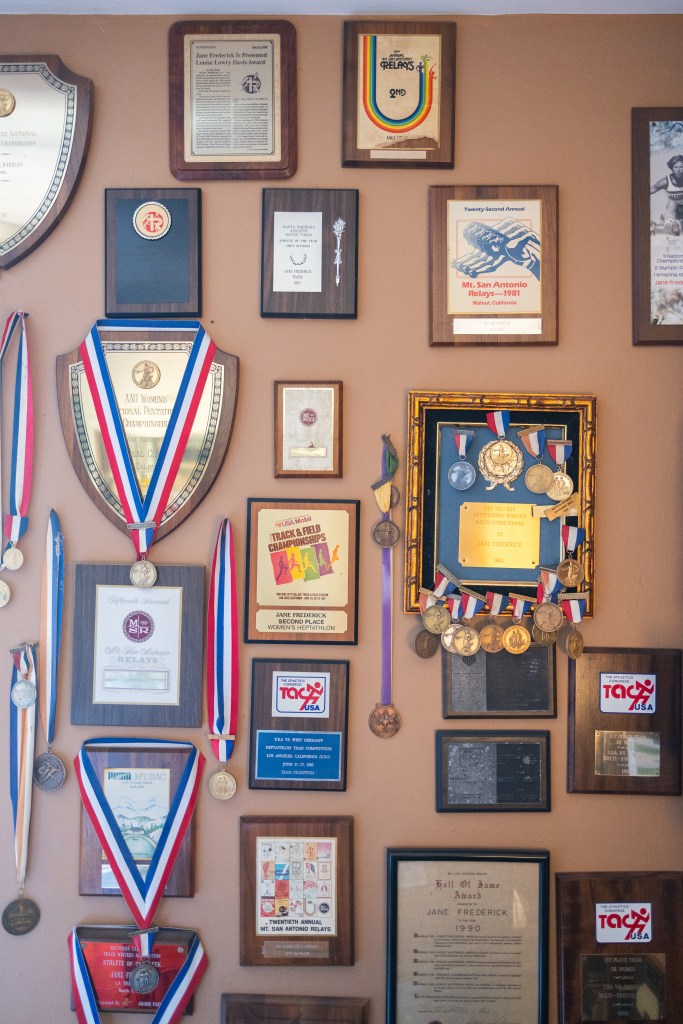
Jane Frederick continued to compete internationally after 1984. She excelled in the heptathlon, which replaced the pentathlon as the women’s multi-event test, setting an American record and increasing her haul of U.S. championships to nine. She retired from competition after earning a bronze medal at the 1987 World Championships. Jackie Joyner-Kersee, who had broken her record, won the title.
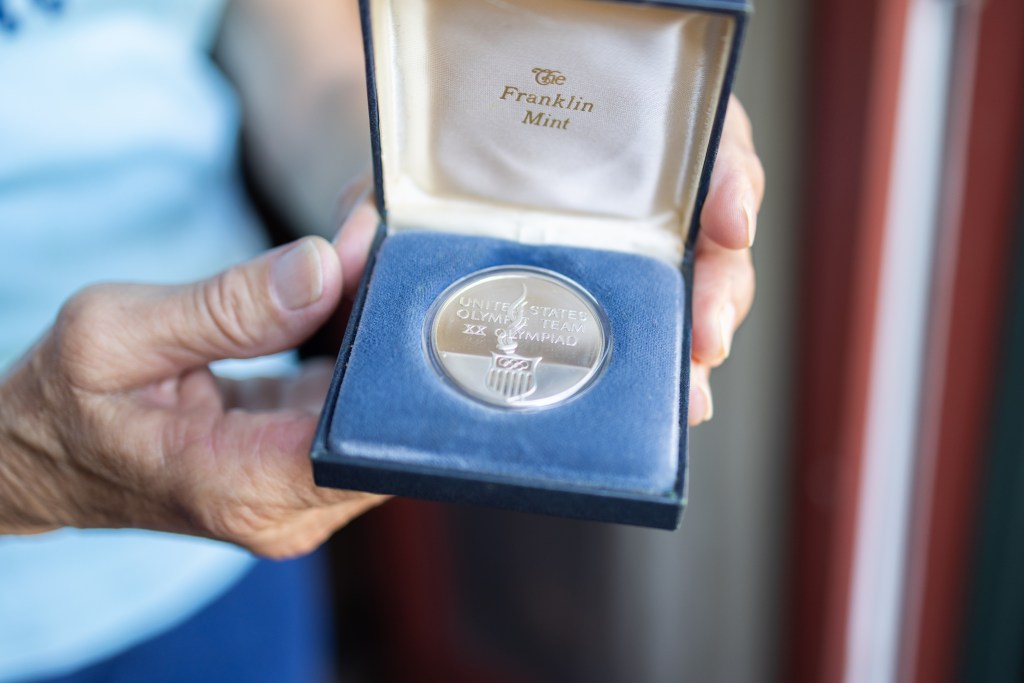
Fully retired after years of coaching and training, Frederick has settled in her Santa Barbara home. No Olympic medals are on display, but she has a collection of pins that she exchanged in friendship with other athletes, and powerful memories of the best and worst of times at Munich in 1972.
Related Posts





Premier Events

Sat, Mar 28
12:00 PM
Santa Barbara
Spring Fragrance Release Party
Sat, Mar 28
7:15 PM
Santa Barbara
Santa Barbara Stargazing Tour

Sat, Mar 28
All day
Santa Barbara
Coffee Culture Fest
Sat, Mar 28
11:00 AM
Santa Barbara
NO KINGS 3!

Mon, Mar 30
6:00 PM
Santa Barbara
Art4Grief Support Group 2nd 2-Week Session
Thu, Apr 02
2:00 PM
Santa Barbara
S.B. Rescue Mission Annual Easter Feast

Thu, Apr 02
5:00 PM
Santa Barbara
Exhibit Opening: The Santa Barbara Independent: ‘Covering 40 Years’

Sat, Apr 04
9:00 AM
Santa Barbara
Mesa Harmony Garden Spring Plant Sale
Sat, Apr 04
9:00 AM
Santa Barbara
Passport Fair, hosted by Congressman Salud Carbajal

Sun, Apr 05
10:00 AM
Santa Barbara
Easter Brunch at Brass Bear

Thu, Apr 09
6:00 PM
Santa Barbara
Chaucer’s Books – Poetry Night

Sat, Apr 11
3:00 PM
Santa Barbara
SB Music Club Free Concert Saturday 🎶
Sat, Mar 28 12:00 PM
Santa Barbara
Spring Fragrance Release Party
Sat, Mar 28 7:15 PM
Santa Barbara
Santa Barbara Stargazing Tour
Sat, Mar 28 All day
Santa Barbara
Coffee Culture Fest
Sat, Mar 28 11:00 AM
Santa Barbara
NO KINGS 3!
Mon, Mar 30 6:00 PM
Santa Barbara
Art4Grief Support Group 2nd 2-Week Session
Thu, Apr 02 2:00 PM
Santa Barbara
S.B. Rescue Mission Annual Easter Feast
Thu, Apr 02 5:00 PM
Santa Barbara
Exhibit Opening: The Santa Barbara Independent: ‘Covering 40 Years’
Sat, Apr 04 9:00 AM
Santa Barbara
Mesa Harmony Garden Spring Plant Sale
Sat, Apr 04 9:00 AM
Santa Barbara
Passport Fair, hosted by Congressman Salud Carbajal
Sun, Apr 05 10:00 AM
Santa Barbara
Easter Brunch at Brass Bear
Thu, Apr 09 6:00 PM
Santa Barbara
Chaucer’s Books – Poetry Night
Sat, Apr 11 3:00 PM
Santa Barbara


You must be logged in to post a comment.