
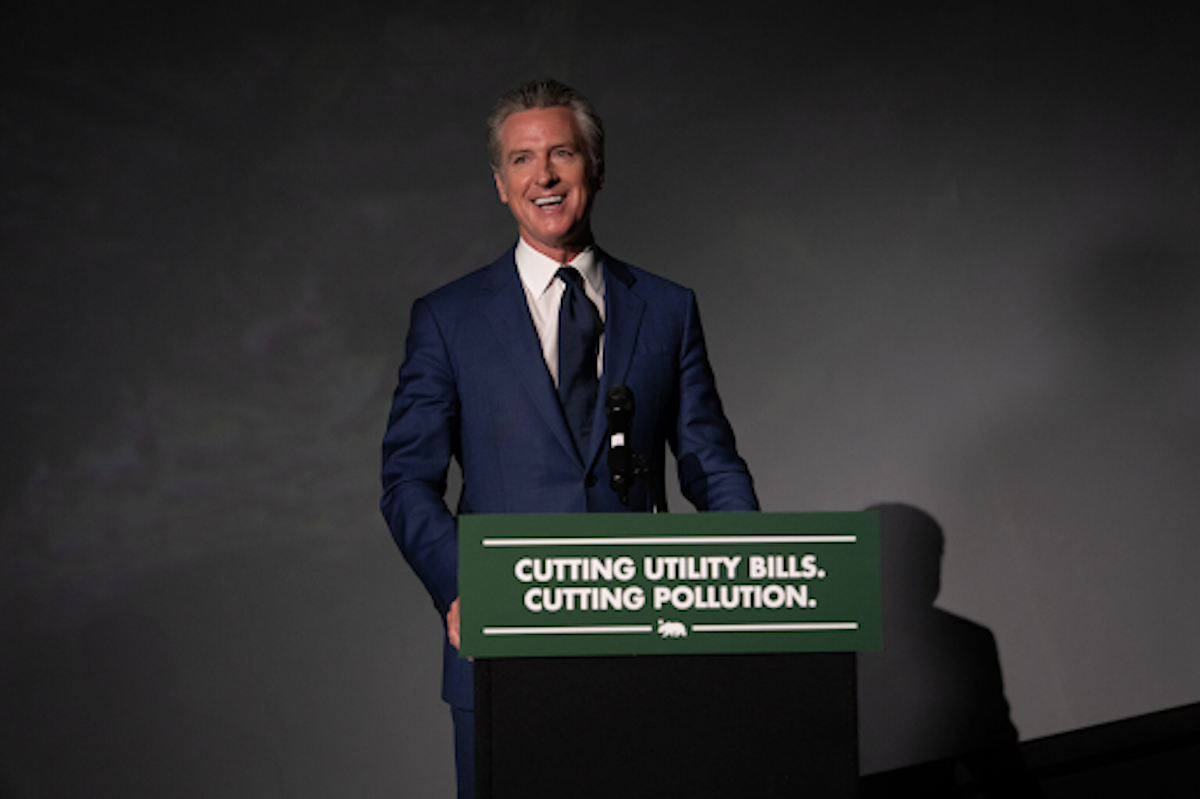
A new set of climate bills signed into law last month by Governor Gavin Newsom is already rippling through California’s energy landscape — and according to former Santa Barbara County supervisor Das Williams, the Central Coast stands to gain.
Newsom’s package, signed in mid-September at the California Academy of Sciences in San Francisco, includes an extension of the state’s cap-and-trade program (now dubbed “cap-and-invest”) through 2045, provisions for stabilizing gas prices, and controversial support for expanded drilling in Kern County. But for advocates of green energy, one bill in particular — Assembly Bill 825 (AB 825) — signals legislative progress: It lays the groundwork for a regional electricity market across Western states.
“This is important because the [Trump] administration’s attempts to kill clean energy will stop some projects that we need to avoid higher prices on energy in general,” Williams told the Independent. “Despite the terrible policies that have been enacted by the current Congress and president, clean energy is still winning.”
Williams, who now works as the senior advisor for policy and legislative affairs for the public agency Central Coast Community Energy (3CE), was part of the Pathways coalition — an initiative backing AB 825 and advocating for multi-state collaboration on electricity markets.
“California is once again leading the way, and in a manner that will help other Western states reduce their emissions growth,” Williams said. “They want to buy some of our very affordable solar …. We want to buy some of their wind and hydro, so that our grid can be carbon free for longer periods of time.”
The Pathways market expansion will allow solar-rich California to sell excess electricity to neighboring states during the daytime, while importing wind and hydropower to maintain clean supply during evenings and peak usage periods. This is important because while solar has many sustainable strengths, its weakness is that the sun does not shine 24 hours and therefore, solar does not produce energy into the night.
Though the bill has been signed into law, Williams noted, the infrastructure and regulatory framework could take years to implement.
Still, the projected impact is significant: Studies suggest an 11.2 percent reduction in California’s emissions, and a one-third reduction in emissions growth across other western states. The program is also expected to save California ratepayers about $1 billion.
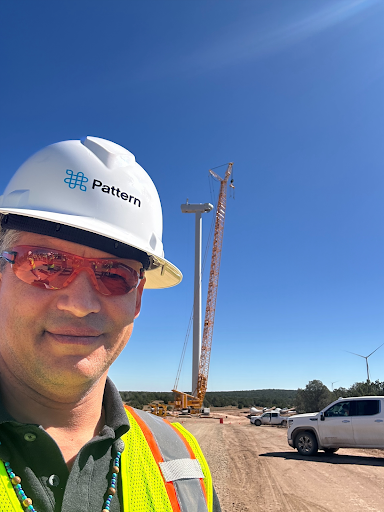
Williams was quick to remind that economic gains are inextricably tied to individual consumer behavior. “Keep the economic momentum going by using energy in the middle of the day, and minimizing gas usage by using transit, biking, or buying an EV,” he said.
Central Coast Community Energy currently provides electricity to 30 cities and five counties, including Santa Barbara. The agency is governed locally and reinvests revenues into clean energy projects and customer savings. In recent years, it has emerged as a major regional player in California’s push for grid decarbonization.
Newsom’s broader legislative package was hailed by state leaders as a pragmatic compromise aimed at balancing affordability with long-term emissions reduction. “If you pay utility bills and you want them lower, you win,” said State Senate President Pro Tem Mike McGuire during the September 13 signing event. “If you drive a car and hate gas price spikes, you win.”
Some environmental groups criticized the inclusion of Senate Bill 237, which allows up to 2,000 new oil wells per year in Kern County through 2036. Williams acknowledged the mixed signals, but there are substantial benefits to be reaped from the bill in the market of clean energy.
“In the first six months of this year alone, the largest expansion of solar energy took place in this country,” he said, “a 37.6 percent increase over last year’s record-breaking numbers.”
While policy on a federal level remains unsupportive of prioritizing green energy sources, Williams said the momentum should be channeled locally. “If you’ve been wallowing in the darkness of our times, I have something to lift your spirit,” he said. “Clean energy is still winning.”
Related Posts




Premier Events
Sat, Mar 28
7:15 PM
Santa Barbara
Santa Barbara Stargazing Tour

Wed, Mar 18
8:00 PM
Santa Barbara
Horse to Water & Salvidoria

Thu, Mar 19
1:30 PM
Goleta
Film Club: “Intruder in the Dust,” 1949
Thu, Mar 19
6:00 PM
Santa Barbara
Chaucer’s Book Talk & Signing: Elizabeth Gilchrist

Thu, Mar 19
6:30 PM
Santa Barbara
Wildflowers and other Wonders
Thu, Mar 19
6:30 PM
Santa Barbara
Resist & Rise: A Community Vigil to Protect Our Coast from Sable Pipeline

Thu, Mar 19
8:00 PM
Santa Barbara
Nefesh Mountain

Fri, Mar 20
9:00 AM
Santa Barbara
The 78th Santa Barbara International Orchid Show 2026

Fri, Mar 20
8:00 PM
Santa Barbara
The Framers & False Puppet with DJ Ringworm Radio

Sat, Mar 21
11:00 AM
Santa Barbara
Film Screening for World Down Syndrome Day!

Sat, Mar 21
12:00 PM
Santa Barbara
The Rack Grand Opening Party
Sat, Mar 28 7:15 PM
Santa Barbara
Santa Barbara Stargazing Tour
Wed, Mar 18 8:00 PM
Santa Barbara
Horse to Water & Salvidoria
Thu, Mar 19 1:30 PM
Goleta
Film Club: “Intruder in the Dust,” 1949
Thu, Mar 19 6:00 PM
Santa Barbara
Chaucer’s Book Talk & Signing: Elizabeth Gilchrist
Thu, Mar 19 6:30 PM
Santa Barbara
Wildflowers and other Wonders
Thu, Mar 19 6:30 PM
Santa Barbara
Resist & Rise: A Community Vigil to Protect Our Coast from Sable Pipeline
Thu, Mar 19 8:00 PM
Santa Barbara
Nefesh Mountain
Fri, Mar 20 9:00 AM
Santa Barbara
The 78th Santa Barbara International Orchid Show 2026
Fri, Mar 20 8:00 PM
Santa Barbara
The Framers & False Puppet with DJ Ringworm Radio
Sat, Mar 21 11:00 AM
Santa Barbara
Film Screening for World Down Syndrome Day!
Sat, Mar 21 12:00 PM
Santa Barbara


You must be logged in to post a comment.