

Sign up to get Matt Kettmann’s Full Belly Files, which serves up multiple courses of food & drink coverage every Friday, going off-menu from our regularly published content to deliver tasty nuggets of restaurant, recipe, and refreshment wisdom to your inbox
My introduction to Baja California wine came by accident. It was about 25 years ago while on a surfing/beach-camping/primarily drinking trip, when I was stunned to come around some corner outside of Ensenada and see grapevines rolling through the desert landscape.
I was far from a wine expert at that time, and I only vaguely recall exploring a rustic bodega. My memories of shucking slippery abalone, sleeping on the sand, guzzling rotgut mezcal (con gusano), and kicking bioluminescent whitewash toward star-soaked skies left much more of an impression on that trip.
I’ve since tasted both fantastic and forgettable Baja wines, mostly served to me at restaurants and wine bars in San Diego, Mexico City, and Oaxaca. I’ve been impressed by many of the whites, pinks, and bubbles, though most of the reds have disappointed — like they’re trying too hard to make big, heavy wines with the wrong grapes in the wrong climate. An aged Baja grenache I bought a decade ago at Pujol was simultaneously the most expensive and only bad part of the meal.
I’m embarrassed to say that I haven’t yet explored the Valle de Guadalupe, the epicenter of Baja wine country where the food/drink/design/hospitality scene has been on fire for about a decade. I’ve declined a handful of invitations from PR agencies representing various properties, largely because I don’t feel like I have a trustworthy contact of my own there. Sponsored press trips sometimes skirt the truly happening places to promote paying clients, and I don’t want to blow my proper Baja wine introduction on one of those.
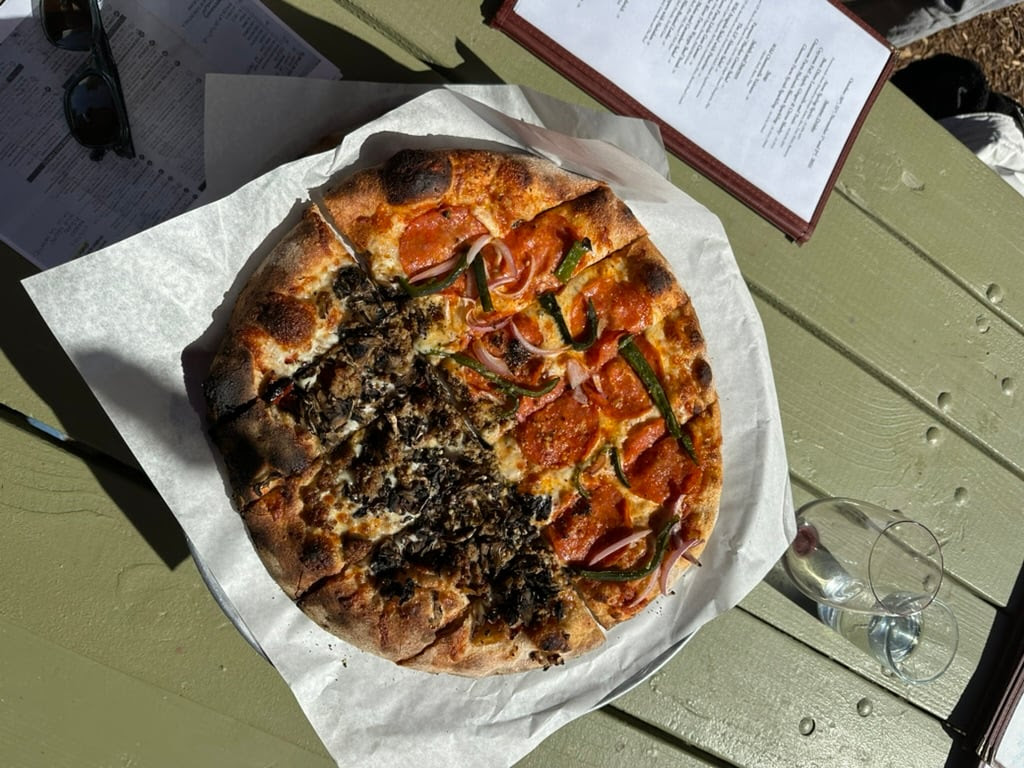
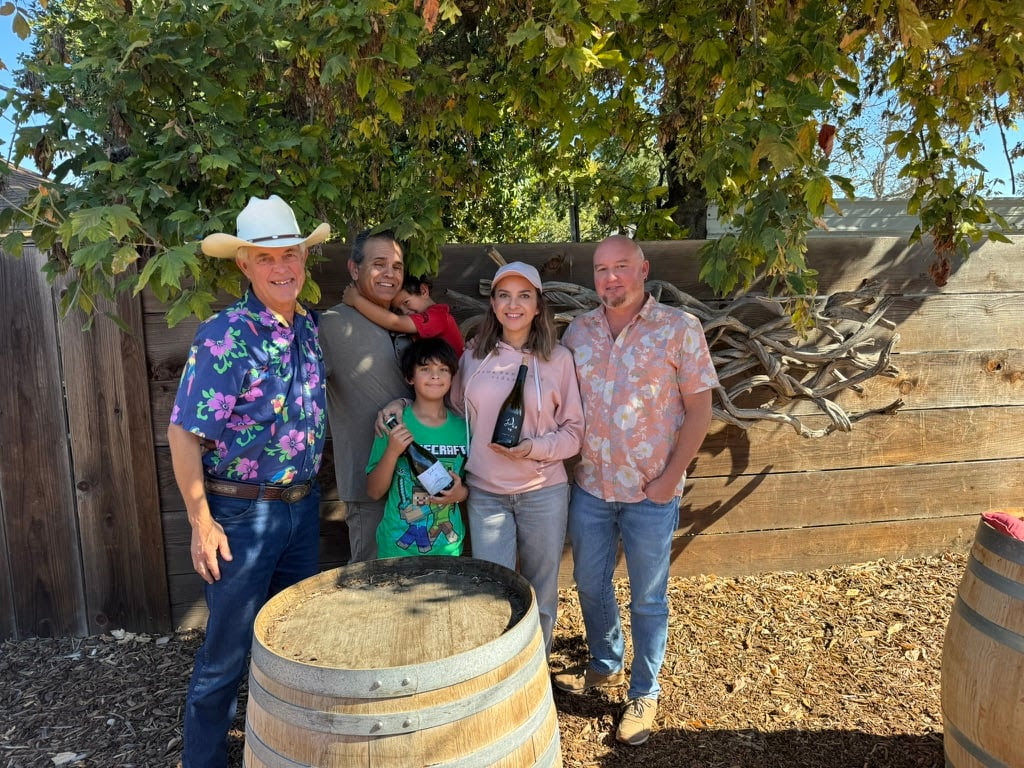
So when my good friend Peter Work of Ampelos Cellars — who I made my own Periodista wine with from 2012 to 2019 — said he had some Baja winemaker friends coming to town, I was there. That we’d be eating Saturday lunch at Full of Life Flatbread in Los Alamos was just the melty cheese on the pie.
Those friends are Verónica Santiago and Nathaniel Malagón, the proprietors of Viñedos Mina Penélope. Located about 20 minutes north of Ensenada and just five miles from the Pacific Ocean, Mina Penélope makes about 1,500 cases a year of about 10 different wines. Most are grown on the property that Santiago’s family planted in 2007, which is one of the most coastally influenced vineyards in the region.
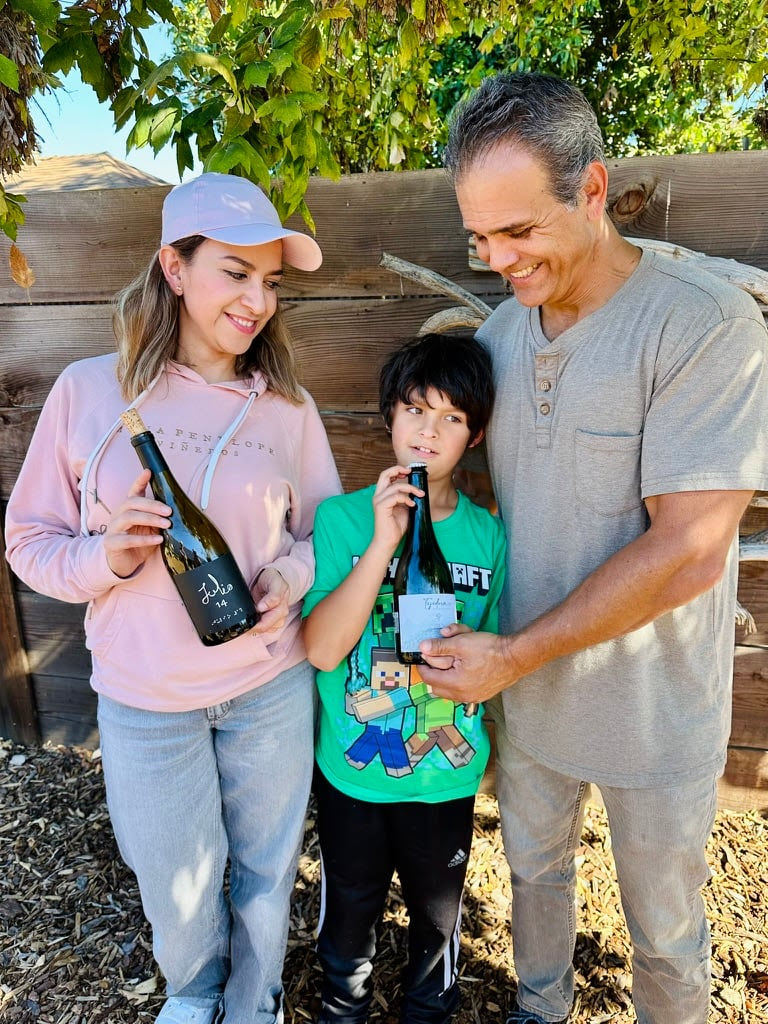
Originally from Jalisco, Santiago’s family moved north decades ago to Ensenada, where she was born and raised. She was serious about ballet as a young girl before learning about wine. “It was like love at first sight,” said Santiago.
She studied food science in Monterrey, Mexico, and then got her masters at the University of Adelaide in Australia, working harvest in the Barossa Valley. She stopped for a spell at Joseph Phelps in the Napa Valley before returning to Ensenada. When she was gone, her mom had purchased a ranch in the valle as a family getaway. They’d also put in wine grapes, which is what drew her home.
“I have to figure this out,” realized Santiago, who started working for Vinisterra, where winemaker Christoph Gaertner became a mentor. “He’s one of the pioneers,” she said.
That’s where she met Malagón, who was raised in San Juan Capistrano. “I grew up primarily on what was formerly known as O’Neill Ranch, which was a big cattle ranch, like the Yellowstone of Orange County,” he said. “You could actually ride your horses out by Disneyland, and it was still orange groves. You could fish and hunt.”
But Malagón is also the fourth generation of his family to tend to a vineyard and ranch in a hotter corner of the valle, just outside of the town of Guadalupe. That land was purchased by his Guanajato-residing great-grandfather in the 1960s, and it was already home to ancient bush vines of grenache that today are 92 years old.
By the time Malagón decided to move to the property, many of the old vines were riddled with termites and needed work. He relied on heavy chemicals to do the job, which saved the vines, but made him very sick for months. That put him on the path toward organic, sustainable, and regenerative farming, which is starting to catch on across the conventionally farmed region.
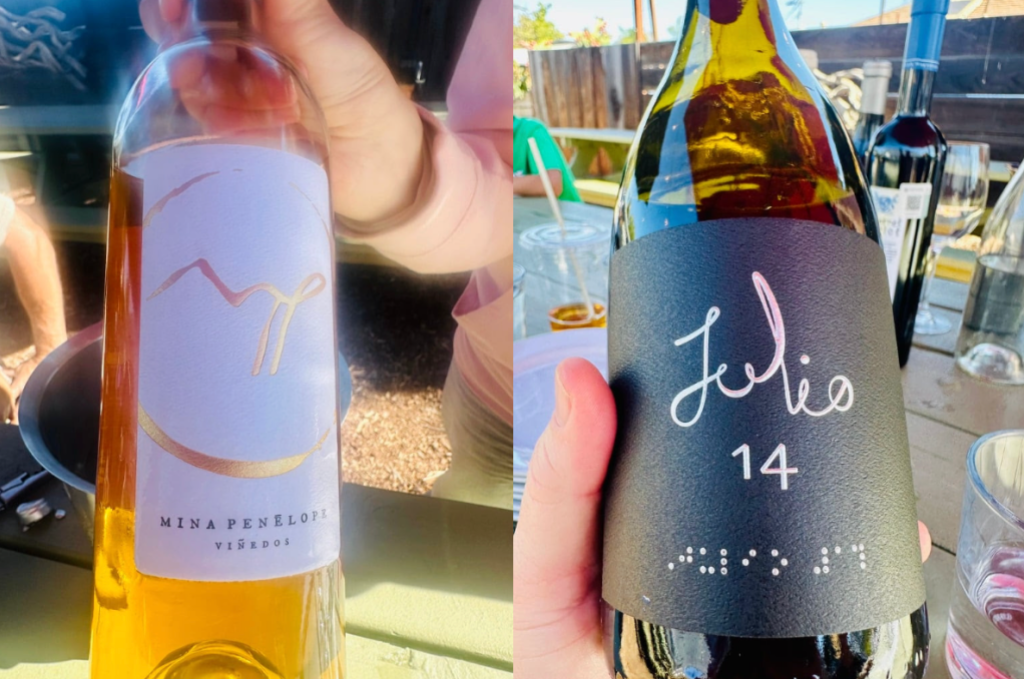
When the two met in 2009, they clicked both in love and on wine philosophy. They put their beliefs into the bottle by launching Mina Penélope in 2014, and are now determining which vines aren’t great for their vineyard — like cabernet sauvignon — and which might be better choices, like aglianico.
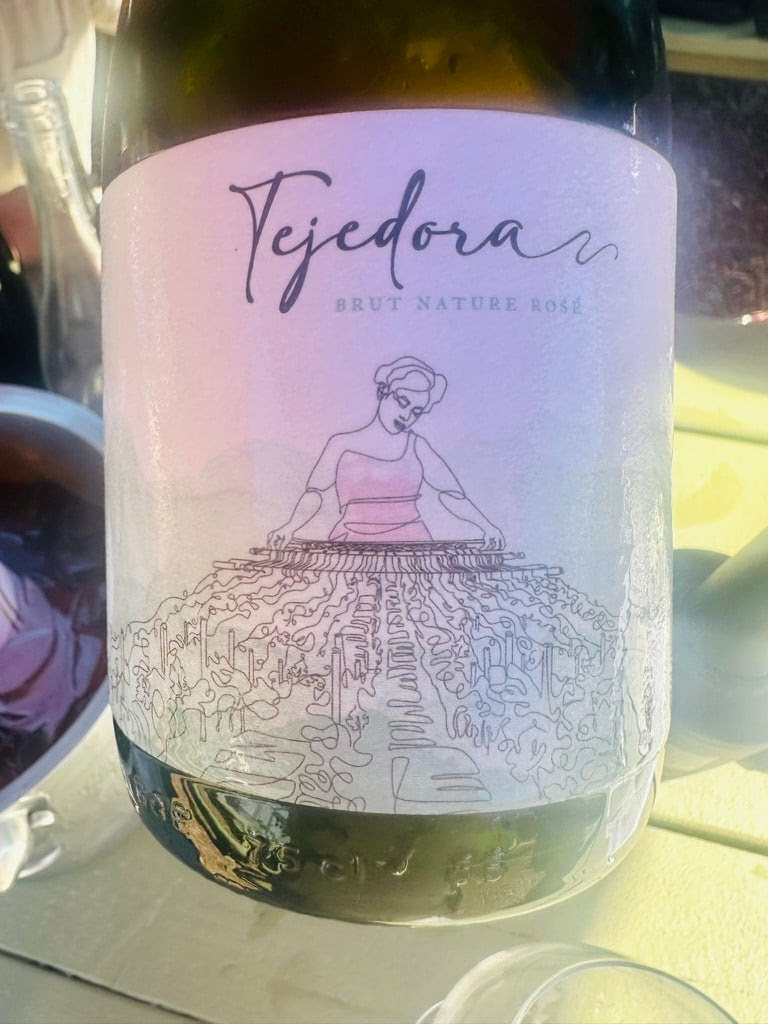
That deeply hued Italian red variety was the base of our first wine of the day: a sparkling aglianico called “Tejedora” that was certainly the first sparkling aglianico I’ve ever seen — zesty, lightly plummy, a brilliantly transparent magenta color. Its bottle features a woman weaving a shroud, which is a nod to the Penelope of Odyssey fame, and to Verónica’s middle name.
Next up was an orange (or amber, as they say) wine made from sauvignon blanc, tremendously aromatic on the nose and viscous while grippy on the palate. It was one of the better skin-contact wines I’d ever had.
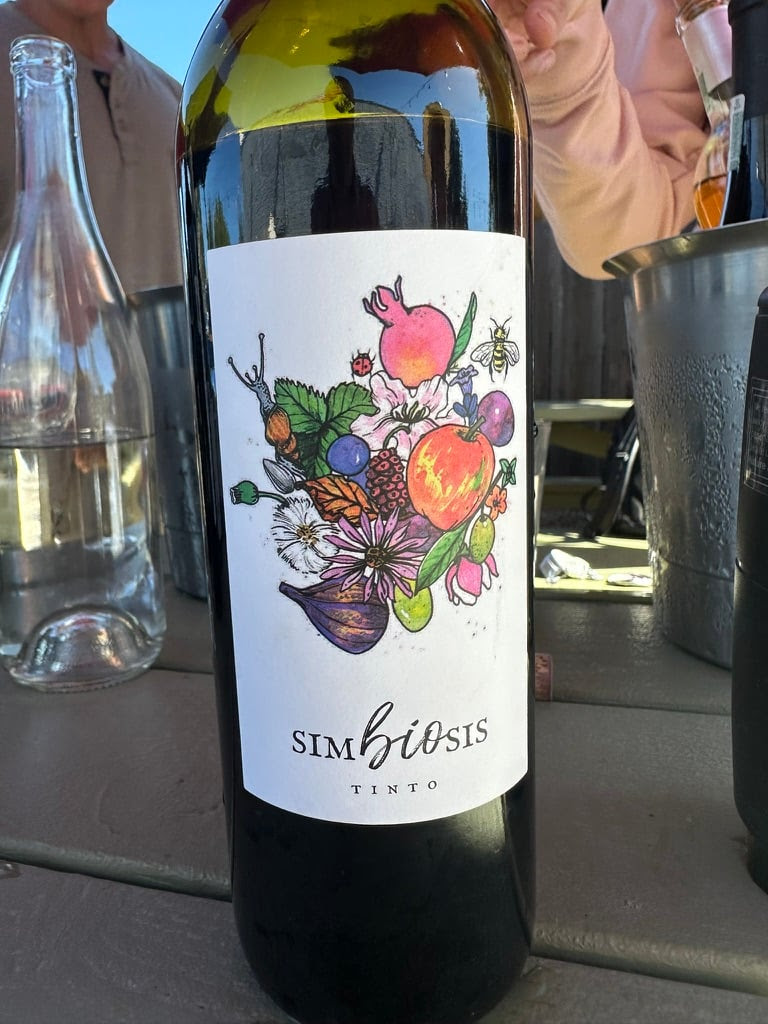
We then tried two reds, both of which were much fresher than any of the other Baja reds I’ve had. The Simbiosis Tinto 2020 was a combination of cabernet sauvignon from Santiago’s ranch and 30 percent that old vine grenache from Malagón’s family property. (His dad farms it right now for another brand, but he usually gets at least some of the old vine fruit.) At just 12.1 percent, it was bright and refreshing, nothing like those heavy things I’d had in the past.
The last Mina Penélope wine was the 2022 vintage of their Julio 14, a traditional Rhône blend of syrah, grenache, and mourvèdre — no doubt in part influenced by Santiago’s time Down Under. It was rich and concentrated, as you’d expect from a GSM, but with a maritime-washed energy that reminded me of cooler climates Rhônes from up here.
“When you go to Ensenada, what’s the best thing to have? It’s seafood,” said Santiago, explaining her style. “That’s what we’re thinking about when we make our wine.”
We finished over pizzas, salad, and bites of wagyu beef from the Flatbread kitchen, talking about native yeast usage, grapes that might work down there (vermentino? clairette blanche?), and the booming Baja hospitality scene. Like many of their neighboring bodegas, Mina Penélope includes an on-site restaurant. Theirs is a much lauded spot called Malva, run by Michelin star–winning chef Roberto Alcocer of Valle in Oceanside.
By that point, I’d heard enough. With new friends who make great wines, care about their landscape, and partner with one of the best restaurants around, I’ve lost excuses to not visit the valle. Expect to read that report here, whenever it happens.
From Our Table
Here are some stories you may have missed:
- Leslie Dinaberg divulged some of the beverages she’s enjoying at home.
- Leslie also reports on the Mother Dough Bagels x DJ Javier x MCASB dinner.
- And Leslie again unveils some of the new menu highlights from Corazón Comedor.
- And I did this week’s cover story on robots in Santa Barbara, which started as a small piece on Meet Up Chinese before snowballing into a full-fledged feature. My favorite part might be my headline: Are These the Droids We’re Looking For?





You must be logged in to post a comment.