

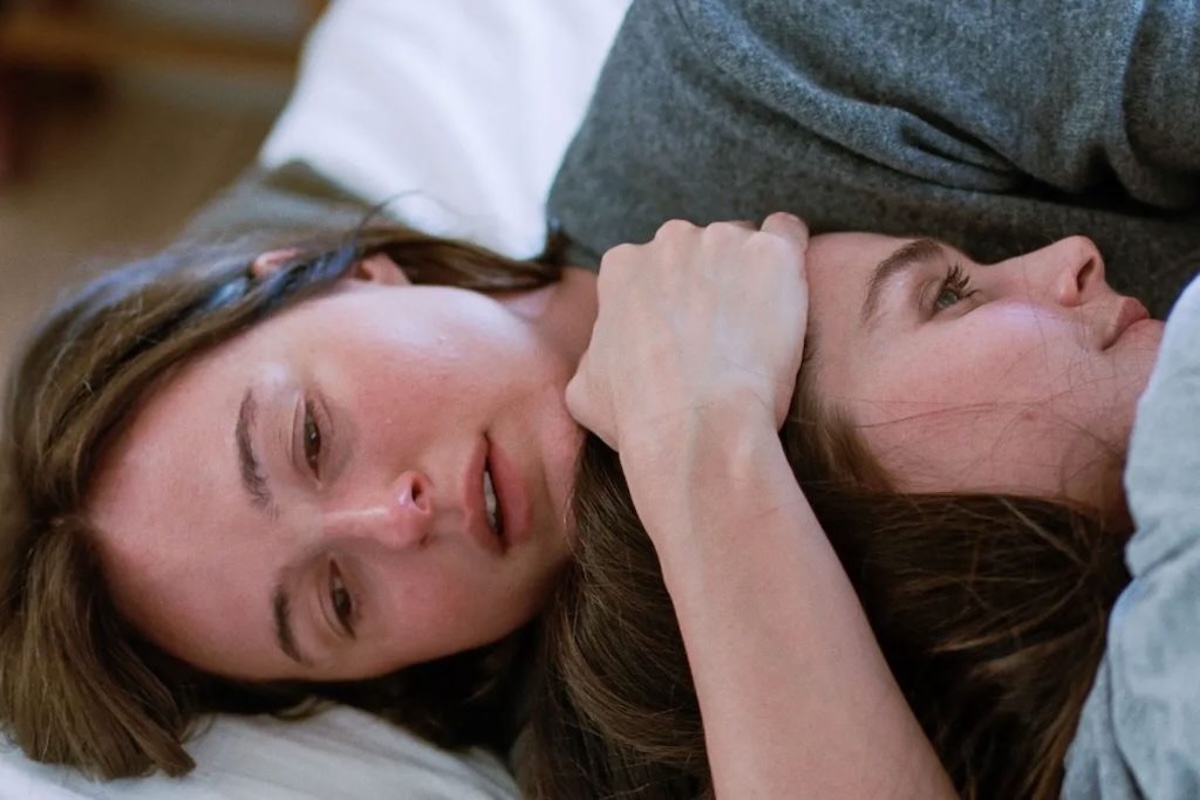
Midway through the superb new Joachim Trier film Sentimental Value, our troubled protagonist Nora Borg (Renate Reinsve), whose various issues with depression and family ghosts have more than earned her a right to a tearful breakdown, does just that. She openly weeps, crouched into a heaving coil of humanity, and finally gives in to the cathartic act of unleashing and venting her pain.
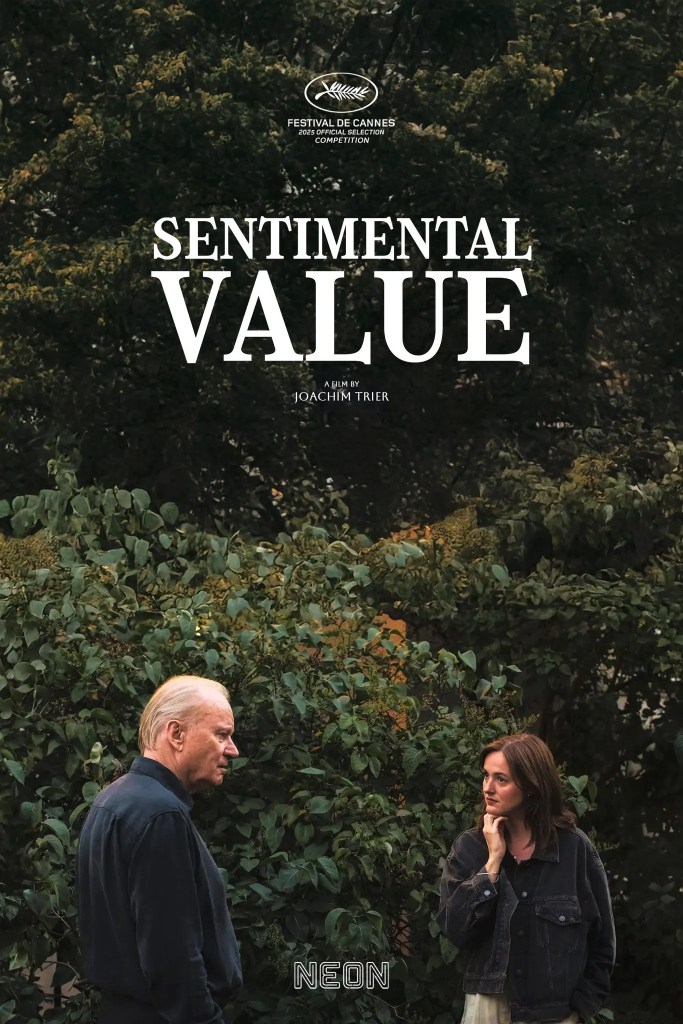
Then, alas, the camera pulls back to reveal that Nora is merely acting a role in a play. It’s a telling trick of the cinematic sort, but an excusable one in the context of Trier’s deceptively straight narrative. This isn’t the only time in the film when art colludes and collides with realities — of the emotional, tragic, historical, and architectural kind — including a certain resolving postscript. The core story involves a long absentee film director father Gustav (Stellan Skarsgård, in a calmly stunning performance) reconnecting with his understandably embittered daughter, and proposing a semi-autobiographical project about his suicidal mother touches on many thematic strains, with more universal undercurrents attached.
The Norwegian-Danish Trier has earned rightful kudos, including Cannes’ Grand Prix award and status as Norway’s Oscar contender, for the latest in a filmography which also includes the Oscar-nominated 2021 film The Worst Person in the World. His latest is likely headed for the short list of Top 10 list at this year’s end (including this scribe’s).
In a real and discernible way, Sentimental Value is a house that Nordic drama built. The very house that the family has passed down through ambling generations is introduced up front as a critical character and framing device unto itself, a domestic space which has endured and been imbued with a soulful presence. In a scenario which could be a theater piece, story references are repeatedly drawn back into the fateful house/set, with echoes of such deep, cool Scandinavian sources Ibsen and Strindberg, and, by extension, Swedish cinema master Ingmar Bergman. Trier joins in on their northerly worlds of existential angst and cool-to-the-touch dramaturgy, but with warm spots of humor and empathy all along the way.
From the art life angle, the film also addresses the age-old tension between the pursuit of pure art and the carrot of mass culture, and vice versa. Gustav tries to lure his daughter — who specializes in what her father calls the fusty domain of “centuries old plays,” into the modern feature film domain, in a highly personal and familial role he wrote for her. Enter a Hollywood actress, perfectly portrayed by Elle Fanning, whose desire for stepping away from her Hollywood life into the world of foreign film prestige makes her a ripe young muse for Gustav’s dream project.
Fittingly, in a film about characters steeped in the film/theater scene, one primary strength of the film comes through in the acting department. Reinsve (also the alluring star of The Worst Person in the World) expertly oscillates between rage and internalized emotions, in contrast to Skarsgård’s measured wisdom and coming-to-terms late in life — on screen and in the actor’s own life. Skarsgård has achieved something special with his lived-in performance, speaking volumes with subtle facial gestures and evoking a lot with minimal expressive means.
(Catch the Arlington Theatre tribute night to the venerable actor as part of the upcoming Santa Barbara International Film Festival on February 11, link here).
For all the dark elements in store, all is hardly doom and gloom in Sentimental Value. The family values embodied here also espouse reckoning and forgiveness of past “sins,” and the possibility of hope — essentially bringing the house back together, and with the next generation in tow. Life’s cycle goes on, damn the inherent obstacles.
Sentimental Value is currently playing at the Hitchcock Cinema (Metropolitan Theatres) and SBIFF’s Riviera Theatre.
View trailer here.










You must be logged in to post a comment.