
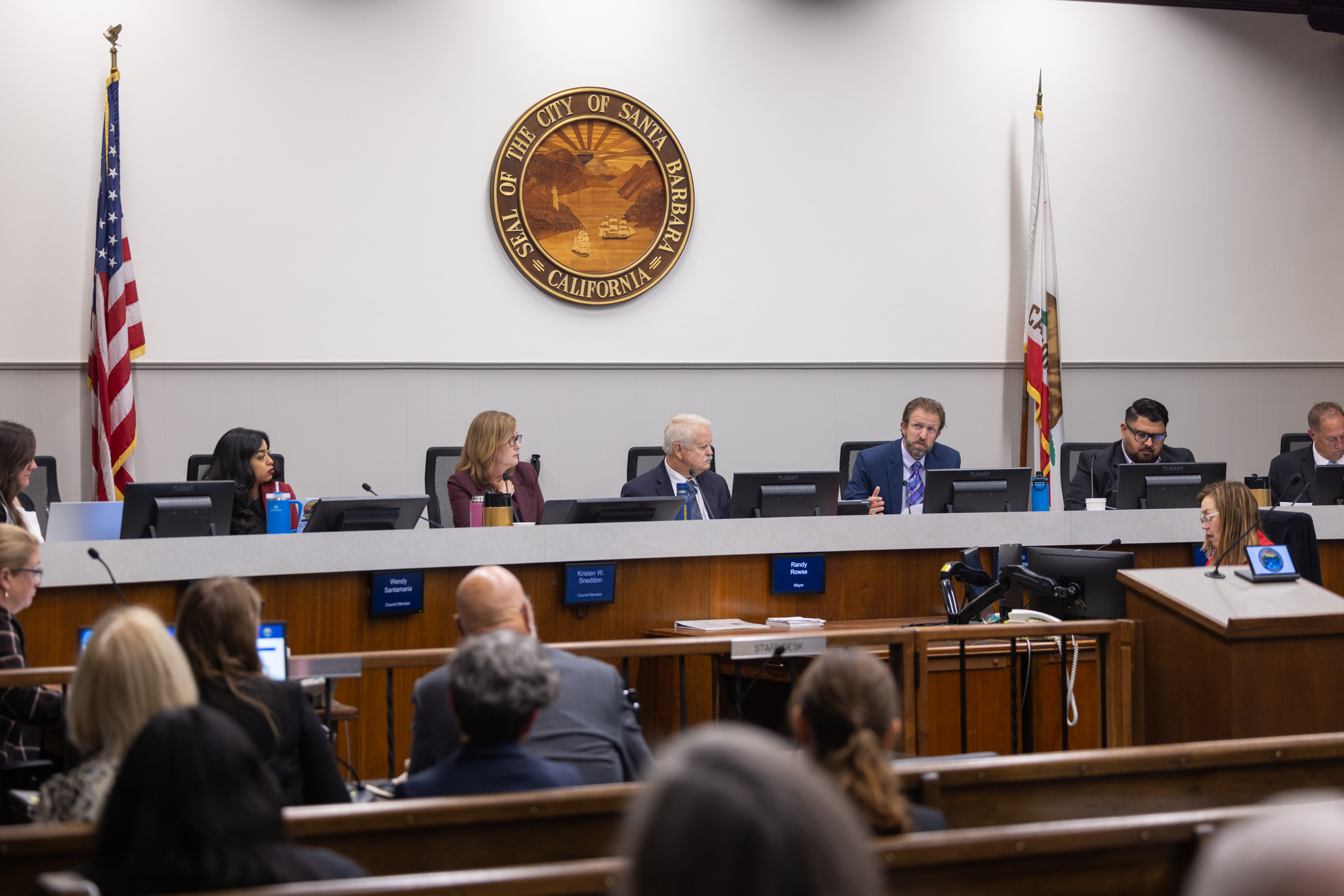
Heading into Tuesday’s six-hour-long city council hearing on the proposed redevelopment of the Paseo Nuevo shopping mall in downtown Santa Barbara, councilmembers were told by the project’s developers, in no uncertain terms, that if the city did not move forward with the plan as currently proposed, they would walk away and leave the mall undeveloped for the next decade or more. The word they used, according to Councilmember Kristen Sneddon, was “fallow.”
“They looked me in the eye and said: ‘If you don’t pass this deal, we’re going to leave it fallow like we’ve done to two other properties in Los Angeles — and that’s just the reality,’” Sneddon said during Tuesday’s council meeting.
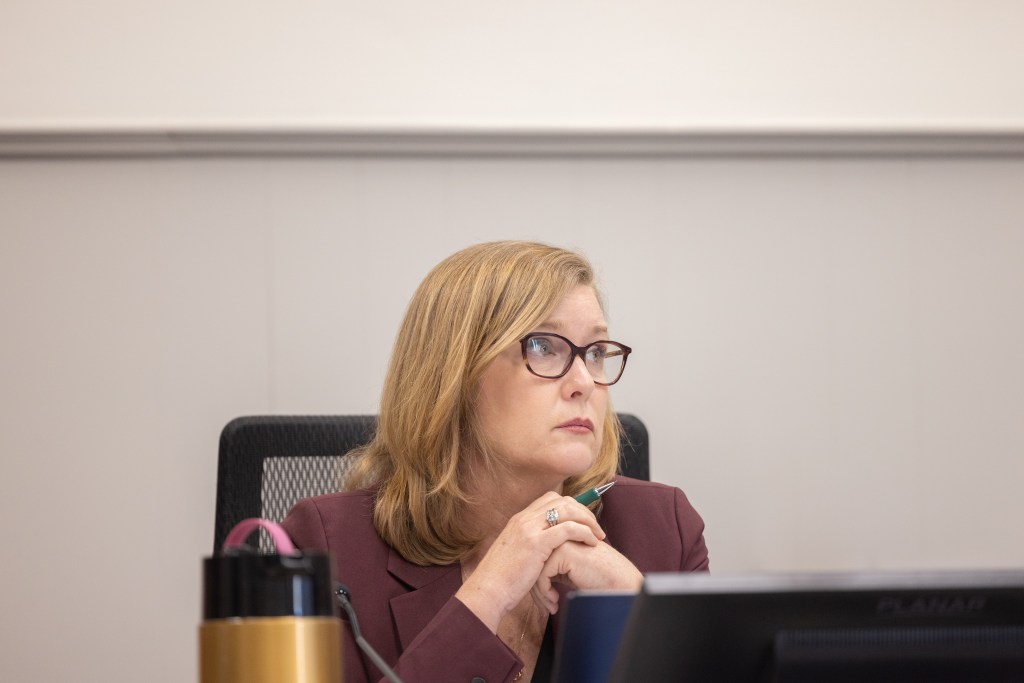
The proposed redevelopment of the struggling Paseo Nuevo mall has been years in the making, ever since global investment firm AllianceBernstein (AB Commercial) acquired the rights to the majority of the mall after the previous owners defaulted on a reported $120 million loan on the property in 2021. AB Commercial, not a housing developer but a financial firm with over $800 billion worth of assets in its portfolio, enlisted a whole team of partners to work on the projects, including the Arcturus Group, The Georgetown Company, and a group of architects with Gensler, Mullen & Henzell, and AB Design Studio.
AB Commercial’s portion of the mail includes all the in-line shops and the former Macy’s building, while the Nordstrom’s building is owned by another company, Shopoff, and the city held onto ownership rights of the land underneath the mall. Due to the complicated ownership of the mall, all three of the ownership parties need to agree to any future housing at the site.
For the past three years, AB Commercial’s team has worked closely with city staff to draft a proposal that could benefit all parties involved. AB Commercial could recoup its losses from the defaulted loan and get a return on the millions of dollars spent in the planning stage; Shopoff would get an opportunity to build a potential 112-unit housing development at the Nordstrom’s building; and the city could get a once-in-a-generation project in the heart of downtown, with much needed housing.
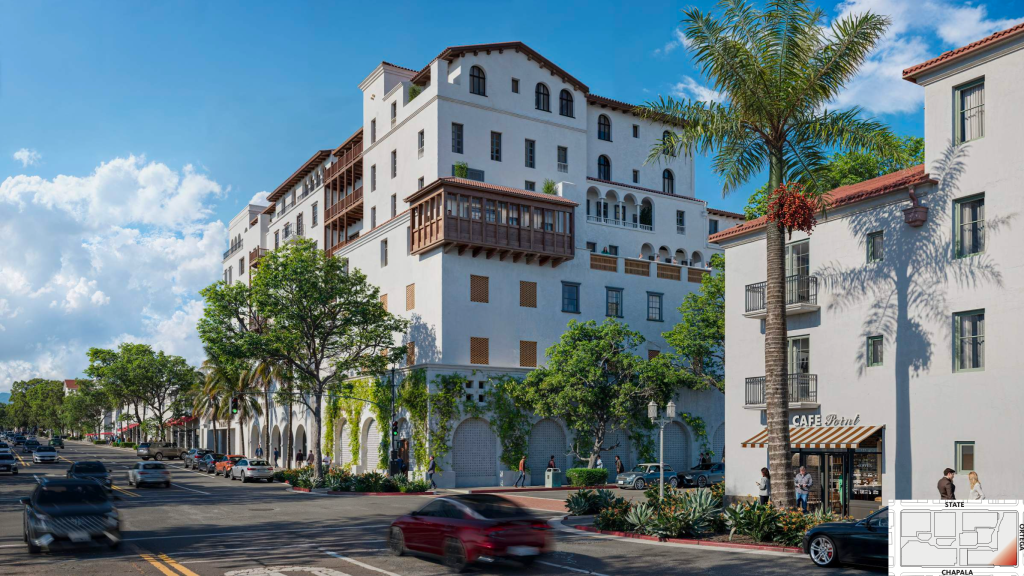
The project was hailed as a “catalyst” for the future of downtown Santa Barbara, with City Administrator Kelly McAdoo selling the finer points of the proposal, which originally included two main components: A 233-unit market-rate development to be built over the Macy’s property and the parking lot along Ortega and Chapala Streets, and a fully low-income affordable housing development with 80 units to be built above the city parking lot across the street from the mall near the Canary Hotel.
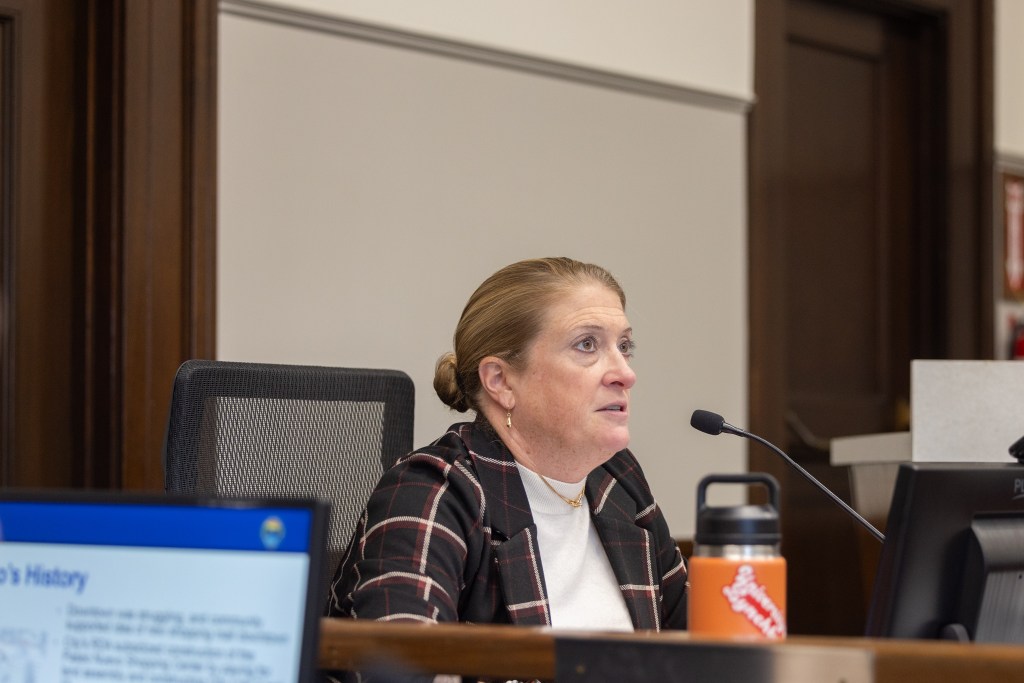
But as city administrative staff worked with AB Commercial toward a finalized Disposition and Development Agreement — which laid out the concrete terms of the deal — the project began to receive a wave of criticism from members of the public and representatives of the city’s planning review boards. The Planning Commission unanimously voted in opposition to the project, with commissioners taking offense at giving away city-owned land without equal public benefit.
When the terms of the agreement were released to the public last week, the 110-page document raised more questions than it answered. Councilmember Sneddon brought a binder full of questions to Tuesday’s hearing, picking apart everything from the murky finances — which were vetted by city consultants who were forced to sign an NDA — to the removal of the plan for 80 affordable units. In the final version presented to the council, AB Commercial had sole discretion to decide whether to build the affordable development within five years or go ahead with a project with only 24 units of affordable housing.
Councilmembers were unsatisfied with the contract as written and questioned the assertion that the city had limited bargaining power due to the heavily restricted nature of the land. The city only owned the land underneath the mall, which technically had no monetary value, according to the State Department of Finance, which concluded that there was “no feasible method” to use the property unless ownership was transferred to one entity.
Councilmember Wendy Santamaria said she felt the city should use the leverage it had to require AB Commercial to build more affordable units or at least contribute a substantial sum to the city’s Local Housing Trust Fund through in-lieu fees. “As our city grapples with our housing shortage and the displacement rates that we’re seeing in our community, it’s simply not sufficient to provide a majority market-rate units and nothing else,” she said.
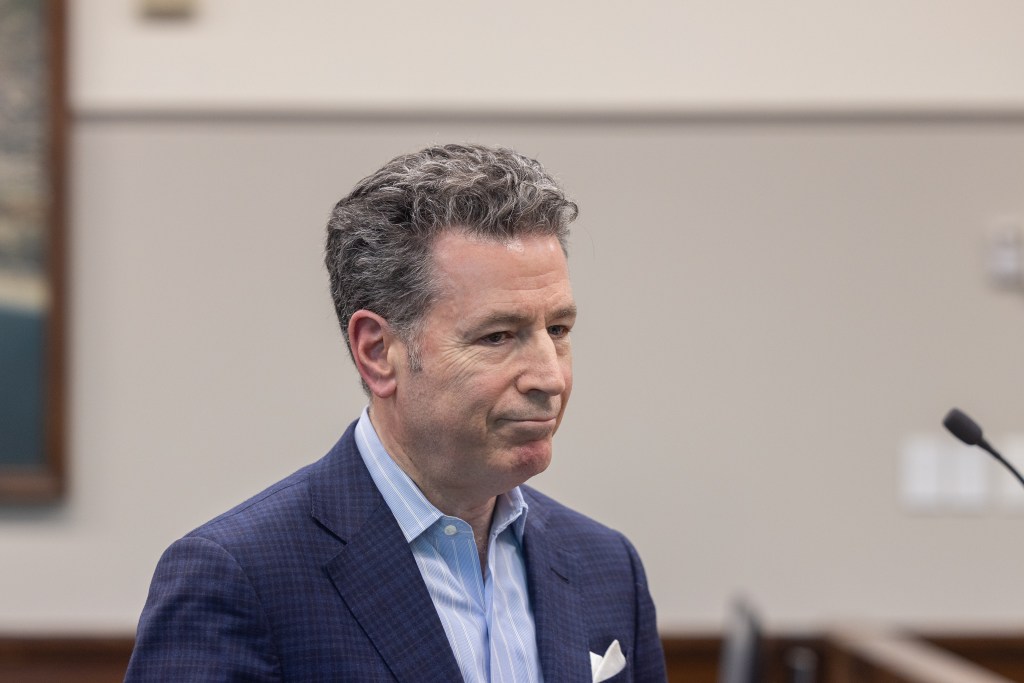
Adam Flatto, President and CEO of The Georgetown Company, spoke on behalf of the development team. He said the group has been in daily negotiations to try and bring a project that would bring as much housing as feasible. “The project, which might not be perfect, shows what can be accomplished when people work together around a common goal supported by leadership,” Flatto said. “This hearing should be a celebration of that, not a stampede of acrimony.”
While the council was highly critical of the agreement, almost every councilmember spoke in support of working toward a redevelopment that worked for the city and the private developer. But they pushed back on the idea that the city should rush to sign an agreement that gave away rights to public lands.
“There is a pathway to getting there,” Councilmember Mike Jordan said.
“We have a great project at our fingertips; we just need to figure out a way to get it there,” said Councilmember Eric Friedman.
Councilmember Sneddon made a laundry list of suggestions, from a more thorough analysis of the city’s financial contributions to the project, to a requirement for more public review (as currently proposed, the project would only need to return for one Historic Landmarks Commission hearing).
Councilmember Meagan Harmon had an equally long list of suggestions and said that there was “deep community concern” that the City Council hadn’t properly looked into all alternatives or weighed in on the specifics. She said that all three ownership parties should meet and work out the complicated reciprocal easement agreement to officially allow housing at the property, and that any provision for affordable housing should be guaranteed and not at the will of the developers.
“Overpromising and underdelivering is not acceptable when it comes to affordability in our community,” Harmon said.
After a long public comment and deliberation session, the council did not take a vote on signing the agreement. Instead, the council unanimously agreed to direct staff to look into a charter amendment to lift the 50-year limit on leases for city-owned property, and to create an ad-hoc committee to guide city staff negotiations with the development team and implement suggestions made by the council to the finalized agreement. The council will return to discuss an updated plan early in the new year.





You must be logged in to post a comment.