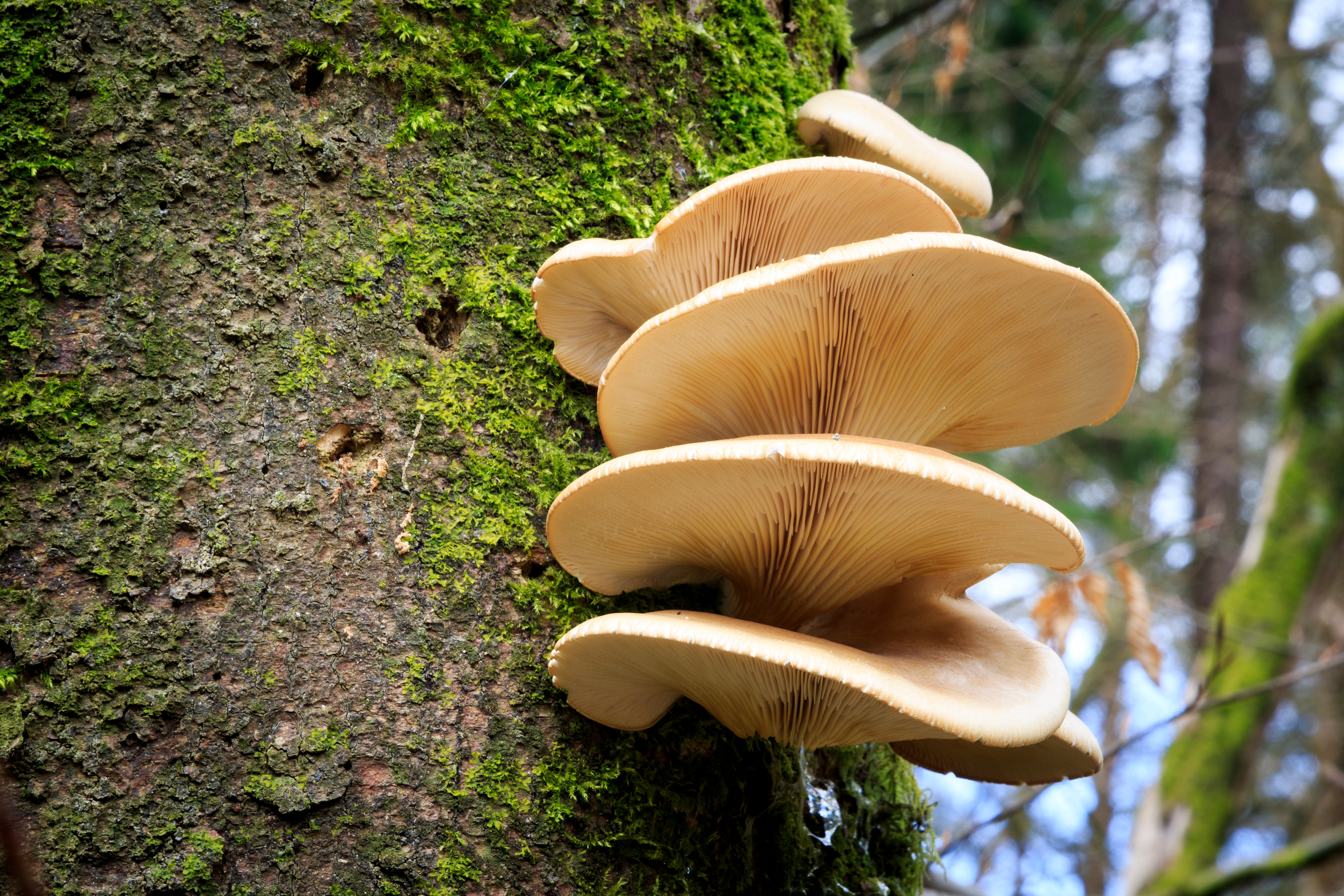
The unique properties of fungi are gaining traction in revolutionizing construction. When worked into composites, they offer strength, durability, light weight, fire-resistance, CO2 sequestration (almost a kilogram of CO2 per kilogram of material), invulnerability to pests, self-healing possibilities, and low cost. Mycelium is renewable and can grow from being fed bacteria or waste, frequently demolition waste or agricultural biproducts.
Mushroom roots provide mycelium, a substance made of fibers that, not surprisingly, resemble roots. It is the base of a new class of building products that are alive. Fungateria, a European Union research initiative bringing together scientists from many European countries, has the goal to create engineered living materials (ELMs) that don’t just exist in the built environment but actively participate in it. These researchers are developing materials that can grow, heal themselves, and even sense changes in their environment. Some believe it is possible to reactivate dormant mycelium so that composites can heal cracks or repair damage and wear.
Some of the most successful mycelium-based composites are:
- Mycecrete, a material that is strong and super-versatile, made from mycelium and knitted molds or textiles.
- Myco-bricks and panels are made by bonding mycelium with agricultural waste. The bricks are 60 times lighter than industry standard clay or concrete masonry blocks.
- Mycelium-based insulation has an insulative value comparable to polystyrene. It also attenuates sound.
In growing composites, mycelium can consume wood, tiles, and asphalt as a food source. It breaks down toxins in the process. The mycelium has natural glue properties, which bind particles together. This process emits minimal greenhouse gases while upcycling waste stocks as food inputs. At the end of life of any of these products, they can be composted, closing the loop on construction waste. Being completely renewable and biodegradable, these processes offer a model for the circular economy.
To prevent fungi composites from going rogue in the manufacturing process, controlling fungal growth is essential. Two methods of control are used: (1) manipulating growth through light and temperature, and (2) using specially engineered bacteria. The bacteria feed the fungus essential nutrients, and when they are removed or destroyed, growth stops.
Mushroom-based materials are showing great promise but also face challenges. Growing mycelium takes days to weeks, creating production scale and speed issues. Tensile strength is good, but compressive strength does not yet equal that of concrete. Standardization is needed to become mainstream in construction. Mycelium can degrade under high humidity unless treated. Scientists are exploring genetic and process engineering to solve these hurdles.
In a short amount of time, great strides have been made in developing fungi-based construction materials. Thus far, these fungal materials have shown impressive resilience, withstanding drought and high temperatures. Considering that the world is facing more extreme weather, this is a hopeful sign, especially considering the many positive attributes of mycelium-based composites.