This article was originally published in UCSB’s ‘The Current‘.
A new $3.8 million grant from the National Institutes of Health is helping UC Santa Barbara scholars reimagine how virtual reality can support older adults who are aging at home — and the family members and professionals who care for them.
“Our goal has always been to figure out how technology can help older adults thrive, despite cognitive and physical challenges,” said communication professor Tamara Afifi, who is co-leading the project with psychological and brain sciences professor Nancy Collins. “Virtual reality isn’t meant to replace relationships — it’s a tool for relationship maintenance and social bonding.”
The project builds on nearly a decade of work with Rendever, a VR company that designs lightweight, cord-free headsets and shared experiences specifically for older adults. Afifi’s team, which includes Rendever CEO Kyle Rand and Director of Research Jennifer Stamps, first piloted the technology at Maravilla, a senior living community near UCSB, in an early NIH-funded study focused on safety and feasibility for residents with dementia. Older adults with mild cognitive impairment or mild to moderate dementia at Maravilla used the VR remotely with a family member who was geographically separated. The results were promising: the system not only proved safe, but also improved residents’ quality of life and psychological and relational well-being.
That pilot laid the groundwork for a large clinical trial across eight countries and involving 186 pairs of participants: an older adult with mild cognitive impairment or mild to moderate dementia, and an adult child living at a distance. Dyads were randomly assigned to connect once a week for a month using either Zoom or Rendever’s shared VR platform, with follow-ups at one and three months.
Both technologies helped families enhance their social bonds and psychological well-being, but VR offered unique benefits. In the headset, parents and adult children could “travel” together — taking a boat in Thailand, going on safari or touring a cathedral in Barcelona — while talking about what they were seeing and feeling. Families could also upload addresses from their past and, using Google Street View inside the headset, revisit childhood homes or meaningful places. Another popular feature allowed them to sit together as avatars in a virtual living room, surrounded by family photos and home videos. The researchers found that VR (compared to Zoom) was especially beneficial for older adults with dementia.
“Video conferencing is wonderful, but conversations can become mundane or quickly turn toward talking about health ailments,” Afifi explained. “With VR, you’re doing something novel and stimulating together. You have adventures to talk about, and you can build in reminiscence therapy to invoke positive memories and emotions.”
In both studies, the team found benefits not only for older adults but also for caregivers, including improvements in mental health and reductions in guilt for family members separated by distance.
The new grant takes the next step the researchers have long envisioned: bringing VR into the homes of older adults who are aging in place, particularly for those with dementia. Most older adults do not live in senior communities, Afifi said, yet they may face significant loneliness, mobility limits and cognitive challenges. “We need to provide other ways to still allow them to thrive.”
To reach them, the team is partnering with Right at Home in-home care services. Trained home health aides will bring Rendever’s headsets to clients’ homes, help them get settled, and connect them to group VR sessions in senior communities where Rendever is already being used. Activity directors at those communities will operate the experiences from a tablet, so older adults at home simply put on the headset and are transported into a shared environment.
In this new study, participants will first meet one another over Zoom to see faces and learn names. Then, like kids logging on to play video games with friends, they’ll reconnect regularly in shared VR spaces — going on virtual outings, attending concerts or movie nights, or taking turns “hosting” visits to meaningful places from their past.
“The key difference in this study is that we’re using shared virtual reality to help older adults form authentic new friendships,” Collins said. “We know social connection is one of the strongest predictors of quality of life at any age, but it becomes harder to maintain as you get older and face more physical and cognitive limitations.”
Collins, whose work is rooted in attachment theory and the science of adult close relationships, sees the project as a natural extension of her research on how supportive bonds promote health and thriving. Afifi, a family communication scholar who studies family communication, stress and resilience, was drawn to VR after caring for her own mother-in-law with dementia and seeing firsthand how quickly meaningful activities can evaporate with cognitive decline.
“People run out of things to do with loved ones who have dementia,” Afifi said. “They can’t travel, they may lose the ability to read and write. I wanted something that could bring back a sense of efficacy and dignity — something that lets them explore, reminisce and feel connected again to their loved ones and the larger world.”
For funders like NIH and the National Institute on Aging, the project speaks directly to two intertwined goals: extending lifespan and improving quality of life.
“It’s wonderful to live longer, but you want those added years to be rich in connection and engagement,” Collins said. “Virtual reality can provide cognitively stimulating experiences — and when you do them socially, you’re addressing two domains that often decline with age: social networks and opportunities for new, mentally engaging activities.”
The researchers also expect the program to ease strain on family caregivers by offering safe, engaging sessions that can double as short periods of respite.
Looking ahead, Afifi and Collins hope that, if the model proves effective, VR-based social programs could become low-cost, widely accessible and eventually covered by insurance — available in rural communities, across diverse populations and to families of all income levels.
“If we can give older adults and their caregivers a drug-free, joyful tool that reduces isolation and brings people together across distance,” Afifi said, “I think our world will be better for it.”
Related Posts






Premier Events

Thu, Nov 19
10:30 AM
Santa Barbara
Sunshine In a Jar, The Art of Making Meyer Lemon Marmalade

Mon, Nov 16
7:00 PM
Santa Barbara
Toast – The Best of Bread at the Arlington

Tue, Nov 17
7:00 PM
Santa Barbara
CWC Screening and Conversation: “Criminal Minds” James T. Clemente
Wed, Nov 18
12:00 PM
Santa Barbara
UCSB Son Jarocho

Wed, Nov 18
7:00 PM
Santa Barbara
Outside+ Showing of “Warren Miller’s Days Off”

Fri, Nov 20
11:00 AM
Santa Barbara
Santa Barbara Antique & Vintage Show

Sat, Nov 21
10:00 AM
Solvang
56th Annual Holiday Open House

Sat, Nov 21
10:00 AM
Santa Barbara
MOXI’s Seaside Sock Skating
Sat, Nov 21
11:00 AM
Santa Barbara
Santa Barbara Antique & Vintage Show
Sat, Nov 21
11:00 AM
Santa Barbara
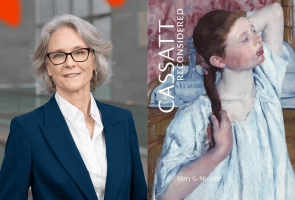
Cassatt Reconsidered: Lecture with Mary G. Morton
Sat, Nov 21
7:30 PM
Santa Barbara
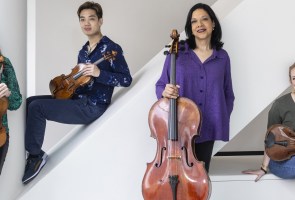
Juilliard String Quartet & Simone Dinnerstein
Thu, Nov 19 10:30 AM
Santa Barbara
Sunshine In a Jar, The Art of Making Meyer Lemon Marmalade
Mon, Nov 16 7:00 PM
Santa Barbara
Toast – The Best of Bread at the Arlington
Tue, Nov 17 7:00 PM
Santa Barbara
CWC Screening and Conversation: “Criminal Minds” James T. Clemente
Wed, Nov 18 12:00 PM
Santa Barbara
UCSB Son Jarocho
Wed, Nov 18 7:00 PM
Santa Barbara
Outside+ Showing of “Warren Miller’s Days Off”
Fri, Nov 20 11:00 AM
Santa Barbara
Santa Barbara Antique & Vintage Show
Sat, Nov 21 10:00 AM
Solvang
56th Annual Holiday Open House
Sat, Nov 21 10:00 AM
Santa Barbara
MOXI’s Seaside Sock Skating
Sat, Nov 21 11:00 AM
Santa Barbara
Santa Barbara Antique & Vintage Show
Sat, Nov 21 11:00 AM
Santa Barbara
Cassatt Reconsidered: Lecture with Mary G. Morton
Sat, Nov 21 7:30 PM
Santa Barbara